

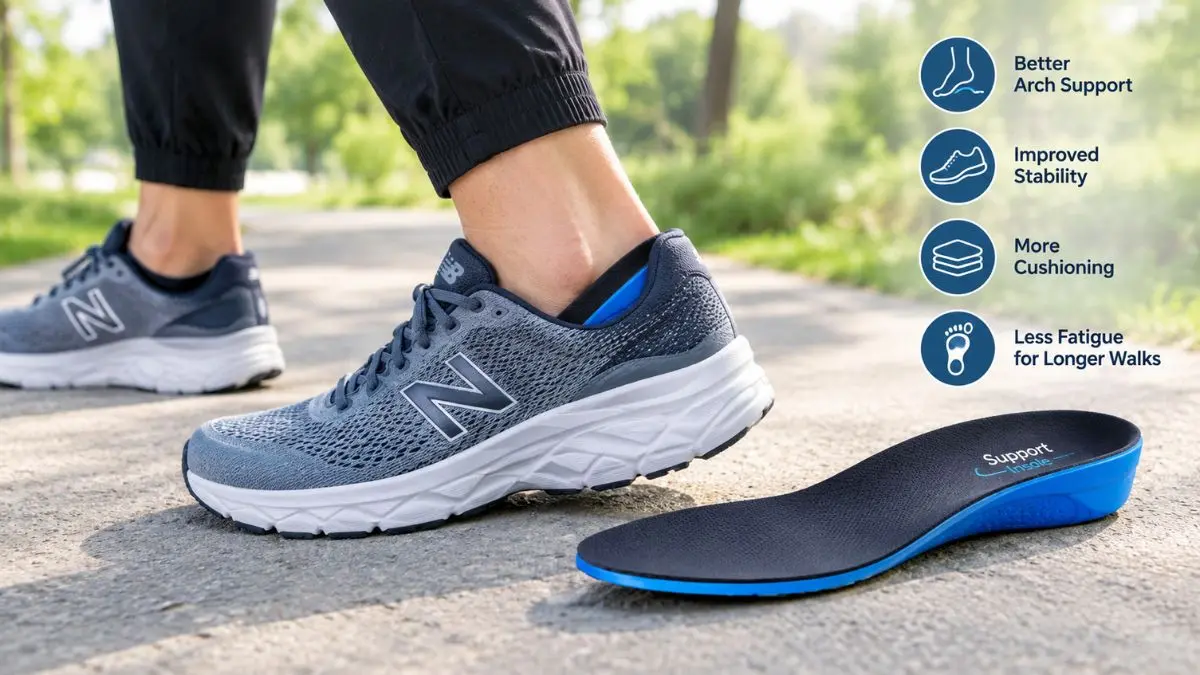
Finding the best insoles for flat feet can make everyday shoes feel more supportive and comfortable. People with low or fallen arches may prefer an insole that provides structure under the foot without creating uncomfortable pressure.
Not everyone with flat feet needs the same type of support. Some people prefer firm arch support, while others feel better with softer cushioning and a more flexible design. Your shoes, activity level, foot shape, and personal comfort all matter.
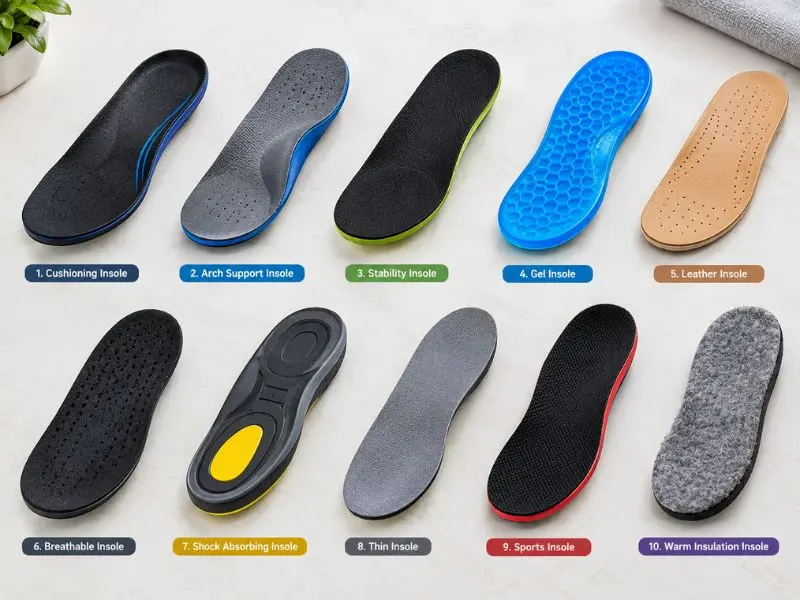
In this guide, we look at 10 popular options for different needs, including walking, standing, everyday use, running, and work. We will also explain what to look for when choosing insoles for flat feet and how to find a comfortable fit.
The 10 Best Insoles for Flat Feet
1. Superfeet Green Professional-Grade Insoles
Superfeet Green is a popular choice for people who want structured support. Its relatively firm construction is designed to provide a stable base under the heel and arch.
These insoles may work well in walking shoes, casual shoes, and other footwear with enough room for an insert. The deep heel cup can also help keep the foot positioned securely inside the shoe.
Best for: Firm support and everyday walking
Key features: Structured support, deep heel cup, durable construction
Potential drawback: The firm design may feel too rigid for people who prefer soft cushioning.
Verdict: A strong option for people who want noticeable structure rather than a soft, flexible insole.
2. PowerStep Pinnacle Maxx
PowerStep Pinnacle Maxx is designed for people who want substantial arch support combined with cushioning. The design provides a more supportive feel than many basic foam inserts.
It can be useful for people who spend a lot of time walking or standing. However, the best insoles for flat feet may take time to get used to.
Best for: Strong arch support
Key features: Structured arch, heel support, cushioning
Potential drawback: May feel too supportive for users who prefer a low-profile insert.
Verdict: A practical choice when you want a supportive insole with a balance of structure and cushioning.
3. Dr. Scholl’s Prevent Pain Protective Insoles
Dr. Scholl’s offers several insole designs aimed at everyday comfort. Its protective options can be useful for people who want additional cushioning without choosing an extremely rigid insert.
The softer feel may be appealing for casual walking and daily activities. They can also be easier to adapt to than very firm orthotic-style products.
Best for: Everyday cushioning
Key features: Shock absorption, cushioning, everyday comfort
Potential drawback: They may not provide enough structure for someone specifically looking for strong arch support.
Verdict: A convenient option for people who prioritize cushioning and general foot comfort.
4. Currex RunPro
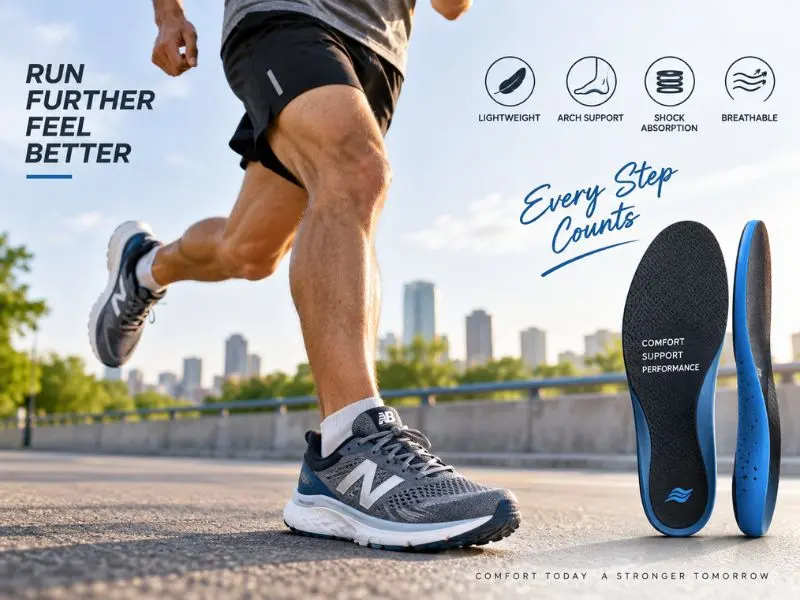
Currex RunPro is designed with active users in mind and comes in different support profiles. This makes it particularly useful for people who want an insole that works with their activity and foot shape.
The design focuses on balancing support, cushioning, and movement. The best insoles for flat feet can work for walking, running, gym sessions, and more.
Best for: Active users
Key features: Activity-focused design, cushioning, arch support options
Potential drawback: It may be more than you need if your main goal is simple everyday shoe comfort.
Verdict: A good choice for people with flat feet who regularly exercise or spend significant time on their feet.
5. Spenco Total Support Max
Spenco Total Support Max combines cushioning with a more structured support system. Its design can appeal to people who want an insole that feels supportive while still providing some softness underfoot.
The additional structure may be helpful in walking and standing shoes, provided the shoe has enough interior space.
Best for: Walking and standing
Key features: Arch support, cushioning, supportive construction
Potential drawback: Its thicker construction may not work well in tight-fitting shoes.
Verdict: A useful option for people who want support and cushioning for longer periods on their feet.
6. Tread Labs Ramble Insoles
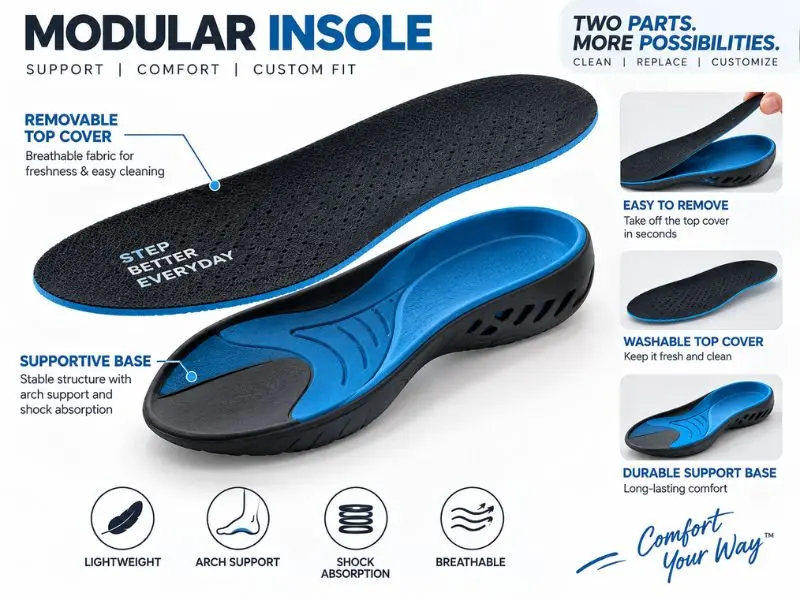
Tread Labs offers a modular approach, allowing users to pair different top covers with supportive bases. This can make the system appealing to people who want to adjust the feel of their insoles.
The best insoles for flat feet offer support and can last longer with replaceable parts.
Best for: Customizable support
Key features: Replaceable components, structured support, multiple options
Potential drawback: The overall setup can be more expensive than a basic insole.
Verdict: Worth considering if you value adjustability and long-term use.
7. SOLE Active Medium Insoles
SOLE Active Medium insoles provide a supportive design with a moldable base. Over time, the material can adapt more closely to the shape of the user’s feet.
This can be useful for people who dislike the feeling of a completely rigid arch support. The design offers a middle ground between strong structure and personalized comfort.
Best for: Moldable support
Key features: Supportive base, cushioning, adaptable fit
Potential drawback: The break-in process may require some patience.
Verdict: A good option for people who want structured support that can become more personalized with use.
8. Superfeet Run Support Medium Arch
For people with flat feet who want an insole for running or active workouts, a running-specific design may be more appropriate than a basic everyday insert.
Superfeet Run Support Medium Arch focuses on balancing support and cushioning while allowing the foot to move during activity. Fit remains important because an insole that feels comfortable while standing may feel different during exercise.
Best for: Running and active workouts
Key features: Supportive structure, cushioning, activity-focused design
Potential drawback: Not every runner will prefer the same level of arch contact.
Verdict: A solid option for active users who want additional structure during exercise.
9. Walk-Hero Comfort and Support Insoles
Walk-Hero insoles focus on everyday walking comfort and support. Their cushioning and supportive construction can make them an option for people who spend a significant portion of the day walking or standing.
They are a more affordable option among the best insoles for flat feet.
Best for: Everyday walking and budget-conscious shoppers
Key features: Cushioning, arch support, everyday design
Potential drawback: The fit and firmness may not suit every foot shape.
Verdict: A reasonable choice for people who want basic support without moving into a higher-priced option.
10. Protalus M100 Insoles
Protalus M100 insoles are designed around support and foot positioning. The construction aims to provide a stable platform while adding cushioning for everyday activities.
They can be considered for walking, standing, and general daily use. As with any supportive insole, the amount of arch contact should feel comfortable rather than overly aggressive.
Best for: Everyday support
Key features: Supportive structure, cushioning, heel support
Potential drawback: The more structured design may require an adjustment period.
Verdict: A useful option for people who want a supportive everyday insole with noticeable structure.
Best Insoles for Flat Feet: Quick Comparison
| Insole | Best For | Support Level | Cushioning | Key Feature | Price Range |
| Superfeet Green | Everyday support | Firm | Moderate | Deep heel cup | $$ |
| PowerStep Pinnacle Maxx | Strong support | Firm | Moderate | Structured arch | $$ |
| Dr. Scholl’s Protective | Everyday comfort | Moderate | Soft | Cushioning | $ |
| Currex RunPro | Active users | Moderate–Firm | Moderate | Activity-focused design | $$$ |
| Spenco Total Support Max | Walking/standing | Firm | Moderate | Supportive construction | $$ |
| Tread Labs Ramble | Customizable support | Firm | Moderate | Replaceable components | $$$ |
| SOLE Active Medium | Moldable support | Moderate–Firm | Moderate | Adaptable base | $$ |
| Superfeet Run Support | Running | Moderate | Moderate | Athletic design | $$$ |
| Walk-Hero | Budget walking | Moderate | Moderate | Everyday comfort | $ |
| Protalus M100 | Daily support | Moderate–Firm | Moderate | Stable platform | $$ |
How to Choose the Best Insoles for Flat Feet
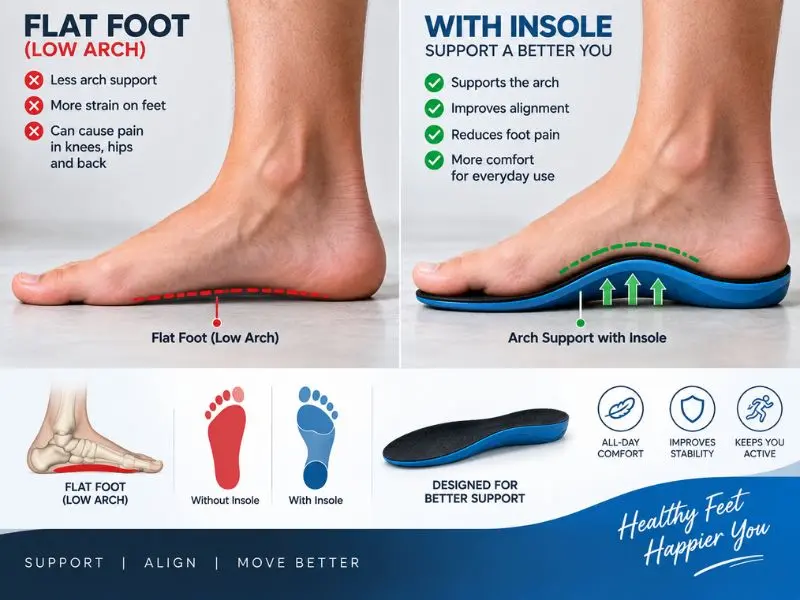
Choosing an insole is not simply about finding the product with the strongest arch support. A good option should work with your foot shape, shoes, activity, and comfort preferences.
Consider the Amount of Arch Support
People with flat feet may naturally look for the strongest support available, but more support is not automatically better.
If an insole presses sharply into your arch or causes discomfort, it may not be the right match. The best insoles for flat feet should feel stable without adding too much pressure.
Pay Attention to Cushioning
Cushioning can make a significant difference if you walk or stand for long periods. Softer materials may provide a comfortable feel, while firmer designs can provide a more stable platform.
The right balance depends on your preference. Some people enjoy a plush feel, while others prefer a more responsive and structured surface.
Check the Heel Cup
A deep or structured heel cup can help keep the heel positioned consistently inside the shoe. This may be useful for people who want their feet to feel more secure while walking.
However, the heel cup should fit comfortably inside the shoe without reducing available space.
Think About Your Shoes
An insole can only work well if it fits properly inside the shoe. Before buying, check whether the shoe has a removable factory insole and enough interior volume.
Adding a thick insert to a shoe that already fits tightly can make the shoe uncomfortable. In some cases, a thinner design may be a better choice.
Match the Insole to Your Activity
The ideal insole for walking may not be the same one you prefer for running or work.
For walking, balanced cushioning and support may be useful. For running, consider an athletic design that can handle repetitive movement. For standing jobs, comfort and pressure distribution may be more important.
What Are Flat Feet?
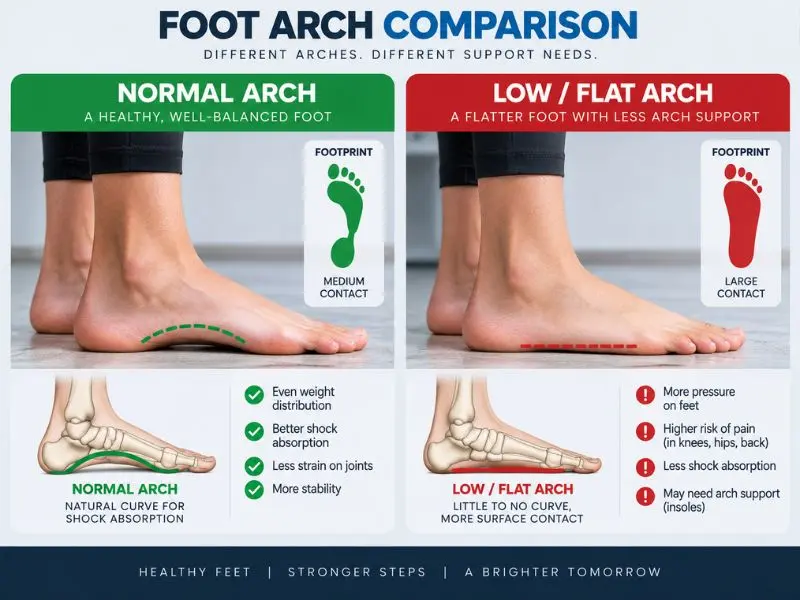
Flat feet occur when the arches of the feet are lower than usual or appear to flatten when standing. Some people naturally have flat feet and experience no problems at all.
For others, low arches may be associated with foot fatigue or discomfort during certain activities. The way a foot moves can also vary significantly from one person to another.
Having flat feet does not automatically mean that you need an orthotic or special insole. The best insoles for flat feet should support comfortable foot function.
If you experience persistent or significant pain, a qualified healthcare professional can help determine whether additional support is appropriate.
Do Insoles Help With Flat Feet?
Insoles may help some people feel more comfortable by adding cushioning, structure, or support inside the shoe. However, the results can vary depending on the person and the underlying reason for their discomfort.
An insole should not be viewed as a guaranteed solution for flat feet. Instead, think of it as one possible way to improve shoe comfort and support.
If you are trying insoles for flat feet for the first time, it can be helpful to wear them for shorter periods initially. This gives you a chance to determine how your feet respond before using them throughout the entire day.
What Shoes Work Best With Insoles for Flat Feet?
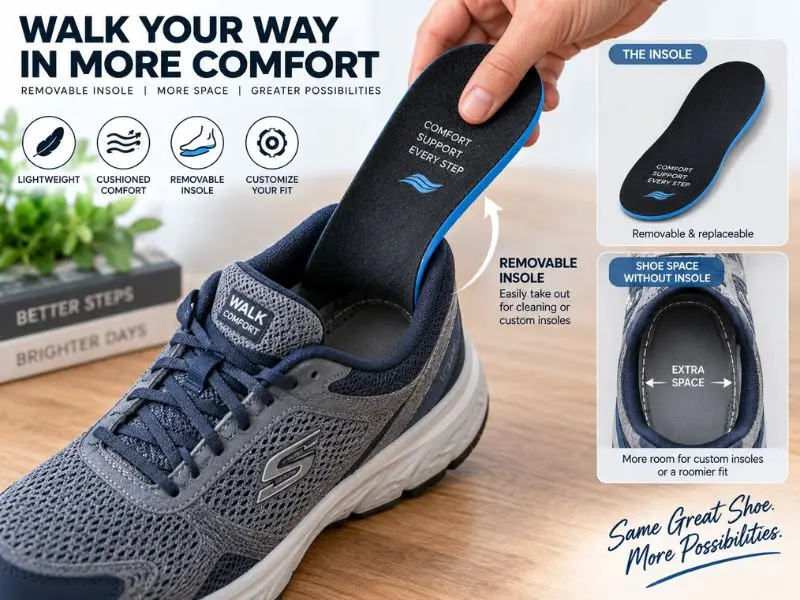
Shoes with a removable factory insole are often easier to use with replacement inserts because they provide more room.
For walking shoes, look for a comfortable upper, enough toe room, and a stable sole. A shoe should not squeeze the foot simply because you have added an insole.
For running shoes, make sure the replacement insert does not change the fit too much. Your heel should remain secure, and your toes should still have adequate space.
Work shoes can be more challenging because some have limited interior volume. In that situation, a thinner insole may be more practical.
Firm vs. Soft Insoles for Flat Feet
There is no universal answer to whether firm or soft insoles are better.
Firm insoles can provide a more structured feeling and may appeal to people who want noticeable arch support. Soft insoles can feel more comfortable to people who prioritize cushioning.
A useful approach is to focus on how the insole feels during actual use. If the support creates pressure, rubbing, or discomfort, a softer or differently shaped design may be a better match.
Common Mistakes to Avoid When Buying Insoles
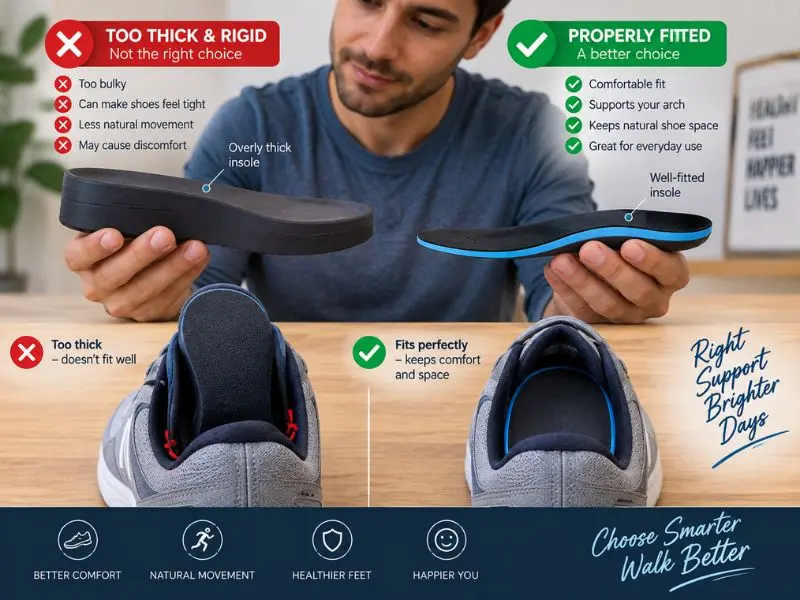
One common mistake is assuming that maximum arch support is always the best choice. An insole that feels too aggressive can make an otherwise comfortable shoe feel unpleasant.
Another mistake is ignoring shoe fit. Even a high-quality insole will not work well if it makes the shoe too tight.
Some people also choose an insole based only on price. A more expensive product is not automatically a better match for your feet.
Finally, avoid judging an insole after only a few minutes of use. Some supportive designs may require a gradual adjustment period. If discomfort continues or becomes significant, however, stop using the product and consider professional advice.
Frequently Asked Questions
1. What are the best insoles for flat feet?
The best option depends on your foot shape, shoe type, activity level, desired support, and personal comfort.
2. Do insoles help with flat feet?
Insoles may improve comfort and support for some people, although results vary between individuals.
3. Should flat feet use firm or soft insoles?
Either can work, but the right choice is the one that provides comfortable support without creating excessive pressure.
4. Can I wear insoles for flat feet all day?
You may be able to wear them all day after gradually adjusting to them, provided they remain comfortable.
5. How often should I replace my insoles?
Replacement depends on the material, frequency of use, and condition, but worn or compressed insoles should generally be replaced.
Conclusion
The best insoles for flat feet should provide a comfortable balance of support, cushioning, stability, and fit. Rather than choosing the firmest or most expensive option, consider how the insole works with your shoes and how your feet feel during everyday activities.
Whether you need support for walking, standing, exercise, or general comfort, there are several designs to consider. Start with the features that matter most to you, introduce a new insole gradually, and pay attention to comfort. If you have ongoing foot pain or a specific foot concern, a qualified healthcare professional can help you determine what type of support is appropriate.
