


Staying active does not always require long gym sessions or difficult workout programs. An everyday fitness workout plan can be built around simple movements that fit your schedule, fitness level, and available space. The aim is to build a fitness routine that fits comfortably into your lifestyle and is easy to follow consistently.
Many people start exercising with an intense plan and then struggle to stay consistent. A better approach is to begin with manageable workouts and gradually build strength, endurance, mobility, and confidence.
Exercising every day also does not mean doing a hard workout every day. A balanced routine can include strength training, walking, cardio, mobility exercises, and easier recovery days. This approach gives your body opportunities to work and recover.
This guide provides a practical everyday fitness workout plan for beginners and active adults. You will learn how to organize a 7-day routine, choose exercises for home workouts, create a 30-minute session, and stay consistent without making exercise unnecessarily complicated.
What Is an Everyday Fitness Workout Plan?
An everyday fitness workout plan is a structured routine that helps you stay physically active throughout the week. It can include different types of movement depending on your goals, fitness level, schedule, and available equipment.
The key is that staying active each day does not require a high-intensity workout every time. For example, you might perform a strength workout on Monday, take a brisk walk on Tuesday, do mobility exercises on Wednesday, and use Thursday as an active recovery day.
This variation can make an everyday workout routine easier to maintain. It also prevents your routine from becoming dependent on one type of exercise.
Beginners should start with a comfortable amount of activity rather than trying to complete an advanced program immediately. As your fitness improves, you can gradually increase the duration, resistance, repetitions, or difficulty of your workouts.
What Should an Everyday Fitness Workout Plan Include?
A well-rounded daily fitness routine should include several forms of movement rather than focusing on only one type of exercise.

Strength Training
Strength training helps you develop muscular strength and improve your ability to perform everyday movements. If you’re new to exercise, begin with simple bodyweight movements and introduce added resistance as your strength improves.
Useful exercises include:
- Squats
- Lunges
- Push-ups
- Glute bridges
- Bodyweight rows
- Planks
Many exercises can be modified to suit your fitness level. For example, beginners can perform push-ups against a wall or sturdy elevated surface before progressing to floor push-ups.
Cardio
Cardio activities challenge your heart and lungs while helping you build endurance. Walking is a simple choice that needs little or no equipment.
Other choices include:
- Brisk walking
- Cycling
- Jogging
- Dancing
- Low-impact cardio
- Stair climbing
Choose activities that you enjoy because enjoyable exercise is often easier to continue consistently.
Mobility and Flexibility
Mobility improves joint movement, while flexibility focuses on stretching muscles.
A short mobility session can include gentle hip, shoulder, ankle, and spine movements. These exercises can be especially useful on lighter days when you do not want a demanding workout.
Recovery
Recovery is essential for a balanced fitness routine. Your body needs time to adapt to training, especially after challenging sessions.
Recovery can include light walking, gentle stretching, mobility work, adequate sleep, and complete rest when necessary.
7-Day Everyday Fitness Workout Plan
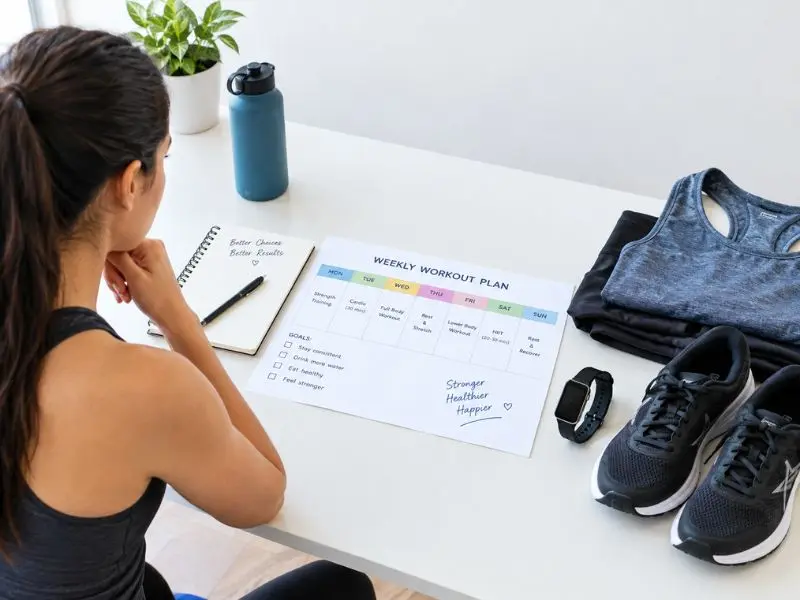
A simple weekly schedule can make it easier to know what to do each day instead of deciding at the last minute.
| Day | Workout Focus | Example Exercises | Approx. Time | Intensity |
| Monday | Full-body strength | Squats, push-ups, glute bridges, plank | 25–35 min | Moderate |
| Tuesday | Cardio + mobility | Brisk walking + mobility exercises | 25–40 min | Easy–Moderate |
| Wednesday | Lower body | Squats, lunges, step-ups, glute bridges | 25–35 min | Moderate |
| Thursday | Active recovery | Easy walking + gentle stretching | 15–30 min | Easy |
| Friday | Upper body + core | Push-ups, rows, shoulder work, plank | 25–35 min | Moderate |
| Saturday | Cardio + full body | Walking, cycling, bodyweight circuit | 30–45 min | Moderate |
| Sunday | Recovery | Easy movement, stretching, or rest | 10–25 min | Easy |
This schedule is only a starting point. New exercisers may benefit from shorter workouts and more rest days. Someone with more experience may gradually increase workout difficulty.
You do not need to make every workout perfect. The goal is to create a routine that can fit into your normal week.
30-Minute Everyday Fitness Workout for Beginners
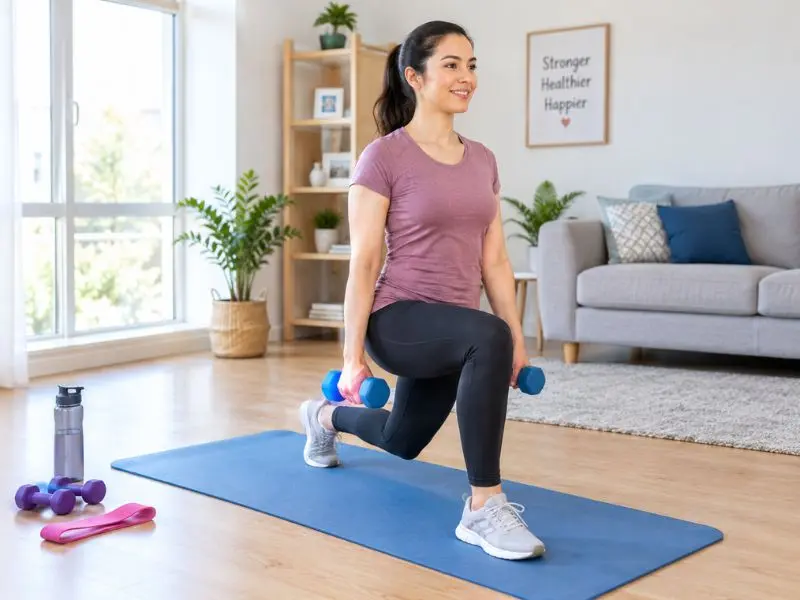
A well-structured 30-minute workout can support a consistent daily exercise routine.
5-Minute Warm-Up
Start with easy movements such as:
- Marching in place
- Arm circles
- Gentle bodyweight squats
- Shoulder rolls
- Easy walking
The warm-up should gradually prepare you for the movements you plan to perform.
15-Minute Main Workout
Try these exercises at a pace that feels comfortable:
- 10–12 bodyweight squats
- 8–10 incline push-ups
- 10 glute bridges
- 8–10 reverse lunges per side
- 20–30 seconds of plank
- 8–10 bird dogs per side
Move through the exercises in a circuit, taking breaks when needed. Beginners can perform fewer repetitions or take longer breaks.
5-Minute Cardio
Finish with an easy-to-moderate activity such as brisk walking, marching, cycling, or step-ups.
5-Minute Cool-Down
Slow down gradually and perform gentle stretches for the muscles you used during the workout.
This type of session can be modified easily. If 30 minutes feels too demanding, start with 10 or 15 minutes and gradually build your routine.
Best Exercises for an Everyday Fitness Routine
Effective exercises do not have to be complicated. A good everyday workout routine should include movements that match your ability and goals.
Squats
Squats work several muscles in the lower body and can help improve everyday movement. Beginners can use a chair behind them as a target for controlled squats.
Lunges
Lunges work your legs while improving balance and coordination. If standard lunges feel difficult, hold onto a stable surface or use a smaller range of motion.
Push-Ups

Push-ups strengthen your chest, shoulders, arms, and core. Beginners can start with wall push-ups or incline push-ups.
Glute Bridges
Glute bridges focus on the muscles around the hips and buttocks. They are simple to perform at home and require no equipment.
Planks
Planks challenge the core and can be adjusted by changing the duration. Beginners can start with short holds rather than trying to maintain a long plank.
Bird Dogs
Bird dogs combine controlled movement with balance and core stability. Move slowly and avoid rushing through each repetition.
Walking
Walking is one of the easiest ways to add regular movement to your day. You can increase your pace or duration gradually as your fitness improves.
Everyday Fitness Workout Plan at Home

You do not need a large home gym to follow an effective daily fitness routine. Many exercises can be performed using your body weight and a small amount of floor space.
A home workout can include squats, lunges, push-ups, glute bridges, planks, bird dogs, and mobility exercises. Walking outside can provide an easy way to add cardio.
If you have additional equipment, resistance bands, dumbbells, a stationary bike, or a step platform can provide more exercise options. However, equipment is not required to begin.
Before exercising at home, make sure you have enough clear space to move safely. Keep floors free of objects that could cause you to trip, and choose stable surfaces for exercises that require support.
The biggest advantage of a home workout routine is convenience. When travel time and gym access are removed, it may be easier to fit exercise into a busy day.
How Long Should You Exercise Every Day?
There is no single workout duration that is perfect for everyone. The appropriate amount depends on your current fitness level, goals, schedule, and the type of activity you are performing.
A beginner might start with 10–15 minutes of movement. Another person may prefer a 30-minute daily workout, while an experienced exerciser may comfortably complete longer sessions.
Instead of focusing only on the clock, pay attention to how your body responds. A short workout that you perform consistently can be more useful for your lifestyle than an ambitious routine that you abandon after a week.
You can also divide activity throughout the day. For example, a short morning walk and a brief strength session later can be easier to manage than one long workout.
How to Make an Everyday Workout Routine Sustainable

Consistency is one of the biggest challenges in fitness. A good plan should fit your life rather than forcing your life around exercise.
Start with a realistic routine. If you currently do very little exercise, jumping directly into six intense workouts each week can make the process unnecessarily difficult.
Schedule exercise around activities you already perform. For example, you could walk after lunch, complete mobility exercises after work, or perform a short strength workout before dinner.
Choose exercises you enjoy. If you dislike running, you do not have to build your entire cardio routine around running. Walking, cycling, dancing, swimming, or other activities may be better choices.
Track simple progress. You could record workout duration, repetitions, walking distance, or how an exercise feels. Seeing gradual improvement can help maintain motivation.
Another useful strategy is to have a minimum workout option. On busy days, your goal might simply be 10 minutes of movement. This prevents an unusually busy day from turning into a completely inactive day.
Most importantly, do not expect perfection. Missing one workout does not mean your entire routine has failed. Return to your normal schedule when you can.
Common Mistakes to Avoid
One common mistake is trying to exercise intensely every day. Hard training without enough recovery can make a routine difficult to maintain.
Another mistake is doing only one type of exercise. For example, someone may walk every day but never include strength training, while another person may lift weights but ignore mobility and cardio.
Increasing workout difficulty too quickly can also create problems. Your body needs time to adapt to new movements and training demands.
Skipping warm-ups and ignoring technique are other common mistakes. Even simple exercises should be performed with controlled movement.
Finally, avoid judging progress only by body weight. Fitness improvements can also include better endurance, greater strength, improved movement, increased confidence, and better ability to perform everyday activities.
How to Progress Your Everyday Fitness Workout Plan
Once your routine starts feeling comfortable, you can gradually increase the challenge.
One option is to add a few repetitions. For example, if you can comfortably perform 10 squats, you might eventually progress toward 12 or 15.
You can also increase resistance by using a suitable pair of dumbbells or resistance bands. Another option is to make the movement more controlled rather than simply doing more repetitions.
For cardio, you might gradually increase walking time or pace. For exercises such as planks, you can slowly increase the duration if you can maintain good form.
Avoid making several major changes at once. Increasing workout volume, intensity, and duration simultaneously can make the routine unnecessarily difficult.
A simple rule is to progress gradually while keeping technique and recovery a priority.
Safety and Recovery Tips

A safe everyday fitness workout plan should allow you to adjust your routine when necessary.
Pay attention to your technique and avoid movements that cause sharp or concerning pain. Normal muscle fatigue can happen during exercise, but persistent or unusual pain should not simply be ignored.
Stay hydrated and give your body enough time to recover. Sleep is also an important part of maintaining an active lifestyle.
If you have an existing health condition, an injury, or concerns about starting a new exercise program, consider speaking with an appropriate healthcare professional before making major changes to your activity level.
Remember that recovery does not mean you are falling behind. Rest and lighter movement can be useful parts of a sustainable fitness routine.
Everyday Fitness Workout Plan: Which Type Should You Choose?
| Workout Type | Main Benefit | Beginner Friendly? | Equipment | Typical Duration |
| Walking/Cardio | Builds endurance and daily activity | Yes | Usually none | 15–45 min |
| Strength Training | Builds muscular strength | Yes, with modifications | Optional | 20–40 min |
| Bodyweight Workout | Convenient full-body training | Yes | None | 15–30 min |
| Mobility/Flexibility | Supports comfortable movement | Yes | Usually none | 10–20 min |
| Active Recovery | Keeps you moving with lower intensity | Yes | Usually none | 10–30 min |
There is no need to choose only one category. Combining different types of movement can create a more balanced everyday fitness routine.
Frequently Asked Questions
Can I follow an everyday fitness workout plan as a beginner?
Yes, beginners can start with short, manageable sessions and gradually increase exercise time and difficulty.
Is it okay to exercise every day?
Yes, but daily exercise should not mean intense training every day; lighter activity and recovery days can be part of the routine.
How long should an everyday workout last?
A workout can be as short as 10–15 minutes for beginners, while 20–45 minutes may suit people with more experience and time.
Can I do an everyday fitness workout plan at home?
Yes, many effective workouts can be completed at home using bodyweight exercises and little or no equipment.
Should I rest between workouts?
Yes, recovery is important, and lighter days or rest days can help your body adapt to more demanding workouts.
Conclusion
An effective everyday fitness workout plan does not need to be complicated or exhausting. A balanced routine can combine strength training, cardio, mobility, walking, and recovery while allowing you to gradually improve your fitness.
Start with a routine that feels realistic for your current level and schedule. Focus on consistency rather than perfection, increase the challenge slowly, and give your body enough time to recover as you build a stronger and more sustainable fitness routine.
