

Resistance training is one of the most effective ways to build strength, improve fitness, and support long-term health. It involves working your muscles against resistance, such as dumbbells, resistance bands, machines, or your own body weight.
You do not need an expensive gym membership or years of exercise experience to get started. Simple movements at home can help beginners develop strength and confidence.
Regular strength workouts can support muscle growth, bone health, balance, and everyday movement. They can also complement walking, cycling, and other forms of physical activity.
This guide explains how resistance training works, its main benefits, the best beginner exercises, and how to create a practical workout routine that fits your lifestyle.
What Is Resistance Training?

Resistance training is a type of physical activity that makes your muscles work against an external force. This force creates a challenge that encourages your muscles to become stronger over time.
Common forms of resistance include:
- Free weights: Dumbbells, barbells, and kettlebells.
- Resistance bands: Stretchable bands that provide tension during movement.
- Weight machines: Equipment designed to guide specific exercises.
- Bodyweight exercises: Movements such as squats, push-ups, and lunges.
Resistance training is also called strength training or weight training, although these terms can describe slightly different exercise methods.
For beginners, the main goal is to learn proper movement patterns, build consistency, and gradually increase the challenge as strength improves.
How Does Resistance Training Work?
When you perform a resistance exercise, your muscles produce force to move or control a load. This places stress on the muscles and signals your body to adapt.
With consistent training and enough recovery, your muscles can become stronger and better able to handle similar physical demands.
Three important principles help explain how this process works.
Progressive Overload

Progressive overload means gradually increasing the challenge of your workouts as your fitness improves. You can do this by adding a small amount of weight, performing more repetitions, or improving your exercise technique.
For example, if you can comfortably perform 10 squats with good form, you might gradually work toward 12 repetitions before making the exercise more challenging.
Consistency
Regular workouts give your body repeated opportunities to adapt. A manageable routine that you follow consistently is usually more useful than an intense workout plan that you abandon after a few weeks.
Recovery
Muscles need time to recover between challenging workouts. Sleep, balanced nutrition, hydration, and rest days all support recovery and help you maintain a sustainable training routine.
Benefits of Resistance Training

Resistance training offers several benefits beyond building visible muscle. It can support physical function, improve strength, and help you maintain an active lifestyle. Pairing exercise with a balanced diet can also help you build healthier habits.
1. Builds Muscle Strength and Size
Strength exercises challenge your muscles and help them adapt to physical demands. Over time, consistent training can improve your ability to lift, carry, push, and pull objects.
Muscle growth, also called hypertrophy, can occur when training provides an appropriate challenge and is supported by sufficient nutrition and recovery.
Beginners can start with basic strength training exercises such as squats, rows, and push-ups before progressing to more advanced movements.
2. Supports Bone Health
Bones respond to physical stress by adapting to the forces placed on them. Weight-bearing and resistance exercises can help support bone strength and overall skeletal health.
This can be especially important as people age, when maintaining bone strength and physical function becomes increasingly valuable.
People with osteoporosis or other bone-related conditions should seek professional guidance before starting a new exercise program.
3. Improves Balance and Everyday Mobility
Strong muscles help you perform daily activities such as climbing stairs, getting up from a chair, and carrying groceries.
Exercises that strengthen the legs, hips, and core can also support balance and coordination. For older adults, appropriately designed strength training may help maintain independence and physical function.
4. Supports Weight Management
Muscle tissue uses energy, and resistance training can contribute to your overall daily energy expenditure. Combined with a balanced diet and regular physical activity, it can support weight management.
Resistance training may also help preserve muscle while someone loses weight. This is important because weight loss does not need to come entirely from muscle and fat; maintaining muscle is a valuable part of a healthy approach.
5. Promotes Healthy Aging
Maintaining strength becomes increasingly important with age. Resistance exercises can help people preserve muscle function, mobility, and the ability to complete everyday tasks.
A suitable routine can be adapted to different fitness levels, making strength training useful throughout adulthood.
Types of Resistance Training
Different training methods offer different benefits. The best choice depends on your goals, available equipment, experience, and personal preferences.
Free Weights
Free weights include dumbbells, barbells, and kettlebells. They allow you to move through different directions and perform exercises that target several muscle groups.
Examples include dumbbell rows, shoulder presses, and goblet squats.
Free weights are versatile, but beginners should learn proper technique and choose manageable loads before increasing weight.
Resistance Bands
Resistance bands are lightweight, portable, and useful for home workouts. They provide tension as you stretch them, allowing you to perform exercises such as band rows, chest presses, and lateral walks.
They are a practical option for people who have limited space or want to exercise while traveling.

Weight Machines
Weight machines guide movement along a set path and often make it easier to adjust resistance. They can be useful for beginners learning how to target specific muscle groups.
Examples include leg presses, chest presses, and seated rows.
However, machine settings should be adjusted to your body, and controlled movement remains important.
Bodyweight Exercises
Bodyweight exercises use your own weight as resistance. They require little or no equipment and can be performed in many settings.
Examples include squats, wall push-ups, lunges, and planks.
As these exercises become easier, you can increase repetitions, slow down the movement, or progress to a more challenging variation.
Best Resistance Training Exercises for Beginners
A beginner workout should include movements that target the major muscle groups. Start with a small number of exercises and focus on controlled, comfortable movement.
<|exercise|>
1. Bodyweight Squats

Squats strengthen the quadriceps, glutes, and other muscles involved in lower-body movement.
- Stand with your feet about shoulder-width apart.
- Bend your knees and hips as if sitting in a chair.
- Keep your chest lifted and your feet firmly on the floor.
- Push through your feet to return to standing.
Start with 2 sets of 8–12 repetitions.
2. Push-Ups
Push-ups work the chest, shoulders, triceps, and core muscles.
- Place your hands slightly wider than shoulder-width apart.
- Keep your body in a straight line.
- Lower your chest toward the floor with control.
- Push back to the starting position.
If regular push-ups are too difficult, begin with wall push-ups or incline push-ups.
3. Dumbbell Rows
Rows strengthen the upper back, shoulders, and arms.
- Hold a dumbbell in each hand or use one dumbbell at a time.
- Hinge forward slightly at the hips while keeping your back neutral.
- Pull the weight toward your torso.
- Lower it slowly without swinging.
Start with a light weight and perform 2 sets of 8–12 repetitions per side.
4. Lunges
Lunges target the legs and glutes while challenging balance and coordination.
- Stand upright with your feet hip-width apart.
- Step forward and bend both knees comfortably.
- Keep your torso upright.
- Push through your front foot to return to standing.
Begin with 2 sets of 6–10 repetitions per leg. Use a wall or stable support if needed.
5. Dumbbell Shoulder Press
This exercise strengthens the shoulders and triceps.
- Hold light dumbbells at shoulder height.
- Keep your feet stable and your core engaged.
- Press the weights overhead without arching your back.
- Lower them slowly to the starting position.
Start with 2 sets of 8–12 repetitions.
Resistance Training at Home vs. the Gym

Both home workouts and gym sessions can help you build strength. Your choice should depend on convenience, budget, equipment, and comfort. Setting clear fitness goals can help you choose the workout routine that best fits your needs.
| Feature | Home Workouts | Gym Workouts |
| Equipment | Bodyweight, bands, or basic weights | Machines, free weights, and varied equipment |
| Cost | Usually lower | Membership fees may apply |
| Convenience | No commute; flexible schedule | Requires travel and gym access |
| Exercise variety | Depends on available equipment | Usually offers more options |
| Beginner support | Online guidance or personal planning | Trainers may provide instruction |
| Best for | Flexible, budget-friendly training | Access to equipment and structured support |
You can begin at home with bodyweight exercises and gradually add resistance bands or dumbbells. A gym may be helpful if you want access to more equipment or professional coaching.
Beginner Resistance Training Workout Plan
A simple full-body routine can help beginners build consistency without overwhelming their schedules.
Weekly Schedule
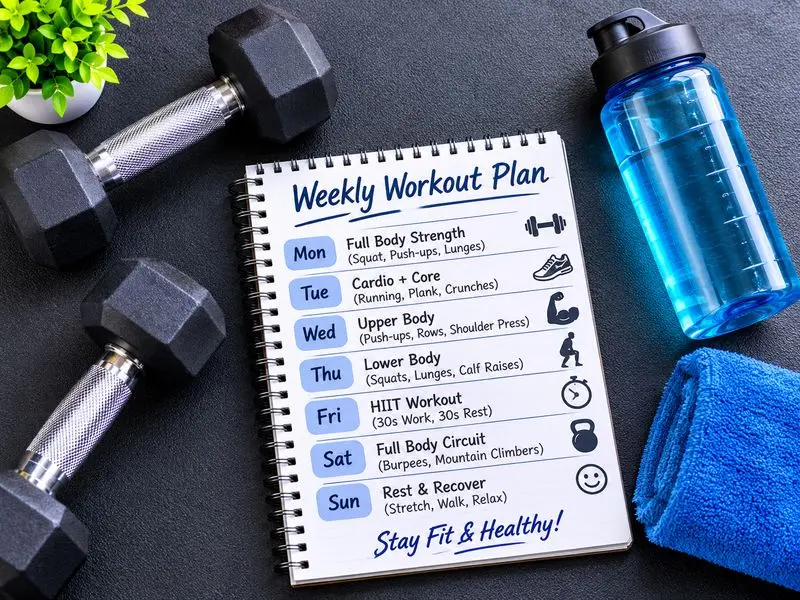
Start with two nonconsecutive strength-training days each week. For example:
| Day | Activity |
| Monday | Full-body resistance workout |
| Tuesday | Walking or light activity |
| Wednesday | Rest or gentle movement |
| Thursday | Full-body resistance workout |
| Friday | Walking or other cardio |
| Saturday | Optional light activity |
| Sunday | Rest |
As your fitness improves, you may choose to train three days per week if you can recover comfortably.
Sample Full-Body Workout
| Exercise | Sets | Repetitions |
| Bodyweight squats | 2 | 8–12 |
| Wall or incline push-ups | 2 | 8–12 |
| Dumbbell rows | 2 | 8–12 per side |
| Lunges | 2 | 6–10 per leg |
| Dumbbell shoulder press | 2 | 8–12 |
| Plank | 2 | 15–30 seconds |
Rest for about 60–120 seconds between sets, or longer if you need to regain comfortable breathing and maintain good form.
How to Progress
When you can complete all repetitions with good technique and the exercises feel manageable, increase the challenge gradually.
You might add one or two repetitions, use slightly heavier weights, or choose a more challenging exercise variation.
Avoid increasing weight, repetitions, and workout frequency all at once. Gradual progress makes it easier to maintain proper technique and recover between sessions.
Common Resistance Training Mistakes
Avoiding common mistakes can make your workouts safer and more effective.
Using Too Much Weight
Heavy weights are not necessary when you are learning. Choose a load that allows you to complete each repetition with control and proper technique.
Skipping Warm-Ups
Begin with 5–10 minutes of light activity, such as brisk walking or gentle cycling, followed by movements that prepare the muscles you plan to train.
Ignoring Proper Form
Poor technique can reduce exercise effectiveness and increase the risk of injury. Use a manageable resistance and consider asking a qualified trainer to review your form.
Training Without Recovery
Working the same muscles intensely every day may interfere with recovery. Allow time between challenging sessions for the same muscle groups.
Following an Unsuitable Routine
A workout should match your current ability, goals, and available time. Start with a realistic plan rather than copying an advanced athlete’s routine.
Safety Tips for Beginners
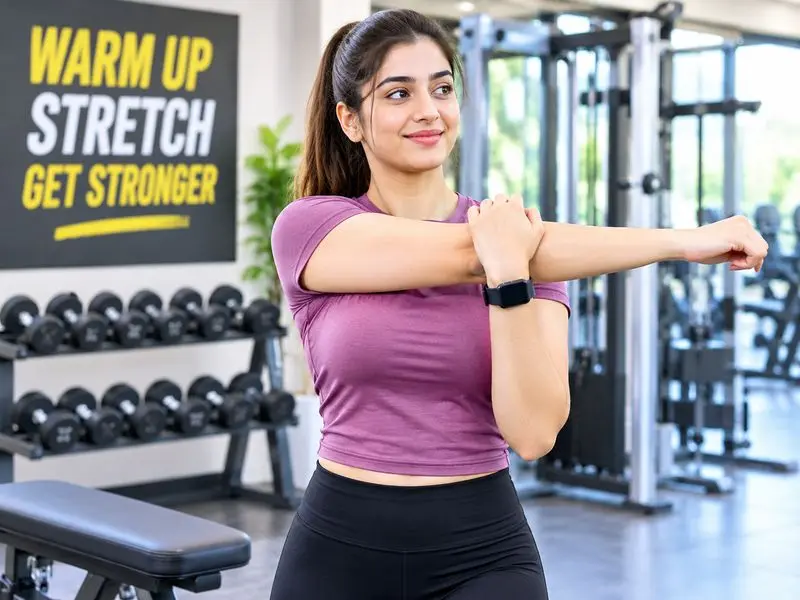
Keep these practical guidelines in mind when starting resistance training:
- Warm up before each workout.
- Learn the correct technique before increasing resistance.
- Move slowly and avoid using momentum to lift weights.
- Breathe continuously instead of holding your breath.
- Stop exercising if you experience sharp pain, dizziness, or unusual shortness of breath.
- Keep equipment in good condition and use a stable workout area.
- Allow adequate rest and recovery between challenging sessions.
If you have a chronic health condition, an existing injury, or concerns about starting exercise, consult a qualified healthcare professional for personalized guidance.
Frequently Asked Questions
1. What is resistance training?
Resistance training is exercise that strengthens muscles by making them work against weights, bands, machines, or bodyweight.
2. How many days a week should beginners do resistance training?
Beginners can start with two nonconsecutive days per week and gradually increase their frequency as they adapt.
3. Can resistance training help with weight loss?
Yes, it can support weight management when combined with balanced nutrition and regular physical activity.
4. Can I do resistance training at home without equipment?
Yes, exercises such as squats, lunges, wall push-ups, and planks use your bodyweight as resistance.
5. Is resistance training safe for beginners?
It is generally suitable for beginners when they use proper technique, manageable resistance, and gradual progression.
Conclusion
Resistance training can help you build strength, support bone health, improve everyday movement, and maintain an active lifestyle. With different exercise options available, you can create a routine that fits your fitness level, schedule, and budget.
Start with simple movements, focus on proper form, and increase the challenge gradually. Consistent effort and adequate recovery can help you make steady progress toward your fitness goals.
