

Belly fat is a common concern for people who want to improve their fitness, feel stronger, and maintain a healthy lifestyle. Finding the right exercises can feel confusing, especially when many workout programs promise fast results. You can start improving your fitness at home with simple, beginner-friendly exercises.
Belly Fat-Burning Workouts can help you become more active, burn calories, and build strength when combined with balanced nutrition and consistent daily habits. However, no single exercise can specifically remove fat from your stomach. Overall fat loss depends on several factors, including activity levels, eating habits, sleep, genetics, and individual health.
In this guide, you will discover beginner-friendly exercises, a simple 10-minute workout, and practical ways to build a routine without expensive gym equipment. You will also learn how cardio, strength training, and healthy lifestyle habits can support your long-term fitness goals.
What Are the Best Belly Fat-Burning Workouts?
The most effective workout is one you can do safely and stick to regularly. Walking, cycling, low-impact cardio, and full-body strength exercises are useful options for people who want to improve fitness and manage body weight.
Exercise increases energy expenditure and helps improve cardiovascular health. Strength training also helps build or maintain muscle, which is important when working toward better body composition.
Although crunches and planks strengthen the abdominal muscles, they do not selectively burn the fat covering those muscles. Belly fat decreases as part of overall body-fat reduction, which usually requires a sustainable combination of physical activity and appropriate nutrition.
Beginners should prioritize consistency instead of pushing themselves into difficult workouts. Starting with simple Belly Fat-Burning Workouts can help build confidence and make it easier to maintain a long-term fitness routine.
Best Exercises to Help Burn Calories and Build Strength
You do not need advanced equipment or complicated movements to start exercising. The following exercises work well in many beginner routines and can be adjusted to match your current fitness level.
1. Brisk Walking

Brisk walking is an accessible way to increase daily movement and improve cardiovascular fitness. You can walk outdoors, use a treadmill, or march in place when the weather makes outdoor exercise difficult.
Start by walking for 10–15 minutes at a steady, comfortable speed, then gradually extend the duration or walk faster as your stamina improves.
Beginner tip: Wear comfortable shoes, maintain a natural stride, and choose a pace that allows you to speak in short sentences without feeling excessively breathless.
2. Bodyweight Squats

Squats strengthen the thighs, hips, and gluteal muscles. They also help develop lower-body strength for everyday activities such as climbing stairs and standing from a chair.
Stand with your feet approximately shoulder-width apart. Push your hips backward, bend your knees, and lower yourself as far as feels comfortable while keeping your feet planted. Return to standing without rushing, keeping your Belly Fat-Burning Workouts controlled and comfortable.
Aim for 8–12 repetitions, taking breaks whenever necessary.
Beginner tip: If you need more support, place a sturdy chair behind you and use it as a guide while squatting. Avoid forcing your knees or hips into an uncomfortable position.
3. Modified Push-Ups
Push-ups train the chest, shoulders, triceps, and core. Modified versions allow beginners to develop strength before attempting traditional floor push-ups.
Place your hands against a wall or use a stable elevated surface. Keep your body aligned, bend your elbows, and move your chest toward the surface before pushing back.
Try 8–10 controlled repetitions.
Beginner tip: A wall push-up is a good starting point if floor exercises feel too difficult. Return to standing without rushing, keeping your Belly Fat-Burning Workouts controlled and comfortable.
4. Marching in Place

Marching in place is a simple, low-impact exercise that can raise your heart rate without requiring much room. It is useful for warm-ups, short movement breaks, and beginner cardio sessions.
Stand upright, raise one knee at a time, and let your arms move naturally with each step. Begin slowly, then increase your pace if comfortable.
Try 30–60 seconds at a time and repeat after a short rest.
Beginner tip: Hold a sturdy support if your balance is limited, and avoid lifting your knees higher than feels comfortable.
5. Mountain Climbers
Mountain climbers combine a plank position with alternating knee movements. They challenge the core, shoulders, and cardiovascular system, particularly when performed quickly.
Begin in a high plank with your hands directly under your shoulders. Slowly draw one knee toward your chest, return it, and then switch to the other side as part of your Belly Fat-Burning Workouts.
Beginners can slow down the exercise or use a sturdy raised surface to make the movement more manageable.
Beginner tip: Maintain a comfortable back position and stop if you experience pain in your wrists, shoulders, or lower back.
6. Planks
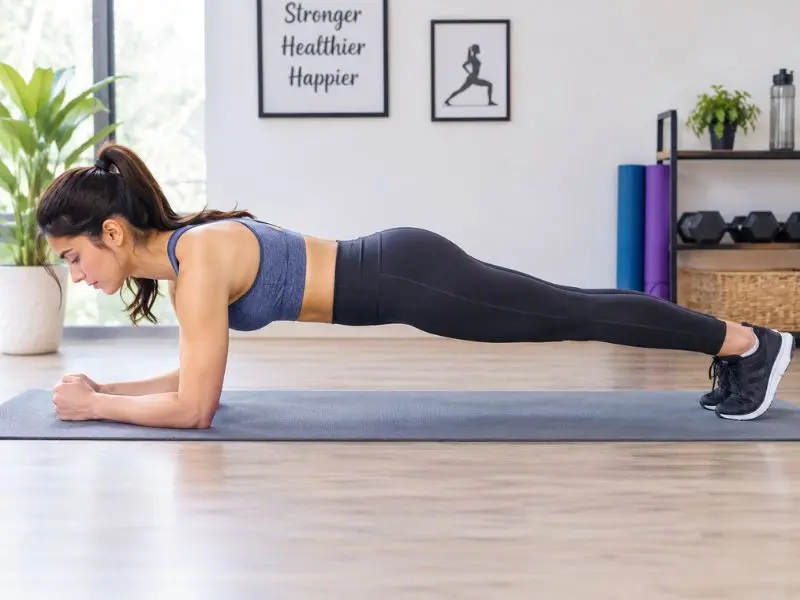
Planks strengthen the muscles that help stabilize your trunk. A stronger core can improve control during exercise and everyday movement.
Rest your forearms on the floor and stretch your legs straight behind you. Keep your body aligned and breathe normally rather than holding your breath.
Begin with 10–20 seconds, then rest. Repeat only as many times as you can maintain good form.
Beginner tip: Try a knee plank if a full plank is too difficult. Planks support core strength but do not directly remove abdominal fat.
7. Step-Ups
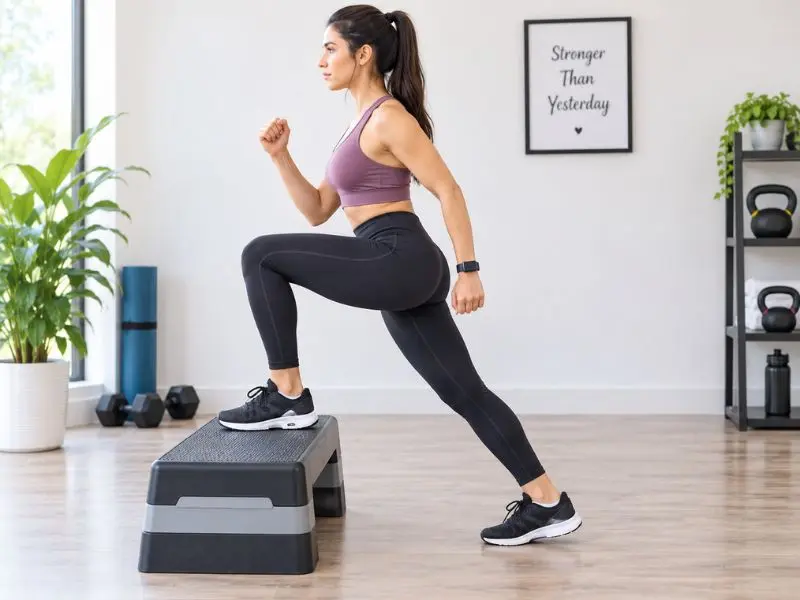
Step-ups strengthen the legs and can raise your heart rate. They also help develop functional strength for everyday activities.
Choose a low, sturdy step that is specifically designed for exercise. Step up carefully, bring the other foot onto the platform, and step down under control. Alternate your leading leg.
Start with 6–10 repetitions per side.
Beginner tip: Skip this exercise if you have balance difficulties, knee pain, or no suitable stable platform. If needed, marching in place is a simple alternative for your Belly Fat-Burning Workouts.
Effective Belly Fat-Burning Exercises for Home Workouts
A home workout can be effective without a treadmill, weights, or a gym membership. The key is choosing movements that match your fitness level and gradually increasing the challenge.
Consider combining three types of activity:
- Cardio: Walking, marching in place, or dancing helps improve cardiovascular fitness and increases energy expenditure.
- Strength training: Squats, wall push-ups, and other resistance exercises help develop and maintain muscle.
- Core training: Planks and modified abdominal exercises strengthen the muscles that support your trunk.
You can perform these activities in a small room with enough clear space to move safely. Wear suitable footwear when needed, keep water nearby, and avoid slippery floors.
If you are new to exercise, start with 10–15 minutes rather than attempting a demanding 45-minute session immediately. Short sessions can help you develop consistency before increasing your workout duration.
You can also add movement throughout the day. Walk during breaks, take the stairs when appropriate, or stand up and stretch after long periods of sitting. These small habits can contribute to your overall activity level.
For people managing busy schedules or age-related changes in body composition, consistency is particularly useful. You may also find our guide to menopause weight gain helpful for understanding other factors that can influence body weight.
A Simple 10-Minute Belly Fat Workout for Beginners

This short routine combines low-impact cardio, lower-body strength, upper-body strength, and core work. It is designed as a starting point, not a guarantee of a particular amount of fat loss.
Warm up with easy marching and gentle shoulder movements for a few minutes before beginning.
| Exercise | Duration | Rest or modification |
| Marching in place | 2 minutes | Slow down whenever needed |
| Bodyweight squats | 1 minute | Use a chair for support |
| Wall push-ups | 1 minute | Stand closer to the wall |
| Step-ups or marching | 2 minutes | Choose the easier movement |
| Modified mountain climbers | 1 minute | Use an elevated surface |
| Plank or knee plank | 30 seconds | Stop when form deteriorates |
| Easy walking in place | 1.5 minutes | Keep the pace comfortable |
| Gentle cooldown | 1 minute | Breathe slowly and relax |
Total: 10 minutes.
Adjust the timing to your abilities. The goal is not to finish every exercise at maximum speed but to move safely and maintain control.
If you need longer breaks, take them. You can also split the routine into shorter sessions throughout the day. As the exercises become easier, gradually increase the time or repetitions in your Belly Fat-Burning Workouts.
Beginners do not need to complete this routine every day. Start with a frequency that allows you to recover, then combine it with walking and other enjoyable activities.
Comparison of Popular Workouts for Fat Loss
Different exercises offer different benefits. The best option depends on your fitness level, preferences, available equipment, and any physical limitations.
| Workout type | Main benefit | Equipment needed | Beginner suitability | Suggested starting duration |
| Brisk walking | Cardiovascular fitness and daily movement | Comfortable shoes | Excellent | 10–15 minutes |
| Low-impact cardio | Improves endurance with less jumping | Usually none | Excellent | 5–10 minutes |
| Bodyweight strength training | Builds or maintains muscle | None or a sturdy chair | Good with modifications | 10 minutes |
| Cycling | Cardiovascular exercise and leg endurance | Bicycle or stationary bike | Good when comfortable | 10–15 minutes |
| Core exercises | Improves abdominal strength and stability | Exercise mat optional | Good with modifications | 5–10 minutes |
These durations are starting suggestions, not fixed prescriptions. Calorie expenditure varies according to body size, exercise intensity, duration, and individual fitness.
A balanced routine often includes both aerobic activity and strength training. Core exercises can be included as part of that plan, but they should not replace full-body movement.
Choose an activity you enjoy. Walking may be more sustainable for one person, while another may prefer cycling or dancing. Enjoyment and convenience can make it easier to maintain your Belly Fat-Burning Workouts as part of your routine over time.
How Often Should You Do Belly Fat-Burning Workouts?
The right frequency depends on your current activity level, recovery, health, and schedule. If you are just starting, two or three short workouts each week may be more manageable than exercising intensely every day.
The U.S. Department of Health and Human Services recommends that adults generally work toward at least 150 minutes of moderate-intensity aerobic activity per week, along with muscle-strengthening activities on at least two days per week. People who are inactive can begin with smaller amounts and build gradually.
A practical weekly routine might look like this:
- Monday: Short home workout with squats and modified push-ups.
- Tuesday: Brisk walking at a comfortable pace.
- Wednesday: Gentle activity or recovery.
- Thursday: Home workout with cardio and core exercises.
- Friday: Walking, cycling, or another preferred activity.
- Saturday: Longer enjoyable movement if comfortable.
- Sunday: Rest or gentle stretching.
This is only an example. You can rearrange the days according to your schedule and energy levels.
Pay attention to how your body feels. Muscle fatigue can occur when you begin exercising, but sharp pain, dizziness, chest pain, or unusual shortness of breath should not be ignored. Stop exercising and seek appropriate medical care when symptoms warrant it.
As your endurance improves, increase workout time or difficulty gradually rather than making several major changes at once.
Nutrition and Daily Habits That Support Fat Loss
Exercise is one part of managing body fat. Food choices, sleep, stress, daily movement, and other individual factors also influence progress.
Eat Balanced, Satisfying Meals
Include a variety of vegetables, fruit, whole grains, protein-rich foods, and healthy fats. Balanced meals can help you meet your nutritional needs and make your eating routine easier to maintain.
Protein sources include eggs, beans, lentils, fish, poultry, tofu, yogurt, and other suitable foods. Protein helps support muscle maintenance and recovery, particularly when combined with strength training.
Fiber-rich foods such as oats, vegetables, beans, and fruit can support digestive health and help meals feel more satisfying.
Avoid relying on restrictive diets or eliminating entire food groups without a sound reason. A sustainable eating pattern, combined with the right exercise routine, can support your fitness goals. Learning about the benefits of going to the gym for women can also help you understand how regular exercise supports overall well-being.
Stay Hydrated
Drink water regularly throughout the day, especially when exercising or spending time in hot weather. Your fluid needs can vary with activity, climate, and individual health.
Water supports normal body functions, but drinking excessive amounts will not directly burn belly fat.
Get Enough Sleep
Consistent sleep supports recovery, energy, and healthy daily routines. Poor sleep can make exercise feel harder and may affect appetite and food choices.
Establish a regular bedtime when possible and create a comfortable sleeping environment. Most adults should aim for at least seven hours of sleep per night, although individual needs vary.
Focus on Sustainable Progress
Avoid judging success only by the number on a scale. Improvements in stamina, strength, walking pace, and exercise consistency can also indicate progress.
If weight management is your goal, changes in body weight and waist measurements over time may offer additional information. Measure consistently rather than reacting to daily fluctuations.
Remember that genetics, hormones, age, medications, and other health factors can influence where your body stores fat.Progress with Belly Fat-Burning Workouts can look different for each person, depending on their fitness level, lifestyle, and consistency.
Common Workout Mistakes to Avoid
Expecting Spot Reduction
One of the most common misconceptions is that abdominal exercises directly remove belly fat. Crunches and planks strengthen the core, but overall fat reduction cannot be directed to one specific body area through exercise selection alone.
Doing Too Much Too Soon
Starting with intense daily workouts can lead to excessive soreness, poor recovery, or loss of motivation. Increase exercise duration and intensity gradually.
Ignoring Exercise Technique
Rushing through squats, push-ups, or planks can reduce the quality of your movement. Use controlled repetitions and choose easier variations whenever necessary during your Belly Fat-Burning Workouts.
Relying Only on Exercise
Physical activity is important, but overall weight management is influenced by eating habits, sleep, daily movement, and other factors. A balanced approach is more useful than depending on one workout.
Comparing Your Progress With Others
People respond differently to exercise. Another person’s results do not determine what is realistic for your body or circumstances. Track your own habits and focus on gradual improvements.
Frequently Asked Questions
1. What is the best workout for belly fat?
A combination of aerobic activity, full-body strength training, and balanced nutrition can support overall fat loss, although no workout specifically targets belly fat.
2. Can I lose belly fat by exercising at home?
Yes, home workouts can support overall fat loss when combined with sustainable eating habits and regular physical activity.
3. How long should a beginner exercise each day?
A beginner can start with 10–15 minutes of manageable activity and gradually increase the duration according to fitness and recovery.
4. Do planks burn belly fat?
Planks strengthen the core muscles but do not directly burn fat from the stomach area.
5. How long does it take to see results from regular exercise?
The time required to notice changes varies with consistency, nutrition, activity level, genetics, and individual health.
Conclusion
Belly Fat-Burning Workouts can be a useful part of a healthier lifestyle when they combine manageable cardio, full-body strength exercises, and consistent daily movement. Walking, squats, modified push-ups, and core exercises provide practical ways to start without investing in expensive equipment. Balanced nutrition, sufficient sleep, and recovery also support your long-term goals.
Start with exercises that feel comfortable and build your routine gradually. Focus on improving your strength, stamina, and consistency rather than expecting overnight changes. With realistic habits and patience, you can develop a fitness routine that fits your life and supports your overall well-being.