

Starting a fitness journey can feel confusing when you are unsure which exercises to try, how often to work out, or how much effort you should put in. Many beginners feel pressure to make big changes quickly, but building a healthier lifestyle does not require an extreme workout routine.
The good news is that Fitness Tips for Beginners can help you exercise without expensive gym memberships or equipment.Walking, simple bodyweight movements, and short home workouts can help you become more active while learning what works best for your body.
The key is to focus on consistency rather than perfection. Small steps, enough rest, balanced meals, and realistic goals can make exercise easier to maintain as your strength and confidence improve.
These Fitness Tips for Beginners will help you understand how to start exercising, choose beginner-friendly workouts, create a weekly schedule, and develop healthy habits. You will also learn which common mistakes to avoid so you can build a routine that fits your lifestyle.
Why Fitness Matters for Beginners

Regular physical activity supports overall health and helps you build a foundation for an active lifestyle. You do not need to be an athlete or exercise for hours every day to benefit from movement.
Exercise can help improve cardiovascular fitness, muscle strength, mobility, and endurance. It may also support better sleep, stress management, and everyday activities such as climbing stairs, carrying groceries, or walking longer distances.
For beginners, the most important goal is to find a manageable starting point. Someone who spends most of the day sitting may benefit from short walks and gentle movement before progressing to more challenging workouts.
Think about what you want to improve. Your goal might be to feel more energetic, become stronger, improve balance, or develop a consistent exercise habit. Having a clear reason for starting can make it easier to stay motivated.
Remember that fitness looks different for everyone. With Fitness Tips for Beginners, measure progress by your abilities, personal goals, and well-being, not by comparing yourself with others.
How to Set Realistic Fitness Goals

Before choosing a workout, decide what you want your fitness routine to achieve. Realistic goals give you direction without creating unnecessary pressure.
For example, instead of promising yourself that you will exercise every day immediately, begin with three manageable workout sessions per week. Once this feels comfortable, you can gradually increase your activity.
Use these practical strategies to set better goals:
- Make your goal specific: Decide whether you want to walk more, improve strength, or exercise consistently.
- Start small: Choose a duration and intensity that match your current fitness level.
- Track your progress: Record your workouts, walking time, repetitions, or how you feel after exercise.
- Allow flexibility: Adjust your schedule when work, school, family, or recovery needs change.
- Focus on habits: Celebrate completing your planned sessions instead of expecting immediate physical changes.
For instance, a beginner might start with a 10-minute walk after lunch three times a week. After a few weeks, they could increase the duration if the activity feels manageable.
Avoid setting goals based only on appearance or a specific number on the scale. Fitness Tips for Beginners can help you track progress in stamina, strength, mobility, and consistency.
How to Start Exercising as a Beginner
Starting with a simple plan makes exercise feel less intimidating. You do not need to learn every exercise at once or follow an advanced training program. Build your routine around activities you can perform comfortably and repeat each week.
1. Choose a Convenient Time

Choose a time that suits your Fitness Tips for Beginners routine. Some people prefer morning walks, while others enjoy exercising after work. The ideal time varies from person to person.
Choose a time when you can focus on your workout without rushing. If your schedule is unpredictable, shorter sessions spread throughout the week may be easier to maintain.
2. Begin With Short Sessions
Start with a duration that feels manageable. Start with a short walk or gentle exercise if you are inactive.
Increase your activity gradually as your fitness improves. If you experience unusual pain, dizziness, or excessive breathlessness, stop and assess what is happening rather than pushing through it.
3. Prepare a Simple Workout Space
You can follow Fitness Tips for Beginners at home with enough space, comfortable clothes, and suitable footwear. A stable chair or exercise mat may also be helpful for certain movements.
Keep your space free from obstacles to reduce the risk of tripping. Follow Fitness Tips for Beginners by choosing safe outdoor routes and checking the weather, visibility, and surroundings.
4. Learn the Basic Movements
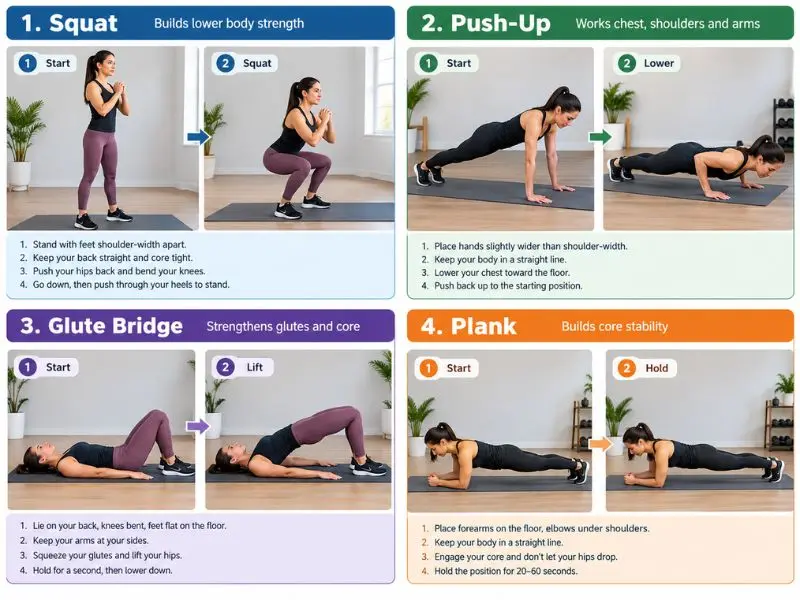
Begin with easy exercises like walking, chair squats, wall push-ups, and gentle stretches. Learn the correct technique before increasing repetitions or adding resistance.
If an exercise causes pain or feels too difficult, choose an easier variation. You can make progress without copying the workout of someone who has been training for years.
Essential Fitness Tips for Beginners
Following a few basic principles can make your workouts safer, more comfortable, and easier to maintain.
Start Slowly and Increase Activity Gradually
One common beginner mistake is doing too much during the first week. Long workouts and intense exercises may leave you excessively tired and make it harder to maintain a regular schedule.
Instead, begin with manageable sessions and increase your activity as your body adapts. You might add a few minutes to a walk, perform another comfortable repetition, or introduce a new exercise after mastering the basics.
You don’t need to improve after every workout. Some days will feel easier than others, and taking additional recovery time can be appropriate when you are tired or sore.
Choose Exercises You Enjoy
The best beginner workout is one you can perform consistently. If you dislike running, you can try walking, cycling, dancing, swimming, or another activity that suits your interests and abilities.
Enjoyment can make exercise feel less like a chore. Try different activities until you find a combination that fits your preferences, available time, and budget.
You can also vary your workouts throughout the week. For example, alternate walking with basic strength exercises to develop different aspects of fitness.
Learn Proper Exercise Form
Correct technique helps you control your movements and train the intended muscles. It is especially important when learning strength exercises or using gym equipment.
Start with a comfortable range of motion, move with control, and avoid rushing through repetitions. For safe Fitness Tips for Beginners, seek advice from a qualified fitness professional if you are unsure about an exercise.
Do not increase weights simply because other people are lifting heavier loads. Choose resistance that allows you to maintain good form throughout the movement.
Combine Cardio and Strength Training
Cardiovascular exercise, such as brisk walking or cycling, supports heart and lung fitness. Strength training helps build and maintain muscle strength, making everyday activities easier.
Beginners can combine both types of exercise without performing them in the same session. For example, you could walk on Monday, complete a short strength workout on Wednesday, and walk again on Friday.
The right balance depends on your current fitness level and goals. Begin with manageable amounts and build toward the physical activity recommendations that are appropriate for you.
Make Consistency Your Priority
A realistic routine that you follow regularly is generally more useful than an ambitious plan that quickly becomes overwhelming.
Choose specific days for exercise and prepare what you need beforehand. With Fitness Tips for Beginners, resume your routine after a missed session instead of giving up on your plan.
Remember that consistency does not mean exercising hard every day. Rest, lighter activity, and adjustments to your schedule can all be part of a sustainable approach.
A Simple Weekly Workout Plan for Beginners
A weekly exercise schedule gives you structure while leaving room for recovery. The following example is a starting point for generally healthy adults who can comfortably perform these activities. Adjust the duration and intensity to your abilities.
| Day | Activity | Suggested Duration |
| Monday | Comfortable or brisk walking | 10–20 minutes |
| Tuesday | Basic full-body strength exercises | 10–15 minutes |
| Wednesday | Walking or gentle cycling | 10–20 minutes |
| Thursday | Rest or gentle mobility exercises | 5–10 minutes |
| Friday | Beginner strength workout | 10–15 minutes |
| Saturday | Enjoyable low-impact cardio | 15–20 minutes |
| Sunday | Rest or easy walking | As comfortable |
Start with shorter sessions if necessary. These durations are illustrative, not a requirement or a complete exercise prescription. Gradually increase activity as your comfort and fitness improve.
For strength sessions, begin with a few controlled repetitions of exercises such as wall push-ups, chair squats, and standing calf raises. Rest between movements and stop when you can no longer maintain good technique.
If you are new to exercise, you do not have to complete the entire schedule immediately. Begin with two or three manageable sessions and build from there. People with medical conditions, significant limitations, or concerns about exercise should seek appropriate professional advice before following a new plan.
Beginner-Friendly Exercises You Can Try at Home
Home workouts are a practical option if you have limited time, prefer privacy, or cannot access a gym. Fitness Tips for Beginners include bodyweight exercises that require little or no special equipment.
Walking
Walking is a simple way to increase daily physical activity. Start at a comfortable pace and choose a distance that suits your current abilities.
As walking becomes easier, you can gradually extend the duration or include short periods of faster walking. Wear comfortable footwear and choose a safe route.
Chair Squats
Stand in front of a stable chair with your feet about shoulder-width apart. Slowly bend your knees and hips to lower yourself toward the seat, then stand up again with control.
Use the chair for guidance and support if needed. Only lower as far as you comfortably can, and stop if the movement causes pain.
Wall Push-Ups
Stand facing a wall with your hands placed against it at about chest height. Bend your elbows to bring your chest closer to the wall, then push gently back to the starting position.
Keep your body aligned and avoid rushing. Wall push-ups offer an easier starting variation than floor push-ups for many beginners.
Standing Calf Raises
Stand near a stable surface for balance. Slowly lift your heels off the floor, pause briefly, and lower them with control.
This movement works the calf muscles and can be performed without weights. Hold the support lightly if you need extra stability.
Gentle Mobility Exercises
Move your shoulders, ankles, and hips through comfortable ranges of motion. Controlled shoulder rolls, ankle circles, and gentle marching in place may help you prepare for activity.
Avoid forcing a joint into an uncomfortable position or bouncing aggressively during stretches. With Fitness Tips for Beginners, keep mobility exercises controlled and comfortable.
Comparison Table: Which Exercise Is Best for Beginners?
Different activities offer different benefits. Choose based on your preferences, current abilities, access to equipment, and fitness goals rather than assuming one exercise is best for everyone.
| Exercise Type | Main Benefit | Beginner Difficulty | Equipment Needed |
| Walking | Supports cardiovascular fitness and daily movement | Easy to adjust | Comfortable footwear |
| Bodyweight strength training | Develops muscle strength | Easy to moderate | Usually none |
| Cycling | Builds cardiovascular endurance | Easy to moderate | Bicycle or stationary bike |
| Low-impact cardio | Increases activity with less jumping | Usually easy to moderate | Often none |
| Flexibility and mobility exercises | Supports comfortable movement and flexibility | Usually easy | Optional exercise mat |
Walking is often a convenient first choice because you can adjust your pace and duration. Bodyweight exercises complement walking by helping you develop strength, while cycling can provide another cardiovascular option.
Low-impact cardio may suit people who prefer to avoid jumping, although not every low-impact activity is suitable for every joint or medical condition. Flexibility and mobility work can complement other forms of exercise but should not replace cardiovascular and strength activities entirely.
You can combine several activities throughout the week to create a balanced routine. Choose Fitness Tips for Beginners that feel manageable and enjoyable enough to follow regularly.
Nutrition and Hydration Tips for Beginners

Exercise is only one part of a healthy lifestyle. Eating balanced meals and drinking enough fluids can help you feel better during your workouts and support recovery.
Eat Balanced Meals
Include a variety of foods such as vegetables, fruits, whole grains, protein-rich foods, and healthy fats. Foods such as eggs, beans, yogurt, fish, chicken, lentils, nuts, and tofu can contribute protein to your diet.
Carbohydrates from foods such as oats, potatoes, rice, and whole grains provide energy for physical activity. You do not need to eliminate entire food groups or follow a restrictive diet to begin exercising.
Try to eat meals that leave you comfortably satisfied and provide the energy you need for daily activities. Your nutritional needs may differ depending on your age, activity level, preferences, and health.
Stay Hydrated
Drink water regularly throughout the day, and pay attention to thirst, particularly when exercising in hot weather. Longer workouts, heavy sweating, and high temperatures may increase your fluid needs.
You generally do not need a special sports drink for a short, easy workout. Water is often sufficient for everyday beginner exercise.
Avoid Extreme Diet Changes
Do not assume that eating as little as possible will improve your fitness results. Severe restrictions can make it harder to meet your nutritional needs and maintain an active routine.
Focus on sustainable eating habits alongside your workouts. If you have specific dietary needs or a medical condition affecting nutrition, a qualified healthcare professional or registered dietitian can provide personalized guidance.
The Importance of Warm-Ups, Rest, and Recovery
A good fitness routine includes preparation and recovery, not just the main workout.
Warm Up Before Exercising
Spend a few minutes gradually preparing for your activity. For example, walk slowly before increasing your pace, or march gently in place before a home workout.
A warm-up should be comfortable and related to the activity you plan to perform. With Fitness Tips for Beginners, keep warm-ups gentle before short workouts.
Give Your Body Time to Recover
Your body needs time to adapt to new physical demands. Alternate challenging sessions with lighter activity or rest, especially when beginning strength training.
Mild muscle soreness can occur after unfamiliar exercise, but sharp, severe, or persistent pain should not be ignored. Reduce the activity and seek appropriate medical advice when necessary.
Get Enough Sleep
Adequate sleep supports general health, energy, and recovery. Try to maintain a consistent sleep schedule and avoid making your exercise plan so demanding that it regularly interferes with rest.
Recovery is not a sign of laziness. It is an important part of building a routine that you can maintain over time.
Common Fitness Mistakes Beginners Should Avoid

Knowing what to avoid can make your first few weeks of exercise more manageable.
- Doing too much too soon: Begin with manageable sessions and increase the workload gradually.
- Skipping warm-ups: Prepare your body with gentle movements related to your planned activity.
- Ignoring exercise technique: Learn the basics before adding resistance or increasing difficulty.
- Comparing yourself with others: Focus on your own abilities and progress rather than another person’s routine.
- Expecting immediate results: Fitness improvements take time and vary from person to person.
- Neglecting recovery: Include rest and lighter days instead of training intensely every day.
- Following unsuitable workout plans: Adapt exercises to your abilities and seek professional guidance when necessary.
- Giving up after missing a session: Resume your routine when you can instead of treating one missed workout as failure.
Another common mistake is believing that exercise must be uncomfortable to be effective. A beginner workout can challenge you without leaving you exhausted. The goal is to develop a sustainable habit, improve gradually, and learn how your body responds to activity.
How to Stay Motivated on Your Fitness Journey

Motivation naturally changes from day to day. Instead of relying on enthusiasm alone, create an environment that makes exercise easier to start.
First, connect your workouts to an existing habit. For example, take a short walk after breakfast or perform a few simple movements after finishing work. Linking exercise to a familiar part of your day can help make it more consistent.
Second, keep track of small achievements. Record completed workouts, longer walks, improved technique, or exercises that feel easier than before. These changes can help you recognize progress even when physical changes are not obvious.
Third, make your routine enjoyable. Listen to music while walking, invite a friend to join you, or alternate between activities you like. If a particular exercise feels unpleasant or is difficult to fit into your schedule, look for a suitable alternative.
Finally, allow yourself to adjust. Busy weeks, travel, tiredness, and other responsibilities can affect your schedule. A shorter workout may be more realistic than skipping movement entirely, provided you feel well enough to exercise.
The most useful routine is one that fits your life and can change as your needs change. Start with a manageable plan, build confidence, and give yourself time to develop the habit.
Frequently Asked Questions
1. What are the best fitness tips for beginners?
Start slowly, choose enjoyable activities, learn proper technique, stay consistent, and allow enough time for recovery.
2. How should a beginner start exercising?
Begin with manageable activities such as walking and simple bodyweight exercises, then gradually increase your activity as your fitness improves.
3. How many days a week should a beginner work out?
Starting with two or three manageable sessions may be practical, with the schedule adjusted gradually toward appropriate physical activity recommendations.
4. Can beginners get fit by exercising at home?
Yes, home workouts using walking, bodyweight exercises, and low-impact movements can help beginners develop fitness without a gym membership.
5. What is the best exercise for someone just starting out?
Walking is a convenient starting option for many people, but the best activity depends on individual abilities, preferences, and health needs.
Conclusion
Building a healthier lifestyle starts with simple, realistic actions. Follow these Fitness Tips for Beginners by choosing manageable exercises, learning proper form, eating balanced meals, staying hydrated, and giving your body time to recover. Consistency matters more than trying to do everything perfectly from the beginning.
Choose one or two activities you enjoy and make time for them this week. As your routine becomes more comfortable, gradually increase your activity and celebrate your progress. A steady, flexible approach can help you build fitness habits that support your long-term health and well-being.