

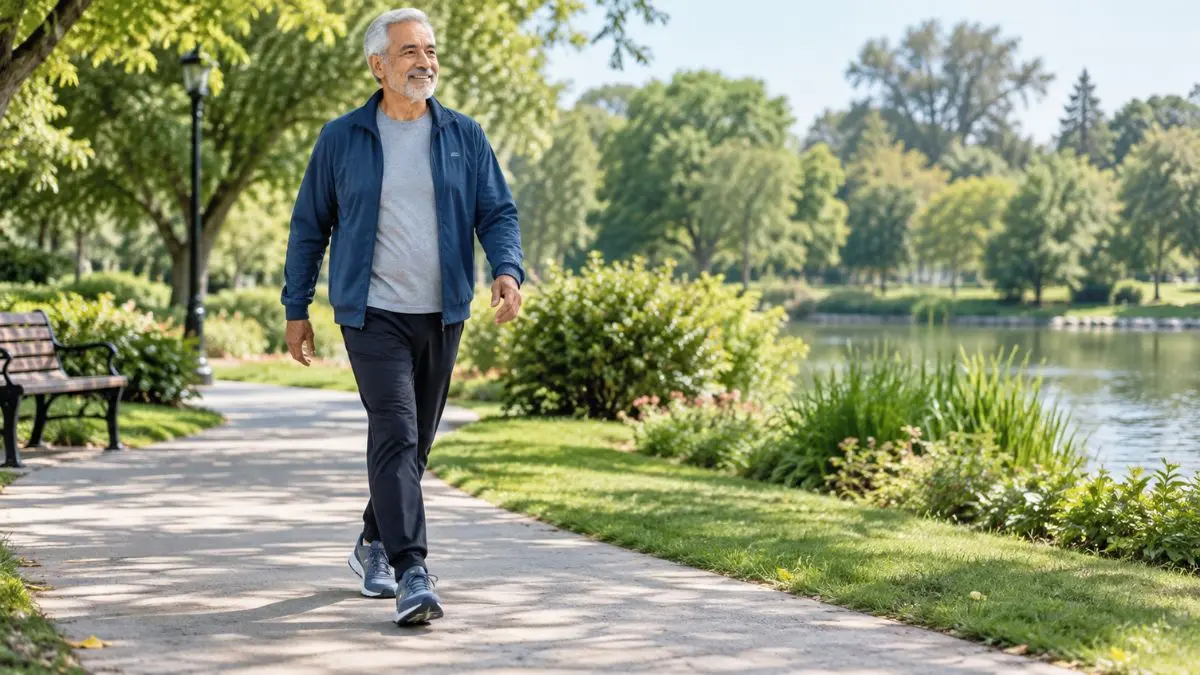
Choosing the right walking shoes is essential for maintaining comfort and support as we get older. Comfortable footwear can make everyday walks, errands, and outdoor activities more enjoyable. The right pair should feel secure, provide enough cushioning, and match your individual foot shape and walking needs.
The best walking shoes for seniors are not necessarily the most expensive or heavily cushioned models. A good choice depends on fit, stability, flexibility, weight, and how the shoes feel during everyday use.
In this guide, we’ll explore 12 walking shoes worth considering in 2026. We’ll cover their key features, potential advantages, limitations, and the factors older adults should consider before purchasing a pair.
How We Selected the Best Walking Shoes for Seniors
We focus on features that matter during everyday walking, including comfort, fit, cushioning, support, traction, and ease of use.
Our recommendations are based on product characteristics and intended use, rather than claiming that every shoe has been personally tested. Individual comfort and fit can vary, so readers should check current specifications and try shoes when possible.
The ideal shoe for one senior may not be suitable for another. When choosing the best walking shoes for seniors, consider foot width, balance, walking environment, and personal preferences.
Important Features to Consider When Choosing Walking Shoes for Seniors
Before choosing walking shoes, consider these important features.
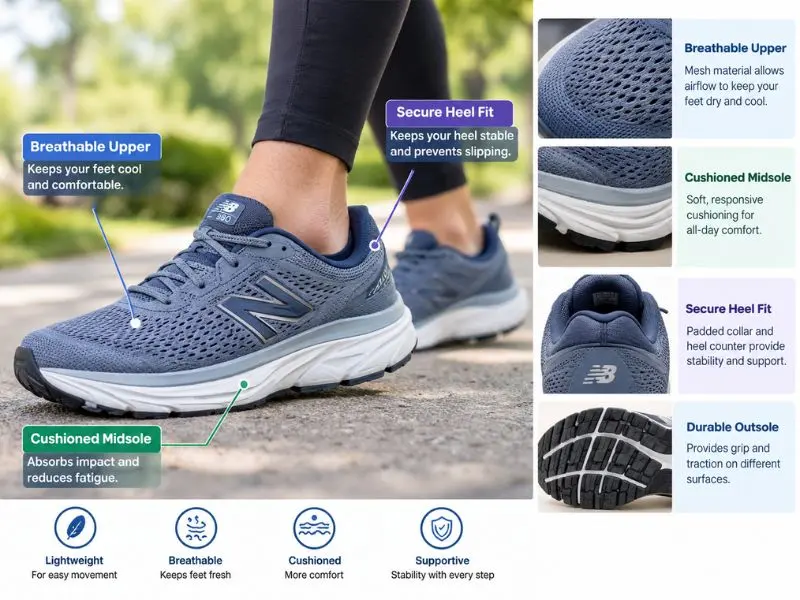
1. Comfortable Cushioning
Cushioning helps reduce the feeling of impact during walking. However, extra cushioning may not be the right choice for every walker, as comfort and stability depend on individual needs.
Look for a comfortable midsole that suits your walking style and feels stable underfoot.
2. Supportive Fit
A supportive shoe should hold your foot securely without creating uncomfortable pressure.
The heel should fit comfortably, and the midfoot should feel supported without being excessively tight.
3. Lightweight Construction
Lightweight shoes may feel easier to wear during longer walks and everyday activities.
Consider the balance between weight, cushioning, durability, and support rather than choosing based on weight alone.
4. Reliable Traction
A well designed outsole offers reliable traction on different walking surfaces.
Choose the best walking shoes for seniors based on your usual walking surfaces, such as sidewalks, indoor floors, or outdoor paths.
5. Easy-to-Manage Closures
Some older adults prefer shoes with adjustable straps, elastic laces, or convenient entry systems.
The best closure depends on personal dexterity, foot shape, and how securely the shoe fits.
The 12 Best Walking Shoes for Seniors of 2026
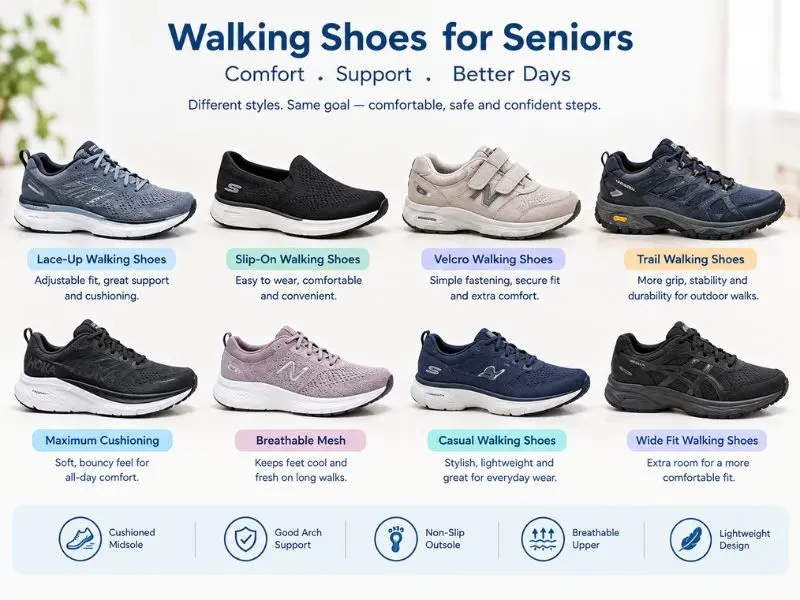
The following shoes cover different needs, including everyday comfort, cushioning, stability, wide feet, and easy on-and-off designs. Your choice should depend on your individual requirements rather than a general ranking.
1. Brooks Ghost Max 3
Best for: Cushioned everyday walking
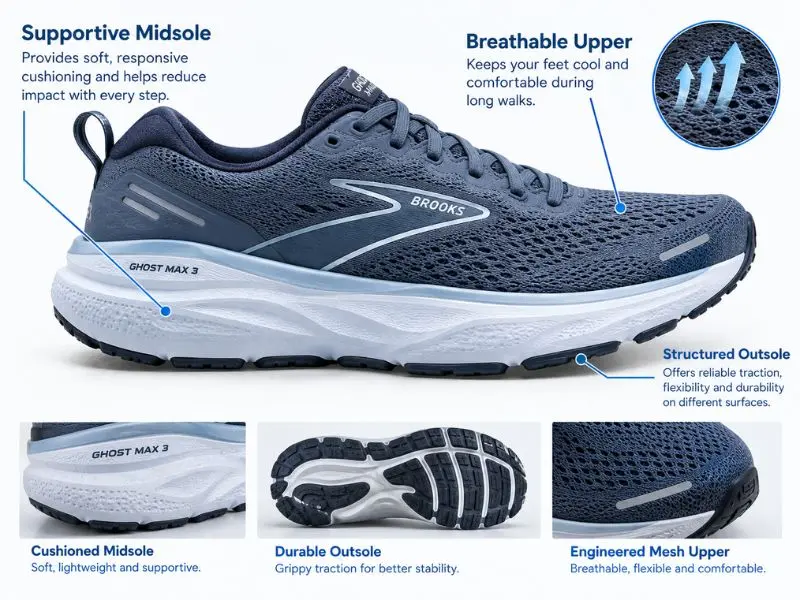
The Brooks Ghost Max 3 is worth considering if you prefer a highly cushioned shoe for walking and standing. Its design focuses on impact absorption and a comfortable platform.
Potential advantages:
- Generous cushioning
- Wide toe-box design
- Suitable for walking and extended standing
- Available in multiple width options
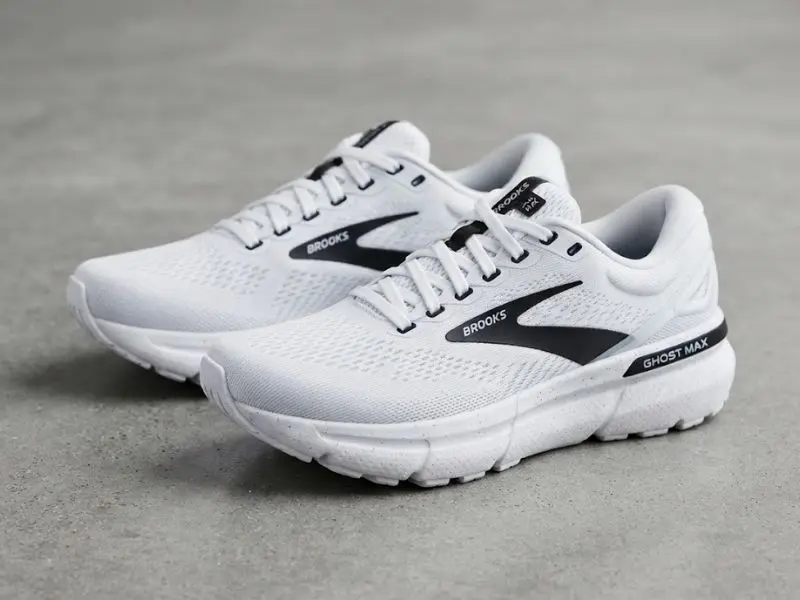
Potential limitations: The substantial sole may not suit people who prefer a lower-profile shoe or who find high platforms uncomfortable.
Who should consider it? Seniors who want cushioning for everyday walking and prefer a traditional lace-up design.
2. New Balance Fresh Foam X More v6
Best for: Extended standing and walking
The New Balance Fresh Foam X More v6 offers a generously cushioned platform for people who spend considerable time on their feet.Its breathable upper and width options make it a comfortable choice when comparing the best walking shoes for seniors.
Potential advantages:
- Substantial underfoot cushioning
- Breathable upper
- Multiple width options
- Designed for comfortable daily use
Potential limitations: The shoe’s front flare may not suit everyone, particularly those who prefer a more compact shoe shape.
Who should consider it? Seniors who regularly walk or stand for extended periods and prefer a highly cushioned shoe.
3. Skechers GO WALK 7 Springtime
Best for: Easy slip-on convenience
Skechers GO WALK 7 Springtime is a practical option for seniors who prefer shoes that are easy to put on and remove. Its lightweight construction and knit upper may suit everyday walking.
Potential advantages:
- Convenient slip-on design
- Lightweight construction
- Breathable knit upper
- Suitable for casual daily walking
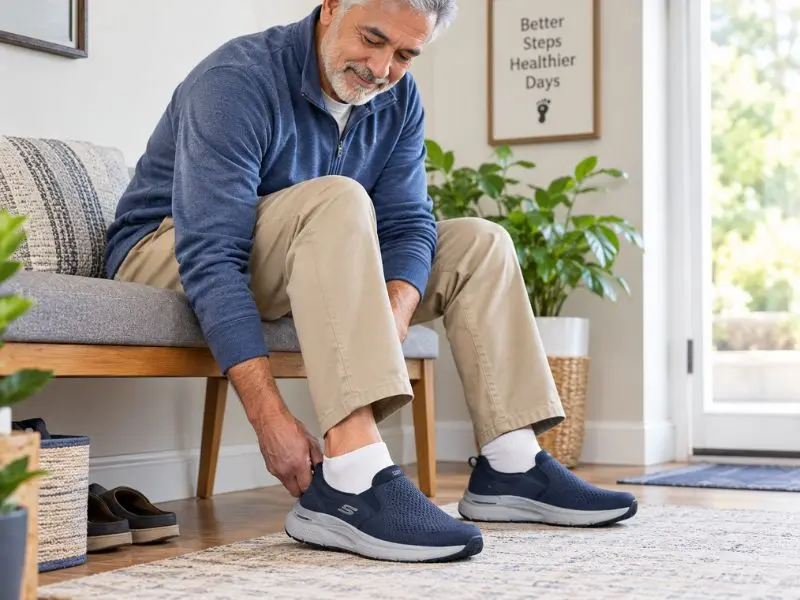
Potential limitations: Some walkers may prefer more forefoot cushioning or a more structured fit.
Who should consider it? Older adults who prioritize convenience and lightweight comfort for routine walking.
4. HOKA Bondi 9
Best for: Maximum cushioning
The HOKA Bondi 9 is a maximum-cushioning shoe that may appeal to walkers who prefer substantial underfoot padding. Its rocker-style geometry is designed to support a smooth transition through the walking motion.
Potential advantages:
- High cushioning level
- Rocker-style design
- Suitable for walking and everyday use
- Available in different fit options
Potential limitations: The thick sole and shoe geometry may take some time to get used to. It is important to assess your comfort and stability when trying it on.
Who should consider it? Seniors who prefer a highly cushioned shoe and feel comfortable walking in a thicker platform.
5. New Balance 928v3
Best for: Structured walking support
The New Balance 928v3 is a walking shoe designed with stability-oriented features. Its width options and removable insole make it a practical choice among the best walking shoes for seniors.
Potential advantages:
- Structured walking design
- Multiple width options
- Removable insole
- Suitable for people who prefer traditional walking shoes
Potential limitations: Its structured construction may feel less flexible than lightweight athletic shoes.
Who should consider it? Seniors who prefer a supportive walking shoe and need to pay close attention to width and fit.
6. Brooks Addiction Walker 2
Best for: Traditional stability-focused walking
The Brooks Addiction Walker 2 is designed for people who prefer a structured walking shoe with stability-oriented features. It can be considered for daily walking when the fit and level of support suit the wearer.
Potential advantages:
- Structured construction
- Traditional walking-shoe design
- Available in selected width options
- Suitable for everyday walking
Potential limitations: It may feel heavier or firmer than modern lightweight running-inspired shoes.
Who should consider it? Seniors who prefer a more traditional shoe design and want to compare structured support options.
7. ASICS GEL-KAYANO 33
Best for: Stability-focused walking
The ASICS GEL-KAYANO 33 is a stability oriented running shoe that can be considered for walking. Its design includes cushioning and support features intended to help manage foot movement during activity.
Potential advantages:
- Stability-oriented construction
- Cushioned midsole
- Suitable for walking and other activities
- Modern athletic design
Potential limitations: Stability features are not necessary for every walker, and the shoe may not suit people who prefer a neutral or less structured feel. For those who prefer lightweight footwear in warm weather, walking sandals may be another option to consider.
Who should consider it? Seniors who want to explore a stability-oriented athletic shoe and find its fit comfortable.
8. Saucony Guide 19
Best for: Breathable stability-oriented comfort
The Saucony Guide 19 combines cushioning with stability-focused construction. Its breathable upper and flexible feel make it a suitable option among the best walking shoes for seniors.
Potential advantages:
- Breathable upper
- Stability-oriented design
- Cushioned platform
- Suitable for everyday walking
Potential limitations: The shoe’s geometry may not suit every foot shape or walking preference.
Who should consider it? Seniors who want to compare cushioning, breathability, and support in one athletic shoe.
9. Ryka Jumpstart Lace Slip-On
Best for: Convenient everyday footwear
The Ryka Jumpstart Lace Slip-On combines a slip-on design with a sneaker-style appearance. It may appeal to seniors who want easy entry without choosing a traditional lace-up shoe.
Potential advantages:
- Easy on-and-off design
- Cushioned construction
- Practical for everyday activities
- Available in selected width options
Potential limitations: The toe box may feel longer for some users, so checking fit is important.
Who should consider it? Seniors who prefer convenient footwear and want to balance ease of use with everyday comfort.
10. Skechers Arch Fit 2.0
Best for: Everyday arch-support preferences
Skechers Arch Fit 2.0 is designed around an arch-support-focused insole system. It may be worth considering for casual walking when the arch shape and overall fit suit your feet.
Potential advantages:
- Arch-support-focused design
- Everyday walking suitability
- Various style options
- Convenient footwear choices within the range
Potential limitations: Arch support is not identical for every foot, and some people may find the insole shape uncomfortable.
Who should consider it? Seniors who prefer an arch-support-focused walking shoe and can confirm that the insole feels comfortable.
11. HOKA Bondi SR
Best for: Slip-resistant work and everyday environments
The HOKA Bondi SR is designed for work and walking environments where traction is an important consideration. Its cushioning makes it a suitable choice among the best walking shoes for seniors.
Potential advantages:
- Slip-resistant outsole design
- Cushioned platform
- Suitable for work-oriented use
- Supportive construction
Potential limitations: It may feel substantial compared with lightweight casual walking shoes. Traction can vary according to the surface and conditions.
Who should consider it? Seniors who need a shoe for indoor work or walking environments where outsole grip is a priority.
12. Dr. Comfort Therapeutic Walking Shoes
Best for: Specialized fit considerations
Dr. Comfort offers footwear designed for people who need specific fit and comfort features. Certain models include additional depth or adjustable designs.
Potential advantages:
- Specialized footwear options
- Models with adjustable closures
- Options for different foot shapes
- May accommodate certain orthotic needs
Potential limitations: Not every model is appropriate for every medical condition. Specialized footwear should be selected according to individual requirements.
Who should consider it? Seniors who need particular fit accommodations or have been advised to consider therapeutic footwear.
Important: People with diabetes, reduced sensation, significant swelling, or persistent foot pain should seek individualized footwear guidance from a qualified healthcare professional.
Comparison Table: Best Walking Shoes for Seniors
| Shoe | Best For | Cushioning | Support | Overall Use |
| Brooks Ghost Max 3 | Everyday cushioning | High | Moderate | Walking and standing |
| New Balance More v6 | Extended standing | High | Moderate | Daily activities |
| Skechers GO WALK 7 | Easy slip-on use | Moderate | Moderate | Casual walking |
| HOKA Bondi 9 | Maximum cushioning | High | Moderate | Walking and comfort |
| New Balance 928v3 | Structured support | Moderate | Stability-focused | Everyday walking |
| Brooks Addiction Walker 2 | Traditional support | Moderate | Structured | Daily walking |
| ASICS GEL-KAYANO 33 | Stability-focused walking | High | Stability-focused | Walking and exercise |
| Saucony Guide 19 | Breathable support | Moderate–high | Stability-focused | Everyday walking |
| Ryka Jumpstart | Convenient entry | Moderate | Moderate | Daily use |
| Skechers Arch Fit 2.0 | Arch-support preference | Moderate | Arch-support-focused | Casual walking |
| HOKA Bondi SR | Slip-resistant use | High | Structured | Work and walking |
| Dr. Comfort models | Specialized fit | Varies | Varies | Individual needs |
Features and availability can vary by model, size, and version. Check current manufacturer information before purchasing.
How to Choose the Right Walking Shoes for Seniors
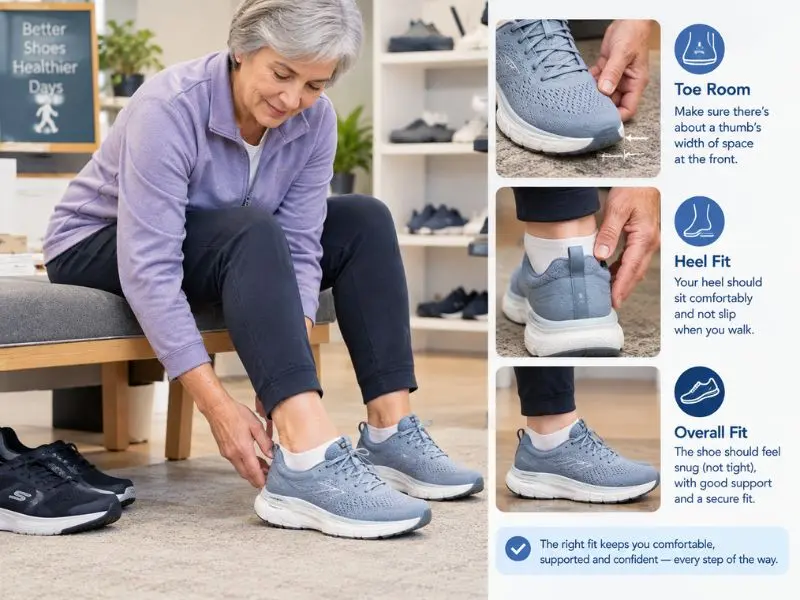
Finding comfortable walking shoes involves more than selecting a popular brand. Consider how the shoes fit, where you walk, and what features you need for everyday activities.
Consider Your Foot Shape
Your feet may change over time, including changes in width and sensitivity. Choose a shoe with enough toe room and avoid footwear that creates pressure points.
If you have wide feet, choose the best walking shoes for seniors in a wider size instead of simply buying a longer shoe.
Think About Walking Surfaces
Your daily walking environment affects your footwear choice.
- Indoor floors: Focus on comfort and reliable traction.
- Sidewalks: Look for suitable cushioning and outsole grip.
- Outdoor paths: Consider the terrain and the shoe’s stability.
- Extended standing: Prioritize a comfortable fit and cushioning that feels suitable for you.
Check the Fit Carefully
Try on shoes while wearing the socks you normally use for walking. Walk around and check whether your heel stays secure and your toes have enough space.
Avoid choosing a size solely because it is your usual size. Different brands and models may fit differently.
Consider Your Closure Preference
Lace-up shoes can provide adjustable fit, while slip-on and hook-and-loop designs may be easier for some people to manage.
However, easy entry should not come at the expense of a secure fit.
Common Mistakes to Avoid
1. Choosing Shoes Only for Appearance
A stylish shoe may not offer the comfort or fit you need. Consider appearance alongside practical footwear features.
2. Buying the Wrong Size
Shoes that are too tight can create pressure and discomfort. Shoes that are too loose may move excessively while walking.
3. Assuming More Cushioning Is Always Better
A softer or thicker shoe is not automatically suitable for everyone. Pay attention to stability, comfort, and how naturally you walk in the shoe.
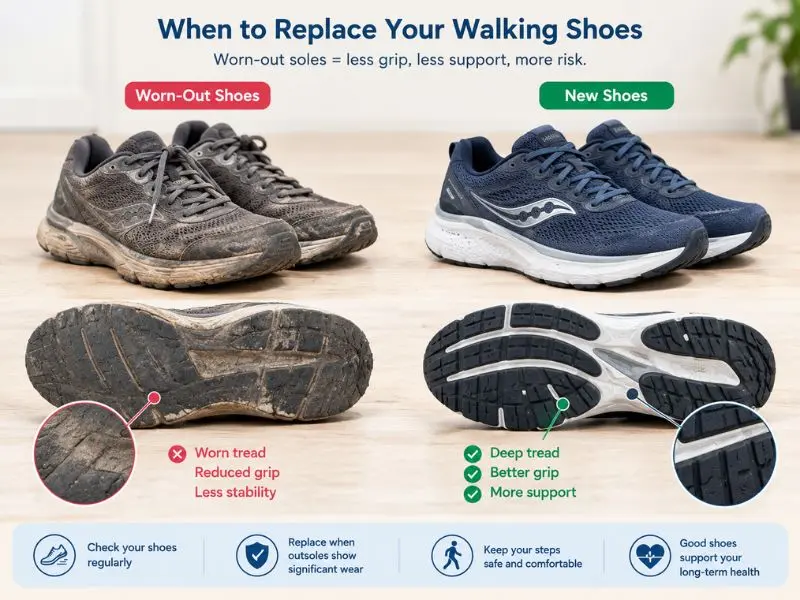
4. Ignoring Outsole Condition
Worn tread can affect traction. Inspect your shoes regularly and consider replacement when the outsole or upper shows substantial wear.
5. Ignoring Persistent Foot Discomfort
Walking shoes are not a substitute for medical assessment. Persistent pain, swelling, or changes in sensation should be discussed with an appropriate healthcare professional.
Frequently Asked Questions
1. What features should seniors look for in walking shoes?
Look for a comfortable fit, suitable cushioning, secure heel hold, enough toe room, and reliable traction.
2. Are cushioned shoes better for older adults?
Cushioned shoes may improve comfort, but the ideal amount depends on individual preferences, fit, and walking needs.
3. How should seniors choose the right shoe size?
Measure both feet when possible and select a size that provides comfortable toe room and secure heel placement.
4. Are stability shoes useful for seniors?
Stability shoes may suit people who benefit from their design, but they are not necessary for every senior.
5. How often should walking shoes be replaced?
Replace shoes when their cushioning, outsole grip, fit, or overall condition no longer provides suitable comfort and support.
Conclusion
The best walking shoes for seniors should offer a comfortable fit, appropriate cushioning, and features that match your everyday walking needs. Options such as Brooks, New Balance, HOKA, Skechers, and ASICS provide different designs for various preferences. If you enjoy outdoor walking or hiking, trekking poles may also be useful for added support on suitable terrain.
Take time to compare your foot shape, walking environment, and desired level of support before purchasing. A comfortable, properly fitting pair can make daily walking more enjoyable.
