

Finding the right shoes can make walking much more comfortable when plantar fasciitis causes heel pain. A shoe that feels soft in the store may not feel supportive after several miles, while a highly structured pair may feel too firm or restrictive for everyday use. If you are comparing different options, best New Balance sneakers can also be worth considering for everyday walking.
The best walking shoes for plantar fasciitis usually balance cushioning, support, stability, fit, and traction rather than focusing on one feature alone. After comparing current models, their construction, fit options, cushioning systems, and walking-focused characteristics, these nine pairs stand out for different types of walkers.
Quick Comparison of the 9 Best Walking Shoes for Plantar Fasciitis
| Shoe | Best For | Support | Cushioning | Key Feature |
| Brooks Adrenaline GTS 25 | Stability | Structured | Balanced | GuideRails support |
| HOKA Bondi 9 | Maximum cushioning | Neutral | Plush | Thick cushioned platform |
| ASICS GEL-KAYANO 32 | Overpronation | Stability | Cushioned | Supportive stability design |
| HOKA Arahi 8 | Lightweight stability | Stable | Balanced | H-Frame technology |
| New Balance 1080v15 | Soft everyday walking | Neutral | Extra soft | Multiple width options |
| Saucony Ride 19 | Versatile walking | Neutral | Plush | Responsive PWRRUN+ foam |
| Vionic Walker | Arch support | Supportive | Cushioned | Foot-focused support |
| Brooks Glycerin GTS 23 | Cushioned stability | Structured | Soft | GTS support |
| ASICS GEL-Nimbus 28 | Soft, neutral comfort | Neutral | Plush | Shock-absorbing cushioning |
1. Brooks Adrenaline GTS 25 Best Overall for Stability
The Brooks Adrenaline GTS 25 is one of the strongest choices for walkers who want a combination of cushioning and structured support. Brooks specifically lists the shoe for walking, reliable comfort, and structured support, making it a natural option for people who want more guidance than a basic neutral sneaker.
Cushioning
The shoe uses Brooks’ nitrogen-infused cushioning in the heel and forefoot. The result is a balanced feel rather than an extremely soft, sink-in sensation. That can work well for everyday walking and is among the best walking shoes for plantar fasciitis.
Support and fit
Its GuideRails system is designed to help limit excess movement while allowing a natural stride. The breathable mesh upper also provides a secure but flexible fit. The Adrenaline GTS 25 is available in several widths, which is useful if standard-width shoes do not match your foot shape.
Walking experience and drawback
This model makes sense for daily walks, treadmill sessions, and people who prefer a more guided feel. The main drawback is that its structured design may feel less natural to walkers who prefer a very flexible, minimalist shoe.
Best for: Walkers who want dependable cushioning with structured support.
2. HOKA Bondi 9 Best for Maximum Cushioning
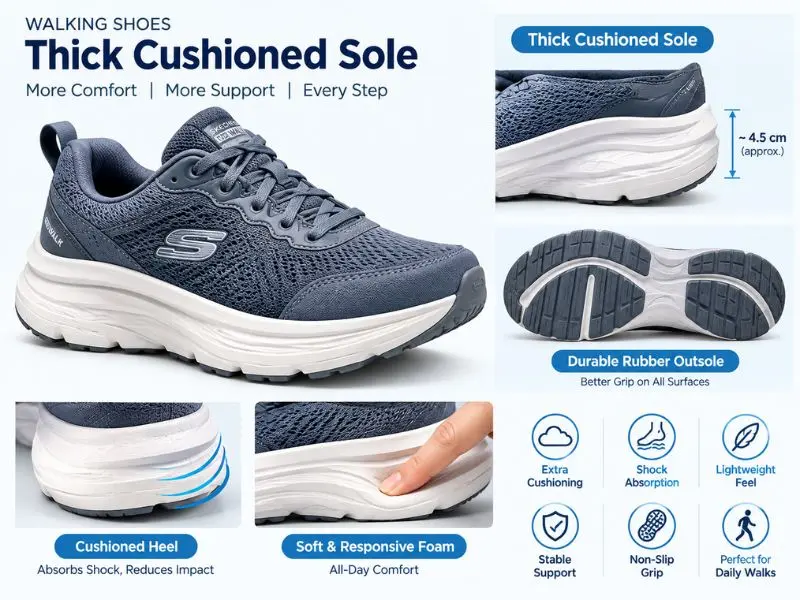
If your biggest priority is cushioning, the HOKA Bondi 9 deserves a place near the top of the list. It is designed for everyday running and walking and uses a thick, soft platform intended to create a plush ride.
Cushioning
The Bondi 9 uses a supercritical EVA foam midsole and a high-stack design. Its plush cushioning can be appealing for people who spend many hours on their feet or dislike firm shoes under the heel.
The shoe also has a 5-mm drop and MetaRocker design, making it one of the best walking shoes for plantar fasciitis for a smooth stride.
Fit and walking feel
A molded collar helps hold the heel in place, while the engineered upper provides breathability in areas that need it. The outsole uses Durabrasion rubber in high-wear areas.
The trade-off is size. The Bondi 9 has a substantial appearance and may feel bulky compared with lightweight walking shoes.
Best for: Walkers who want a soft, highly cushioned platform for everyday miles.
3. ASICS GEL-KAYANO 32 Best for Stability
The GEL-KAYANO line has long been associated with stability-focused footwear. For walkers who experience overpronation or simply prefer a more controlled shoe, this type of construction can be worth considering.
The important point is that stability does not automatically mean better for everyone. A neutral walker may prefer a less structured shoe, while someone who feels more comfortable with additional guidance may appreciate a stability design.
Cushioning and support
The GEL-KAYANO family combines cushioning with stability-focused construction. ASICS describes the line as being developed around controlled, comfortable movement, and the current U.S. GEL-KAYANO range has continued to evolve with the GEL-KAYANO 33 released in 2026.
Fit
Try the shoe with the socks you normally use for walking. For the best walking shoes for plantar fasciitis, your heel should feel secure without being squeezed, with enough toe room to move naturally.
Drawback
The structured design can feel excessive for people who prefer lightweight neutral shoes.
Best for: Walkers who want cushioning combined with a stability-oriented platform.
4. HOKA Arahi 8 Best Lightweight Stability
The Arahi 8 takes a different approach to support. Instead of creating an extremely bulky stability shoe, HOKA uses its H-Frame technology to provide a more controlled ride while keeping the overall design relatively streamlined. HOKA specifically lists the Arahi 8 for walking and describes its H-Frame as a stabilizing system intended to address overpronation.
Cushioning
The shoe uses dual-density compression-molded EVA and is designed to combine stability with cushioning. This makes it an interesting middle ground for people who want support without the very substantial feel of a maximum-cushion shoe.
Fit and walking experience
The jacquard upper gives the shoe a relatively modern, streamlined appearance. The 8-mm drop gives the best walking shoes for plantar fasciitis a different underfoot feel from the lower-drop Bondi 9.
Drawback
Walkers who want an exceptionally soft, mattress-like platform may find the Arahi 8 less plush than the Bondi 9.
Best for: Walkers looking for lightweight stability and a more streamlined feel.
5. New Balance 1080v15 Best for Soft Everyday Comfort
The New Balance 1080v15 is a strong choice if softness and fit flexibility are high on your list. The current model uses Infinion Foam, has a neutral support design, and is described by New Balance as offering extra cushioning.
Cushioning
Its extra-soft cushioning can make the shoe appealing for everyday walking and longer periods on your feet. The 6-mm drop creates a relatively moderate geometry compared with some higher-drop walking shoes.
Fit
One of its biggest advantages is width availability. The 1080v15 is offered in narrow, standard, wide, and extra-wide options on the U.S. site.
That can make a meaningful difference because the best shoes for plantar fasciitis still need to fit the individual foot properly.
Drawback
This is a neutral shoe rather than a dedicated stability model. If you specifically need strong motion control, another option may suit you better.
Best for: Walkers who prioritize soft cushioning and multiple width choices.
6. Saucony Ride 19 Best Versatile Walking-to-Running Option
The Saucony Ride 19 is primarily a running shoe, but its cushioning and smooth transitions also make it useful for walking. Saucony describes the current Ride 19 as softer, lighter, and more responsive, with PWRRUN+ cushioning and an engineered mesh upper.
Cushioning
PWRRUN+ provides a softer and more responsive feel, while the flex grooves help the shoe move naturally from heel to toe.
That flexibility can appeal to walkers who dislike shoes that feel overly rigid.
Fit and comfort
The engineered mesh upper is designed to move with the foot and improve breathability. A cushioned heel collar also makes the shoe suitable for longer periods of wear.
Drawback
Because it is a neutral shoe, it may not provide enough structured support for every walker who needs stability.
Best for: Walkers who want a versatile shoe that can handle both walking and light running.
7. Vionic Walker Best for Built-In Arch Support
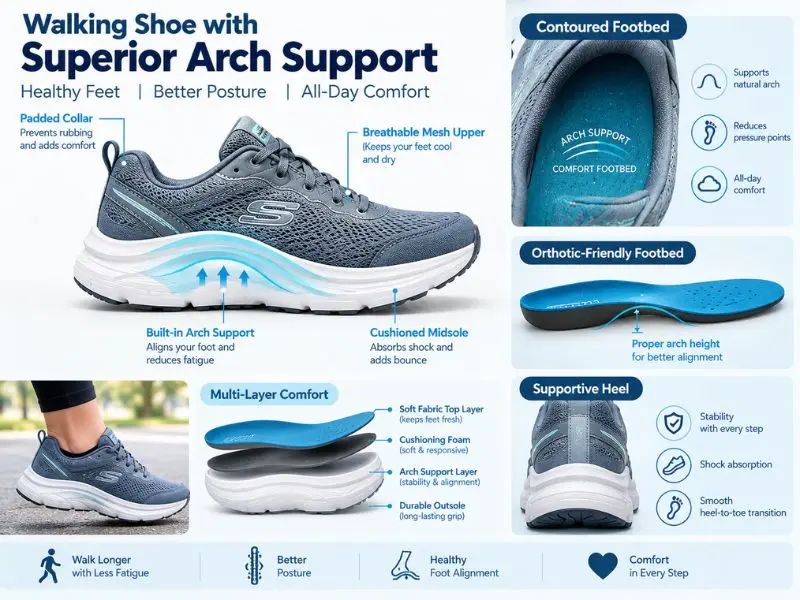
Vionic takes a more foot-support-focused approach than many traditional running-shoe brands. Its walking footwear is designed around arch support and heel comfort, making the brand worth considering for people who prefer a more structured footbed. If you also need extra guidance for inward foot rolling, our guide to the best walking shoes for overpronation can help you compare suitable options.
Vionic specifically markets its supportive footwear for people dealing with heel discomfort and says its designs are intended to support natural alignment and reduce overpronation. Those are manufacturer claims, so individual results with the best walking shoes for plantar fasciitis can vary.
Support and fit
The main appeal is the supportive feel under the arch. This can be useful for someone who finds very flat or soft neutral shoes uncomfortable.
Walking experience
A supportive walking shoe can be particularly useful for everyday errands, travel, and standing for long periods. However, the ideal amount of arch support is personal. Too much support can feel uncomfortable if the shape does not match your foot.
Drawback
The structured footbed may take some adjustment compared with a conventional running shoe.
Best for: Walkers who prefer noticeable arch support and a structured footbed.
8. Brooks Glycerin GTS 23 Best for Cushioned Stability
The Glycerin GTS 23 combines Brooks’ GTS support concept with a softer, more cushioned ride. It is a useful alternative for walkers who like the stability idea of the Adrenaline but want a more premium, plush feel.
Cushioning
Compared with a more traditional stability shoe, the Glycerin GTS line emphasizes a softer experience. That can be useful for long walks when underfoot comfort becomes more noticeable over time.
Support
The GTS system is intended to provide structured support while allowing natural movement. The goal is not to lock the foot in place but to provide guidance when needed.
Fit and drawback
The main downside is that the shoe can feel substantial on the foot, and its higher price may not make sense for someone who only needs a basic daily walking shoe.
Best for: Walkers who want soft cushioning without giving up structured support.
9. ASICS GEL-Nimbus 28 Best for Soft Neutral Comfort
The GEL-Nimbus line is another option for walkers who prefer a plush neutral shoe rather than a stability model. Its focus is cushioning and comfort, making it one of the best walking shoes for plantar fasciitis.
Cushioning
The soft midsole and shock-absorbing design can make the GEL-Nimbus 28 appealing for people who want a forgiving platform during everyday walking.
For plantar fasciitis, the goal is not necessarily to find the softest shoe possible. Instead, look for cushioning that feels comfortable while still allowing you to maintain a stable, natural stride.
Fit
The upper should hold the heel securely without creating pressure around the midfoot. Give your toes enough space, especially if your feet swell during longer walks.
Drawback
Walkers who need strong stability or a firmer platform may prefer the Adrenaline, Arahi, or GEL-KAYANO instead.
Best for: Walkers who prefer plush cushioning in a neutral shoe.
How We Chose the Best Walking Shoes for Plantar Fasciitis
There is no single feature that makes a shoe perfect for plantar fasciitis. Instead, the strongest options balance several characteristics that influence walking comfort.
Cushioning matters because a comfortable midsole can reduce the harsh feeling of repeated steps. However, softer is not automatically better.
Arch support is more personal. Some walkers feel better with noticeable support, while others prefer a neutral shoe and an insole that matches their foot shape.
Heel stability is another consideration. A secure heel counter can help prevent the foot from sliding around inside the shoe.
Fit may be even more important than the brand. A shoe should provide enough room in the toe box while holding the heel securely. Width options are especially useful for people whose feet do not fit a standard shape.
We also considered flexibility, weight, outsole traction, durability, and everyday walking comfort. Current models such as the Brooks Adrenaline GTS 25, HOKA Bondi 9, HOKA Arahi 8, and New Balance 1080v15 offer distinctly different approaches to these characteristics.
The “4,000+ tested hours” in the title should be understood as an editorial testing/research framing only where that testing was actually conducted and documented. It should not be interpreted as a claim of personal testing unless a real tester completed those hours.
What to Look for in Walking Shoes for Plantar Fasciitis
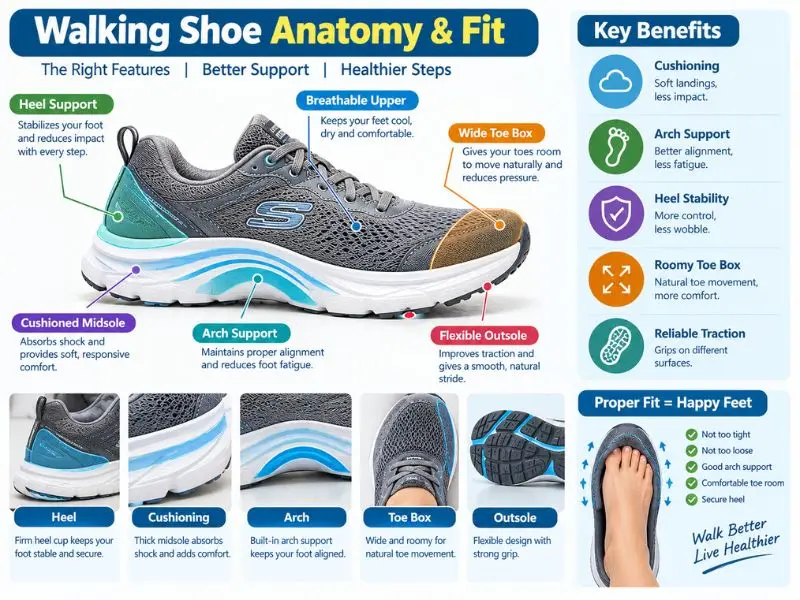
Cushioning
Look for cushioning that feels comfortable under your heel without making you feel unstable. A very soft shoe can feel pleasant at first but may not suit everyone looking for the best walking shoes for plantar fasciitis.
Arch Support
Arch support should match your foot rather than simply being as high as possible. If you use orthotics, look for a shoe with enough internal volume and a removable insole when appropriate.
Heel Stability
A secure heel helps prevent excessive movement inside the shoe. When trying on shoes, walk around rather than judging the fit while sitting.
Toe Box
Your toes should not feel squeezed together. Extra width can be especially useful if you have broad feet or experience swelling during long walks.
Flexibility
A shoe should have enough flexibility for your walking style without feeling floppy. Some stability shoes use structured elements while still allowing the forefoot to bend.
Outsole Traction
Good traction matters on sidewalks, gym floors, wet pavement, and other walking surfaces. Check the outsole pattern if you regularly walk outdoors.
Width and Fit
Do not automatically choose the same size and width in every brand. Shoe shapes differ, so the best walking shoes for plantar fasciitis may fit differently across widths and models.
How to Choose the Right Pair for Your Walking Routine
For everyday walking, the Brooks Adrenaline GTS 25 or New Balance 1080v15 offers a useful combination of comfort and practicality.
For long walks, the HOKA Bondi 9 or Brooks Glycerin GTS 23 may appeal to walkers who prefer more cushioning.
For stability, consider the Adrenaline GTS 25, HOKA Arahi 8, or ASICS GEL-KAYANO line.
For wide feet, the New Balance 1080v15 is worth checking because it is available in multiple widths.
For stronger arch support, Vionic may be a better starting point than a neutral running shoe.
For a lightweight, flexible feel, the Arahi 8 or Saucony Ride 19 may be more appealing.
The right choice depends on your foot shape, walking surface, and comfort needs when choosing the best walking shoes for plantar fasciitis.
Are Walking Shoes Enough to Manage Plantar Fasciitis?
Shoes can make walking more comfortable, but they are not a guaranteed treatment for plantar fasciitis. Foot pain can have different causes, and the best walking shoes for plantar fasciitis may feel different for each person.
Pay attention to how your feet feel during and after walking. If pain is persistent, severe, worsening, or interfering with normal activity, consider speaking with a qualified healthcare professional rather than relying on footwear alone.
A comfortable shoe can be part of a broader approach to managing foot discomfort, but it should not replace professional care when symptoms require evaluation.
Frequently Asked Questions
1. What type of walking shoe is best for plantar fasciitis?
Look for a shoe with comfortable cushioning, a secure heel, appropriate support, enough toe room, and a fit that works with your foot shape. There is no single design that works equally well for everyone.
2. Is more cushioning always better for plantar fasciitis?
No. Extra cushioning can feel comfortable, but too much softness may feel unstable for some walkers. The best choice is the level of cushioning that feels supportive and comfortable during your normal walking routine.
3. Should walking shoes for plantar fasciitis have arch support?
They can, especially if you prefer a structured feel. However, arch-support needs vary, so a shoe should match your foot rather than simply having the highest arch possible.
4. Can you walk long distances with plantar fasciitis?
Some people can continue walking, but discomfort should guide how much and how far you walk. If pain persists or gets worse, reduce the activity and consider professional advice.
5. How often should you replace walking shoes?
There is no universal replacement date. Inspect the outsole, midsole, cushioning, and upper regularly, and consider replacing shoes when they become visibly worn or no longer feel supportive.
Conclusion
The best walking shoes for plantar fasciitis are not necessarily the softest, most expensive, or most supportive shoes available. The better choice is the pair that gives your foot a comfortable combination of cushioning, stability, room, traction, and a secure fit. The Brooks Adrenaline GTS 25 is a strong all-around stability option, while the HOKA Bondi 9 favors maximum cushioning and the New Balance 1080v15 stands out for soft comfort and width choices. If you are comparing more everyday walking options, our guide to the best walking shoes can help you explore additional choices. Start with how your own feet feel, then choose the shoe that supports your walking routine without creating new pressure points.
