

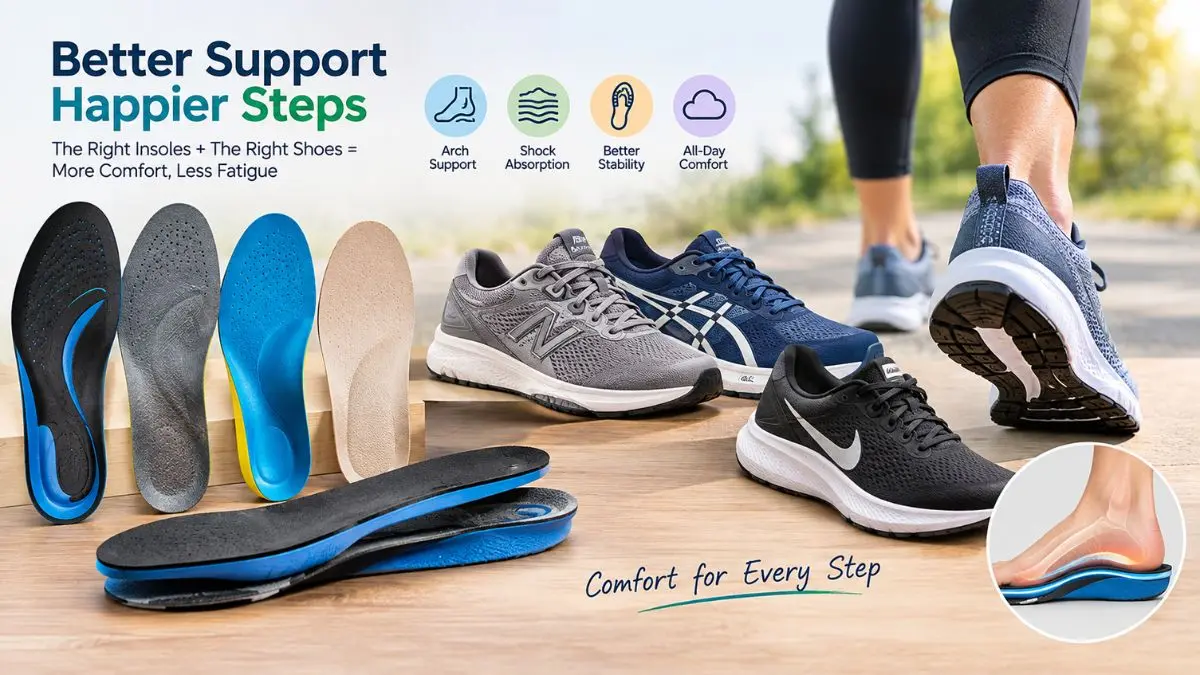
Finding the best insoles can make a noticeable difference in how your shoes feel, especially if the original footbeds are flat, worn, or lacking support. But not every insole works for every foot. Some people need firmer arch support, while others want more cushioning for walking, running, work, or long days on their feet.
The right choice depends on your foot shape, shoe type, activity, and comfort preference. In this guide, we review 15 popular options and explain where each one fits best, from supportive orthotic-style designs to soft cushioned insoles. The goal is to help you choose an insole that fits your shoes and your everyday needs.
15 Best Insoles of 2026
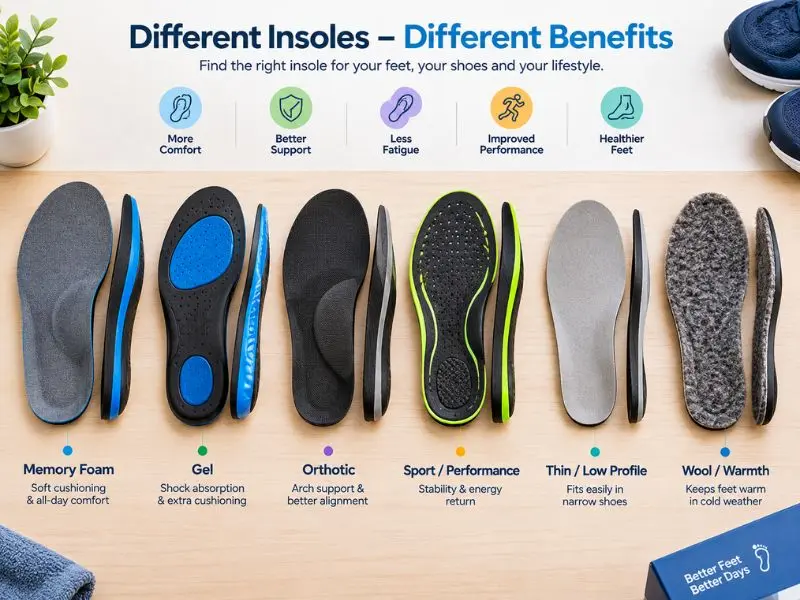
There is no single insole that is best for everyone. A supportive model may feel excellent to one person but too firm to another. Likewise, a very soft insole may feel comfortable initially but lack the structure someone else needs.
Our selections of the best insoles cover different needs, including walking, running, standing, work, high-impact activities, and everyday comfort.
1. Superfeet All-Purpose Support Medium Arch
Best for: Everyday support and walking
Superfeet All-Purpose Support Medium Arch is a versatile choice for people who want structured support without moving to a specialized athletic insole. It has a medium arch profile, firm cushioning, and a mid-thickness design. Superfeet says it is intended for everyday shoes, work footwear, walking, and running, with a fit designed for moderate to tighter footwear.
The firmer feel makes it a better match for shoppers who prefer noticeable support rather than a soft, sinking sensation. It can also be trimmed to fit the shoe.
2. Superfeet All-Purpose Support High Arch
Best for: Higher arches
People with higher arches often need an insole shaped differently from a low-profile everyday insert. Superfeet’s All-Purpose Support High Arch provides a more pronounced arch profile with structured support.
It is worth considering for athletic shoes, boots, and everyday footwear when the shoe has enough interior volume. The main thing to check is whether the arch shape matches your foot comfortably.
3. Superfeet All-Purpose Support Low Arch
Best for: Low arches and slimmer shoes
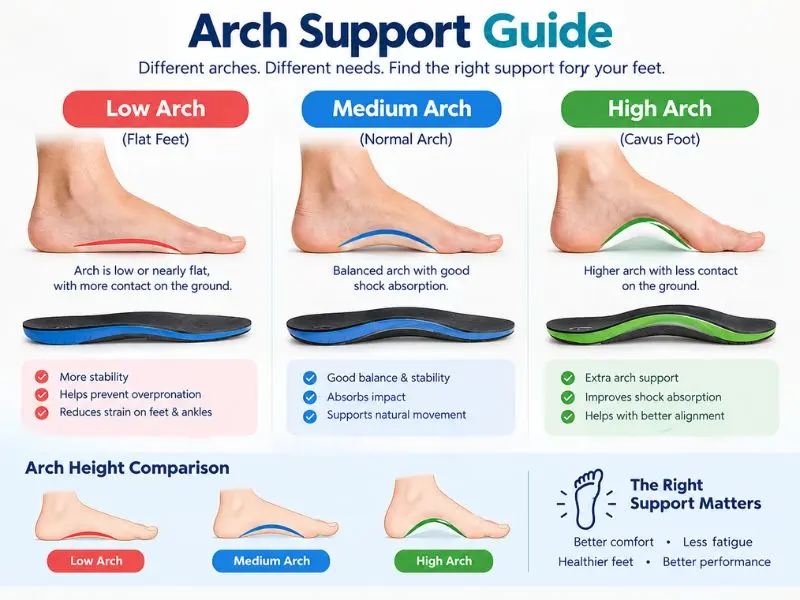
This version has a low arch profile and thin construction, making it one of the more practical choices when shoe space is limited. Superfeet lists it for everyday shoes, slim-fitting footwear, walking, and running.
Its firm cushioning favors support over plush softness. If bulky inserts make your shoes feel tight, the thinner design can be a useful choice among the best insoles for slim-fitting footwear.
4. Superfeet Casual Support
Best for: Casual shoes and everyday comfort
Superfeet Casual Support is designed for casual footwear and combines structured support with a softer memory-foam upper. The company describes it as fitting roomy to moderate-fitting casual shoes with removable insoles.
This is a good option for people who want supportive insoles but do not want the firm feel associated with some traditional orthotic designs.
5. Superfeet Run Cushion Medium Arch
Best for: Running and walking
For people who prefer more cushioning, the Superfeet Run Cushion Medium Arch is a strong option. It uses a medium arch profile with a soft cushioning setup and is designed for running, walking, training, and athletic shoes.
Its thicker construction means you should make sure your shoes have enough room before installing it. It is particularly appealing for people who want a softer feel while keeping some structure under the arch.
6. Superfeet Run Support Medium Arch
Best for: Runners who want more stability
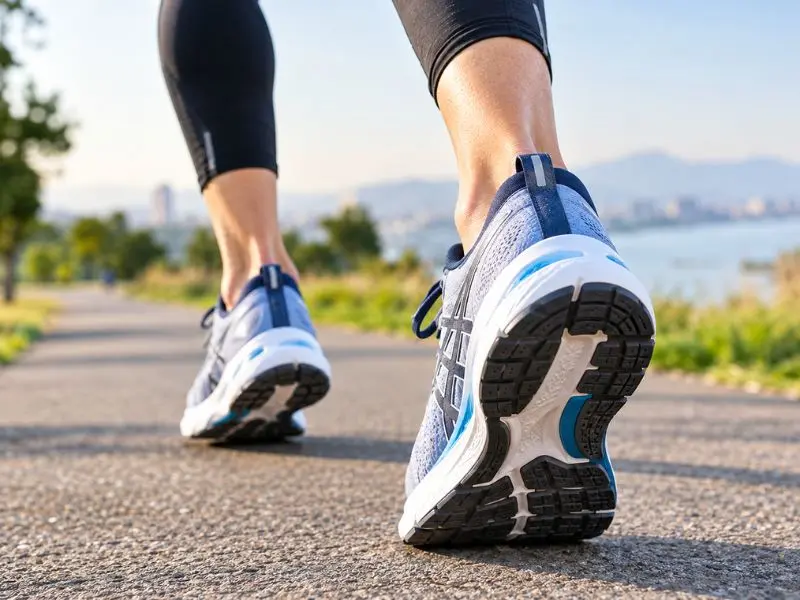
The Run Support Medium Arch is designed for running, walking, training, and athletic footwear. It combines a medium arch profile with a more structured design and carbon-fiber-based stabilizing technology.
Compared with softer cushioned models, this option makes more sense for someone who prioritizes stability and a controlled underfoot feel.
7. Superfeet All-Purpose High Impact Support
Best for: Hard surfaces and high-impact activities
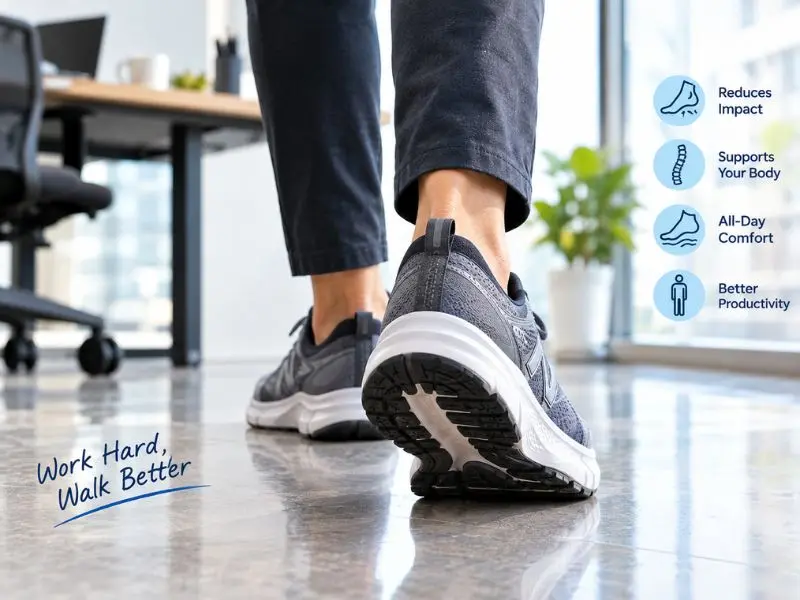
If your shoes take a lot of punishment, the All-Purpose High Impact Support is worth considering. Superfeet lists it for walking, running, playing sports, and working on hard surfaces. It has a medium/high arch profile and an additional forefoot cushioning feature.
It is designed for roomy to moderate-fitting athletic footwear, so check available shoe space before choosing it.
8. CURREX RUNPRO
Best for: Running and active walking
CURREX RUNPRO uses a dynamic arch design and is available in low, medium, and high arch profiles. It also combines dual-layer cushioning, a decoupled heel, and targeted forefoot cushioning.
The ability to select an arch profile is useful because foot shape varies considerably between people. CURREX also provides a fitting guide to help users select the appropriate profile.
For runners who also walk regularly, it can be a versatile option.
9. PowerStep Pinnacle
Best for: Everyday orthotic-style support
PowerStep Pinnacle is designed around a firm but flexible arch shape, a deep heel cradle, and dual-layer cushioning. The manufacturer positions it as an everyday support option with multiple variants for different needs.
It is a good choice for people who want more structure than a basic foam replacement insole. The feel is supportive rather than extremely soft.
10. PowerStep Pinnacle Maxx
Best for: Extra stability and overpronation
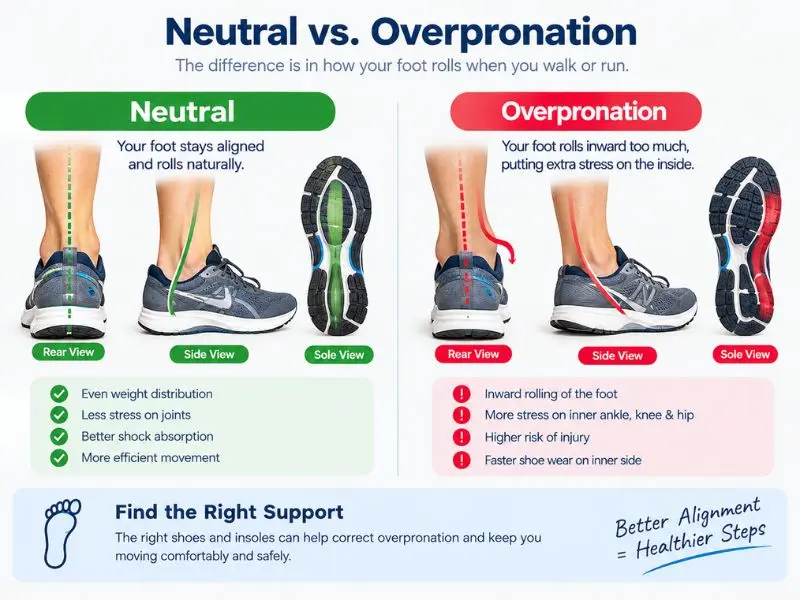
The Pinnacle Maxx adds a firmer shell and angled heel platform to the PowerStep design. PowerStep says the design is intended to improve stability and control for people who experience excessive inward rolling of the foot.
This is one of the more structured choices on the list, so it may not suit people who prefer a flexible or barely noticeable insole.
11. PowerStep Pinnacle 3/4
Best for: Tight-fitting shoes
Full-length insoles can sometimes take up too much space in dress shoes, flats, or other low-volume footwear. PowerStep Pinnacle 3/4 solves that problem with a shorter design that leaves additional room near the toes.
It provides a neutral arch support shape and cushioning while avoiding a full-length layer underneath the forefoot.
12. Dr. Scholl’s Advanced Pain Relief Insoles
Best for: Everyday cushioning and support
Dr. Scholl’s Advanced Pain Relief Insoles are designed for people looking for additional cushioning and support during daily activities. The current design uses multiple cushioning layers and a moisture-managing top fabric.
For shoppers who want a widely available option without moving into higher-priced specialty orthotics, this is a practical choice. However, comfort is personal, so the fit and arch shape still matter.
13. Dr. Scholl’s Extra Comfort All-Day Insoles
Best for: Long days on your feet
These insoles are aimed at people who spend much of the day standing or walking. Dr. Scholl’s specifically describes them for people who are tall, weigh 200 pounds or more, or have wider feet, with cushioning and reinforced support features.
They are worth considering for jobs that require extended standing, especially when the original shoe footbed provides little cushioning.
14. Spenco Total Support Max
Best for: Support during walking and everyday activities
Spenco Total Support Max is a structured insole available as part of Spenco’s current range for walking, prolonged standing, athletic use, and different foot-support needs.
It is a sensible middle ground for shoppers who want more support than a basic cushioned replacement but do not necessarily need a highly specialized insert.
15. Protalus M-100
Best for: Maximum structural support
The Protalus M-100 is built around deep stabilizing walls designed to hold the heel and midfoot more securely. The manufacturer describes it as a heavy-duty support option and offers it for shoes with removable insoles.
Its stronger structure makes it more appropriate for people specifically looking for substantial support. It may feel too aggressive if your preference is a soft, flexible footbed.
Best Insoles Comparison
| Insole | Best For | Support | Cushioning | Key Feature |
|---|---|---|---|---|
| Superfeet All-Purpose Medium | Everyday use | Firm | Firm | Medium arch |
| Superfeet High Arch | High arches | Firm | Moderate | Higher arch profile |
| Superfeet Low Arch | Low arches | Firm | Moderate | Thin profile |
| Superfeet Casual Support | Casual shoes | Moderate | Medium | Memory-foam top |
| Superfeet Run Cushion | Running/walking | Moderate | Soft | Cushioned feel |
| Superfeet Run Support | Running | High | Medium | Stabilizing design |
| Superfeet High Impact | Hard surfaces | High | Medium | Forefoot cushioning |
| CURREX RUNPRO | Running | Dynamic | Medium | Multiple arch profiles |
| PowerStep Pinnacle | Everyday support | High | Medium | Deep heel cradle |
| PowerStep Pinnacle Maxx | Overpronation | High | Medium | Angled heel platform |
| PowerStep Pinnacle 3/4 | Tight shoes | High | Medium | 3/4-length design |
| Dr. Scholl’s Advanced | Daily comfort | Moderate | Medium | Multi-layer cushioning |
| Dr. Scholl’s Extra Comfort | Standing | Moderate | Soft | Extended cushioning |
| Spenco Total Support Max | Walking/work | High | Medium | Structured support |
| Protalus M-100 | Maximum support | Very high | Medium | Deep stabilizing walls |
How We Chose the Best Insoles
Choosing the best insoles is about more than looking for the highest price or the most cushioning. We considered how each design approaches support, comfort, fit, and intended use.
Comfort: An insole should feel supportive without creating new pressure points.
Arch support: The arch shape should match your foot rather than simply being as high as possible.
Cushioning: Softer materials can improve comfort, but too much softness may not suit people who prefer a stable feel.
Stability: Structured insoles can be useful for people who want greater control inside their shoes.
Fit: An insole that is too wide, long, thick, or tall can make a comfortable shoe feel cramped.
Materials: Foam, gel, carbon-fiber-reinforced components, fabric covers, and other materials can change the feel and durability.
Durability: A quality insole should maintain its shape and cushioning with regular use.
Walking and standing: We gave attention to options suitable for everyday walking and prolonged standing, not just sports.
Value: Expensive does not automatically mean better. The best value is an insole that provides the support and comfort you actually need.
How to Choose the Best Insoles
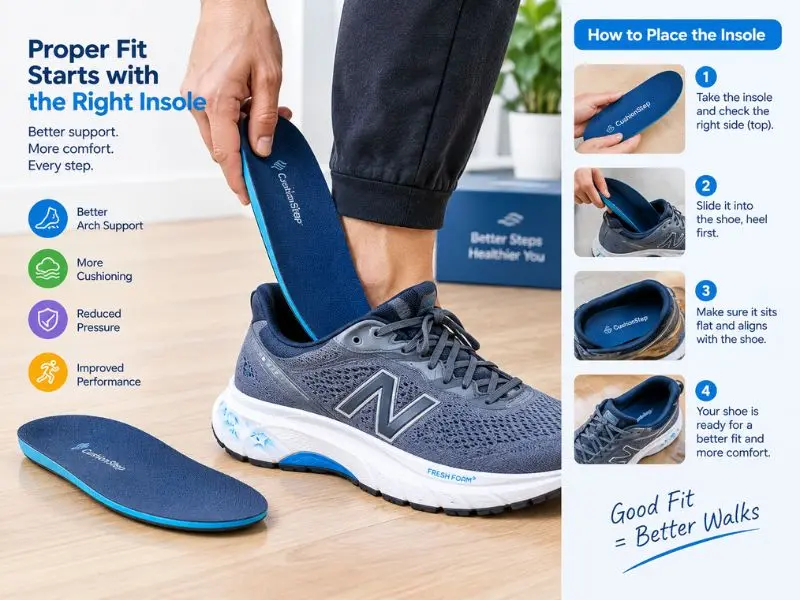
Start with your foot shape. Think about whether your arch is low, medium, or high and whether the insole’s shape feels natural under your foot.
Next, consider your shoe type. Running shoes usually provide more space for a full-length replacement insole, while dress shoes and slimmer footwear may work better with a thin or 3/4-length design.
Your activity level matters too. Someone walking several miles every day may want a different design from someone who needs extra comfort for occasional use.
Pay attention to cushioning preference. Cushioned insoles can feel soft and comfortable, while firmer designs may provide a more stable sensation.
Sizing is equally important. Many replacement insoles can be trimmed, but you should use the manufacturer’s sizing instructions rather than cutting too much material away.
Finally, check whether the original shoe insole is removable. If it is, replacing it is usually easier and gives you more room for a new footbed.
Are Insoles Worth It?
Insoles can be worthwhile when the original footbed feels uncomfortable, lacks support, or has become worn. They can also help fine-tune the fit of a shoe and change how the shoe feels underfoot.
However, an insole is not a universal solution for foot problems. Persistent or severe pain may have an underlying cause that an insert cannot address. If discomfort continues or gets worse, consider speaking with a qualified healthcare professional instead of continually changing insoles.
The most comfortable option is also not always the softest. A good fit, appropriate arch shape, and balanced support are often more important than maximum cushioning.
How to Use and Break In New Insoles
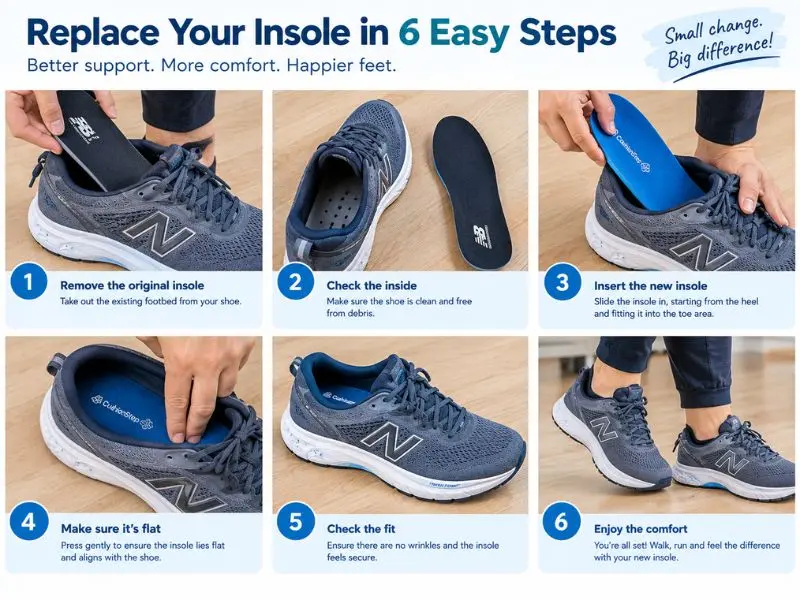
New insoles can feel different from the footbeds you are used to, especially if they provide more arch support.
Start by wearing them for shorter periods. For example, use them for part of the day before wearing them for a full work shift or long walk.
Make sure the heel sits securely and that your toes still have enough room. If you notice rubbing, excessive pressure, numbness, or significant discomfort, stop using them and reassess the fit.
When possible, remove the original shoe insole before inserting the replacement. Stacking one insole on top of another can make the shoe too tight unless the manufacturer specifically recommends it.
Give your feet time to adjust, but do not assume persistent pain is simply part of the break-in process.
When to Replace Your Insoles
Insoles do not last forever. Look for visible compression, cracks, flattened cushioning, worn fabric, or changes in shape.
You may also notice that your shoes no longer feel as comfortable as they did when the insoles were new. If the arch support has collapsed or the heel area has become uneven, replacement may be appropriate.
How long an insole lasts depends on the material, body weight, activity level, footwear, and frequency of use. Someone walking or standing for many hours every day may wear out an insole faster than someone who uses it occasionally.
Instead of relying only on a fixed replacement date, inspect the actual condition of the insole and pay attention to changes in comfort and support.
FAQs About the Best Insoles
What are the best insoles for everyday walking?
The best insoles for walking should provide a comfortable balance of cushioning, arch support, stability, and a secure fit.
How do I know which insoles are right for me?
Choose based on your arch shape, shoe type, activity, available space, and whether you prefer soft cushioning or firmer support.
Are expensive insoles better?
Not necessarily; a moderately priced insole can be a better choice if its shape and cushioning match your feet.
How long do insoles usually last?
Their lifespan varies with use, but visible compression, worn materials, and reduced support are common signs that replacement is needed.
Can insoles improve shoe comfort?
Yes, the right insole can improve cushioning, fit, and support, although results vary between people and footwear.
Conclusion
The best insoles are not necessarily the most expensive or the most heavily cushioned. The right choice should match your foot shape, New Balance sneakers, activity, support needs, and comfort preference. Whether you need everyday cushioning, walking support, running stability, or a structured orthotic-style design, focus on fit first and choose the level of support that feels comfortable and useful for your feet.
