
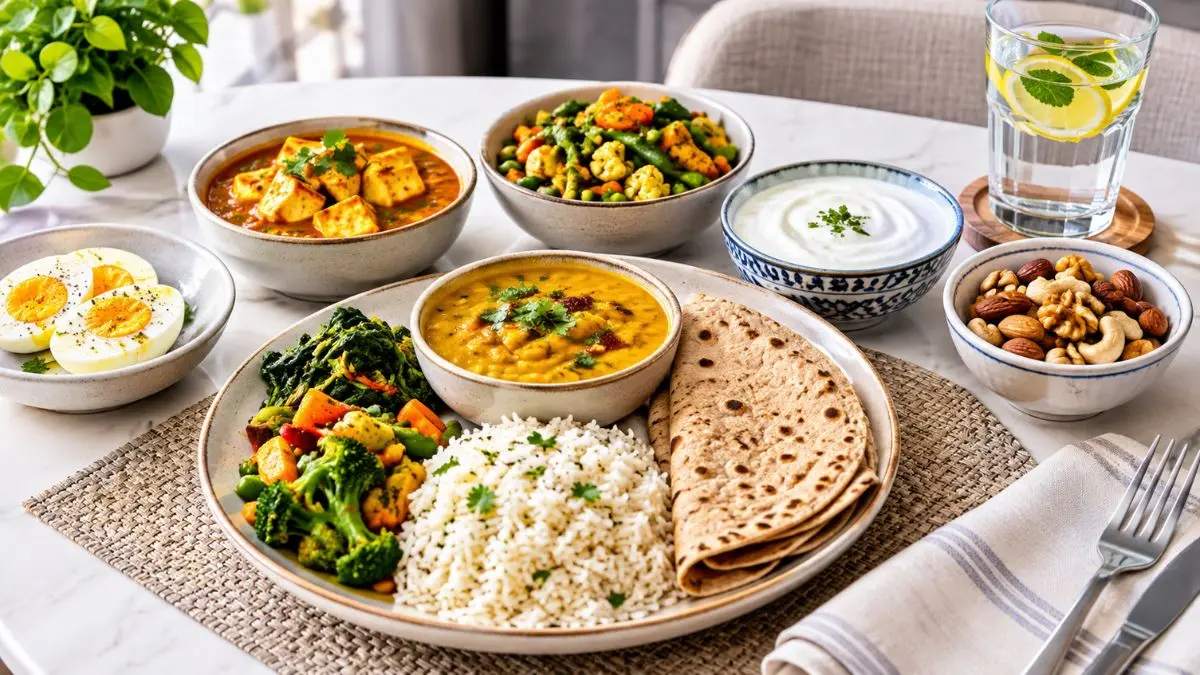
Protein is an essential nutrient that helps the body maintain muscles, support normal growth, and repair tissues. However, protein needs can differ from person to person depending on factors such as body weight, age, activity level, and overall health.
So, how much protein do Indians need daily? Current ICMR-NIN dietary guidance gives a recommended dietary allowance (RDA) of 0.83 grams of protein per kilogram of body weight per day for healthy adult men and women. For a 65 kg adult, that works out to about 54 grams of protein per day.
Your protein needs may also change depending on how active you are, whether you are trying to build muscle, your age, and any specific health or dietary needs. The good news is that many Indian foods, including dal, beans, dairy, eggs, fish, poultry, soy foods, nuts, and seeds, can contribute to a balanced protein intake.
How Much Protein Do Indians Need Daily?
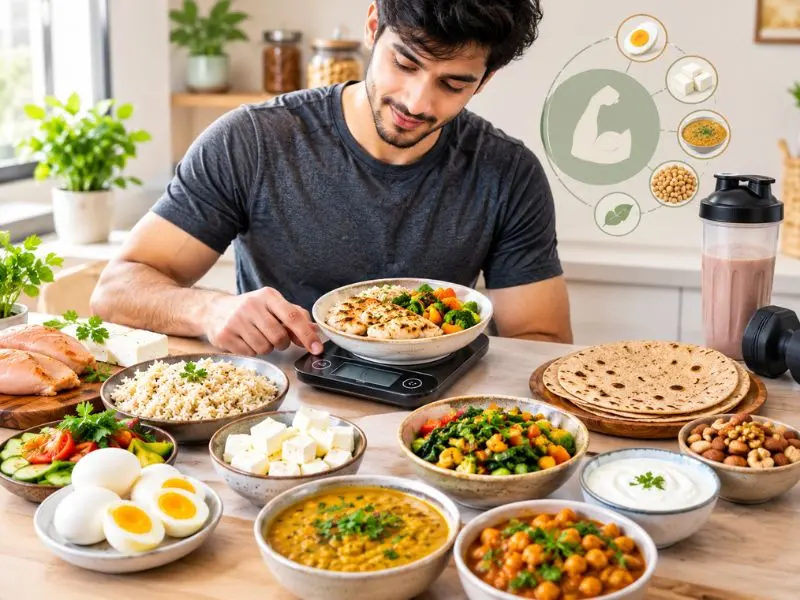
For healthy adults, the ICMR-NIN 2024 Dietary Guidelines list 0.83 g/kg/day as the protein RDA. To understand how much protein do Indians need daily, you can estimate your basic requirement by multiplying your body weight in kilograms by 0.83.
For example:
Body weight × 0.83 = approximate daily protein RDA
For example, someone who weighs 60 kg would need roughly 50 g of protein daily, while a person weighing 70 kg would need around 58 g.
| Body Weight | Approximate Protein RDA |
| 50 kg | 42 g/day |
| 60 kg | 50 g/day |
| 65 kg | 54 g/day |
| 70 kg | 58 g/day |
| 80 kg | 66 g/day |
| 90 kg | 75 g/day |
| 100 kg | 83 g/day |
These figures are general calculations based on the ICMR-NIN adult RDA of 0.83 g/kg/day. Individual requirements can differ depending on health status, body composition, life stage, and physical activity.
Getting enough protein is not just about hitting a daily target; choosing a variety of nutritious foods and maintaining a balanced diet is important too.
Daily Protein Needs by Age and Gender
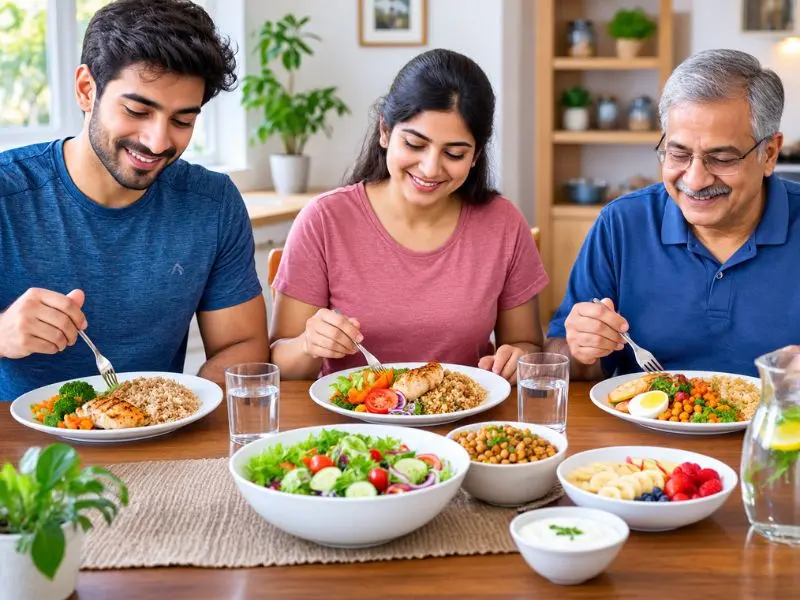
Protein requirements can change at different stages of life. Children and teenagers are growing, older adults may need additional attention to maintaining muscle, and pregnancy or breastfeeding can change nutritional requirements.
For healthy adult men and women, the current ICMR-NIN guideline uses the same protein RDA of 0.83 g/kg/day. Therefore, body weight is a more useful starting point than simply choosing a different number based on gender.
Adult Men
A healthy adult man can use body weight as a starting point for estimating his daily protein requirement. For example, a 75 kg man would calculate approximately 62 g of protein per day using the 0.83 g/kg/day RDA.
People who do regular strength training or have specific fitness goals may need to adjust their intake when considering how much protein do Indians need daily.
Adult Women
Healthy adult women can also use body weight to estimate the basic protein RDA. For example, a woman weighing 60 kg would need around 50 g of protein per day using the same calculation.
Pregnancy, breastfeeding, medical conditions, and individual dietary needs can change protein requirements, so general adult calculations should not be treated as personal medical advice.
Older Adults
As people get older, getting enough protein can be an important part of maintaining a balanced diet and an active lifestyle. ICMR-NIN also emphasizes regular physical activity, including strength exercise, along with a good diet for maintaining muscle mass and muscle function.
If an older person has difficulty eating enough, has an illness, or has been advised to follow a special diet, a qualified healthcare professional or registered dietitian can provide individualized guidance.
Protein Needs Based on Activity Level
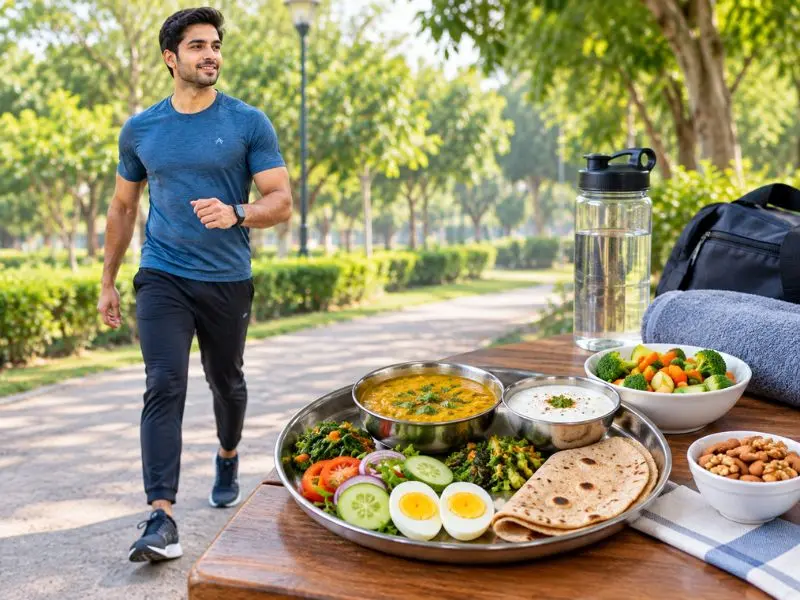
The amount of protein you need each day may also vary depending on your level of physical activity.
Someone with a mostly sedentary routine may need a different amount of protein than a person who works out regularly each week. Walking, running, resistance training, sports, and physically demanding work can all influence how much protein do Indians need daily and their overall nutrition needs.
Sedentary Adults
For a generally healthy adult with low physical activity, the ICMR-NIN RDA provides a useful baseline. A balanced and varied diet can usually provide enough protein without the need for supplements.
Regular Walkers
Walking is excellent for general physical activity, but casual walking alone does not necessarily mean you need large amounts of extra protein.
Focus on balanced meals containing protein, vegetables, whole grains or other carbohydrate sources, healthy fats, and adequate fluids.
Recreational Exercisers
If you work out a few times a week, including a good source of protein in your meals can help you maintain a well-balanced diet.
Foods such as curd, milk, dal, beans, eggs, chicken, fish, tofu, soy products, and paneer can make it easier to include protein regularly.
Strength Training
People who do regular strength training often focus more on protein because muscle growth and recovery depend on both proper nutrition and consistent training.
However, increasing protein does not replace a well-designed resistance-training program, sufficient calories, sleep, and an overall balanced diet.
ICMR-NIN’s dietary guidance emphasizes obtaining good-quality protein through food combinations and states that protein supplements are unnecessary for normal healthy life.
Protein Needs for Weight Loss
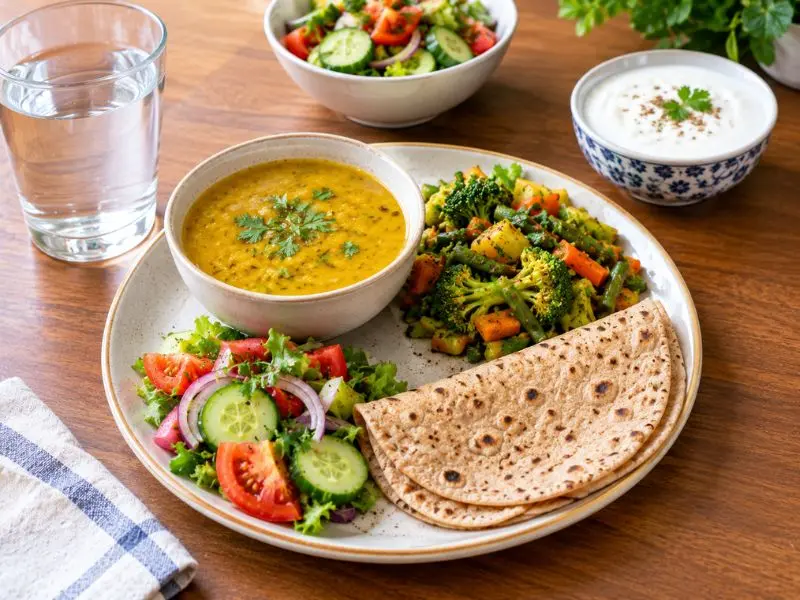
Protein can be part of a balanced weight-loss diet, but protein alone does not guarantee fat loss.
A useful approach is to include a protein source in meals while also eating vegetables, fruits, whole grains, pulses, and other nutrient-rich foods. Portion sizes and your overall calorie intake are still important to consider.
High-protein foods may also make meals more satisfying for some people, which can make it easier to follow a sensible eating pattern. However, calorie and nutritional needs can differ from one person to another.
Instead of focusing only on protein grams, look at the quality of the complete meal. For example, a bowl of dal with vegetables and roti can be a more balanced option when considering how much protein do Indians need daily than a highly processed snack with added protein.
Protein Needs for Muscle Gain
People trying to build muscle usually combine resistance training with adequate protein and sufficient overall nutrition.
Protein supplies the amino acids your body needs to support and repair muscle tissue. However, increasing your protein intake alone will not build muscle; regular strength training is also needed to stimulate muscle growth.
For someone starting strength training, it can be useful to include a protein-rich food at each main meal. Options include eggs, milk, curd, paneer, dal, chickpeas, rajma, soy foods, fish, and chicken.
ICMR-NIN recommends obtaining protein through appropriate food combinations and notes that most athletes can obtain recommended protein amounts through suitable food choices.
Vegetarian Protein Sources for Indians
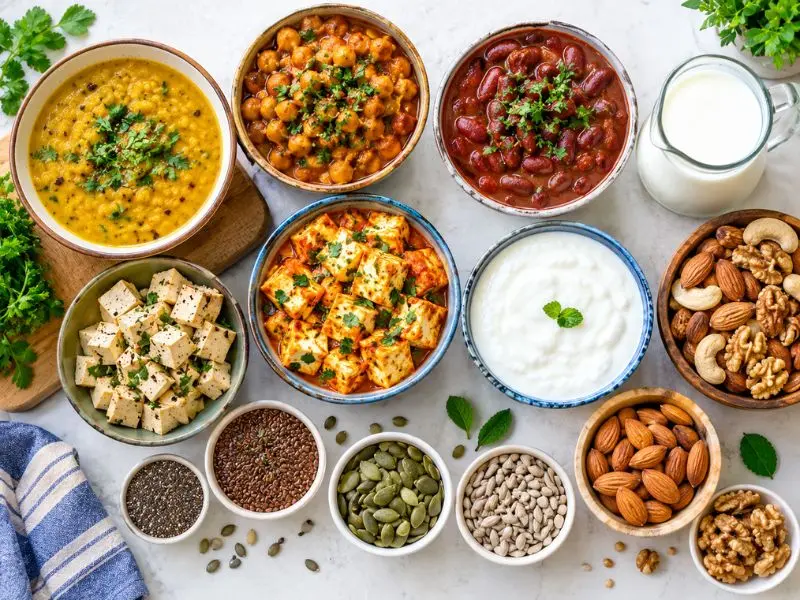
A vegetarian diet can provide protein when meals contain a variety of foods.
Common Indian vegetarian protein sources include:
- Dal and lentils
- Chickpeas and chana
- Rajma
- Peas
- Soybeans and soy foods
- Tofu
- Paneer
- Milk
- Curd
- Peanuts
- Nuts and seeds
- Whole grains
Protein quality is also worth considering. ICMR-NIN explains that cereals and pulses have different amino-acid patterns and that combining them can improve the overall quality of dietary protein. Its guidance gives a cereal-to-pulse combination of about 3:1 by raw food weight as one example.
This is one reason traditional combinations such as rice with dal or roti with dal can fit naturally into a balanced Indian eating pattern.
High-Protein Indian Foods
Indian meals offer many ways to increase protein without relying on protein powders.
Dal and Lentils
Dal is a familiar part of many Indian meals and can contribute protein along with other nutrients. Different varieties, such as moong dal, masoor dal, and toor dal, can add variety while helping meet how much protein do Indians need daily.
Chickpeas and Rajma
Chickpeas and kidney beans are useful plant-based options. They can be used in curries, salads, wraps, or mixed meals.
Dairy Foods
Milk, curd, and paneer can contribute protein to vegetarian diets. Curd can also be used as a simple side with meals or as part of a snack.
Eggs
Eggs provide high-quality protein and can be included in breakfast, lunch, or dinner depending on dietary preferences.
Fish and Chicken
For non-vegetarians, fish and chicken can provide concentrated sources of protein. Choosing sensible portions and preparing them with a balanced meal can make them practical choices.
Soy Foods
Soybeans, tofu, and other soy foods can be useful vegetarian protein choices. They can add variety to meals that otherwise rely heavily on grains and pulses.
How to Spread Protein Throughout the Day
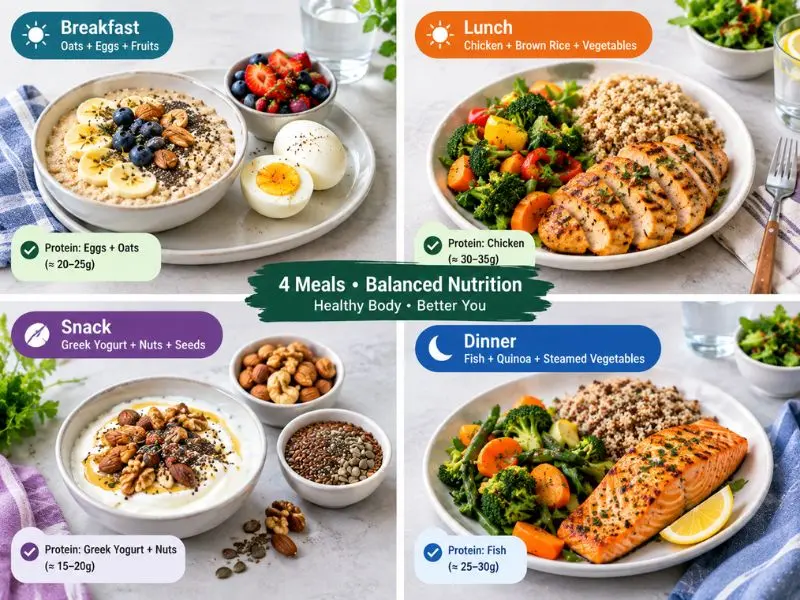
You do not have to eat all your protein in one meal.
Instead, try to include a protein source at breakfast, lunch, snacks, and dinner. This can make it easier to meet your daily protein requirement while keeping meals balanced.
For example, breakfast could include eggs or milk with another balanced food. Lunch could include dal, curd, or beans. A snack might include curd, milk, roasted chana, or another suitable protein-rich option. Dinner could include dal, paneer, tofu, fish, chicken, or another protein source.
The goal is not to make every meal extremely high in protein. The goal is to build a consistent eating pattern that provides enough protein throughout the day and supports how much protein do Indians need daily.
Simple High-Protein Indian Meal Ideas
Here are some practical combinations:
Breakfast: Eggs with roti and vegetables, or curd with a balanced breakfast.
Lunch: Dal with rice or roti, vegetables, and curd.
Snack: Roasted chana, milk, curd, or a small serving of nuts and seeds.
Dinner: Rajma or chickpea curry with roti and vegetables, or paneer/tofu with a balanced side.
Non-vegetarian option: Chicken or fish with rice or roti and vegetables.
These are examples rather than fixed meal plans. The appropriate portions depend on your body size, energy needs, food preferences, and health goals.
Common Mistakes When Increasing Protein
Focusing Only on Protein
Protein is important, but your diet also needs carbohydrates, fats, fiber, vitamins, minerals, and enough fluids.
Depending Too Much on Supplements
Protein powders can be convenient in some situations, but they are not automatically necessary. ICMR-NIN’s dietary guidance encourages obtaining protein through suitable foods and notes that protein supplements are unnecessary for normal healthy life.
Ignoring Protein Quality
Eating a variety of foods can help provide a broader range of essential amino acids. Combining cereals and pulses is one approach highlighted in ICMR-NIN guidance and can help support how much protein do Indians need daily.
Eating Too Much Processed Food
A product can contain a large amount of protein while still being high in added sugar, sodium, or calories. Look at the entire nutrition profile rather than protein alone.
Forgetting Individual Needs
A general calculation cannot account for every medical condition or life stage. People with kidney disease, certain medical conditions, pregnancy, or other specific nutritional needs should seek individualized professional advice.
Protein Intake for Indians: A Simple Daily Approach
For a healthy adult, the easiest starting point is to use body weight and the ICMR-NIN RDA of 0.83 g/kg/day.
For example, someone weighing 65 kg would calculate:
65 × 0.83 = 53.95 g
That is approximately 54 g of protein per day.
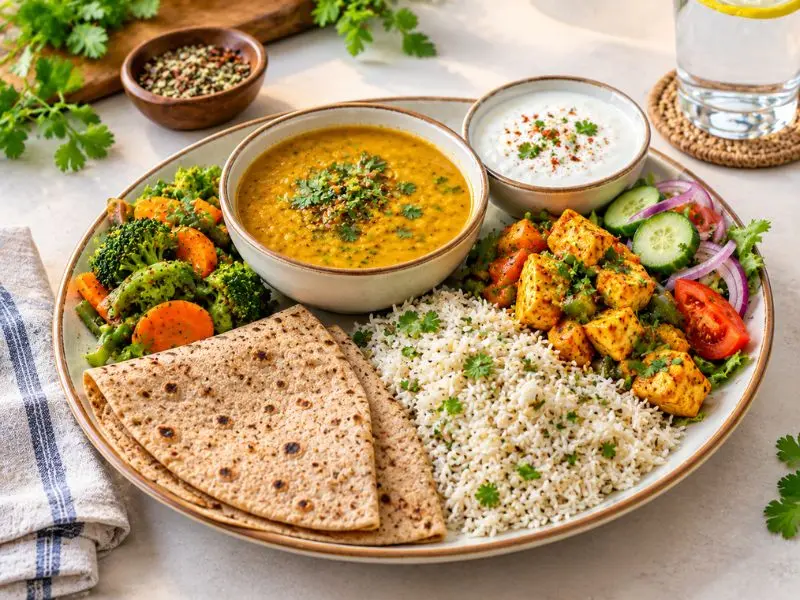
From there, build meals around a variety of protein-containing foods. A vegetarian Indian diet can include dal, beans, peas, milk, curd, paneer, and soy foods, while non-vegetarians can also use eggs, fish, poultry, and meat.
The important point is consistency. You do not need to make every meal high in protein or depend on supplements to maintain a balanced diet while meeting how much protein do Indians need daily.
Frequently Asked Questions
How much protein does an Indian adult need per day?
The ICMR-NIN RDA for healthy adult men and women is 0.83 g of protein per kg of body weight per day.
How much protein should I eat for muscle gain?
Protein needs for muscle gain can vary with training, body weight, and overall diet, so an individualized target may be appropriate.
Which Indian vegetarian foods are high in protein?
Dal, lentils, chickpeas, rajma, soy foods, paneer, milk, curd, peas, nuts, and seeds can all contribute protein.
Can I get enough protein from an Indian vegetarian diet?
Yes, a varied vegetarian diet can provide adequate protein when it includes diverse foods and suitable combinations.
Is eating more protein always better?
No, more protein is not automatically better, and overall diet quality and individual nutritional needs also matter.
Conclusion
Understanding how much protein do Indians need daily starts with a simple body-weight-based calculation. For healthy adults, the ICMR-NIN RDA is 0.83 g/kg/day, which equals about 54 g for a 65 kg adult.
Rather than focusing only on a protein number, build balanced meals using dal, beans, dairy, soy foods, eggs, fish, poultry, or other suitable choices. Your age, activity level, health, and personal goals can affect your needs, so a personalized plan may be useful when your requirements are more specific, especially when considering protein supplements.