

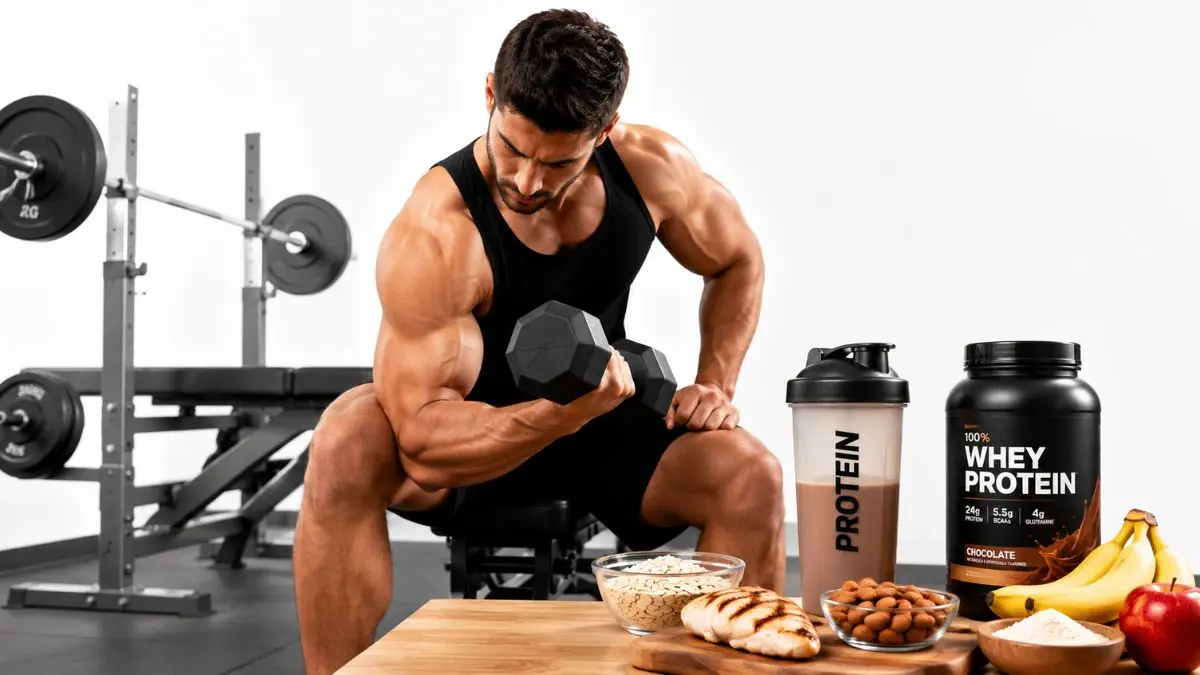
Building muscle takes more than simply spending time in the gym. Your body needs enough calories, protein, resistance training, sleep, and recovery to support muscle growth. A protein drink can be a convenient way to increase protein intake, but supplements should support a strong diet and training routine rather than replace them.
If you are searching for the best supplements for gaining muscle, the good news is that you do not need a long list of expensive products. A few well-supported options can be useful when they match your goals and nutritional needs. This guide explains which supplements are worth considering, how they may help, and which popular products may not be worth your money.
What Are Muscle Building Supplements?
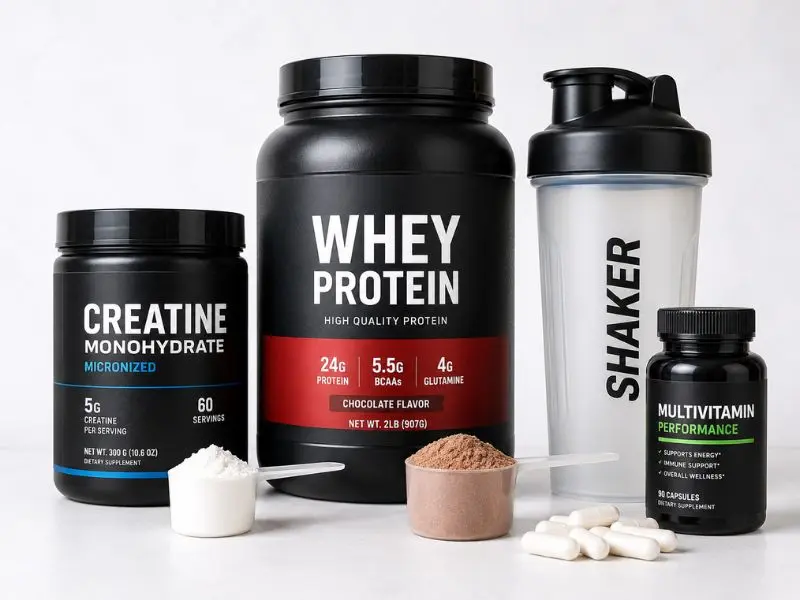
Muscle building supplements are products designed to help support nutrition, training performance, recovery, or muscle growth. The best supplements for gaining muscle may contain protein, creatine, amino acids, carbohydrates, vitamins, minerals, or other ingredients designed to support muscle growth and workout performance.
However, not every product marketed for muscle gain has strong evidence behind it. The supplement industry includes products with very different levels of research, quality, and effectiveness.
The most important point is that supplements work best when the basics are already in place. A balanced diet and consistent resistance training provide the foundation for gaining muscle.
For example, if you are not eating enough protein or calories, adding several supplements may not solve the problem. Likewise, taking creatine without following a progressive resistance-training program is unlikely to produce the results you want.
The National Institutes of Health notes that performance supplements cannot replace a healthy diet, although some ingredients may provide benefits depending on the type and intensity of exercise.
Best Supplements for Gaining Muscle
There are many products marketed as muscle gain supplements, but only a smaller group has useful evidence behind them.
1. Creatine Monohydrate
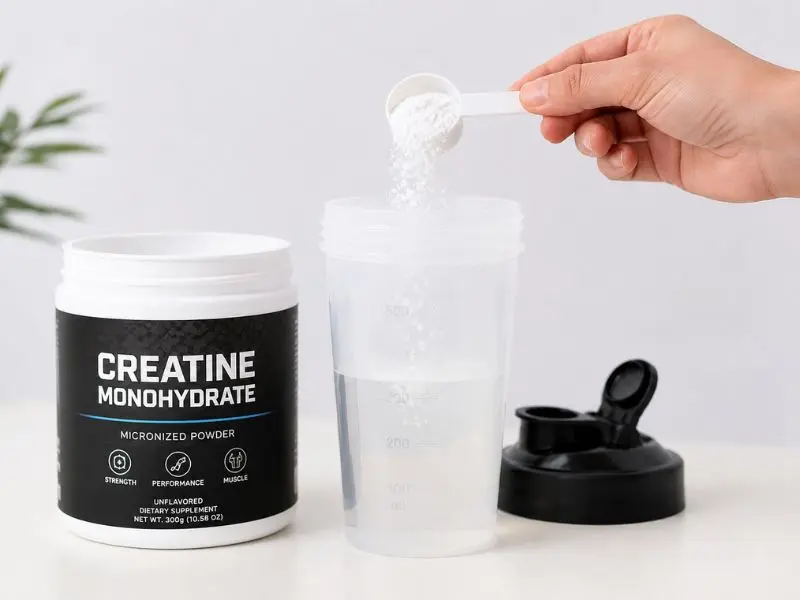
Creatine monohydrate is one of the most researched supplements for strength and high-intensity exercise.
Your body naturally produces creatine, and you also get some from foods such as meat and fish. Muscles store creatine and phosphocreatine, which help provide energy during short, intense efforts.
Supplementing with creatine can increase muscle creatine stores and may improve performance during repeated high-intensity activities such as weightlifting. Better training performance can support progress over time.
Creatine is also associated with an increase in body weight for many users because it increases water stored in muscle. This is not the same thing as gaining body fat.
The NIH Office of Dietary Supplements identifies creatine monohydrate as the most widely studied form and notes that it can improve strength and power during intense, intermittent exercise.
A common approach used in research is 3–5 grams per day. Some people use a short loading phase, but loading is not required for creatine to work.
For most people interested in muscle growth, creatine monohydrate is one of the best supplements for gaining muscle and is worth considering as part of a consistent training and nutrition plan.
2. Protein Powder
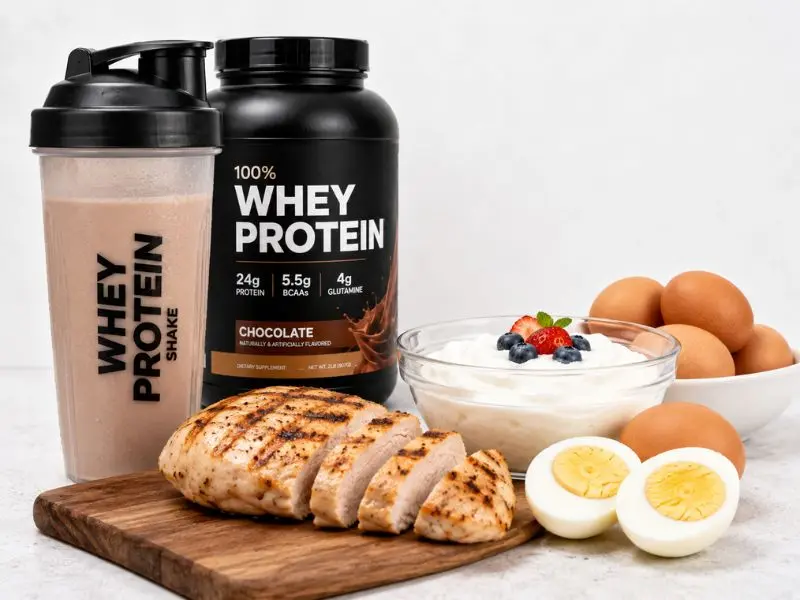
Protein powder can be useful when you struggle to get enough protein from regular food.
Whey protein is a popular choice because it is convenient, high in essential amino acids, and digested relatively quickly. Other options include casein, soy, pea, and other plant-based proteins.
The key benefit of protein powder is convenience. A shake can make it easier to reach your daily protein target without preparing another full meal.
Research on resistance training shows that adequate protein intake can support gains in muscle size and strength. A large meta-analysis found that protein supplementation provided additional benefits during prolonged resistance training, with benefits leveling off around total protein intakes of approximately 1.6 g/kg/day in the analyzed studies.
That does not mean everyone needs exactly 1.6 g/kg. Individual needs can vary based on body size, training, diet, age, and goals.
Think of protein powder as food in a convenient form, and one of the best supplements for gaining muscle, rather than a magic muscle-building product.
3. Casein Protein
Casein is another high-quality protein option and is naturally found in milk.
Unlike whey, casein generally digests more slowly. This makes it a convenient choice when you want a protein-rich snack that may keep you satisfied for longer.
You do not need casein specifically to build muscle. If your daily protein intake is already adequate, choosing whey, casein, soy, or another quality protein can largely come down to personal preference and dietary needs.
For people who enjoy a protein shake later in the day, casein can be an easy option and one of the best supplements for gaining muscle when used as part of a balanced diet.
4. Caffeine
Caffeine is primarily a performance supplement rather than a direct muscle-building supplement.
It can increase alertness and may help some people feel more energetic during workouts. This can be useful when fatigue or low energy makes it difficult to train with the desired effort.
Coffee is already a major source of caffeine for many people, so you may not need a separate pre-workout product.
However, more caffeine is not automatically better. Too much caffeine can cause problems such as restlessness, increased heart rate, or difficulty sleeping, so it may not be one of the best supplements for gaining muscle for everyone.
Because sleep is important for recovery, taking caffeine too late in the day can work against your muscle-building goals.
The NIH includes caffeine among commonly used exercise-performance ingredients, while also emphasizing that supplement effects and safety vary by ingredient and individual.
5. Carbohydrate Supplements
Carbohydrates are not usually the first product people think about when discussing muscle-building supplements, but they can be useful in certain situations.
Carbohydrates provide energy for training and can make it easier to consume enough calories when trying to gain weight.
A carbohydrate powder may be useful for someone who has a high calorie requirement and finds it difficult to eat enough food.
However, you can also get carbohydrates from foods such as rice, oats, potatoes, fruit, pasta, bread, and whole grains.
If you meet your calorie and carbohydrate needs through food, a supplement may not be necessary, even among the best supplements for gaining muscle.
6. Weight Gainer
Weight gainers combine protein, carbohydrates, and calories in a convenient powder.
They can be useful for people who have difficulty eating enough calories to support weight gain. For example, someone with a small appetite may find it easier to drink a calorie-rich shake than eat another large meal.
But weight gainers are not automatically better than homemade shakes.
You can often create a similar option using milk or a milk alternative, protein powder, oats, fruit, nut butter, and other calorie-dense foods.
The key factor is your overall calorie intake, not whether those calories come from one of the best supplements for gaining muscle.
7. Vitamin and Mineral Supplements
Vitamins and minerals are important for normal body function, but taking large amounts does not automatically lead to faster muscle growth.
A supplement may be useful when your diet does not provide enough of a particular nutrient or when a healthcare professional identifies a deficiency.
For this reason, a multivitamin should not be viewed as one of the primary supplements for muscle growth.
Your first goal should be a varied diet with protein-rich foods, fruits, vegetables, whole grains, healthy fats, and the best supplements for gaining muscle when needed.
How Do Supplements Help Muscle Growth?
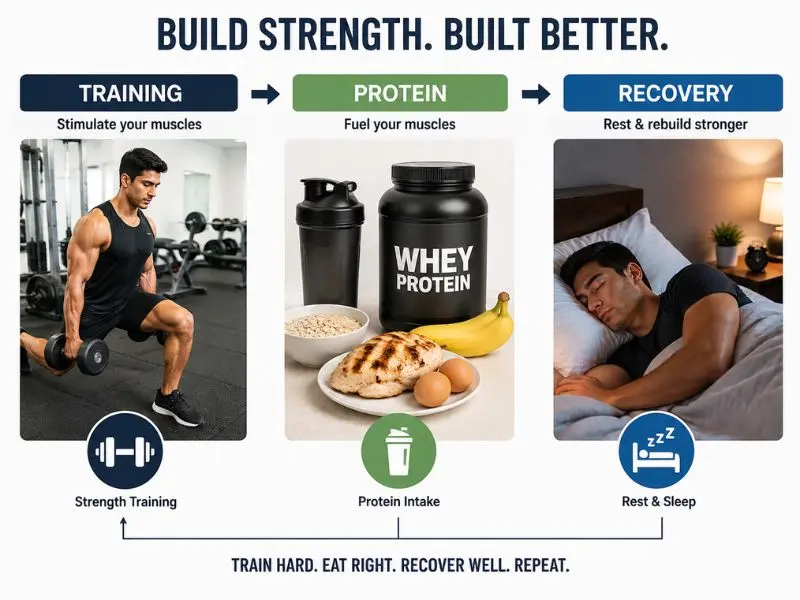
Supplements can support muscle gain in several different ways.
Some improve training performance. Others make it easier to meet protein or calorie needs. A few may directly influence processes related to exercise performance and muscle adaptation.
Creatine, for example, can support repeated high-intensity efforts. Protein powder can help you reach an adequate daily protein intake.
These effects are useful because muscle growth depends heavily on the quality and consistency of your training and nutrition.
A supplement does not replace progressive overload. You still need to challenge your muscles over time by gradually increasing training demands.
Recovery matters too. Your muscles need enough rest, sleep, food, and the right best supplements for gaining muscle to adapt to resistance training.
Supplements vs. Whole Foods for Muscle Gain
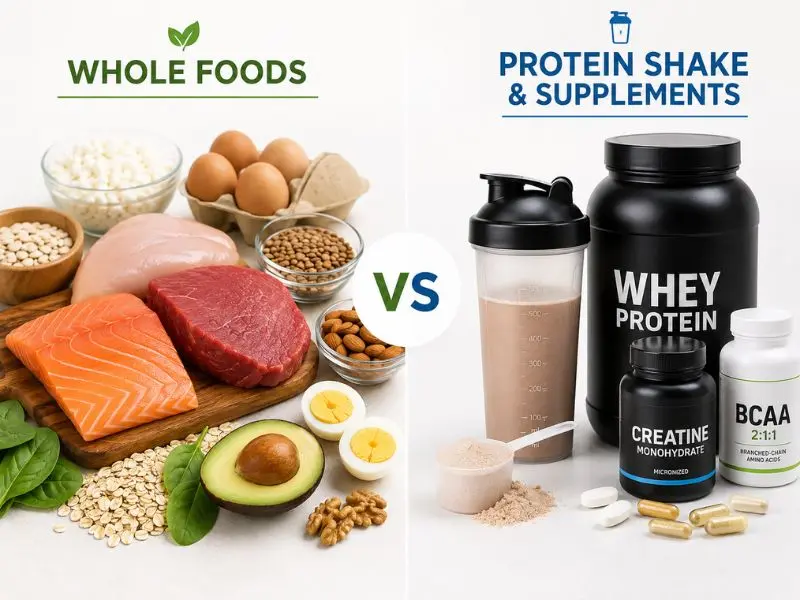
Whole foods should generally make up the majority of your diet because they provide more than protein or calories alone.
Chicken, eggs, Greek yogurt, fish, beans, lentils, milk, and tofu provide protein and other nutrients that can help you gain muscle with proper nutrition and training.
Supplements are most useful for convenience.
For example, if you need 30 grams of protein after work but do not have time to prepare a meal, a protein shake can be practical.
That does not make the shake better than food. It simply makes meeting your nutritional target easier when using the best supplements for gaining muscle.
Comparison of Popular Muscle Gain Supplements
| Supplement | Main Purpose | Evidence | Best Use |
| Creatine monohydrate | Strength and high-intensity performance | Strong | Regular resistance training |
| Protein powder | Helps meet protein needs | Strong | Convenient protein intake |
| Casein protein | Convenient protein source | Good | Meals or snacks |
| Caffeine | Energy and exercise performance | Good | Pre-workout use |
| Weight gainer | Adds calories and protein | Depends on diet | People struggling to eat enough |
| Carbohydrate powder | Adds carbohydrates and calories | Useful in some situations | High calorie or training demands |
| BCAA supplements | Provides selected amino acids | Limited when protein is adequate | Usually unnecessary |
Supplements for Muscle Growth: What About BCAAs?
Branched-chain amino acids, or BCAAs, contain leucine, isoleucine, and valine.
Leucine plays an important role in stimulating muscle protein synthesis, which is why BCAA supplements are often marketed for muscle growth.
However, taking BCAAs alone is not necessarily better than consuming a complete protein source.
Complete protein foods and protein powders provide BCAAs along with other essential amino acids that the body needs.
If your daily protein intake is already adequate, spending extra money on BCAA supplements may provide little additional value.
For most people, a quality protein source is a more practical choice than many of the best supplements for gaining muscle.
Are Pre-Workout Supplements Necessary?
No. A pre-workout supplement is optional.
Many pre-workout products contain caffeine along with ingredients such as beta-alanine, citrulline, creatine, or other compounds.
The problem is that combination products can make it difficult to know which ingredient is responsible for an effect. The NIH also notes that many multi-ingredient performance supplements have not been studied as combinations, so their overall effectiveness and safety may be uncertain.
If you want a pre-workout product, check the label carefully and avoid blindly combining it with coffee, energy drinks, or other sources of caffeine.
You can build an effective workout routine without relying on the best supplements for gaining muscle or pre-workout products.
How to Choose the Best Muscle Gain Supplements
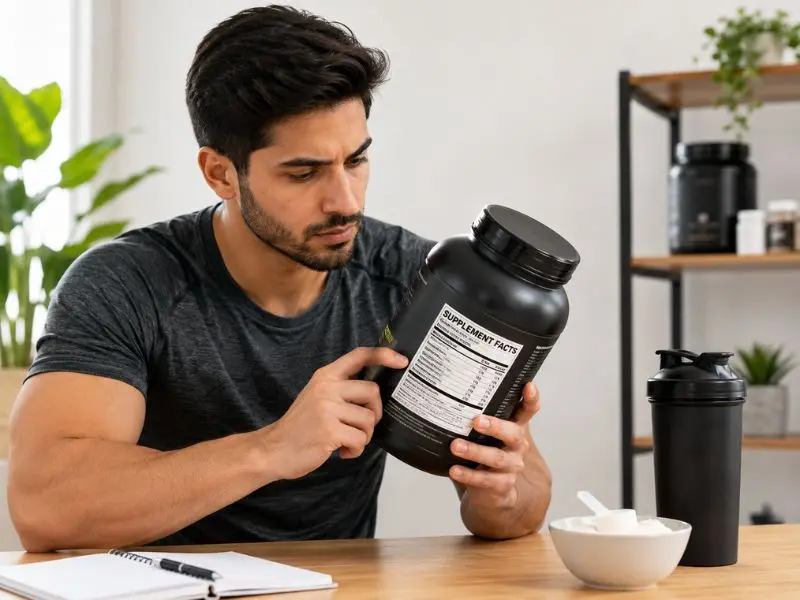
Choosing supplements should start with your actual needs rather than the latest social media trend.
Check the Ingredients
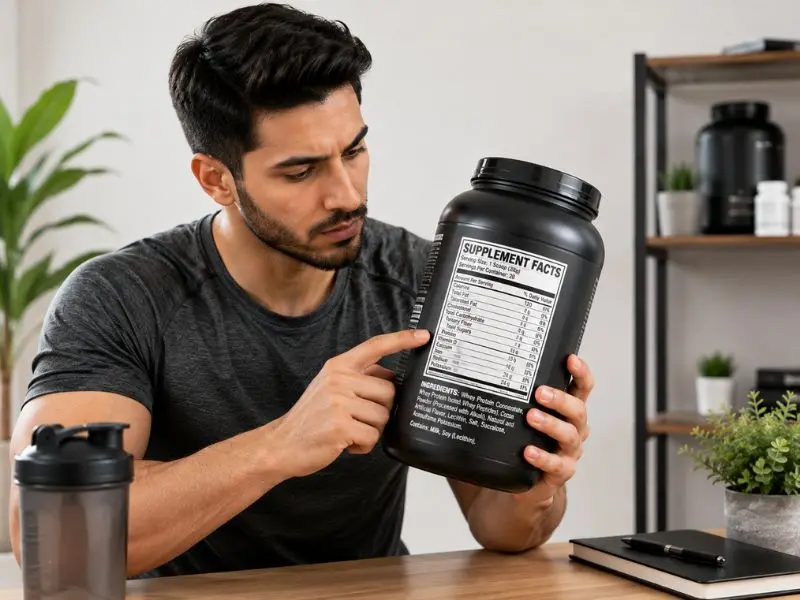
Look for products that clearly list their ingredients and amounts.
Avoid products that hide important information behind vague proprietary blends.
A transparent label makes it easier to understand which ingredients are in the best supplements for gaining muscle.
Choose Evidence Over Hype
Words such as “anabolic,” “extreme muscle growth,” or “testosterone boosting” do not prove that a supplement works.
Look for ingredients in the best supplements for gaining muscle that have human research supporting their intended use.
Creatine monohydrate and protein supplements have much stronger evidence for relevant goals than many exotic muscle-building ingredients.
Consider Third-Party Testing
Supplements can vary in quality. Third-party testing can provide additional confidence that a product has been tested for its contents and contaminants.
This is especially important for competitive athletes choosing the best supplements for gaining muscle to reduce the risk of consuming prohibited substances.
Compare Cost Per Serving
A cheap tub is not always the cheapest option.
Compare the price per serving and, more importantly, the amount of useful ingredient provided per serving.
This helps you avoid paying more for flashy packaging or unnecessary ingredients in the best supplements for gaining muscle.
How to Use Supplements With a Muscle-Building Diet
Supplements work best when they fit into your overall eating plan.
Start by estimating how much protein and energy you need. Then build most of your meals around nutrient-dense foods.
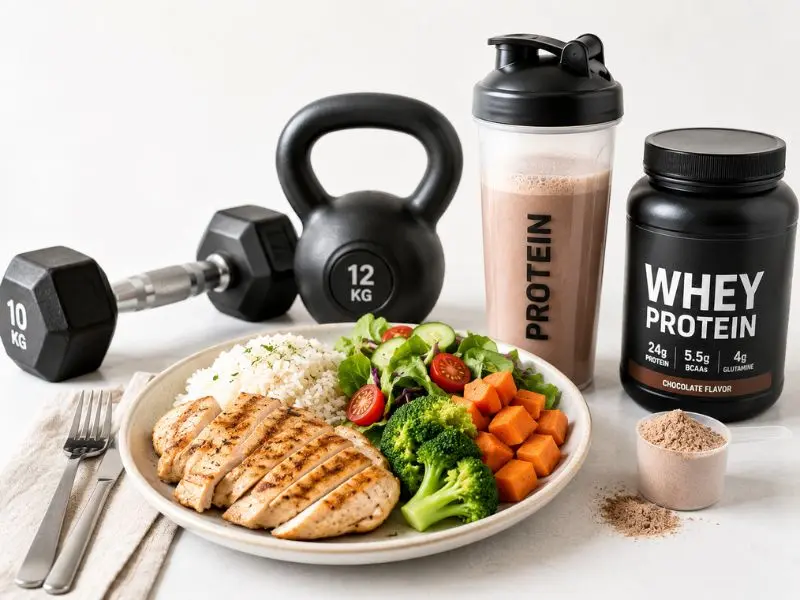
A simple muscle-building meal might include chicken, rice, vegetables, and olive oil.
Breakfast could include eggs, oatmeal, fruit, and Greek yogurt.
A snack could be a protein shake with milk, banana, oats, and peanut butter.
This approach provides protein, carbohydrates, fats, and calories without depending heavily on supplements.
If your diet already provides enough protein and calories, you may only need a few of the best supplements for gaining muscle.
Common Mistakes When Using Muscle Building Supplements
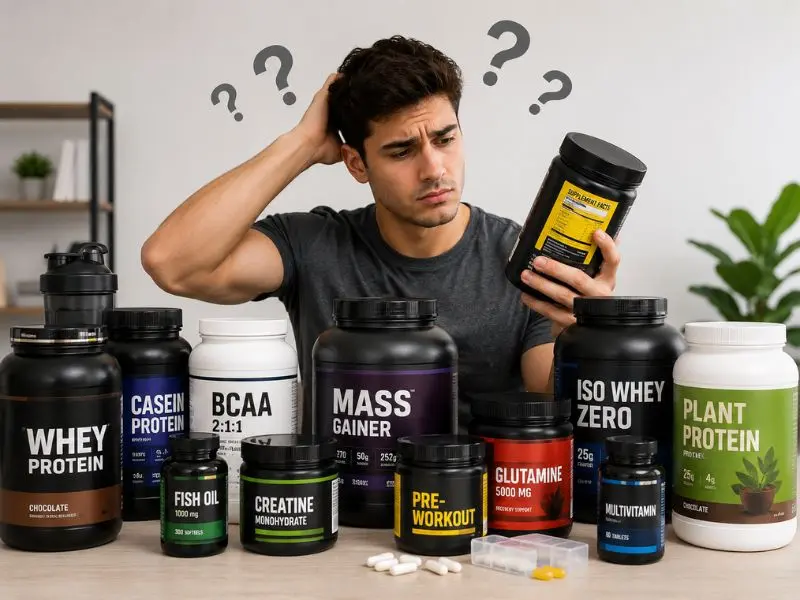
Taking Too Many Products
More supplements do not automatically mean more muscle.
Using five or ten products at once can become expensive and makes it harder to identify what is actually helping.
Start with the basics and add the best supplements for gaining muscle only when you have a clear reason.
Ignoring Calories
Muscle growth requires more than protein.
If you consistently eat too few calories, gaining body weight and muscle can become more difficult.
A moderate calorie surplus can be useful for people whose primary goal is gaining size, along with the best supplements for gaining muscle.
Replacing Meals With Shakes
Protein shakes are convenient, but they should not automatically replace most of your meals.
Whole foods provide more nutrients and can make your diet more satisfying than relying only on the best supplements for gaining muscle.
Expecting Fast Results
Supplements cannot compensate for inconsistent training.
Muscle growth is a gradual process. Your results depend on training quality, nutrition, recovery, genetics, consistency, and using the best supplements for gaining muscle when needed.
Buying Based on Marketing
A product promoted by a fitness influencer is not necessarily effective.
Check the ingredients, serving sizes, evidence, and quality testing before buying the best supplements for gaining muscle.
Taking Excessive Doses
Higher doses are not always better.
Some ingredients have useful amounts supported by research, while excessive intake can increase the chance of unwanted effects.
Follow product directions and consult a qualified healthcare professional before using the best supplements for gaining muscle if you have safety concerns.
Practical Tips for Better Muscle Gain
1. Prioritize resistance training.
Use a structured workout program and gradually increase the challenge as your strength improves.
2. Eat enough protein.
Spread protein-rich foods across your meals instead of relying on one large serving.
3. Get enough calories.
If gaining size is the goal, consistently eating enough energy is important.
4. Use supplements strategically.
Choose products that solve a specific nutritional or training problem.
5. Make creatine simple.
Creatine monohydrate is well studied, and a daily routine is more important than complicated timing.
6. Treat protein powder as a convenience.
Use it when food alone makes it difficult to reach your protein target.
7. Protect your sleep.
Poor sleep can make training and recovery harder.
8. Track your progress.
Record your workouts, body weight, measurements, and strength so you can see whether your plan is working.
9. Give your plan time.
Changing supplements every few days makes it difficult to judge what is effective.
10. Review your complete routine.
Before adding another product, ask whether your training, diet, sleep, and recovery are already consistent.
Are Muscle Gain Supplements Safe?
Safety depends on the specific ingredient, dose, product quality, and individual health situation.
Creatine has a strong safety record in healthy adults when used appropriately, while other supplements may have less evidence available. The NIH recommends discussing performance supplements with a healthcare professional, particularly if you take medications, have a medical condition, or are a teenager.
Remember that dietary supplements are not a substitute for medical care or a balanced diet.
If you experience unusual symptoms after starting the best supplements for gaining muscle, stop using them and seek medical advice.
Who Should Consider Supplements?
Supplements can be especially useful when they solve a practical problem.
For example, protein powder may help someone who struggles to eat enough protein from food. Creatine may be useful for someone following a consistent strength-training program.
On the other hand, someone who already meets their nutrition needs through food may not need several additional products.
The goal is not to build the biggest supplement stack. The goal is to create a consistent nutrition and training plan that works with the best supplements for gaining muscle.
Frequently Asked Questions
What are the best supplements for gaining muscle?
Creatine monohydrate and protein supplements have some of the strongest evidence for supporting resistance-training goals.
Do muscle building supplements really work?
Some can help, but their benefits depend on adequate nutrition, resistance training, recovery, and consistent use.
Is protein powder necessary to build muscle?
No, but it can make reaching your daily protein target more convenient.
Is creatine good for muscle growth?
Creatine can improve strength and high-intensity exercise performance, which can support muscle-building training over time.
Should beginners take muscle gain supplements?
Beginners should first establish consistent training and nutrition before adding supplements based on specific needs.
Conclusion
The best supplements for gaining muscle are not necessarily the products with the biggest claims or longest ingredient lists. Creatine monohydrate and protein supplements are practical, well-supported choices for many people, while caffeine, casein, carbohydrate products, and weight gainers may be useful in specific situations. Build your plan around progressive resistance training, enough protein and calories, quality food, sleep, and consistency, then use supplements only when they provide a clear benefit.
