
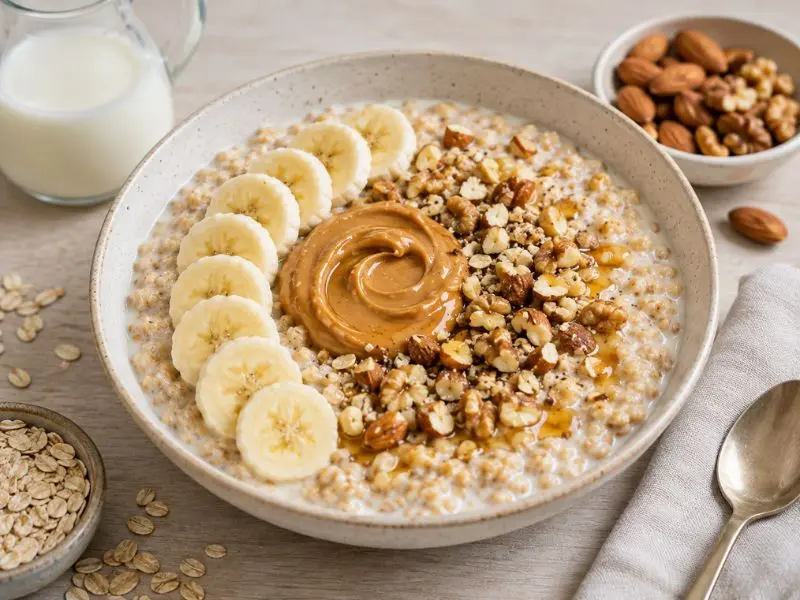
Oatmeal for gaining muscle is a simple and affordable way to add carbohydrates, calories, and some protein to your diet. Oats are easy to prepare and can be combined with milk, Greek yogurt, fruit, nuts, or protein powder.
However, oats alone cannot build muscle. A balanced diet, enough protein, resistance training, and proper recovery are all important for muscle growth. This guide explains how to use oatmeal effectively as part of a muscle-building diet.
Why Oatmeal Can Help With Muscle Gain
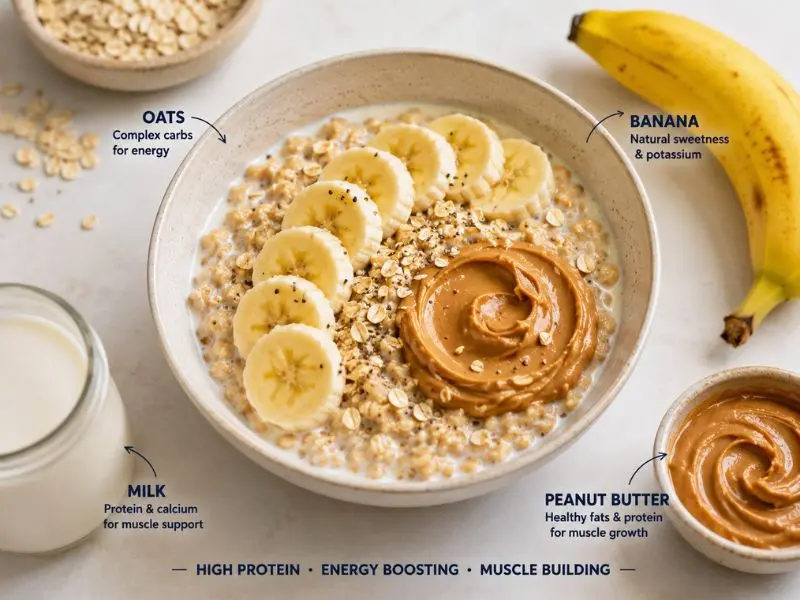
Oatmeal for gaining muscle works best when it is part of a balanced diet rather than treated as a special muscle-building food.
Oats provide carbohydrates, which are an important source of energy for exercise. When you eat enough carbohydrates, you may have more energy available for workouts. This can make it easier to train consistently and support good training performance.
Oats also provide some protein, fiber, vitamins, minerals, and other nutrients. However, the protein content of plain oats is not high enough to make oatmeal a complete muscle-building meal by itself.
The easiest solution is to combine oats with a quality protein source. Milk, Greek yogurt, cottage cheese, eggs, protein powder, or a protein-rich side can turn a basic bowl of oats into a more balanced meal.
Another advantage is that oats can make it easier to increase your calorie intake. If you are trying to gain muscle and struggle to eat enough food, a bowl of oats with milk, banana, peanut butter, and yogurt can provide a substantial meal without requiring complicated cooking.
Oatmeal Nutrition for Muscle Growth
A typical serving of dry oats provides carbohydrates along with moderate amounts of protein and fat. The exact nutrition depends on the brand and serving size.
The main reason oats are useful in a muscle-building diet is their carbohydrate content. Carbohydrates help provide energy for training and can complement protein-rich foods in your daily diet.
Oats also contain fiber, which can help make oatmeal for gaining muscle meals more filling.
This can be useful for people who want steady, satisfying meals. However, if you feel too full after eating a large amount of oats, reduce the portion or spread your carbohydrate intake across several meals.
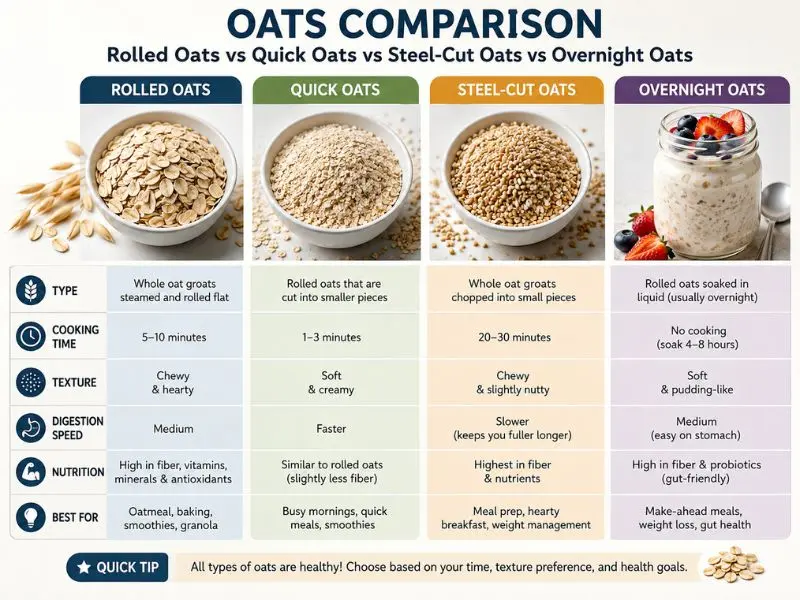
Here is a simple comparison of common oatmeal choices:
| Oatmeal option | Main benefit | Best use | Easy protein addition |
| Rolled oats | Balanced and versatile | Breakfast or meal prep | Greek yogurt or milk |
| Quick oats | Fast preparation | Busy mornings | Protein powder or milk |
| Steel-cut oats | Hearty texture | Filling breakfast | Eggs or Greek yogurt |
| Overnight oats | Convenient and cold | Meal prep | Greek yogurt or protein powder |
| Instant oats | Very quick | Post-workout or snacks | Milk, yogurt, or protein powder |
The best type depends more on your preferences and overall diet than on choosing a particular oat variety. Plain oats are often a good starting point because you can control the other ingredients.
How Oatmeal for Gaining Muscle Fits Into Your Diet
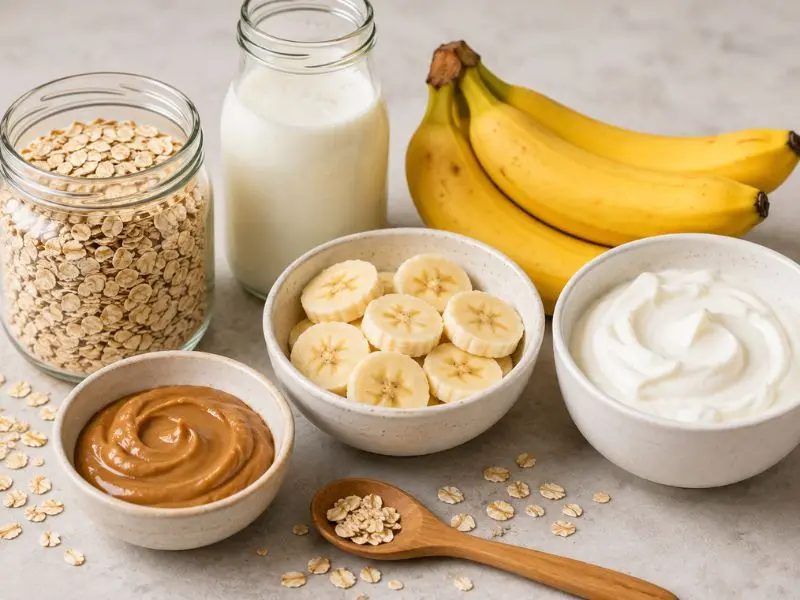
A successful muscle-building diet needs more than one food. Think of your daily meals as part of a complete system for oatmeal for gaining muscle.
You need enough protein to support muscle repair and growth. You also need enough calories to provide energy and support your goal. Carbohydrates and fats are useful sources of energy, while fruits and vegetables add important vitamins, minerals, and fiber.
This is where oatmeal for gaining muscle can fit naturally.
For example, you could build a bowl using:
- ½ to 1 cup of dry oats
- 1 cup of milk
- ½ to 1 banana
- ½ cup of Greek yogurt
- 1 tablespoon of peanut butter
- Cinnamon or berries for flavor
The portion should match your individual calorie and protein needs. Someone with a smaller appetite may need a smaller serving, while someone with higher energy needs may require more food.
You do not need to eat oats at every meal. One bowl at breakfast or as a snack can be enough to make oats a useful part of your diet.
How Much Oatmeal Should You Eat to Gain Muscle?
There is no single oatmeal serving that works for everyone.
Your ideal portion depends on your body size, activity level, total calorie needs, appetite, and the rest of your diet. A practical starting point is around ½ to 1 cup of dry oats for a meal.
If you are not gaining weight and your goal requires a calorie surplus, you may gradually increase your portion or add calorie-dense foods such as nuts, seeds, nut butter, dried fruit, or milk.
If you are gaining weight faster than intended, reduce the portion or adjust other calorie sources.
The goal is not to eat as much oatmeal as possible. The goal is a balanced diet with enough energy and nutrients for oatmeal for gaining muscle.
Best Protein Sources to Add to Oatmeal
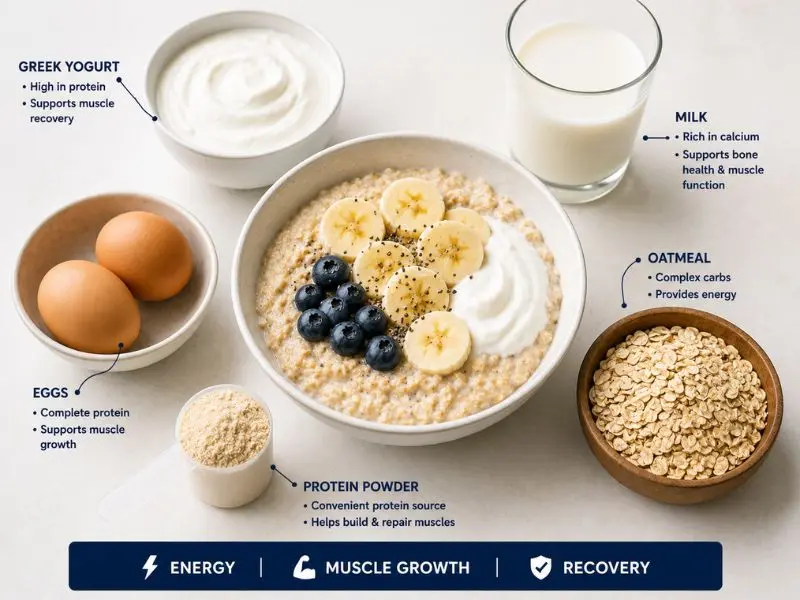
Plain oats are useful, but adding protein makes the meal more suitable for a muscle-building diet.
Greek Yogurt
Greek yogurt is an easy addition because it provides protein and creates a creamy texture. Add it after cooking the oats or use it in overnight oats.
Milk
Cooking oats with milk instead of water can increase the protein and calorie content of the meal. Dairy milk can be a convenient option for oatmeal for gaining muscle if you tolerate it well.
Protein Powder
Protein powder can be mixed into cooled oatmeal. Let the oats cool slightly before adding it, and mix well to avoid a lumpy texture.
Choose a product that fits your dietary needs. Supplements are optional, and you can meet your protein needs through regular foods.
Peanut Butter
Peanut butter adds some protein along with fats and calories. Peanut butter adds protein, fats, and calories, making it useful for oatmeal for gaining muscle when you need a higher-calorie meal.
Eggs
Eggs can be eaten alongside oatmeal rather than mixed directly into it. This combination gives you carbohydrates from oats and a high-quality protein source from eggs.
Best Oatmeal Toppings for Muscle Gain
The toppings you choose can change the nutrition of your meal significantly.
For extra protein, consider Greek yogurt, milk, cottage cheese, or protein powder. For additional calories, nuts, seeds, peanut butter, almond butter, or dried fruit can help.
For flavor and nutrients, use bananas, berries, apples, cinnamon, or unsweetened cocoa powder in oatmeal for gaining muscle.
Here are a few simple combinations:
Banana peanut butter oats: Oats, milk, banana, peanut butter, and cinnamon.
Berry yogurt oats: Oats, milk, Greek yogurt, berries, and chia seeds.
Chocolate protein oats: Oats, milk, protein powder, banana, and unsweetened cocoa powder.
Apple cinnamon oats: Oats, milk, chopped apple, cinnamon, Greek yogurt, and walnuts.
These combinations show why oatmeal for gaining muscle is easy to customize. You can change the ingredients based on your calorie and protein needs.
High-Protein Oatmeal Recipe for Muscle Gain
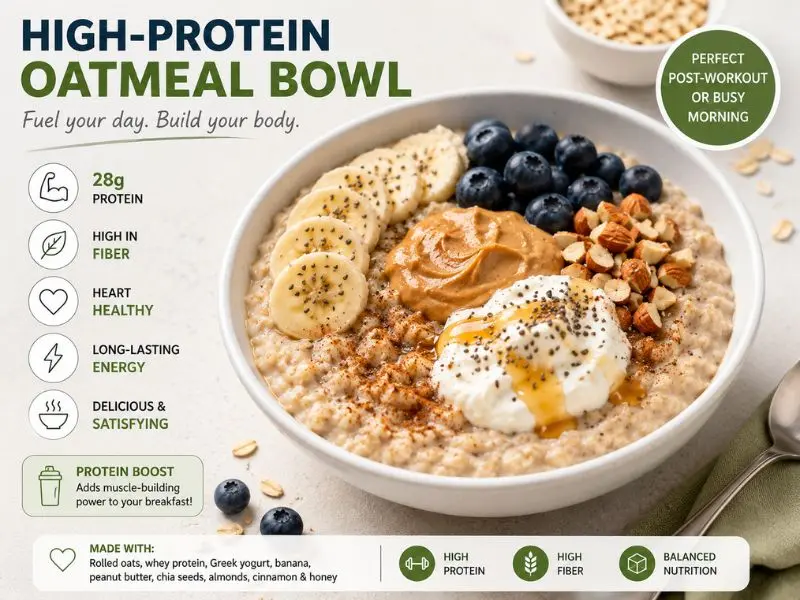
One of the easiest high protein oatmeal recipes for muscle gain uses oats, milk, Greek yogurt, banana, and protein powder for oatmeal for gaining muscle.
Ingredients
- ½ to 1 cup rolled oats
- 1 cup milk
- ½ banana
- ½ cup Greek yogurt
- ½ scoop protein powder
- Cinnamon
- A small amount of peanut butter if extra calories are needed
Directions
- Add oats and milk to a saucepan.
- Cook over medium heat until the oats become soft.
- Remove from heat and allow the oatmeal to cool slightly.
- Mix in the protein powder.
- Add Greek yogurt and sliced banana.
- Top with cinnamon and peanut butter if desired.
You can adjust the serving sizes to fit your nutrition goals. If you need more calories, increase the oats or add nut butter. If you need more protein, increase the Greek yogurt or use an appropriate amount of protein powder.
Oatmeal Before a Workout

Oats can be a useful pre-workout meal because they provide carbohydrates.
However, meal timing should also consider digestion. A very large bowl of oats immediately before exercise may feel uncomfortable for some people because oats contain fiber.
If you eat oatmeal for gaining muscle before training, try having it about 1–3 hours before your workout and see how your body responds.
A smaller bowl may work well if you are eating closer to exercise. You can combine oats with banana and a protein source for a balanced meal.
Avoid making your oatmeal for gaining muscle meal unnecessarily heavy if it causes stomach discomfort during training.
Oatmeal After a Workout
After training, your overall daily nutrition matters more than relying on one specific food.
Oats can be part of a post-workout meal because they provide carbohydrates, while added protein can help you reach your daily protein target.
For example, you could eat oats with milk, Greek yogurt, banana, and protein powder after resistance training.
The important point is that oatmeal for gaining muscle should support your overall eating pattern rather than replace a complete diet.
If you already ate a balanced meal before training and have another meal later, you do not need to rush to eat a large bowl of oats immediately after exercise.
Oatmeal for Gaining Muscle on a Calorie Surplus
Building muscle generally requires enough energy to support training and recovery. Some people choose a small calorie surplus when trying to gain muscle.
Oats can make this easier because you can increase calories without creating a complicated meal.
For example, adding milk, banana, peanut butter, and nuts can turn a basic bowl into a much higher-calorie meal.
However, more calories are not always better. A very large surplus can lead to more body-fat gain than you want.
A moderate approach is usually easier to manage. Track your body weight, gym performance, hunger, and progress over several weeks, then make small changes when needed.
Can You Gain Muscle by Eating Oatmeal Every Day?
Yes, you can include oats every day while trying to build muscle, provided your overall diet is balanced.
Eating the same breakfast can also make meal planning easier. You can prepare overnight oats the night before or cook a fresh bowl in the morning.
However, variety is still useful. Rotate your protein sources, fruits, vegetables, grains, and healthy fats throughout the week.
If you enjoy oats, there is no need to remove them simply because you are trying to gain muscle. Just make sure your oatmeal for gaining muscle diet includes enough protein and a wide range of nutrient-rich foods.
Common Mistakes When Using Oatmeal for Muscle Gain
Eating Plain Oats Without Enough Protein
Oats contain protein, but a plain bowl may not provide enough protein for a muscle-building meal. Add Greek yogurt, milk, eggs, or another protein source.
Adding Too Many High-Calorie Toppings
Peanut butter, nuts, honey, chocolate, and dried fruit can quickly increase calories. These foods are not automatically bad, but portions matter.
Eating Huge Portions
A massive bowl of oats may leave you overly full and uncomfortable. Start with a reasonable serving and adjust based on your needs.
Ignoring the Rest of Your Diet
No single food can replace a complete muscle-building diet. Your daily protein, calories, fruits, vegetables, fats, and carbohydrates all matter.
Depending Too Much on Supplements
Protein powder can be convenient, but it is not required. Whole foods can provide plenty of protein and nutrients for many people.
Simple 7-Day Oatmeal Ideas
You can keep your breakfast interesting by changing the ingredients.
Day 1: Banana, peanut butter, milk, and cinnamon.
Day 2: Greek yogurt, blueberries, chia seeds, and oats.
Day 3: Protein powder, banana, cocoa powder, and milk.
Day 4: Apple, cinnamon, walnuts, and Greek yogurt.
Day 5: Strawberries, milk, peanut butter, and chia seeds.
Day 6: Banana, Greek yogurt, oats, and almonds.
Day 7: Mixed berries, protein powder, milk, and a small amount of nut butter.
These meals can all support oatmeal for gaining muscle goals when they fit your total calorie and protein intake.
Is Oatmeal Better Than Other Carbohydrate Sources?
Oatmeal is a good carbohydrate option, but it is not automatically better than every other carbohydrate food.
Rice, potatoes, whole-grain bread, pasta, fruit, and other grains can also fit into a muscle-building diet.
The best choice is one you enjoy, digest well, and can eat consistently.
Oats are particularly convenient because they are affordable, easy to store, quick to prepare, and easy to combine with protein-rich foods.
If you dislike oatmeal, there is no reason to force yourself to eat it. Your diet can support muscle growth without it.
How to Make Oatmeal More Calorie-Dense
If you have trouble eating enough calories, oatmeal for gaining muscle can be made more energy-dense without greatly increasing the meal size.
Try adding:
- Whole milk instead of water
- Peanut or almond butter
- Nuts and seeds
- Banana
- Dried fruit
- Greek yogurt
- A suitable protein powder
Start with one or two additions rather than adding everything at once.
This approach lets you control calories more easily and helps prevent your bowl from becoming unnecessarily large.
How to Make Oatmeal More Protein-Rich
If your goal is to build muscle, focus on the protein content of the complete meal.
You can increase protein by adding Greek yogurt, milk, cottage cheese, eggs on the side, or protein powder.
For example, a basic bowl of oats can become a more balanced muscle-building meal when combined with milk, Greek yogurt, banana, and a suitable protein source.
Remember that your total daily protein intake matters more than making one meal extremely high in protein.
Final Tips for Using Oatmeal for Gaining Muscle
Keep your approach simple.
Choose a serving size that fits your calorie needs. Add a protein source. Include fruit when you want extra flavor and nutrients. Use nuts or nut butter when you need more calories.
Most importantly, combine your diet with a consistent resistance-training program.
Focus on major movement patterns such as squats, presses, rows, hinges, and pulls. Give your muscles enough recovery time, sleep well, and gradually improve your training over time.
Oatmeal for gaining muscle is not a magic solution, but it can be a practical part of a well planned muscle building diet.
FAQs
Is oatmeal good for gaining muscle?
Yes, oatmeal can support muscle gain by providing carbohydrates, calories, and some protein.
How much oatmeal should I eat for muscle gain?
A practical starting point is ½ to 1 cup of dry oats, depending on your calorie needs.
Should I eat oatmeal before or after a workout?
You can eat oatmeal before or after a workout based on your meal schedule and digestion.
What can I add to oatmeal to build muscle?
Add Greek yogurt, milk, eggs, or protein powder for more protein, plus nuts or peanut butter for extra calories.
Can I eat oatmeal every day to gain muscle?
Yes, you can eat oatmeal daily as part of a balanced diet with enough protein and calories.
Conclusion
Oatmeal for gaining muscle can be an easy, affordable, and flexible addition to a muscle-building diet. Oats provide useful carbohydrates and can be combined with protein-rich foods such as Greek yogurt, milk, eggs, or protein powder. The key is to use an appropriate portion and make sure your overall diet supports your training goals. Combine nutritious meals with progressive resistance training, enough recovery, and consistent habits for a practical approach to building muscle.
