

Finding a workout routine that supports both weight loss and muscle growth can feel challenging, especially for women who are new to the gym. The good news is that gym routines for women can help improve strength, build lean muscle, and support healthy body composition when combined with consistent exercise and balanced nutrition.
Many women believe they must choose between losing body fat and building muscle. However, it is possible to work toward both goals at the same time. The right combination of strength training, cardio, recovery, and healthy eating can make a meaningful difference.
Whether you want to feel stronger, improve your fitness, or become more comfortable using gym equipment, a structured workout plan can help you get started. You do not need complicated exercises or hours of daily training to make progress.
In this guide, you will discover beginner-friendly gym exercises, a weekly workout schedule, nutrition tips, and practical ways to build a routine that fits your lifestyle. You will also learn how to choose exercises that support your individual fitness goals.
How Gym Routines for Women Support Weight Loss and Muscle Gain

A well-planned gym routine combines different types of exercise to support strength, endurance, and overall fitness. Strength training challenges your muscles, while cardio improves cardiovascular health and increases energy use.
When your body uses more energy than you consume over time, you can lose body fat. At the same time, resistance exercises provide the stimulus needed to maintain or develop muscle. This combination may support a process called body recomposition, in which body fat decreases while muscle mass increases.
However, results depend on several factors, including training experience, nutrition, sleep, genetics, and consistency. Beginners following gym routines for women may notice improvements in strength and body composition more quickly than experienced gym members.
Strength training is particularly valuable during weight loss because it helps maintain muscle mass. The CDC recommends muscle-strengthening activities that work all major muscle groups at least two days per week. <Cite ref=”turn111419search13″/>
Best Gym Exercises for Women to Lose Fat and Build Muscle
Choosing effective exercises is more important than filling your workout with dozens of movements. Focus on exercises that target major muscle groups and allow you to improve gradually.
1. Squats
Squats work your quadriceps, glutes, and other muscles involved in lower-body movement. They are useful for building lower-body strength and improving everyday movements such as sitting and standing.
Beginners can start with bodyweight squats or use a light dumbbell. Keep your chest lifted, move through a comfortable range of motion, and avoid rushing each repetition.
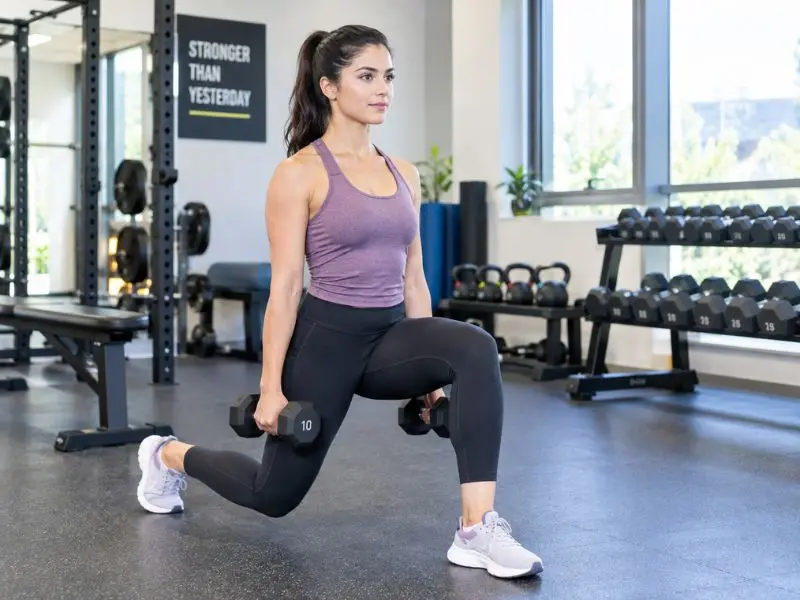
2. Dumbbell Lunges
Lunges train your legs and glutes while challenging balance and coordination. Gym routines for women can include bodyweight or dumbbell exercises.
Start with stationary lunges if walking lunges feel difficult. Use controlled movements and keep your front foot firmly planted.
3. Leg Press
The leg press machine provides a supported way to train your lower body. It mainly works your quadriceps and glutes, depending on your foot position and movement.
Choose a manageable weight and avoid locking your knees at the top. Adjust the seat so your knees can bend comfortably without your lower back lifting from the support.
4. Chest Press
The chest press strengthens your chest, shoulders, and triceps. You can use a machine or dumbbells, depending on your comfort level.
Keep your wrists steady and lower the weight slowly. A machine can be especially helpful when learning proper movement patterns.
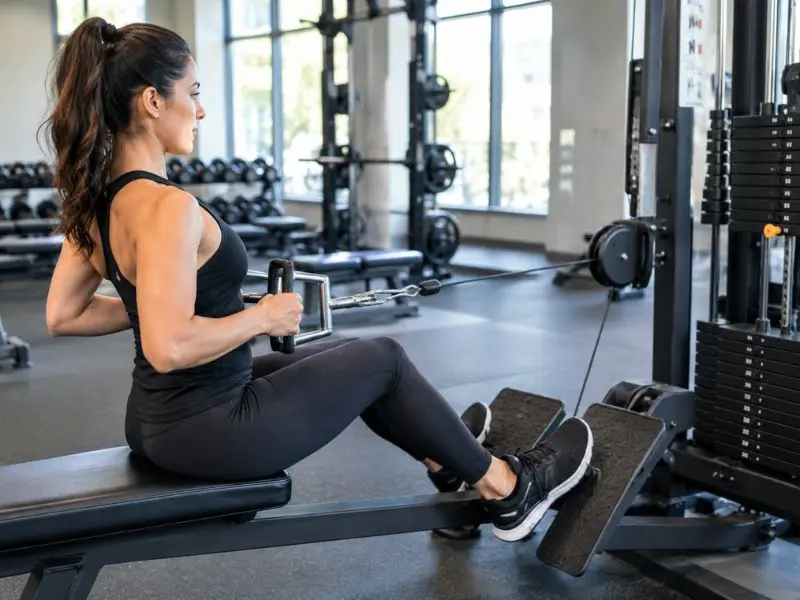
5. Seated Cable Rows
Rows strengthen your upper back and help develop pulling strength. Gym routines for women also train the biceps and muscles that control the shoulder blades.
Sit upright, pull the handle toward your torso, and avoid leaning backward to move heavier weights.
6. Planks
Planks challenge your abdominal muscles and other muscles that stabilize your trunk. They are useful for developing core strength without requiring equipment.
Start with short holds while maintaining a straight body position. If a full plank is too difficult, try a modified version with your knees on the floor.
A Beginner Gym Workout Plan for Women
A beginner gym workout for women should be manageable, balanced, and easy to repeat. Starting with gym routines for women three days per week gives beginners enough practice while allowing time for recovery. For those exploring other options, EMS body sculpting may offer an additional approach to muscle stimulation.
Here is a sample schedule you can adapt to your fitness level.
| Day | Workout | Main Focus |
| Monday | Full-body strength training | Legs, chest, back, and core |
| Tuesday | Brisk walking or cycling | Cardio and endurance |
| Wednesday | Full-body strength training | Major muscle groups |
| Thursday | Rest or gentle walking | Recovery |
| Friday | Full-body strength training | Strength and technique |
| Saturday | Light cardio or enjoyable activity | General fitness |
| Sunday | Rest | Recovery |
Example Full-Body Gym Session
For each strength session, begin with five to ten minutes of easy cardio and a few gentle warm-up movements.
- Goblet squats: 2 sets of 8–12 repetitions
- Seated cable rows: 2 sets of 8–12 repetitions
- Chest press: 2 sets of 8–12 repetitions
- Dumbbell Romanian deadlifts: 2 sets of 8–10 repetitions
- Planks: 2 sets of 15–30 seconds
Rest between sets as needed. Choose weights that let you maintain good form while making the final repetitions challenging.
If you are completely new to strength training, ask a qualified fitness professional to demonstrate unfamiliar exercises. You can begin with lighter resistance and increase it as your technique improves.
Comparison of Different Gym Workout Routines for Women
Not every workout plan suits every fitness goal. The best choice depends on your experience, available time, recovery needs, and personal preferences.
| Workout Type | Weekly Frequency | Main Benefits | Ideal Audience |
| Full-body workout | 2–3 days | Trains major muscle groups in each session | Beginners and busy women |
| Upper/lower split | 3–4 days | Allows focused training for different muscle groups | Intermediate exercisers |
| Strength-focused routine | 2–4 days | Builds strength and supports muscle development | Women prioritizing strength |
| Cardio-focused routine | 3–5 days | Improves endurance and supports energy expenditure | Women prioritizing cardiovascular fitness |
| Combined strength and cardio | 3–5 active days | Balances strength, endurance, and general fitness | Women with mixed fitness goals |
A full-body routine is often a practical starting point because it provides regular opportunities to practice basic exercises. An upper/lower split may be more suitable once you are comfortable with gym equipment and want more training variety.
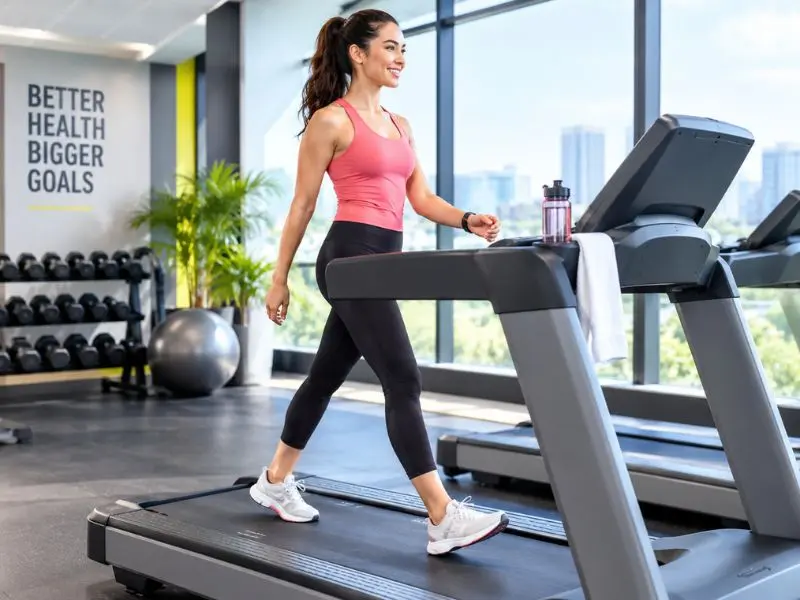
Cardio is also useful, but it does not have to replace resistance training. Combining both in gym routines for women supports a balanced fitness program.
How Often Should Women Go to the Gym?
The ideal gym frequency depends on your experience, schedule, and ability to recover. Beginners can often make progress with two or three strength-training sessions per week.
As your fitness improves, you may choose to train more frequently. However, increasing your training days is not automatically better. Your body needs time to recover between demanding sessions.
For general health, US physical activity guidelines recommend at least 150 minutes of moderate-intensity aerobic activity per week, or an equivalent amount of vigorous activity, along with muscle-strengthening activities on at least two days. These are overall health recommendations, not a requirement to complete every activity inside a gym. <Cite ref=”turn111419search3″/>
You can spread cardio across the week through brisk walking, cycling, swimming, or other activities you enjoy. Start with a realistic amount and gradually increase your activity as your fitness improves.
Pay attention to persistent soreness, unusual fatigue, and declining performance. These may be signs that your gym routines for women need adjustment or more recovery.
Nutrition Tips for Weight Loss and Muscle Gain
Exercise is only one part of your fitness plan. Nutrition provides the energy and nutrients your body needs to perform workouts, repair muscle tissue, and recover between sessions.

Eat Enough Protein
Protein supports muscle repair and development. Include a variety of protein-rich foods in your meals, such as eggs, Greek yogurt, chicken, fish, beans, lentils, tofu, and cottage cheese.
You do not need to rely on expensive supplements to improve your diet. Regular meals containing suitable protein sources can help support your training goals.
Choose Balanced Meals
Build meals around a combination of protein, vegetables or fruit, whole grains, and healthy fats. Foods such as oats, brown rice, potatoes, leafy greens, berries, nuts, and olive oil can fit into a balanced eating pattern.
Carbohydrates are especially useful because they provide energy for exercise. Eliminating entire food groups is generally unnecessary for women following gym routines for women to achieve sustainable fitness goals.
Understand Your Calorie Needs
Weight loss generally requires a calorie deficit over time, meaning your body uses more energy than you consume. However, an overly restrictive eating plan can make workouts harder and may interfere with recovery.
Women aiming to lose fat while developing muscle should avoid extreme dieting. A moderate, sustainable approach to food intake is often easier to maintain than aggressive calorie restriction.
Stay Hydrated
Drink water regularly throughout the day, including before and after exercise. Your fluid needs can vary with temperature, workout intensity, and how much you sweat.
Keeping a water bottle nearby can make hydration easier, particularly during longer gym sessions.
Common Gym Mistakes Women Should Avoid
Even a well-designed workout plan can become less effective when certain habits interfere with progress.
Doing only cardio: Running, cycling, and other aerobic activities can improve endurance, but skipping resistance exercises may limit your opportunities to build or maintain muscle. Include strength training as part of a balanced routine.
Lifting weights that are too heavy: Trying to lift more than you can control may affect your technique. Start with a manageable weight and focus on controlled repetitions before increasing resistance.
Changing workouts too frequently: Constantly switching exercises can make it difficult to measure progress. Keep your main movements consistent long enough to improve your technique and track your performance.
Ignoring recovery: Training hard every day without adequate rest can leave you feeling exhausted. Schedule easier days and pay attention to how your body responds.
Expecting instant results: Fitness improvements take time. Changes in strength, energy, endurance, and body composition may happen at different rates. Focus on steady progress rather than daily scale changes.
Tips to Get Better Results from Gym Routines for Women
A successful routine is one you can maintain. A few simple habits can help make your workouts more effective without making them unnecessarily complicated.

Focus on Progressive Overload
Progressive overload means gradually increasing the challenge of your workouts as your body adapts. You might add a small amount of weight, complete another repetition, or improve your movement control.
You do not need to increase resistance every session. Make changes when your current workload feels manageable and your technique remains consistent.
Track Your Progress
Keep a simple workout log that records your exercises, weights, repetitions, and how each session feels. This helps you identify improvements that may not be obvious when you look only at your body weight.
You can also track non-scale progress, such as improved stamina, better exercise technique, increased confidence, or easier everyday movement.
Prioritize Sleep and Recovery
Sleep supports physical recovery and helps you feel prepared for your next workout. Try to maintain a consistent sleep schedule and avoid making every training session an exhausting challenge.
Rest days do not mean you have to remain completely inactive. Gentle walking or mobility exercises can be suitable when you want to keep moving without adding much training stress.
Choose Exercises You Enjoy
Your workout does not have to look exactly like someone else’s routine. If you enjoy machines, dumbbells, group fitness classes, or outdoor walking, find ways to include activities that fit your preferences.
A realistic routine that you enjoy is often easier to maintain than a demanding plan that feels like a chore.
Frequently Asked Questions (FAQs)
1. Can women lose weight and gain muscle at the same time?
Yes. Strength training, balanced nutrition, adequate protein, and proper recovery can help women lose fat and build muscle.
2. How many days a week should women go to the gym?
Beginners can start with 2–3 strength-training days per week and gradually increase activity.
3. What is the best gym routine for beginners?
A full-body workout 2–3 times per week is a practical way to build strength and improve fitness.
4. Is cardio or strength training better for weight loss?
Both are beneficial. Combining cardio and strength training supports fat loss, muscle maintenance, and overall fitness.
5. How long does it take to see gym results?
Some women notice strength and energy improvements within a few weeks. Visible results may take longer, depending on consistency, nutrition, and recovery.
Conclusion
Effective gym routines for women can support weight loss, muscle development, and better overall fitness. Combining strength training with cardio, balanced nutrition, and enough recovery creates a practical foundation for long-term progress. The best workout plan is not necessarily the most intense one, but the one that matches your goals and abilities.
Start with manageable workouts, practice proper technique, and gradually challenge yourself as you become stronger. With patience and consistency, you can build a fitness routine that supports your health, confidence, and everyday life.