

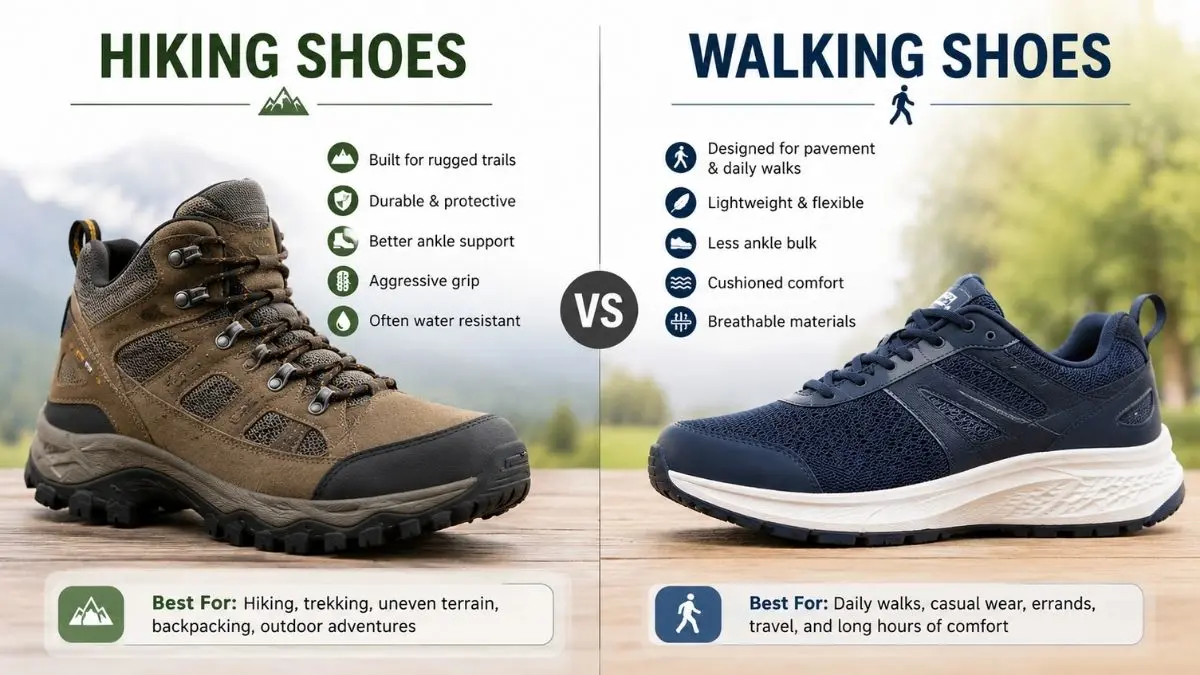
If you are choosing between hiking shoes and walking shoes, the right option depends on where and how you plan to use them. Hiking Shoes vs Walking Shoes is mainly a question of terrain, traction, comfort, stability, and the type of movement you do most often.
Walking shoes are usually made for smooth surfaces and regular daily movement, while hiking shoes are built to handle trails, uneven ground, and changing outdoor conditions. Knowing the difference helps you choose the right hiking shoes vs walking shoes.
Hiking Shoes vs Walking Shoes: Which One Should You Choose?
The biggest difference is how each shoe is designed to perform. Walking shoes are generally made for predictable surfaces such as sidewalks, roads, indoor tracks, and treadmills. They often emphasize cushioning, flexibility, comfort, and a smooth stride.
Hiking shoes are designed with outdoor terrain in mind. They commonly have deeper outsole patterns for grip, more structured construction for stability, and materials that can provide better protection against rocks, roots, dirt, and other trail obstacles.
The right choice depends on where you plan to walk and what feels most comfortable for you. A lightweight walking shoe may be a better choice for a daily walk around your neighborhood, while a hiking shoe may be more practical if your route includes rocky paths or uneven trails.
Your personal comfort also matters. In hiking shoes vs walking shoes, fit and comfort matter most.
What Are Hiking Shoes?
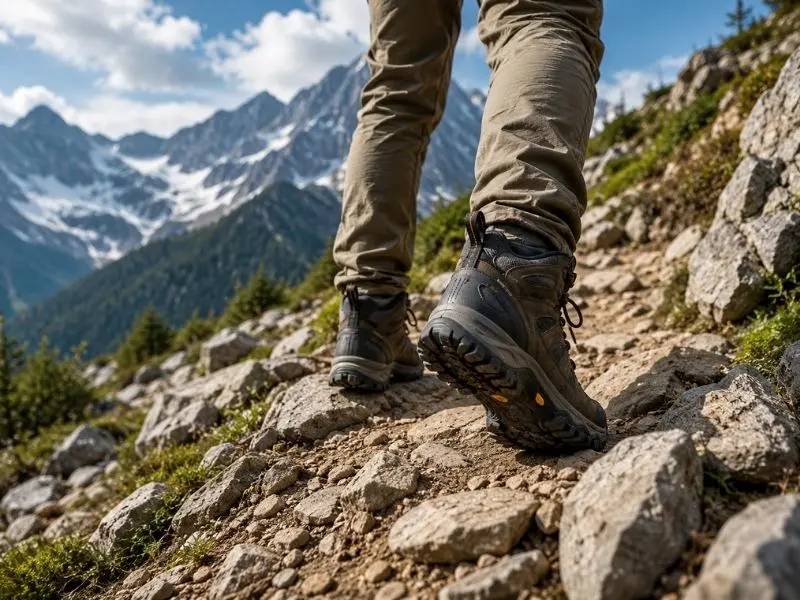
Hiking shoes are outdoor footwear designed for walking on trails and other surfaces that may be uneven, rough, or unpredictable. They sit somewhere between traditional walking shoes and heavier hiking boots in terms of structure and protection.
One of their most noticeable features is the outsole. Hiking shoes often use a tread pattern designed to provide traction on dirt, gravel, rocks, and other outdoor surfaces. The exact level of grip varies by shoe, so not every hiking shoe will perform equally on every trail.
Hiking footwear may also provide more protection around the toes and sides of the foot. This can be useful when a trail contains rocks, roots, or other obstacles. Some models also use materials that offer additional resistance to moisture or abrasion.
Stability is another important feature. Trails can contain slopes, loose surfaces, and uneven steps, so a more structured shoe can help provide a secure feel underfoot.
Durability is usually another consideration. Hiking shoes are commonly built to withstand more outdoor wear than lightweight shoes intended mainly for smooth surfaces.
However, added protection and structure can also make hiking shoes feel heavier or less flexible than some walking shoes. Keep this in mind when choosing between hiking shoes and walking shoes for everyday use.
What Are Walking Shoes?

Walking shoes are designed primarily for comfortable movement on relatively even surfaces. They are commonly used for daily walks, exercise walking, treadmill sessions, travel, and other activities where the ground is predictable.
Comfort is often a major focus. Walking shoes may include cushioning that helps make repeated steps feel more comfortable, especially when you spend a lot of time on your feet.
Flexibility is also important. A flexible design can allow the foot to move more naturally through each step. This can make walking shoes feel lighter and less restrictive during everyday movement.
Many walking shoes are also designed to be relatively lightweight. This can be useful when you want footwear that feels easy to wear throughout the day.
Walking shoes can work very well on sidewalks, paved paths, indoor tracks, and treadmills. However, they may not offer the same level of traction or protection needed for rough trails.
As with hiking shoes, there is no single design that works for every person. Foot shape, fit, cushioning preference, walking style, and intended use should all be considered before choosing a pair.
Hiking Shoes vs Walking Shoes: Key Differences
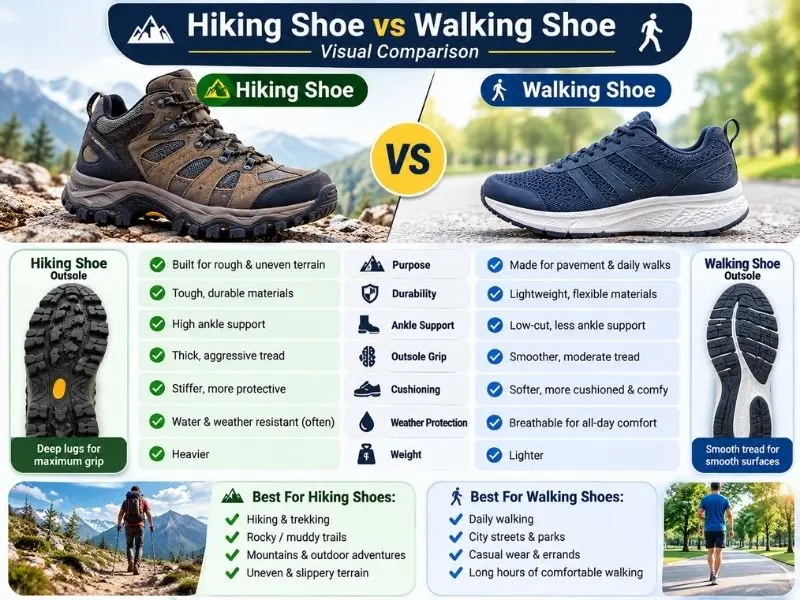
| Feature | Hiking Shoes | Walking Shoes |
| Main purpose | Trail and outdoor walking | Everyday and fitness walking |
| Terrain | Uneven, rocky, dirt, and rough trails | Roads, sidewalks, tracks, and treadmills |
| Traction | Usually stronger and more aggressive | Usually designed for smoother surfaces |
| Cushioning | Balanced with stability and protection | Often focused strongly on walking comfort |
| Flexibility | Moderate, depending on design | Often more flexible |
| Stability | Designed for uneven ground | Designed for predictable surfaces |
| Protection | Usually more protective | Usually lighter and less protective |
| Weight | Often heavier | Often lighter |
| Durability | Built for outdoor use | Built mainly for regular walking |
| Best for | Trails and outdoor adventures | Daily and fitness walking |
The table shows why the best choice depends on your activity. If your normal route is a paved sidewalk, you may not need the extra structure of a hiking shoe. If your route regularly changes from pavement to dirt and rocks, hiking footwear may offer useful advantages.
There can also be overlap between the two categories. When comparing hiking shoes vs walking shoes, some hiking shoes work for daily use, while some walking shoes suit easy trails.
Traction and Grip
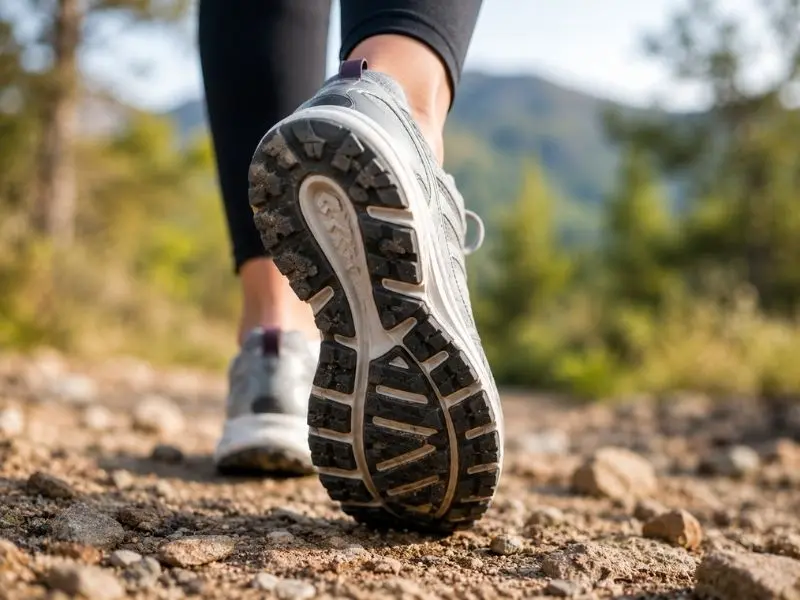
Traction is one of the clearest differences between hiking and walking footwear. On a smooth sidewalk, you generally do not need an aggressive outsole. A simple tread pattern may be enough for normal walking conditions.
Trails can be different. Dirt, gravel, wet ground, loose rocks, and uneven surfaces can make each step less predictable. Hiking shoes often use deeper or more widely spaced tread patterns to help provide grip in these conditions.
The type of trail matters, too. A dry, flat park trail does not have the same demands as a steep, rocky path. Before choosing footwear, think about the surfaces you will actually encounter.
Good traction does not guarantee that you will never slip. In hiking shoes vs walking shoes, weather, surfaces, and shoe condition can affect grip.
Cushioning and Comfort
Cushioning can make a noticeable difference when you spend a long time walking. Walking shoes often place considerable emphasis on creating a comfortable feel during repeated steps.
Hiking shoes also need cushioning, but they may balance it with stability and protection. A trail shoe that is extremely soft may not provide the same stable feel that some people prefer on uneven ground.
Comfort is personal. Two people can try the same pair and have completely different experiences.
Your foot shape, arch structure, preferred fit, walking style, and the amount of cushioning you like can all influence how a shoe feels. Rather than choosing based only on appearance or brand, pay attention to how your feet feel inside the shoe.
Flexibility and Stability
Flexibility allows a shoe to move more easily as your foot goes through its normal walking motion. This is one reason lightweight walking shoes can feel natural and comfortable on smooth surfaces.
Hiking shoes often have a more structured design. This can help create a stable platform when you are walking over uneven terrain.
Neither extreme is automatically better. A very flexible shoe may feel great on a flat sidewalk but may not provide the level of structure you prefer on a rocky trail. On the other hand, a highly structured hiking shoe may feel unnecessary for a short walk around town.
Think about the environment first. Your footwear should match the movement and terrain you encounter most often, which is important when comparing hiking shoes vs walking shoes.
Protection and Durability
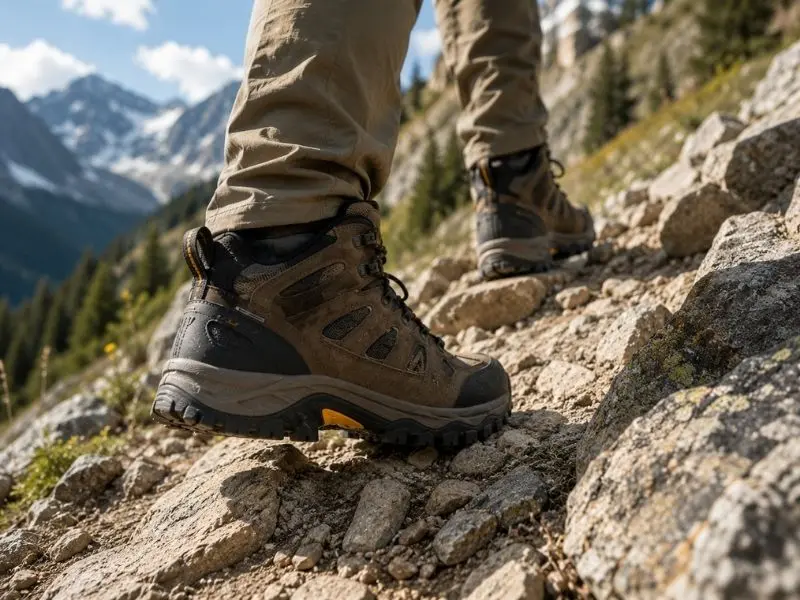
Outdoor trails can expose your feet and shoes to conditions that are uncommon on paved roads. Small rocks, tree roots, mud, rough surfaces, and repeated contact with outdoor obstacles can put additional demands on footwear.
Hiking shoes often use tougher materials and may have reinforced areas around the toe and sides. These features can provide additional protection and help the shoe handle regular walking.
Some hiking shoes are also designed with weather resistance in mind. However, water resistance varies considerably between models, and a water-resistant shoe is not necessarily completely waterproof.
Walking shoes usually have a lighter construction because they are commonly used on smoother surfaces. This can make them comfortable and easy to wear, but they may not be as suitable for demanding trails.
Durability should always be considered alongside comfort. The most rugged shoe is not necessarily the best option if it feels uncomfortable during your normal activities.
Which Is Better for Everyday Walking?
For many people, walking shoes are a practical option for everyday walking. They are commonly designed around comfort, flexibility, and easy movement on surfaces such as sidewalks and roads.
Walking shoes can be useful for:
- Neighborhood walks
- Paved walking paths
- Treadmill sessions
- Indoor tracks
- Shopping and daily activities
- Regular fitness walks
Hiking shoes can also work for everyday walking, particularly if your regular route includes grass, dirt, gravel, or uneven surfaces.
The possible downside is that hiking footwear may feel heavier or more structured than necessary on smooth pavement. If you walk several miles every day on sidewalks, a comfortable walking shoe may make more sense for your routine.
Ultimately, the better choice in hiking shoes vs walking shoes is the one that fits your feet well and matches the surfaces you walk on most often.
Can You Use Hiking Shoes for Walking?
Yes, hiking shoes can be used for walking. In fact, they can be a useful choice if your walks regularly include both paved surfaces and outdoor trails.
For example, someone who walks from home to a local trail may prefer one pair that can handle different surfaces. A hiking shoe can provide the traction and structure needed once the route becomes uneven.
However, hiking footwear may feel unnecessary for simple everyday walking. Some models are heavier, less flexible, or more structured than what you need for a flat sidewalk.
If you enjoy the feel of hiking shoes and find them comfortable, there is nothing wrong with using them for regular walking. The important factors are fit, comfort, surface, and personal preference.
Can You Use Walking Shoes for Hiking?
Walking shoes can sometimes be used on easy hiking routes, but they are not ideal for every trail.
A short, flat, well-maintained nature path may not require the same level of traction and protection as a rocky or steep trail. In those conditions, a walking shoe with a suitable outsole may be sufficient for some people.
More challenging trails are a different situation. Loose rocks, mud, roots, steep sections, and uneven ground can increase the need for traction, stability, and protection.
If you know you will be hiking regularly, especially on rough terrain, purpose-built hiking footwear may be the more sensible option.
For hiking shoes vs walking shoes, judge the trail rather than assuming every path needs the same shoe.
How to Choose Between Hiking Shoes and Walking Shoes

Choosing between the two becomes easier when you consider your actual routine.
1. Where Will You Walk?
Start with your most common walking environment. Paved roads and sidewalks generally suit walking shoes, while trails and rough outdoor routes may call for hiking footwear.
2. What Is the Terrain Like?
Flat and predictable surfaces require less traction and stability. Uneven, rocky, muddy, or loose surfaces can make the features of hiking shoes more useful.
3. How Far Will You Walk?
Distance alone does not determine which shoe is best. A long walk on pavement has different requirements from a shorter walk over difficult terrain.
4. What Are the Weather Conditions?
If you regularly walk in wet or muddy conditions, consider footwear with an outsole and materials suited to those conditions.
5. How Much Traction Do You Need?
Think about whether you need grip for smooth pavement or more demanding outdoor surfaces. Choose based on the conditions you expect rather than buying the most aggressive outsole available.
6. What Feels Comfortable?
Comfort should be a major priority. A shoe that fits well and feels good can make your walking routine easier to maintain.
7. Do You Prefer Lightweight Shoes?
If you prefer a light and flexible feel, walking shoes may appeal to you. Some hiking shoes are lightweight too, so compare individual designs rather than assuming every hiking shoe is heavy.
8. Do You Need More Stability?
If your routes include uneven ground, a more structured hiking shoe may provide the type of support and stability you prefer.
9. How Important Is Durability?
Frequent trail use can put more stress on footwear. If you regularly hike outdoors, look for construction designed for that environment.
10. Does the Shoe Fit Properly?
Fit should never be overlooked. Your heel should feel secure without excessive pressure, and your toes should have enough room to move comfortably.
If you mostly walk on sidewalks, a walking shoe may be the better choice.
If you regularly walk on rocky or uneven trails, hiking shoes may be more suitable.
These are useful starting points, not strict rules. In hiking shoes vs walking shoes, your comfort and individual needs still matter.
What to Look for When Buying Hiking or Walking Shoes
Before buying either type of footwear, focus on the features that match your routine.
Proper fit: Your shoe should feel secure without squeezing your foot. Avoid choosing a size simply because it is the same size you normally wear in another brand.
Toe room: Your toes should have enough space to move naturally. This can be especially important on longer walks and downhill sections.
Heel security: Your heel should stay reasonably secure while walking. Excessive movement can make the shoe feel unstable or uncomfortable.
Cushioning: Choose cushioning based on your comfort preference and activity. More cushioning is not automatically better.
Traction: Match the outsole to your walking environment. Smooth surfaces and rough trails have different traction needs.
Breathability: If you frequently walk in warm weather, breathable materials can help make the shoe feel more comfortable.
Materials: Consider whether you need lightweight materials, extra durability, or some resistance to moisture.
Intended terrain: Always check what the footwear is designed for. A shoe made for casual walking may not be suitable for demanding trails.
Try before buying: When possible, walk around in the shoes before purchasing them. Pay attention to pressure points, heel movement, toe space, and overall comfort.
The most expensive shoe is not necessarily the best shoe for you. In hiking shoes vs walking shoes, a properly fitted pair that matches your activities can be more useful than a premium model you do not need.
Hiking Shoes vs Walking Shoes for Different Activities
Different activities create different footwear needs.
Daily Walking
Walking shoes are often a convenient option for everyday movement on roads, sidewalks, and other smooth surfaces.
Long-Distance Walking
For long walks, comfort and fit become especially important. A lightweight walking shoe may work well on pavement, while a hiking shoe can be useful if the route includes trails.
City Walking
Walking shoes are usually a practical choice for city environments because most surfaces are paved and predictable.
Treadmill Walking
A lightweight, flexible walking shoe is generally a sensible choice for treadmill sessions.
Easy Nature Trails
Either type may work depending on the trail. A well maintained, flat path may not require heavy-duty hiking footwear.
Rocky Trails
Hiking shoes are generally more appropriate because traction, stability, and protection become more important.
Uneven Terrain
If your route includes roots, rocks, slopes, or loose ground, footwear designed for trails can offer features better suited to those conditions.
Travel
Travel often involves a mix of walking surfaces. If your trip includes mostly cities, walking shoes may be convenient. If you plan to explore trails as well, a versatile hiking shoe may be worth considering.
Frequently Asked Questions
1. Are hiking shoes better than walking shoes?
Neither is universally better; hiking shoes suit rough terrain, while walking shoes are often better for smooth everyday surfaces.
2. Can I wear hiking shoes for everyday walking?
Yes, especially if you find them comfortable or regularly walk on uneven outdoor surfaces.
3. Can walking shoes be used for hiking?
They can work on some easy trails, but challenging terrain may require better traction, stability, and protection.
4. Are hiking shoes heavier than walking shoes?
Many hiking shoes are heavier because of their structured construction and protective features, although lightweight models are available.
5. Which shoes are better for long walks?
The best option depends on the surface; walking shoes may suit long paved walks, while hiking shoes can be useful for long trail walks.
Conclusion
When comparing Hiking Shoes vs Walking Shoes, the main thing to consider is where you will use them. Walking shoes are often ideal for comfortable everyday movement on smooth surfaces, while hiking shoes are better suited to trails that require more traction, stability, durability, and protection. Choose the pair that fits well, feels comfortable, and matches the terrain and activities you actually do.
