
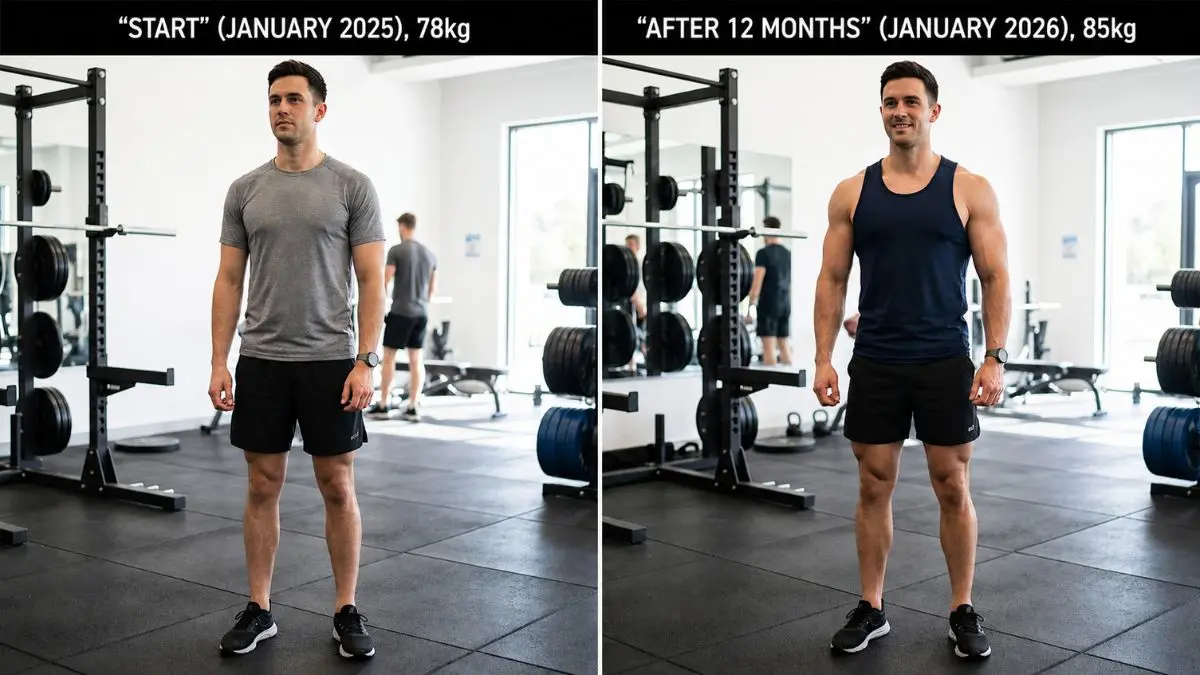
How much muscle can you gain in a year is one of the most common questions people ask before starting strength training. Many expect fast results, but muscle growth depends on several important factors, including training, nutrition, recovery, age, and experience.
This guide explains how much muscle you can gain in a year, what affects your progress, and what realistic results you can expect. You’ll also learn expert-backed strategies to build muscle safely and efficiently while avoiding common mistakes that slow your progress.
How Much Muscle Can You Gain in a Year?

If you’re wondering how much muscle you can gain in a year, the short answer is that it depends on your training experience, genetics, diet, and consistency. No single number fits everyone.
For most natural lifters, realistic muscle growth is much slower than many social media posts suggest. Building muscle takes patience, hard work, and a well-planned routine.
A healthy muscle-building program focuses on three main areas:
- Progressive strength training
- High-quality nutrition
- Proper recovery
When these factors work together, your body creates the best environment for muscle growth.
Average Muscle Gain by Experience Level
Although results vary, many experts agree on these yearly averages for natural lifters.
| Experience Level | Average Muscle Gain Per Year |
| Beginner | 15–25 pounds (7–11 kg) |
| Intermediate | 8–12 pounds (3.5–5.5 kg) |
| Advanced | 2–6 pounds (1–3 kg) |
These numbers represent lean muscle gained under ideal conditions. Most people can achieve these results with consistent training, showing how much muscle can you gain in a year.
Why Beginners Build Muscle Faster
Beginners often experience “newbie gains.” Their muscles respond quickly because resistance training is a completely new stimulus.
During the first year, your body becomes more efficient at:
- Activating muscle fibers
- Repairing damaged muscle tissue
- Improving coordination
- Producing strength
Because of these adaptations, beginners often notice visible changes within a few months.
However, how much muscle can you gain in a year naturally slows as you become more experienced.
Is It Possible to Build Muscle Faster?
Many people search for shortcuts after asking how much muscle can you gain in a year. Unfortunately, there is no safe method that dramatically speeds up natural muscle growth.
Your muscles need time to recover and adapt after every workout.
Trying to rush the process often leads to:
- Overtraining
- Poor recovery
- Fatigue
- Increased injury risk
Instead of chasing unrealistic expectations, focus on building healthy habits that support long-term progress.
What Healthy Muscle Growth Looks Like
A realistic muscle-building journey usually includes:
- Steady strength improvements
- Gradual increases in muscle size
- Better workout performance
- Improved body composition
Progress may seem slow from week to week, but small improvements add up over time.
Factors That Affect How Much Muscle Can You Gain in a Year
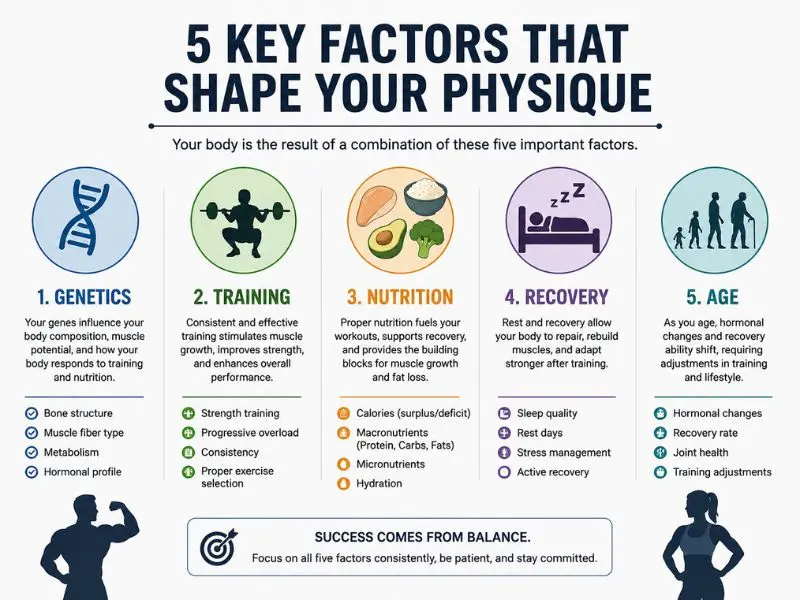
Several important factors determine how much muscle you can gain in a year. Understanding these variables helps you set realistic expectations and improve your results.
Genetics
Genetics influence your muscle-building potential.
Some people naturally have:
- More fast-twitch muscle fibers
- Better hormone responses
- Faster recovery
- Greater muscle-building capacity
While genetics matter, consistent training still produces impressive results for most people.
Training Program
Your workout plan plays a huge role in muscle growth.
An effective program should include:
- Compound exercises
- Progressive overload
- Proper training volume
- Enough weekly frequency
Simply lifting weights without a plan rarely produces the best results.
Nutrition
Muscles cannot grow without enough nutrients.
To maximize muscle growth, prioritize:
- Protein-rich foods
- Healthy carbohydrates
- Healthy fats
- Plenty of water
Eating enough calories supports recovery and provides energy for intense workouts.
Recovery
Recovery is just as important as training.
Your muscles repair and grow while you rest—not during your workouts.
Good recovery includes:
- Sleeping 7–9 hours
- Taking rest days
- Managing stress
- Staying hydrated
Poor recovery can reduce muscle growth even if you train hard.
Age
Age also affects muscle-building speed.
Teenagers and young adults often build muscle more easily because hormone levels are higher.
Older adults can still gain muscle, but they may need:
- More recovery time
- Higher protein intake
- Consistent strength training
Research shows that resistance training benefits people of nearly every age.
How Does Muscle Growth Actually Happen?
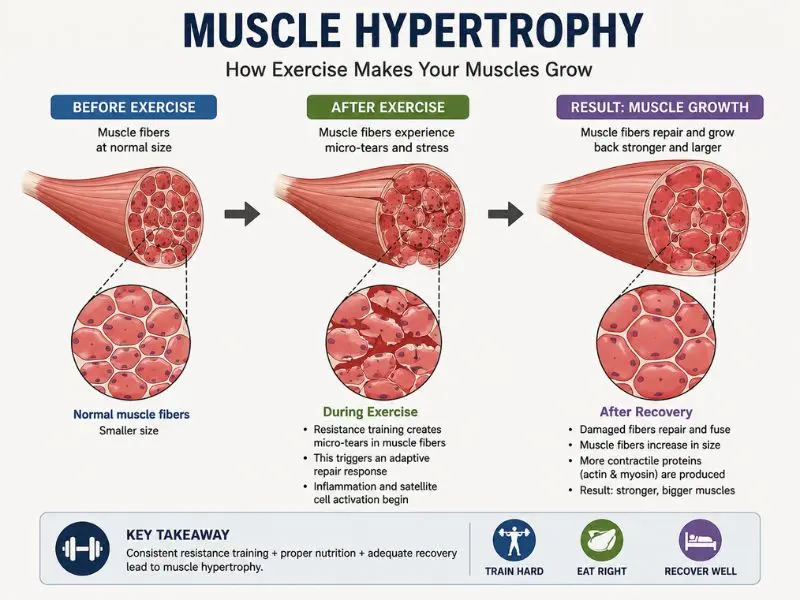
Understanding muscle growth helps explain how much muscle you can gain in a year.
During resistance training, your muscles develop tiny tears.
After your workout, your body repairs these fibers using protein and nutrients.
Each repair cycle makes the muscle slightly stronger and larger than before. This process is called muscle hypertrophy.
However, hypertrophy only happens when you consistently combine:
- Progressive overload
- Adequate protein
- Calorie support
- Quality sleep
- Regular training
Missing any one of these can slow your progress.
Signs You’re Building Muscle Successfully
Muscle growth doesn’t always show up immediately in the mirror.
Instead, look for these signs:
- You’re lifting heavier weights.
- Your muscles feel firmer.
- Your clothes fit differently.
- Your measurements increase.
- Recovery improves.
- Your energy during workouts increases.
Tracking these changes every month gives a better picture than checking your physique every day.
Muscle Gain Timeline: What to Expect Throughout the Year
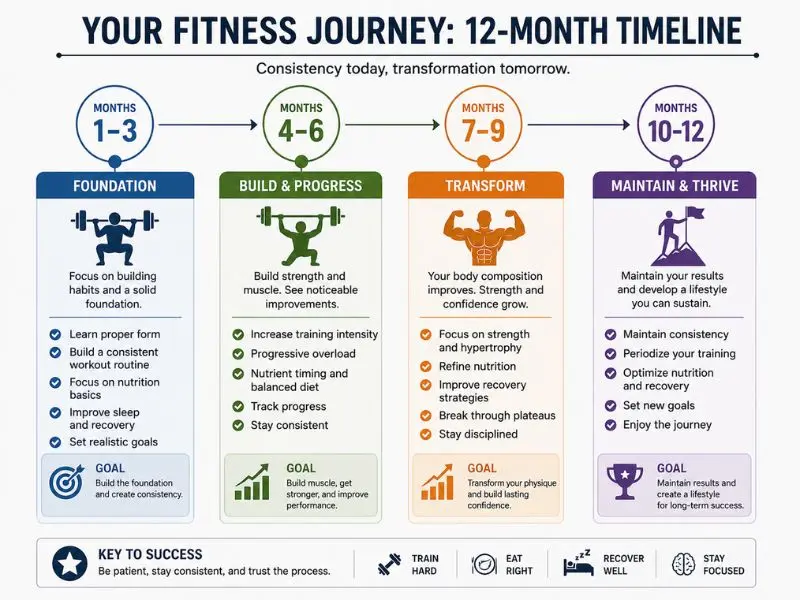
After learning how much muscle you can gain in a year, the next question is usually, “When will I actually see results?”
Muscle growth doesn’t happen overnight. Your body adapts slowly as you train, recover, and eat enough nutrients. Some months bring faster progress, while others feel slower. This is completely normal.
If you stay consistent, each phase builds on the previous one.
Month 1–3: Build the Foundation
The first three months are often the most exciting, especially for beginners.
During this phase, your nervous system becomes more efficient. You learn proper exercise form, improve coordination, and become stronger quickly.
Many beginners notice:
- Better workout performance
- Increased strength
- Slight muscle size improvements
- Better posture
- Higher confidence
Although you may not look dramatically different yet, your body is preparing for faster muscle growth.
Focus During This Phase
- Learn correct exercise technique.
- Train 3–5 days each week.
- Eat enough protein every day.
- Sleep at least 7–9 hours.
Consistency matters far more than lifting extremely heavy weights.
Month 4–6: Visible Muscle Growth
By the middle of the year, many people begin seeing noticeable physical changes.
If you’ve followed your training and nutrition plan, your muscles should appear fuller and more defined.
You may notice:
- Bigger shoulders
- Wider back
- Larger arms
- Stronger legs
- Improved chest development
This is also when friends or family may start commenting on your progress.
Your strength should continue increasing as long as you keep challenging your muscles.
Month 7–9: Progress Begins to Slow
At this stage, building muscle becomes more challenging.
Your body has already adapted to regular resistance training, so each new pound of muscle requires more effort.
This is completely normal.
Instead of expecting rapid growth, focus on gradual improvements like:
- Adding one extra rep
- Increasing training weight
- Improving exercise form
- Recovering more efficiently
Small wins lead to long-term success.
Month 10–12: Long-Term Results
By the end of the year, you’ll have a much better idea of how much muscle you can gain in a year based on your individual response.
If you’ve stayed consistent, you should notice:
- More lean muscle mass
- Better overall strength
- Improved body composition
- Greater workout confidence
- Healthier lifestyle habits
Remember, muscle-building is a marathon, not a sprint.
Comparison Table: Muscle Gain Expectations
| Experience Level | Muscle Gain Per Year | Monthly Average | Difficulty | Main Focus |
| Beginner | 15–25 lb (7–11 kg) | 1.2–2 lb | Easy | Learn technique and build consistency |
| Intermediate | 8–12 lb (3.5–5.5 kg) | 0.7–1 lb | Moderate | Progressive overload and recovery |
| Advanced | 2–6 lb (1–3 kg) | 0.2–0.5 lb | High | Optimize every training variable |
This table provides realistic expectations for natural lifters. Individual results may vary depending on genetics, nutrition, sleep, and training quality.
Best Ways to Maximize How Much Muscle You Can Gain in a Year

Knowing how much muscle you can gain in a year is helpful, but applying the right strategies makes the biggest difference.
Follow Progressive Overload
Muscles only grow when they face a new challenge.
Progressive overload means gradually increasing the difficulty of your workouts over time.
You can do this by:
- Lifting heavier weights
- Performing more repetitions
- Adding extra sets
- Improving exercise form
- Reducing rest time when appropriate
Small improvements each week lead to significant muscle growth over months.
Eat Enough Protein
Protein supplies the amino acids your muscles need to repair and grow.
Aim to include a high-quality protein source in every meal.
Good choices include:
- Chicken breast
- Eggs
- Greek yogurt
- Fish
- Lean beef
- Cottage cheese
- Beans
- Lentils
- Tofu
- Protein shakes
Spreading protein throughout the day supports muscle protein synthesis more effectively than eating most of it in one meal.
Stay in a Small Calorie Surplus
Building muscle requires energy.
Eating slightly more calories than your body burns gives it the fuel needed for growth.
A moderate calorie surplus helps you:
- Recover faster
- Build lean muscle
- Improve workout performance
Avoid eating excessively, as this often leads to unnecessary fat gain.
Train Every Major Muscle Group
Balanced training produces balanced muscle development.
Include exercises for:
- Chest
- Back
- Shoulders
- Arms
- Legs
- Core
Compound movements should form the foundation of your program.
Examples include:
- Squats
- Deadlifts
- Bench press
- Pull-ups
- Rows
- Overhead press
Isolation exercises can then help improve specific muscles.
Prioritize Recovery
Many people believe muscles grow while lifting weights.
In reality, muscles grow after your workouts during recovery.
Support recovery by:
- Sleeping 7–9 hours
- Drinking enough water
- Managing stress
- Taking rest days
- Eating balanced meals
Skipping recovery often slows muscle growth, even if your workouts are excellent.
Expert Insight
Sports nutrition experts and strength coaches agree that consistent habits matter more than chasing quick results. Research consistently shows that natural muscle growth depends on regular resistance training, adequate protein intake, sufficient calories, and quality sleep. People who follow these fundamentals for an entire year usually achieve far better results than those who rely on extreme workout plans or restrictive diets.
Real-Life Example
Imagine two beginners starting strength training on the same day.
Person A trains four times a week, eats enough protein, sleeps eight hours each night, and follows a structured program.
Person B skips workouts, changes routines every week, sleeps poorly, and often misses meals.
After one year, Person A is far more likely to build noticeable lean muscle, while Person B may see only limited progress despite spending the same amount of time in the gym.
This example shows that consistency not perfection is the biggest factor in determining how much muscle you can gain in a year.
Expert Tips for Maximizing Muscle Growth
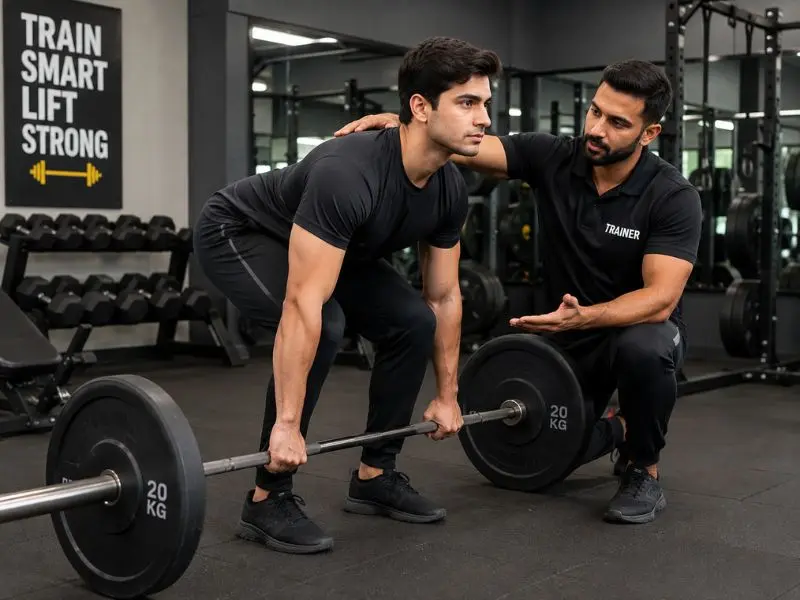
If you want to increase how much muscle you can gain in a year, follow these expert-backed strategies.
1. Stay Consistent All Year
Missing workouts occasionally is normal, but staying consistent for months delivers the best results. A good routine beats a perfect routine that you cannot maintain.
2. Track Your Progress
Keep a workout log and record:
- Body weight
- Strength gains
- Body measurements
- Progress photos
Tracking helps you see improvements that the mirror may not show.
3. Prioritize Compound Exercises
Build your workouts around exercises that train multiple muscle groups.
Examples include:
- Squats
- Deadlifts
- Bench Press
- Pull-Ups
- Rows
- Overhead Press
These movements help build more muscle while improving overall strength.
4. Don’t Ignore Recovery
Recovery is when muscle growth actually happens.
Aim for:
- 7–9 hours of sleep
- Regular rest days
- Proper hydration
- Stress management
Better recovery leads to better workouts.
5. Be Patient
Many people underestimate how much muscle you can gain in a year because they expect weekly transformations.
Small improvements each month create impressive results after one year.
Common Mistakes That Slow Muscle Growth
Avoid these common mistakes if you want to maximize how much muscle you can gain in a year.
- Skipping workouts regularly
- Eating too little protein
- Not consuming enough calories
- Changing workout programs every week
- Ignoring progressive overload
- Sleeping less than seven hours
- Training with poor form
- Comparing your progress to others
- Expecting overnight results
- Skipping warm-ups and recovery sessions
Fixing these habits often leads to better long-term muscle gains.
Key Takeaways
- How much muscle you can gain in a year depends on your experience, genetics, training, nutrition, and recovery.
- Beginners usually gain muscle faster than experienced lifters.
- Progressive overload is essential for continuous muscle growth.
- A protein-rich diet and slight calorie surplus support lean muscle development.
- Recovery, especially quality sleep, is just as important as training.
- Consistency over an entire year produces the best natural results.
- Setting realistic expectations helps you stay motivated and avoid frustration.
FAQs
1. How much muscle can you gain in a year naturally?
Most beginners can naturally gain about 15–25 pounds (7–11 kg) of muscle with proper training and nutrition.
2. Can you build muscle without eating more calories?
Building muscle is much easier when you eat a small calorie surplus.
3. Does protein help build muscle faster?
Protein supports muscle repair and growth, but training and recovery are also essential.
4. How many days a week should I train for muscle gain?
Most people see great results by training 3–5 days per week consistently.
5. How much muscle can you gain in a year after your first year?
Muscle growth slows after the first year, and experienced lifters usually gain much less muscle annually.
Conclusion
Understanding how much muscle you can gain in a year helps you set realistic expectations and stay motivated throughout your fitness journey. While beginners often see the fastest progress, anyone can build muscle by following a structured training program, eating enough protein, staying in a slight calorie surplus, and recovering well. Focus on consistent habits instead of quick fixes. With patience and dedication, you’ll maximize how much muscle you can gain in a year and continue making progress for years to come.
