


Building muscle takes more than simply spending more time in the gym. A well-planned 5 day workout split for muscle gain can help you train each muscle group with enough volume while still giving your body time to recover. The key is choosing effective exercises, using proper form, and gradually increasing the challenge.
A five-day routine can work for beginners, intermediate lifters, and experienced trainees when it matches their fitness level and schedule. In this guide, you will learn how a five-day split works, which exercises to use, how to organize your week, common mistakes to avoid, and how nutrition and recovery support muscle growth.
What Is a 5 Day Workout Split for Muscle Gain?
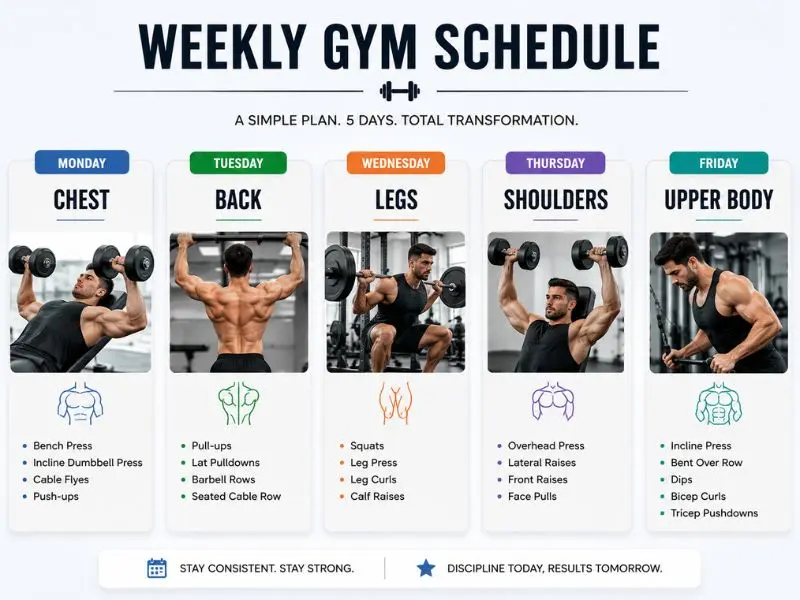
A 5 day workout split for muscle gain is a weekly training routine that divides your workouts across five days. Instead of training your entire body during every session, you focus on specific muscle groups or movement patterns on different days.
For example, you might train your chest and triceps on Monday, back and biceps on Tuesday, legs on Wednesday, shoulders on Thursday, and train your upper body again on Friday.
This approach allows you to include several exercises for a muscle group without making every workout extremely long. It can also make a 5 day workout split for muscle gain easier to manage by balancing training volume with proper recovery.
A good five-day muscle-building split should not simply involve exercising five days in a row. Each workout needs a clear purpose, and the weekly schedule should give heavily trained muscles enough time to recover.
Who Can Use a 5 Day Workout Split?
A five-day split can be useful for people who have enough time to train regularly and enjoy structured gym sessions.
Beginners can use a modified version, but they do not necessarily need five training days to build muscle. Someone new to resistance training may make excellent progress with fewer weekly sessions, while a 5 day workout split for muscle gain can be added as they build experience and recovery capacity.
Intermediate and advanced lifters may find a five-day routine more useful because they often need more training volume and exercise variety to continue progressing.
Why Is a 5 Day Workout Split Important for Muscle Growth?
Muscle growth happens when resistance training provides a strong enough stimulus and your body has the nutrition and recovery needed to adapt.
A structured 5 day workout split for muscle gain can help organize that process. Instead of randomly choosing exercises each day, you know which muscles you are training and what you need to accomplish during each session.
Better Training Organization
A split gives each workout a specific focus. This makes it easier to organize your exercises, sets, repetitions, and progress throughout your 5 day workout split for muscle gain.
For example, a chest-focused workout can include pressing and fly exercises while keeping back and leg training for other sessions.
Enough Training Volume
Training volume is the total amount of work you complete during your 5 day workout split for muscle gain.
A five-day schedule gives you more opportunities to distribute your weekly workload. Instead of trying to complete everything in two very long sessions, you can spread the work across the week.
More Focus on Individual Muscles
When a workout has a specific focus, you can give more attention to technique and muscle control.
This does not mean you need dozens of exercises. A few effective exercises performed consistently can be more beneficial than using a long list of movements in a 5 day workout split for muscle gain.
How Does a 5 Day Workout Split for Muscle Gain Work?
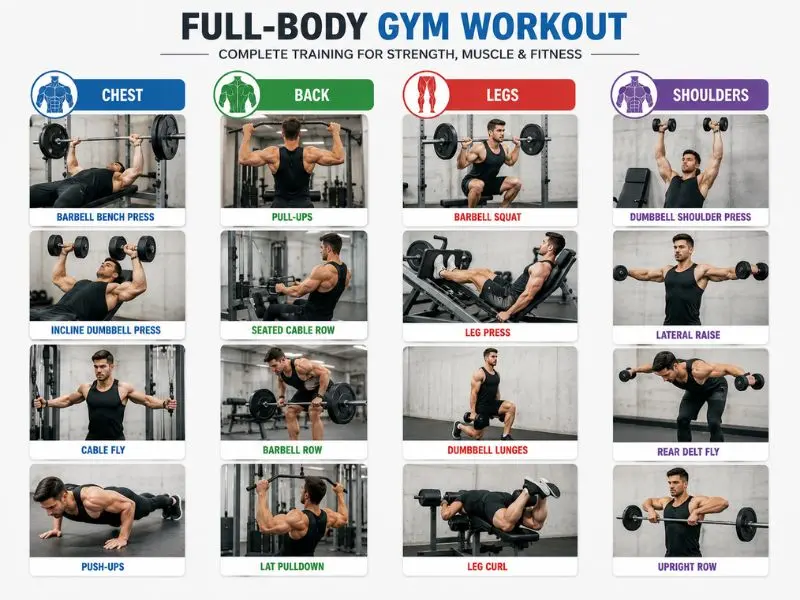
The basic idea is simple: divide your weekly training into five focused sessions.
One effective approach is:
- Monday: Chest and Triceps
- Tuesday: Back and Biceps
- Wednesday: Legs
- Thursday: Shoulders and Abs
- Friday: Upper Body
- Saturday: Rest
- Sunday: Rest
This schedule provides a combination of focused muscle training and a second upper-body stimulus later in the week.
However, there is no single perfect split for everyone. The right 5 day workout split for muscle gain depends on your experience level, recovery ability, available training time, and personal goals.
Monday: Chest and Triceps

Start the week with pressing movements that train the chest while also involving the triceps.
Example workout:
- Barbell bench press — 3 sets of 6–8 reps
- Incline dumbbell press — 3 sets of 8–10 reps
- Machine chest press — 3 sets of 8–12 reps
- Cable fly — 2 sets of 10–15 reps
- Triceps pushdown — 3 sets of 10–15 reps
- Overhead triceps extension — 2 sets of 10–15 reps
Prioritize controlled reps and proper form instead of focusing only on lifting the heaviest weight possible in a 5 day workout split for muscle gain.
Tuesday: Back and Biceps
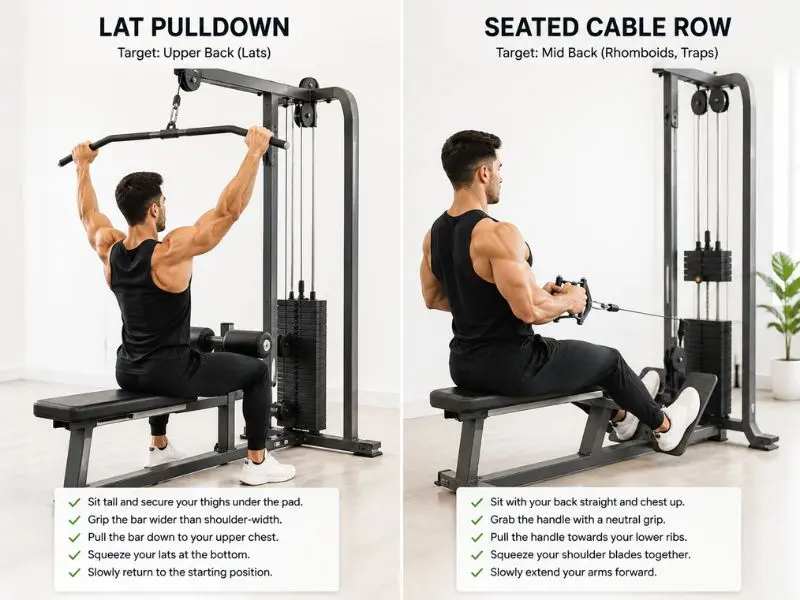
Back training should include movements that challenge different areas of the back.
Example workout:
- Lat pulldown or pull-up — 3 sets of 6–10 reps
- Barbell or chest-supported row — 3 sets of 8–10 reps
- Seated cable row — 3 sets of 8–12 reps
- Straight-arm pulldown — 2 sets of 10–15 reps
- Dumbbell curl — 3 sets of 8–12 reps
- Hammer curl — 2 sets of 10–15 reps
Maintain a stable torso during rowing movements and use controlled reps instead of relying on momentum in your 5 day workout split for muscle gain.
Wednesday: Legs
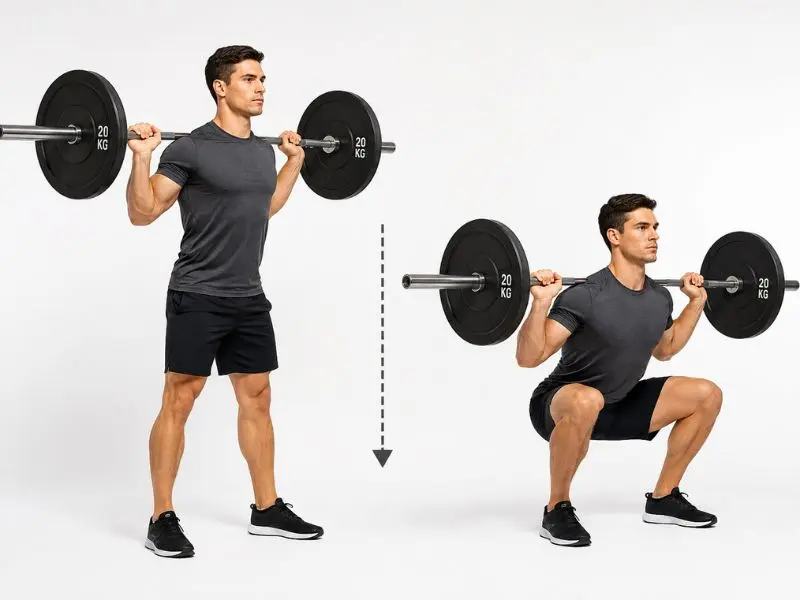
Leg day should train the major muscles of the lower body, including the quadriceps, hamstrings, glutes, and calves.
Example workout:
- Squat — 3 sets of 6–8 reps
- Romanian deadlift — 3 sets × 8–10 reps
- Leg press — 3 sets of 10–12 reps
- Leg curl — 3 sets of 10–15 reps
- Leg extension — 2 sets of 10–15 reps
- Standing calf raise — 3 sets of 10–15 reps
Do not rush through leg exercises. Good technique becomes especially important when using challenging weights.
Thursday: Shoulders and Abs

Shoulder workouts can combine pressing exercises with movements that work the side and rear deltoids.
Example workout:
- Dumbbell shoulder press — 3 sets of 6–10 reps
- Dumbbell side raises — 3 sets of 10–15 reps
- Rear-delt fly — 3 sets of 10–15 reps
- Cable lateral raise — 2 sets of 10–15 reps
- Cable abdominal crunch — 3 sets of 10–15 reps
- Hanging knee lift — 3 sets of 10–15 reps
Use controlled movement during lateral raises. You do not need extremely heavy dumbbells to train the shoulders effectively.
Friday: Upper Body
The final workout can bring the week together by training the major upper-body muscles again.
Example workout:
- Incline bench press — 3 sets of 6–10 reps
- Pull-up or lat pulldown — 3 sets of 8–10 reps
- Dumbbell bench press — 3 sets of 8–12 reps
- Seated cable row — 3 sets of 8–12 reps
- Lateral raise — 2 sets of 12–15 reps
- Biceps curl — 2 sets of 10–15 reps
- Triceps pushdown — 2 sets × 10–15 reps
The goal is not to destroy every muscle on Friday. Keep the workload manageable so you can recover before your next training week.
Benefits of a 5 Day Workout Split for Muscle Gain
A well-designed five-day routine can provide several advantages.
1. Better Workout Focus
Each session has a specific purpose. This can make your training more organized and help you concentrate on technique.
2. More Flexible Volume
You can distribute exercises across five sessions rather than trying to complete a large amount of work in just a few workouts.
3. Consistent Training Routine
Having a fixed weekly schedule can make it easier to build a training habit.
4. Good Exercise Variety
A five-day plan gives you room to include different movements without putting every exercise into one session.
5. Easier Progress Tracking
When your workouts follow a consistent structure, you can record your weights and repetitions and see whether you are improving.
Best Ways to Make a 5 Day Workout Split Work
Simply following a five-day schedule does not guarantee muscle growth. Your training quality matters.
Use Progressive Overload
Progressive overload means gradually making training more challenging over time.
You can progress by:
- Increasing weight
- Performing more repetitions
- Improving technique
- Adding a small amount of training volume
- Using a greater range of motion when appropriate
For example, if you can perform 8 reps with a certain weight while maintaining good form, you may eventually work toward 9 or 10 reps before increasing the load. This can also help you understand how much muscle you may build with consistent training and progressive overload.
Prioritize Good Form
Do not sacrifice technique to lift heavier weights.
Controlled repetitions help you maintain the intended movement pattern and reduce unnecessary stress caused by poor technique.
Train Hard but Recover
Muscle growth requires a balance between training stress and recovery.
You do not need to take every set to complete failure. Leaving some repetitions in reserve on many sets can help you manage fatigue while still training hard.
5 Day Workout Split Comparison Table
| Training Split | Training Days | Main Advantage | Best For |
| Full Body | 3 days | Frequent full-body training | Beginners |
| Upper/Lower | 4 days | Balanced frequency and recovery | Beginners to intermediate |
| Push/Pull/Legs | 5–6 days | Flexible muscle-group training | Intermediate |
| 5 Day Split | 5 days | High focus and organized volume | Intermediate to advanced |
| Body Part Split | 5 days | Strong focus on individual muscles | Experienced lifters |
There is no universally best workout split. The best option is the one you can follow consistently while making progress and recovering well.
Common Mistakes to Avoid
Training Five Days Without a Plan
Going to the gym five days a week is not enough.
Every workout should have a purpose, and your exercises should support your overall goal.
Using Too Much Weight
Heavy weights can be useful, but lifting more than you can control can reduce exercise quality.
Choose a weight that allows you to perform the movement with solid technique.
Ignoring Recovery
More training is not always better.
Sleep, rest days, nutrition, and overall recovery all influence how well you can perform during your next workout.
Changing the Program Too Often
If you change exercises every week, it becomes harder to determine whether you are actually progressing.
Give a well-designed program enough time to work before making unnecessary changes.
Neglecting Nutrition
Training provides the stimulus, but nutrition supports the recovery and growth process.
If muscle gain is your goal, make sure your overall calorie and protein intake supports that goal.
Expert Tips for Better Muscle Gain
Eat Enough Protein

Protein provides amino acids that your body uses to repair and build muscle tissue.
Include protein-rich foods such as eggs, chicken, fish, lean beef, Greek yogurt, milk, beans, and other suitable foods in your diet.
Maintain a Calorie Surplus When Appropriate
If your primary goal is gaining muscle, eating slightly more calories than you use can support weight gain and muscle-building efforts.
A large calorie surplus is not necessary. Excessive calorie intake can lead to unnecessary fat gain.
Get Enough Sleep
Recovery does not stop when you leave the gym.
Aim for consistent, quality sleep so your body can recover between workouts.
Track Your Progress
Keep a simple training log.
Record:
- Exercise
- Weight
- Repetitions
- Sets
- Notes about technique or difficulty
This makes progressive overload easier to manage.
Do Not Ignore Rest Days
Rest days are part of the program, not wasted time.
If your performance continues to decline, soreness remains unusually high, or you feel constantly exhausted, your training and recovery may need adjustment.
Frequently Asked Questions
Is a 5 day workout split good for muscle gain?
Yes, a five-day split can build muscle when combined with progressive overload, proper nutrition, and enough recovery.
Can beginners use a 5 day workout split?
Yes, beginners can use it, but fewer training days may be easier while they learn proper form and build consistency.
How many sets should I do for muscle growth?
Start with a manageable number of sets and gradually adjust your training volume based on your progress and recovery.
Should I train every muscle twice a week?
Training a muscle twice weekly can be effective, especially when weekly training volume is spread across both sessions.
Can I build muscle with five workouts per week?
Yes, five weekly workouts can support muscle growth when your training, nutrition, sleep, and recovery are properly managed.
Conclusion
A 5 day workout split for muscle gain can be an effective way to organize resistance training, build strength, and provide enough training volume while keeping workouts focused. Choose exercises you can perform safely, gradually increase the challenge, eat enough protein and calories, and prioritize recovery. Most importantly, stay consistent and understand can I gain muscle with a structured training plan and enough recovery.
