


Walking 30 minutes a day may seem like a small habit, but doing it consistently can support your heart, muscles, mood, energy levels, and overall fitness. You can start becoming more active without doing long or difficult workouts.
Over time, a daily 30-minute walk can add up to meaningful changes. The results will vary depending on your walking pace, current fitness level, body weight, diet, sleep, and other lifestyle habits.
Is Walking 30 Minutes a Day Enough?
For many people, walking 30 minutes a day is a meaningful amount of physical activity. It can help you spend less time sitting, move your body regularly, and build a consistent exercise habit.
Thirty minutes may also feel more manageable than a long workout. If you are busy or new to exercise, starting with this amount can be a realistic way to become more active.
You can complete your walk all at once or divide it into shorter sessions. For example, you might walk for 15 minutes in the morning and 15 minutes later in the day. The key is to choose a routine that you can follow consistently over time.
If your fitness level improves, you can gradually increase your walking speed, distance, or total activity.
What Changes in Your Body When You Walk 30 Minutes a Day?

Your body does not completely transform overnight. However, regular movement can gradually affect several areas of your physical and mental well-being.
Your Heart and Circulation May Improve
Walking makes your heart work harder than sitting still. Over time, regular physical activity can support cardiovascular fitness and healthy circulation.
A steady walking routine may also help improve your ability to perform everyday activities without becoming tired as quickly. As your fitness improves, activities such as climbing stairs or walking longer distances may feel easier.
You do not have to walk as fast as possible. A comfortable but purposeful pace can still provide useful activity.
You May Burn More Calories
When you walk, your body uses energy. This means walking 30 minutes a day can increase the number of calories you burn compared with remaining inactive.
The number of calories you burn can vary greatly from one person to another. Body weight, walking speed, terrain, fitness level, and other factors all play a role.
Walking alone does not guarantee weight loss. However, regular movement can be one part of a healthy lifestyle that supports weight management.
Your Muscles and Joints Become More Active
Walking uses several muscle groups, especially the muscles in your legs. Your calves, thighs, glutes, and muscles around your hips all contribute to movement.
Your core also helps you maintain balance and posture while walking. Although normal walking is not usually enough to build large amounts of muscle, it can help keep your body active.
Regular movement may also help reduce the stiffness that some people experience after sitting for long periods.
Your Energy Levels May Improve
It may sound strange, but using energy through physical activity can sometimes help you feel more energetic. A short walk can break up a long period of sitting and provide a change of environment.
Some people find that a walk helps them feel more awake and refreshed. Others may notice that regular exercise improves their overall stamina over time.
If you are just starting, begin at a comfortable pace. Trying to do too much too quickly can leave you overly tired.
Walking Can Support Weight Management

One of the most popular reasons people start walking 30 minutes a day is to support weight loss or maintain a healthy body weight.
Walking increases your daily energy expenditure. When combined with eating habits that support your goals, it may contribute to creating the conditions needed for weight loss.
However, results are different for everyone. Someone’s total calorie intake, daily movement, metabolism, sleep, stress, and activity level can all influence changes in body weight.
Think of walking as one useful piece of a larger lifestyle rather than a guaranteed shortcut.
Your Mood and Mental Well-Being May Benefit

A daily walk can also be valuable for your mental well-being. Taking time away from work, screens, or daily responsibilities may help you feel calmer and more refreshed.
Walking outdoors can provide additional benefits for people who enjoy fresh air and a change of scenery. Some people prefer walking alone, while others enjoy walking with a friend or family member.
The best approach is the one that makes the habit enjoyable enough to continue.
Your Sleep May Improve
Regular physical activity can support a healthy sleep routine. When your body moves regularly during the day, you may find it easier to feel physically ready for rest at night.
The results can vary from one person to another. Your caffeine intake, stress level, bedtime routine, and sleep schedule can also affect sleep quality.
If an evening walk makes you feel relaxed, it may become a useful part of your nighttime routine.
Your Digestion May Benefit
Gentle movement after spending a long time sitting may help you feel more comfortable. Some people enjoy taking an easy walk after a meal instead of immediately sitting down.
A walk does not replace medical treatment for digestive problems, but regular movement is one part of a generally active lifestyle.
If you have ongoing digestive symptoms or severe discomfort, it is important to speak with a qualified healthcare professional.
Your Blood Sugar May Be Better Supported
Physical activity allows your muscles to use energy, which is one reason regular movement can support healthy blood sugar management.
For some people, walking after meals may be a practical way to add movement to the day. However, individual needs can differ, especially for people with diabetes or those taking medications that affect blood sugar.
If you have a medical condition, ask your healthcare professional about the activity routine that is appropriate for you.
Your Endurance and Fitness May Gradually Increase
When you first start walking regularly, 30 minutes may feel challenging. After several weeks of consistency, the same walk may begin to feel easier.
This happens because your body can gradually adapt to regular activity. You may be able to walk farther, move at a faster pace, or recover more easily than when you first started.
That is why consistency matters more than trying to push yourself extremely hard on the first day.
Walking 30 Minutes a Day for Weight Loss
Walking 30 minutes a day can be a helpful addition to a weight-loss routine because it increases your daily physical activity. Depending on your body size and walking intensity, your body will use additional energy during the walk.
However, weight loss is influenced by more than exercise. Your eating habits, total calorie intake, sleep, stress, strength training, and other daily movements also matter.
For better long-term results, focus on sustainable habits. Instead of expecting dramatic changes in a few days, try to build a routine that you can continue for months.
You can also make walking more challenging over time. A slightly faster pace, hills, longer routes, or occasional inclines can increase the effort required.
If weight loss is your goal, avoid thinking that you must walk for hours every day. A consistent 30-minute habit can be a useful starting point.
Does Walking 30 Minutes a Day Build Muscle?
Walking uses your calves, quadriceps, hamstrings, glutes, hip muscles, and core to some degree. Because these muscles work during movement, walking can help maintain regular muscle activity.
However, normal walking is generally not the most effective way to build significant muscle size. Muscle growth usually requires progressive resistance, enough training stimulus, proper recovery, and adequate nutrition.
If your goal is to gain muscle, consider combining your walking routine with strength exercises such as squats, lunges, push-ups, rows, or resistance training.
Walking still has an important place in a muscle-building lifestyle. It can provide low-impact activity without requiring the same recovery demands as a hard workout.
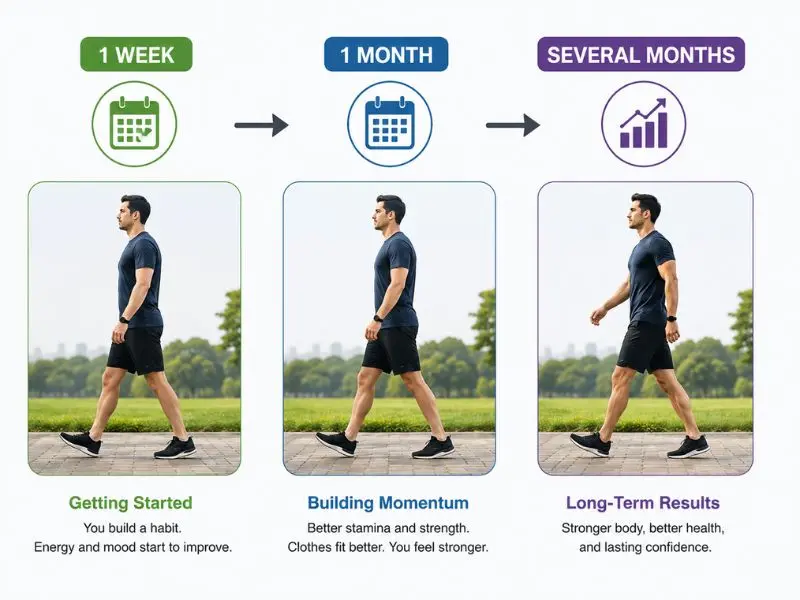
Walking 30 Minutes a Day: Before and After Changes
People often search for dramatic before-and-after results. In reality, changes from a daily walking habit usually happen gradually.
After One Week
During the first week, you may simply notice that you are moving more than before. You might feel slightly more energized or find that your daily routine becomes easier to follow.
You may also experience some tiredness or muscle soreness if you were previously inactive. Starting at a comfortable pace can help your body adjust.
After One Month
After several weeks of walking 30 minutes a day, the habit may start to feel more natural. Your walking endurance may improve, and you may be able to maintain a steady pace more comfortably.
Depending on your overall lifestyle, you may also notice changes in your energy, mood, daily activity level, or body weight.
After Several Months
Over several months, consistency can make a bigger difference. Your cardiovascular fitness and walking endurance may improve, and regular movement may become part of your normal lifestyle.
Any visible changes in body weight or body composition will depend on many factors. Avoid comparing your results with someone else’s because every person’s starting point and lifestyle are different.
The biggest benefit may simply be creating a healthy habit that you can maintain over the long term.
Comparison Table: Walking 10 vs. 30 vs. 60 Minutes a Day

| Daily Walking Time | Potential Benefits | Calorie Burn Potential | Best For |
| 10 minutes | Adds movement, breaks up sitting time, and helps build a habit | Lower overall calorie expenditure | Complete beginners and busy schedules |
| 30 minutes | Supports cardiovascular fitness, daily activity, mood, and weight management | Moderate and varies by pace and body size | A balanced daily fitness routine |
| 60 minutes | Provides more total activity and can further increase endurance and energy expenditure | Higher overall potential, but still varies individually | People comfortable with longer activity |
Actual calorie burn depends on body weight, walking speed, terrain, fitness level, and walking intensity. More time does not automatically mean a better routine if the schedule is too difficult to maintain consistently.
For many people, walking 30 minutes a day offers a practical middle ground between a short activity session and a longer workout.
How Many Calories Can You Burn Walking for 30 Minutes?
There is no single calorie number that applies to everyone. A larger person may burn more calories than a smaller person while covering the same distance at the same pace.
Walking speed also matters. A brisk walk generally requires more energy than a slow stroll. Walking uphill or on uneven terrain may increase the effort as well.
Your fitness level can also affect how challenging a walk feels. As your body becomes more accustomed to the activity, you may choose to increase your pace or distance.
Instead of focusing only on a calorie number, consider your overall consistency. A daily walking habit can add meaningful activity over weeks and months.
What Is the Best Time of Day to Walk?
The best time to walk is usually the time that fits your schedule and allows you to stay consistent.
Morning Walking
A morning walk may help you start the day feeling awake and active. It can also be easier to complete before work, school, or other responsibilities become busy.
Afternoon Walking
Walking in the afternoon can provide a useful break from sitting. If you spend long hours at a desk, a walk may help you add movement to an otherwise inactive day.
Evening Walking
An evening walk may help some people relax after a busy day. It can also be a convenient time to walk with friends or family.
There is no perfect universal schedule. The most effective routine is often the one you can repeat regularly.
How to Get Better Results From a 30-Minute Walk

A few small changes can make your walking routine more effective and enjoyable.
Walk at a Purposeful Pace
You do not need to run, but walking with some purpose can make the activity more challenging. Choose a pace that feels comfortable while still requiring a little effort.
Improve Your Posture
Try to stand tall while walking. Keep your shoulders relaxed, look ahead, and allow your arms to move naturally.
Good posture can make walking feel more comfortable and controlled.
Wear Comfortable Walking Shoes
Shoes that fit well can make a major difference. Choose footwear that feels supportive and appropriate for the surface where you usually walk.
If your shoes are worn out or uncomfortable, walking may become less enjoyable.
Include Hills or Slight Inclines
Once you feel comfortable with your normal route, a gentle incline can increase the challenge.
You do not need to walk uphill every day. Even occasional changes in terrain can add variety to your routine.
Gradually Increase Your Pace or Distance
Do not feel pressured to improve everything at once. You might walk slightly faster for a few minutes or gradually add a little extra distance.
Small increases are often easier to maintain than sudden, extreme changes.
Stay Consistent
Consistency is one of the most important parts of walking 30 minutes a day. Missing an occasional day is normal, but returning to your routine matters more than being perfect.
If 30 minutes feels difficult on a particular day, a shorter walk may still help you maintain the habit.
Combine Walking With Strength Training
Walking and strength training can work well together. Walking supports general physical activity and endurance, while resistance training can help develop muscular strength.
You do not need an advanced gym program to begin. Simple bodyweight or resistance exercises can be a starting point.
Support Your Activity With Healthy Habits
Your walking routine works alongside the rest of your lifestyle. Balanced meals, enough protein, adequate sleep, hydration, and stress management can all support your general health and fitness goals.
Think about the bigger picture instead of expecting one habit to do everything.
Who Should Be Careful When Starting a Daily Walking Routine?

Walking is often considered a simple and accessible activity, but some people may need to take extra precautions.
If you have a serious medical condition, recent injury, severe joint pain, chest pain, unexplained shortness of breath, dizziness, or another concerning symptom, seek appropriate medical advice before pushing yourself into a new exercise routine.
Start slowly if you have been inactive for a long time. You can begin with a shorter walk and gradually build toward 30 minutes as your comfort and fitness improve.
Stop exercising and seek appropriate help if you experience symptoms during activity.
Frequently Asked Questions
1. Is walking 30 minutes a day enough exercise?
For many people, it is a useful amount of daily activity, though total exercise needs depend on individual goals and fitness levels.
2. Can walking 30 minutes a day help with weight loss?
Yes, it can support weight loss by increasing daily energy use when combined with suitable eating and lifestyle habits.
3. How many calories does a 30-minute walk burn?
The amount varies based on body weight, walking speed, terrain, and intensity, so there is no single number for everyone.
4. What happens if I walk 30 minutes every day?
Over time, you may improve your activity level, endurance, cardiovascular fitness, mood, and support your overall health.
5. Is it better to walk faster or longer?
Both can be useful, and the best choice depends on your fitness level, goals, comfort, and ability to stay consistent.
Conclusion
Walking 30 minutes a day is a simple habit that can support your heart, muscles, endurance, mood, energy levels, and overall activity. You do not need to walk perfectly or achieve dramatic results overnight—start at a comfortable pace, stay consistent, and gradually adjust your routine as your fitness improves.
