


How Much Should I Walk a Day? The answer depends on your current fitness level, age, health, lifestyle, and personal goals. Some people may benefit from starting with a short daily walk, especially when they know how to stay comfortable and safe during cold weather walking.
Walking is a simple and practical way to become more active throughout the day. This guide explains daily steps, walking time, miles, weight management, and how to build a walking routine that feels realistic for you.
How Much Should I Walk a Day?
There is no single walking amount that is perfect for every person. If you are asking, How Much Should I Walk a Day, a practical answer is to start with an amount you can comfortably manage and gradually build from there.
For many adults, regular moderate physical activity can be a useful goal, and walking can contribute to that activity. You do not necessarily need to complete all of your walking in one long session. Short walks throughout the day can also add up.
For example, a beginner might start with 10 to 15 minutes of walking. Someone who already walks regularly may choose 30 minutes or more. Your goal should be challenging enough to encourage progress but realistic enough to maintain.
The best approach is usually to look at where you are now. If you currently do very little walking, jumping immediately to a very high step count may not be comfortable. Gradual progress can be easier to maintain.
How Many Steps Should You Aim for Each Day?

When people ask How Much Should I Walk a Day, they often want a specific step number. However, the best number of steps can vary from person to person.
A beginner does not need to start at the same level as someone who is already very active. A useful goal may be to increase your normal daily movement over time.
Here are some practical examples:
Beginners
If you are not used to regular exercise, focus on building the habit first. You might start with a short walk and gradually add more steps as your fitness improves.
Moderately Active Adults
People who already move regularly may choose a higher daily step goal. The exact number depends on their schedule, fitness, and personal goals.
People Focused on General Health
Regular walking can be one way to reduce long periods of sitting and increase daily physical activity. Consistency is often more important than reaching a particular number every day.
People With Higher Fitness Goals
If improving endurance or overall fitness is your goal, you may gradually increase walking distance, time, pace, or the number of active days each week.
The main lesson is that How Much Should I Walk a Day is not always answered by one magic number. A goal that is realistic for you is more valuable than an ambitious goal you cannot maintain.
How Many Miles Should I Walk a Day?
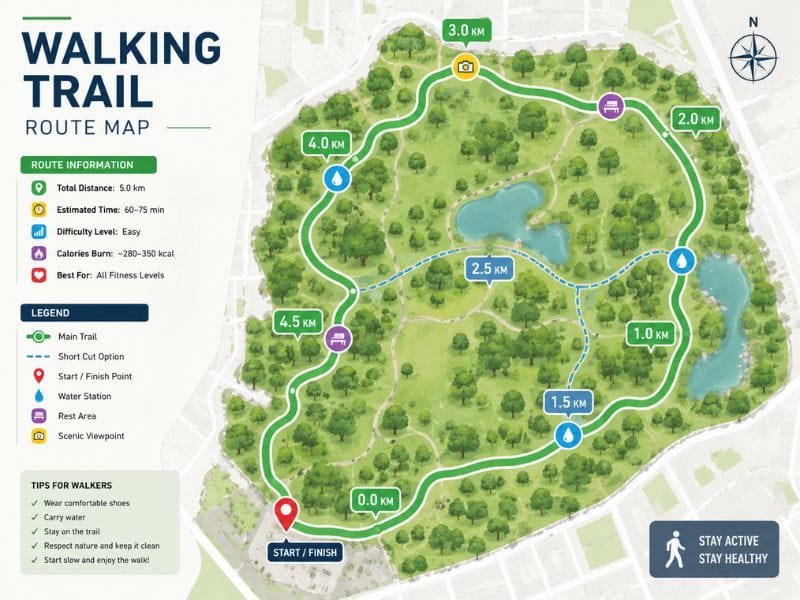
The number of miles you walk depends on how many steps you take and the length of your stride. Because stride length varies, two people can take the same number of steps but cover slightly different distances.
For many people, walking several thousand steps may equal a few miles. However, your height, walking style, and stride length can affect the result.
Instead of worrying too much about an exact conversion, choose a tracking method that works for you. You can track:
- Steps
- Minutes walked
- Distance
- Walking pace
- Active days per week
If you prefer distance, start with a comfortable route and slowly make it longer. If you prefer time, a 20- or 30-minute walk may be easier to plan.
When deciding How Much Should I Walk a Day, the method you use to measure your progress matters less than being consistent.
Comparison Table: Daily Walking Goals
| Goal or Fitness Level | Suggested Daily Walking Amount | Main Focus |
| Beginner | Start with 10–20 minutes or a comfortable step increase | Build the habit |
| General Health | Regular walking spread across the day | Increase daily movement |
| Weight Management | Combine regular walks with healthy eating habits | Support overall energy balance |
| Higher Fitness Goal | Longer or brisker walks based on fitness level | Improve endurance |
| Older Adults or Limited Mobility | A comfortable amount based on individual ability | Stay safely active |
These are general examples, not strict rules. Individual needs can vary depending on age, current fitness, mobility, health conditions, and medical advice.
Benefits of Walking Every Day

Walking is simple, accessible, and does not require a gym membership. Regular walking can support several areas of health and fitness.
Walking Can Support Heart Health
Brisk walking can raise your heart rate and contribute to your weekly physical activity. Over time, regular activity may support cardiovascular health.
Walking Can Improve Daily Movement
Modern life often includes long periods of sitting. A daily walk gives you an opportunity to stand up, move your body, and break up inactive time.
Walking May Support Weight Management
Walking uses energy, which can contribute to your overall daily energy expenditure. It is not a guaranteed solution by itself, but it can be part of a balanced weight-management routine.
Walking Can Build Endurance
When you walk regularly, longer walks may gradually feel easier. You can then increase your time, distance, or pace according to your goals.
Walking May Support Mood and Well-Being
Many people enjoy walking because it provides time away from screens and daily routines. A walk outdoors may also feel relaxing and refreshing.
Walking Helps Create a Healthy Routine
One major benefit of walking is that it can fit into many schedules. You can walk before work, after meals, during a break, or in the evening.
These benefits help explain why the question How Much Should I Walk a Day is worth considering as part of your overall lifestyle.
How Much Should I Walk a Day for Weight Loss?

If your goal is weight loss, How Much Should I Walk a Day depends on your current activity level and overall routine.
Walking can increase the amount of energy you use during the day. However, body weight is also influenced by food intake, sleep, stress, other physical activity, and individual factors.
A good strategy is to begin with an amount you can maintain. For example, if you currently do not walk for exercise, start with a short daily walk. Once that feels easier, gradually increase one of the following:
- Walking time
- Daily distance
- Walking pace
- Number of walking days
- Total daily steps
You do not have to make every walk extremely difficult. A consistent walking habit can be more sustainable than doing one exhausting workout and then stopping for several days.
For weight management, combine walking with a balanced eating pattern that provides appropriate portions and nutritious foods. If you have specific weight-loss or medical concerns, a qualified healthcare professional can provide personalized advice.
Is Walking 30 Minutes a Day Enough?

For many people, 30 minutes of walking can be a useful and realistic part of an active lifestyle. The exact benefit depends on how often you walk, your pace, and the rest of your daily activity.
You can complete 30 minutes all at once or divide it into shorter sessions. For example, you might take:
- A 10-minute walk in the morning
- A 10-minute walk during the day
- A 10-minute walk in the evening
This approach may be especially helpful for busy people.
If 30 minutes currently feels too difficult, start with less. Even a shorter walk can help you begin building the habit. You can gradually add a few minutes as your comfort and fitness improve.
If 30 minutes feels easy, you may choose to walk longer or increase your pace. Again, How Much Should I Walk a Day should be based on your own starting point and goals.
Is Walking 10,000 Steps a Day Necessary?
No, 10,000 steps is not a requirement that every person must reach.
It is a popular target, but different people have different needs and abilities. Someone who currently averages 3,000 steps per day may make meaningful progress by gradually increasing their normal activity, even if they do not immediately reach 10,000.
A lower step count can still be better than remaining inactive, and a higher number is not automatically better for everyone.
Instead of thinking, “I failed because I did not reach 10,000,” focus on questions such as:
- Am I moving more than before?
- Can I maintain this routine?
- Does my body feel comfortable?
- Am I gradually improving?
- Does this goal fit my lifestyle?
For many people, gradual improvement is a smarter approach than chasing one number.
How to Start Walking More Each Day

If you want to increase your activity, start small and make walking part of your normal routine.
Start With a Comfortable Amount
Do not feel pressured to walk for an hour on your first day. Begin with an amount that feels manageable.
Increase Gradually
Once your current routine feels easier, add a few minutes or a little extra distance. Small changes can become significant over time.
Break Walking Into Short Sessions
You do not need one long walk. Several shorter walks can be easier to fit into a busy day.
Walk After Meals When Convenient
A short walk after eating can be an easy way to add movement to your routine.
Use Stairs When Appropriate
Choosing stairs instead of an elevator can add small amounts of activity throughout the day when it is safe and practical.
Track Your Progress if It Motivates You
A phone, smartwatch, or simple journal can help you see your progress. Tracking is optional, though. Some people prefer to walk without focusing on numbers.
Choose Safe Routes
Walk in areas where you feel comfortable and safe. Pay attention to traffic, weather, lighting, and the condition of the walking surface.
Wear Comfortable Footwear
Shoes that fit well and feel comfortable can make regular walking more enjoyable.
These simple habits can help answer How Much Should I Walk a Day in a practical way because your ideal amount may increase naturally as your routine becomes stronger.
Signs You May Need to Slow Down
Walking should not require you to ignore serious discomfort. Slow down or stop if you experience pain that feels unusual or severe, dizziness, chest discomfort, or unusual shortness of breath.
If you have a medical condition, recent injury, or concerns about starting a new exercise routine, ask a qualified healthcare professional for personalized guidance.
Pushing through every symptom is not a sign of a good workout. Long-term consistency is more important than forcing yourself to do too much.
How to Create a Walking Routine You Can Maintain
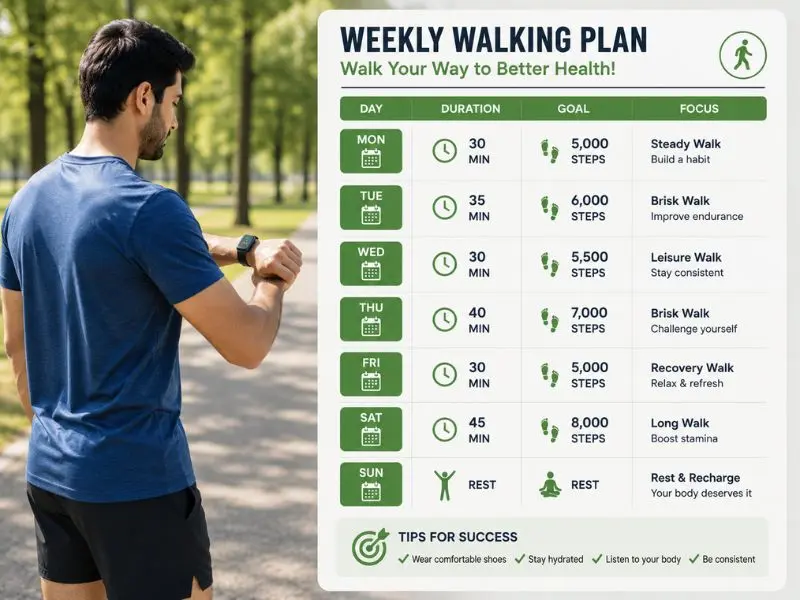
The best walking plan is usually one that fits your real life. You do not need a perfect schedule to become more active.
Start by choosing a time when walking is easiest. This could be before breakfast, during a lunch break, after work, or in the evening.
Here is a simple beginner-friendly example:
Monday
Walk for 15 to 20 minutes at a comfortable pace.
Tuesday
Take a shorter walk or add extra movement throughout the day.
Wednesday
Walk for 20 minutes and include a slightly brisker pace if comfortable.
Thursday
Take an easy walk or use the day for lighter activity.
Friday
Walk for 20 to 30 minutes based on your comfort level.
Saturday
Take a longer enjoyable walk if your schedule allows.
Sunday
Rest or take a relaxed, easy walk.
You can adjust this plan based on your starting point. The goal is not to follow someone else’s schedule perfectly. It is to build a routine you can continue.
When asking How Much Should I Walk a Day, remember that a routine you follow for months is generally more useful than an extreme plan you quit after one week.
How to Make Your Walks More Effective
You do not always need to walk farther to make your walks feel more challenging. Once you have built a comfortable base, you can change your routine in different ways.
Walk a Little Faster
A brisker pace can increase the intensity of your walk. You should still be able to control your movement and remain comfortable.
Add Small Hills
Walking uphill can make your route more challenging. Start gradually if you are new to hills.
Extend Your Route
Adding a few extra minutes can be a simple way to build endurance.
Be More Consistent
Sometimes the biggest improvement comes from walking regularly rather than making every individual walk harder.
Include Variety
Change your route occasionally or walk in a park, neighborhood, or other suitable location. Variety can help prevent boredom.
How Much Walking Is Healthy?
Healthy activity levels vary between individuals. Your current fitness, age, mobility, and overall health all matter.
For some people, a short daily walk is a meaningful improvement. For others, longer and faster walks may fit their fitness goals.
This is why the question should not be treated as if there is one answer for the entire population.
A healthy approach usually includes:
- Regular movement
- Gradual progress
- Appropriate rest
- Attention to your body’s signals
- A realistic schedule
- Safe walking conditions
Walking can be one part of a broader lifestyle that also includes nutritious eating, good sleep, strength-building activities, and other forms of physical activity.
Should You Walk Every Day?
Many people can enjoy walking on most or all days of the week, especially when the intensity is comfortable. However, daily exercise does not have to mean every walk is long or difficult.
Some days may include a brisk walk, while other days may include a slow and relaxing walk. You can also take rest days or choose different activities.
Listen to your body and adjust your routine when needed. If you are new to exercise, gradual progression can reduce the temptation to do too much too soon.
Consistency matters, but flexibility also matters. Missing one walk does not mean your routine has failed. Simply return to your normal schedule when you can.
Tips for Staying Consistent With Your Walking Goals
Knowing How Much Should I Walk a Day is only part of the challenge. The other part is maintaining the habit.
Try these simple strategies:
- Schedule your walk at the same time each day.
- Prepare comfortable shoes in advance.
- Choose routes you enjoy.
- Walk with a friend or family member.
- Listen to music or a podcast when it is safe to do so.
- Set small weekly goals.
- Celebrate consistent progress instead of perfection.
- Keep your goals flexible on busy days.
A 10-minute walk is often easier to maintain than skipping activity completely because you do not have time for a longer workout.
Frequently Asked Questions
How much should I walk a day to stay healthy?
A manageable amount of regular walking that gradually increases your overall activity can support a healthy lifestyle.
Is walking every day good for you?
Regular walking can support fitness and well-being when it is appropriate for your health and fitness level.
How many steps should I walk a day?
The best daily step goal varies, so start from your current level and gradually increase your movement.
Is 30 minutes of walking a day enough?
Thirty minutes can be a useful daily walking goal for many people, depending on their needs and overall activity.
Can walking help with weight loss?
Walking can contribute to weight loss by increasing activity, especially when combined with appropriate nutrition and other healthy habits.
Conclusion
How Much Should I Walk a Day depends on your fitness level, health, lifestyle, and personal goals. There is no single number of steps, miles, or minutes that is perfect for everyone. Start with a manageable amount that fits comfortably into your daily routine, then gradually increase your walking time, distance, or pace as your fitness improves. The most important thing is to stay consistent and choose a walking routine that you can enjoy and maintain over the long term.
