

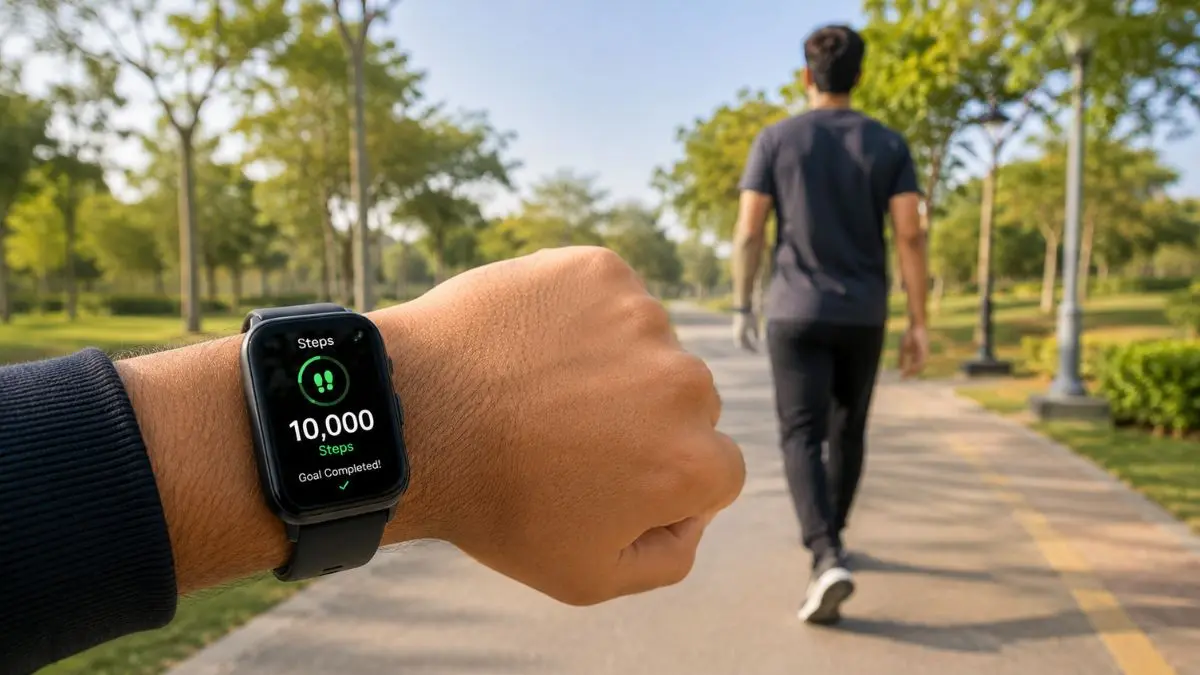
Walking 10,000 steps a day is a popular fitness goal because it is a simple way to add more movement to your routine. Getting started is simple, as you only need a comfortable place to walk and a little time in your day.
Everyone may experience different results from regular walking. Your fitness level, walking pace, age, lifestyle, diet, and overall health can all affect what happens when you become more active.
Are 10,000 Steps a Day Good for Your Health?
For many people, walking 10,000 steps a day can be a useful way to stay active and reduce the amount of time spent sitting. It gives you a clear daily goal and can encourage you to move more throughout the day.
That said, 10,000 is not a magic number. Someone who currently walks 3,000 steps may see benefits by gradually moving toward 5,000 or 7,000 steps. The best daily step goal is one that matches your current fitness level and that you can maintain consistently.
For some active people, 10,000 steps may be easy. For beginners or people with physical limitations, reaching that number immediately may be difficult. Progress matters more than chasing one exact number.
The main benefit of a step goal is that it encourages regular movement. A daily walking routine can fit into many lifestyles, whether you walk outside, use a treadmill, walk at work, or take several short walks during the day.
How Does Walking 10,000 Steps a Day Affect Your Body?

Walking more regularly can affect different parts of your body. Some changes may be noticeable fairly quickly, while others may develop gradually through consistent activity.
You May Burn More Calories

Walking 10,000 steps a day can increase the number of calories you use through daily activity. However, there is no single calorie number that applies to everyone.
Your calorie burn can depend on your body size, walking speed, distance, terrain, and how hard you are working. Walking uphill or at a faster pace may require more energy than walking slowly on a flat surface.
This is why a step count alone cannot tell you exactly how many calories you have burned. Still, adding more movement to your day can increase your overall energy expenditure.
Your Heart and Circulation May Benefit
Regular walking helps keep you active and may improve your heart health and overall cardiovascular fitness. As you walk, your heart works to deliver oxygen-rich blood to your muscles.
Over time, a consistent walking routine may help improve your ability to handle everyday physical activities. For example, you may notice that walking longer distances or climbing stairs feels easier than before.
Walking does not need to be extremely intense to be valuable. A comfortable, regular routine can still help you spend more time being physically active.
Your Muscles and Legs Get More Daily Activity
Walking uses several muscles in your lower body. Your calves, thighs, glutes, and other supporting muscles work as you move from one step to the next.
Walking 10,000 steps a day may help your legs become more accustomed to regular activity. If you have been mostly inactive, you may initially feel tired or sore when increasing your steps.
As your body adapts, everyday movement may begin to feel easier. Walking can also help you maintain regular movement without placing the same demands on your body as some high-impact activities.
Your Endurance Can Improve
One of the noticeable effects of a regular walking routine can be better endurance. When you consistently spend more time moving, your body can gradually become better at handling that activity.
You might find that you can walk farther before feeling tired. Activities such as shopping, doing household chores, or walking around your neighborhood may also feel less demanding.
The key is gradual progress. Suddenly increasing from a very low step count to 10,000 steps every day may leave you overly tired or uncomfortable.
It May Support Weight Management
Walking 10,000 steps a day may support weight-management efforts because it adds more physical activity to your daily routine. More movement can contribute to using more energy throughout the day.
However, walking alone may not always result in weight loss. Changes in body weight can also depend on food intake, sleep, overall activity, medications, and many other individual factors.
Instead of expecting immediate results, think of daily walking as one part of a healthy lifestyle. A consistent routine may be easier to maintain than relying on short periods of extreme exercise.
Sitting Time May Decrease
Many people spend long periods sitting at work, school, or home. A step goal can remind you to stand up and move more often.
You might take a short walk during a break, walk while talking on the phone, or choose the stairs instead of the elevator.Even short periods of activity can contribute to your daily step count.
Walking 10,000 steps a day does not mean you must complete a long walk all at once. Your steps from normal daily activities can also contribute to your total.
Your Mood and Mental Well-Being May Improve
Physical activity can also affect how you feel mentally. A walk may give you time away from screens, work, or other daily pressures.
Some people enjoy walking outdoors because it provides fresh air and a change of environment. Others prefer walking with music, a podcast, a friend, or a family member.
The experience will be different for everyone, but creating a regular time to move can become a useful part of your daily routine.
How Far Is 10,000 Steps?

The exact distance covered by 10,000 steps depends mainly on your stride length. Taller people often take longer steps, while shorter people may take more steps to cover the same distance.
For many adults, 10,000 steps is often roughly equal to around 4 to 5 miles, or approximately 6.5 to 8 kilometers. This is only an estimate, not an exact measurement.
Your walking tracker may provide a more personalized distance estimate if it uses information such as your height or stride length.
The number of steps can also vary depending on your movement. Walking around a store, taking stairs, and moving around your home can all add steps without feeling like one long walk.
How Long Does It Take to Walk 10,000 Steps?
The amount of time needed to complete 10,000 steps depends on your walking pace and stride length.
For some people, walking 10,000 steps a day may take around 1.5 to 2 hours of actual walking. A faster walker may finish sooner, while a slower pace may take longer.
Remember that you do not necessarily need to spend all of that time on one dedicated walk. Steps from daily life can contribute to your total.
For example, you might get some steps while getting ready in the morning, walking around at work, shopping, doing chores, and taking an evening walk.
Comparing Different Daily Step Goals
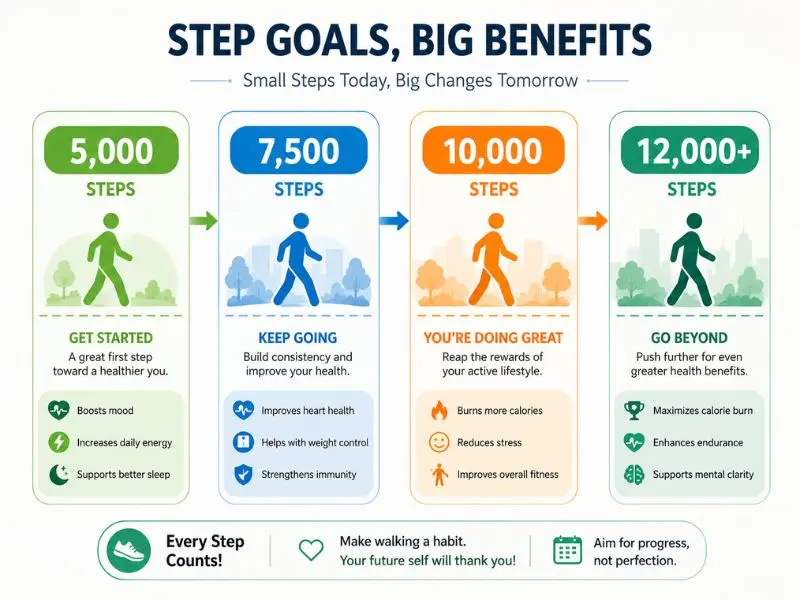
| Daily Steps | General Activity Level | Possible Benefits | Best For |
| 5,000 steps | Lower to moderate activity | Helps encourage more daily movement | Beginners or people starting from a low activity level |
| 7,500 steps | Moderate activity | Can provide a realistic increase in daily walking | People building a regular walking habit |
| 10,000 steps | Active daily movement | May support fitness, endurance, and overall activity | People who can comfortably maintain the goal |
| 12,000+ steps | Higher daily activity | Adds more movement and activity | Active people whose bodies tolerate the extra walking |
More steps are not automatically better for everyone. Your ideal number can depend on your lifestyle, fitness, recovery, and personal goals.
A person who consistently walks 7,000 steps may be better off than someone who forces themselves to reach 12,000 steps for a few days. Starting with a manageable goal, such as a 15-minute walk, can make it easier to build a consistent walking routine.
Do You Need to Walk All 10,000 Steps at Once?
No. You can spread your steps throughout the day.
In fact, breaking your walking into shorter sessions may make the goal feel much easier. You could take a 15-minute walk in the morning, move around during the day, and go for another walk in the evening.
Here are some simple ways to add steps:
- Take a short walk after breakfast or lunch.
- Use walking breaks during work or study.
- Choose stairs when practical.
- Park a little farther away when it is safe and convenient.
- Walk while talking on the phone.
- Take an evening walk around your neighborhood.
- Walk around your home during short breaks.
These small activities can add up. This approach can make walking 10,000 steps a day feel more manageable.
What If You Cannot Reach 10,000 Steps a Day?
You do not need to feel discouraged if you cannot reach 10,000 steps. A lower step count can still mean you are becoming more active than before.
Start by checking your current average. If you normally walk 2,500 steps, trying to reach 10,000 immediately may be a big jump.
Instead, add a manageable number of steps over time. For example, you might first aim for 3,000, then 4,000, and gradually continue increasing as your body adapts.
The goal is to create a routine that you can maintain. Consistency is usually more useful than setting a goal that feels impossible.
Your step count may also naturally change from day to day. You might be more active on weekends and less active on busy workdays. That is normal.
How to Start Walking 10,000 Steps a Day
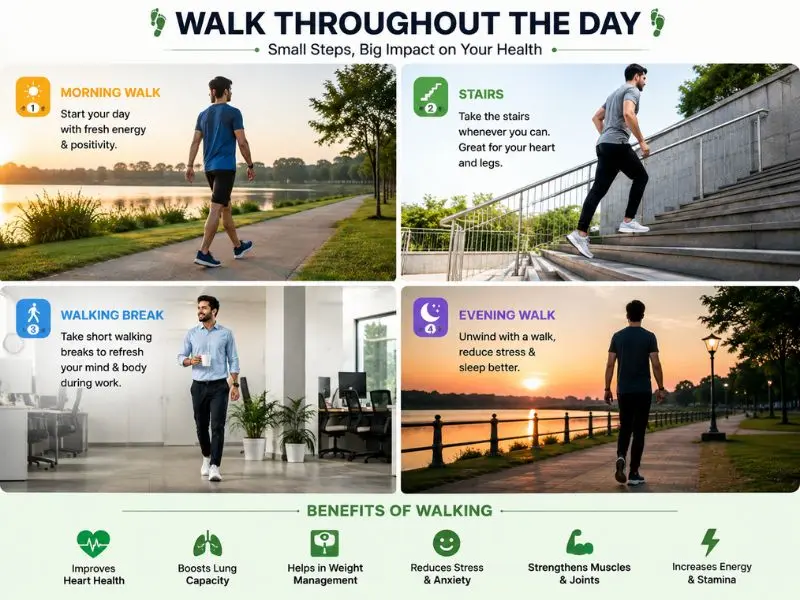
If you want to work toward a higher daily step goal, starting gradually can make the process easier.
Start by Tracking Your Current Steps
Before setting a new goal, find out how many steps you currently take on an average day. You can use a phone, smartwatch, fitness tracker, or another step-counting device.
Knowing your starting point helps you create a more realistic plan. If your current average is 4,000 steps, adding 500 or 1,000 steps may be a reasonable first target.
Add Short Walks Throughout the Day
You do not always need a long workout session. A few short walks can be easier to fit into a busy schedule.
Try taking a short walk in the morning, another after lunch, and one later in the day. These sessions can gradually help increase your total steps.
Increase Your Step Count Gradually
If your body is not used to a lot of walking, give yourself time to adapt. Increasing too quickly may lead to excessive fatigue, soreness, or discomfort.
Pay attention to how your body feels. A gradual approach can make a new routine easier to maintain over the long term.
Choose Comfortable Walking Shoes
Comfortable and supportive shoes can make a big difference when you spend more time on your feet. Shoes that fit poorly may make walking unpleasant.
The best choice can depend on your feet, walking surface, and personal comfort. If you notice persistent foot pain or discomfort, avoid simply pushing through it.
Make Walking Part of Your Routine
A walking habit can be easier to maintain when it becomes connected to an existing part of your day.
For example, you could walk after dinner, during your lunch break, or after dropping someone off. A regular time can reduce the need to decide every day when you will exercise.
Adjust Your Goal When Needed
Your daily step goal does not have to remain exactly the same forever. Some days you may have more time and energy, while other days may require more rest.
Weather, work, travel, and other responsibilities can also affect your activity. Being flexible can help you maintain a healthy relationship with your routine.
Is Walking 10,000 Steps a Day Enough Exercise?
Walking is a valuable form of physical activity, but whether it is enough exercise depends on your personal goals.
If your goal is simply to become more active, walking 10,000 steps a day may provide a significant amount of movement. However, other fitness goals may require additional activities.
For example, strength training can help work major muscle groups. Mobility exercises can support comfortable movement, while other forms of aerobic exercise may offer a different type of challenge.
You do not need to do every type of exercise at once. A balanced routine can be built gradually based on your interests and abilities.
Who Should Be Careful With a 10,000-Step Goal?
A 10,000-step goal may not be appropriate for everyone, especially if you have recently been inactive or have an injury or significant mobility limitation.
People with ongoing pain or medical concerns may need individualized guidance before making a large and sudden increase in physical activity.
If walking causes significant or persistent pain, dizziness, chest discomfort, or other concerning symptoms, stop the activity and seek appropriate medical advice.
The purpose of a walking goal should be to support your health and daily movement, not to force your body beyond what it can safely handle.
How Can You Make 10,000 Steps More Enjoyable?

One reason people stop a walking routine is boredom. Fortunately, there are many ways to make daily walking more interesting.
Try changing your route from time to time. You might walk through a park, around a different neighborhood, or on a treadmill when outdoor conditions are not suitable.
Walking with another person can also make the time pass more quickly. Some people enjoy using the walk as social time.
You can also listen to music, audiobooks, or podcasts if doing so is safe in your surroundings. Keep enough awareness of traffic, cyclists, and other people around you.
The easier and more enjoyable the routine feels, the more likely you may be to continue it.
Tips for Staying Consistent With Your Daily Step Goal
A good walking routine does not have to be perfect. Missing your goal occasionally does not erase the activity you have already done.
Focus on your overall pattern instead of judging every single day. If you have a low-step day, you can simply return to your normal routine when possible.
Planning can also help. Look at your day and identify a few opportunities to move more.
You may discover that the easiest way to increase your steps is not through one long walk. Small changes repeated regularly can have a meaningful effect on your overall activity level.
Walking 10,000 steps a day can become easier when it is treated as part of normal life rather than a difficult daily task.
Can You Get the Same Benefits With Fewer Steps?
Possibly. You do not have to reach one exact number before your walking becomes valuable.
If increasing your steps means you are moving more than you did previously, that can be a positive change. The difference between your current activity level and your new routine may matter more than a specific number on a tracker.
For example, moving from 2,000 to 5,000 steps per day is a major increase in activity, even though it is below the popular 10,000-step target.
Your best approach is to find a level that challenges you without making the routine unsustainable. Once that level feels comfortable, you can decide whether you want to increase it further.
Frequently Asked Questions
Is walking 10,000 steps a day enough to lose weight?
It may support weight loss by increasing activity, but results also depend on diet, calorie intake, and other individual factors.
How many calories do 10,000 steps burn?
The number varies widely depending on body size, pace, distance, terrain, and other factors.
How many miles are 10,000 steps?
For many adults, 10,000 steps is roughly 4 to 5 miles, depending on stride length.
Can beginners walk 10,000 steps a day?
Beginners can work toward it gradually, but starting with a lower step goal may be more comfortable and realistic.
Is it better to walk 10,000 steps at once or throughout the day?
Either approach can work, and spreading the steps throughout the day is often easier for many people.
Conclusion
Walking 10,000 steps a day can be a practical way to increase your daily movement, support fitness, improve endurance, and spend less time sitting. Adding simple exercises such as a 20-minute core workout can also help you build a more balanced fitness routine.
