
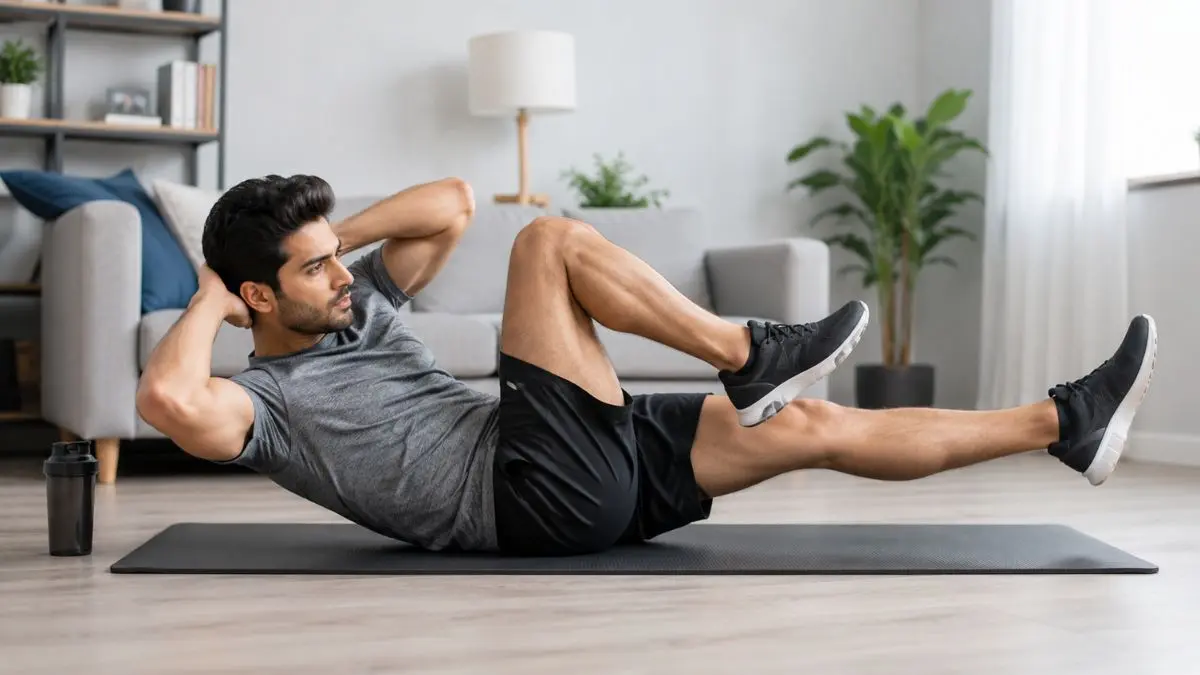
A 20 minute core workout can be a practical way to train your midsection when you do not have much time. You can do many effective core exercises at home with little or no equipment while working on strength, control, and stability. For a complete fitness routine, you can also include a 5-day workout split alongside your core training.
This guide includes a complete routine, exercise instructions, beginner modifications, and tips for progressing safely. Whether you are new to exercise or looking for a quick core workout to add to your current routine, you can adjust the movements to match your fitness level.
What Is a 20 Minute Core Workout?
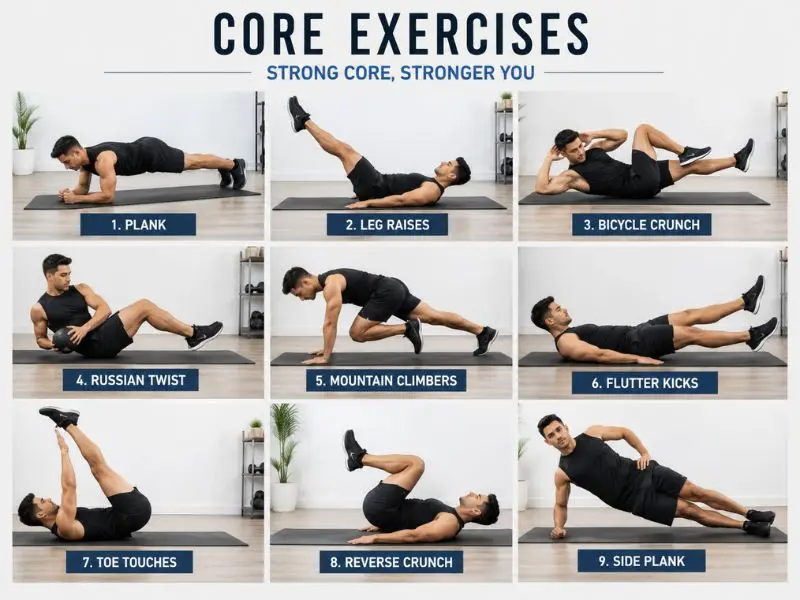
A 20 minute core workout is a short training session focused on the muscles that help support and control your torso. It may include movements for the abdominal muscles, obliques, lower back, and deeper stabilizing muscles around the trunk.
Your core is more than the muscles that create the appearance of visible abs. These muscles work together when you bend, twist, stand, walk, lift objects, and perform many types of exercise.
A well-designed core workout routine can use several types of movement. Some exercises involve keeping your body still while resisting movement, such as a plank exercise. Others involve controlled movement, such as bicycle crunches or reverse crunches.
The goal is not simply to do as many repetitions as possible. Good 20 minute core workout training focuses on controlled movement, steady breathing, and proper form.
Benefits of Strengthening Your Core
A stronger core can be useful in everyday activities as well as exercise. Your torso needs to stay controlled when you move your arms and legs, change direction, or carry objects.
Some potential benefits of regular core training include:
- Building better core strength
- Improving stability and balance
- Supporting controlled everyday movement
- Improving body awareness and control
- Helping you maintain good positioning during other exercises
- Supporting performance in activities that involve running, lifting, or changing direction
Core exercises are only one part of a complete fitness routine. You do not need to spend hours training your abs and core every day. A short, consistent routine may fit well alongside strength training, walking, sports, or other physical activity.
The quality of each repetition also matters. Slow, controlled movements often provide more useful practice than rushing through a large number of repetitions.
What Muscles Does a Core Workout Train?
Your core includes several different muscles that work together to support and stabilize your body. Different exercises place emphasis on different areas.
Abdominal Muscles
The rectus abdominis is a long muscle located at the front of your abdomen. It is often associated with the appearance of a “six-pack.” Exercises involving controlled trunk flexion can challenge this area.
Obliques
The obliques are located along the sides of your abdomen. They help control rotation and side bending. Side planks and controlled twisting movements can involve these muscles.
Lower Back
Muscles around the lower back help support the spine and control your torso. A balanced routine should not focus only on the front of the body.
Deep Core Muscles
Deeper muscles help create stability and control around the trunk. Exercises such as dead bugs and bird dogs can help you practice keeping the torso steady while moving your arms or legs.
Other Stabilizing Muscles
The hips, glutes, and muscles around the pelvis also contribute to stable movement. This is one reason many core exercises involve more than just the abs.
How to Prepare Before Your Workout
Before starting an at home core workout, take a few minutes to prepare your space and body.
Choose an area where you can lie down and move comfortably. A firm exercise mat may make floor exercises more comfortable, although it is not required.
You can wear comfortable clothes that make it easy to move and exercise. If you are exercising on a slippery surface, make sure you have stable footing.
Spend a few minutes warming up. You might walk in place, move your arms and shoulders, perform gentle hip movements, or do a few easy bodyweight movements.
Choose an intensity that matches your current fitness level. You should be able to control the exercises rather than simply rushing to finish them.
If a movement causes sharp or unusual pain during a 20 minute core workout, stop the exercise and choose an easier variation if appropriate. Consider choosing an easier variation or speaking with a qualified healthcare professional if you have an injury or a health concern that affects exercise.
20 Minute Core Workout Routine
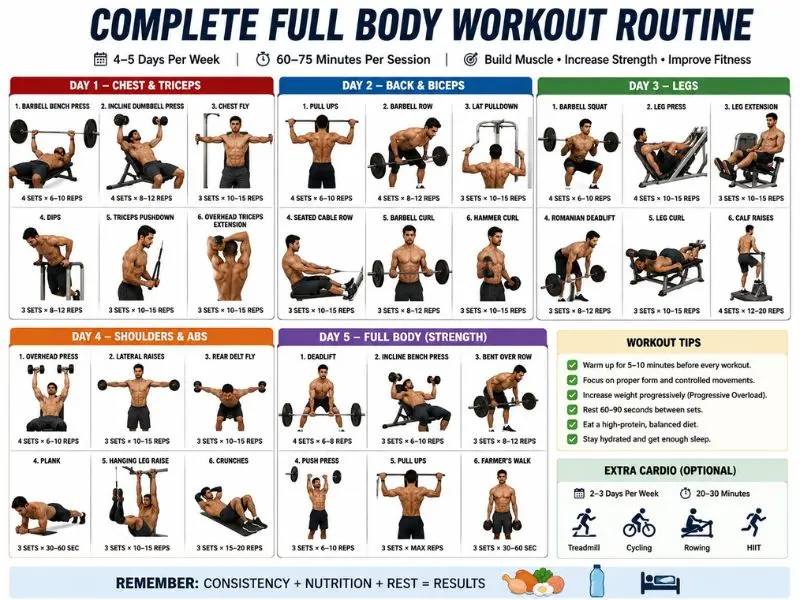
This 20 minute core workout is designed as a simple bodyweight routine for home. It includes a short warm-up, two rounds of core exercises, and a brief cool-down.
The Plan
- Warm-up: 2 minutes
- Round 1: 7 minutes
- Short rest: 1 minute
- Round 2: 7 minutes
- Cool-down: 3 minutes
Total: approximately 20 minutes
During each round, perform seven exercises for about 45 seconds each and take around 15 seconds to transition to the next movement. Adjust the pace if you need more rest between exercises.
The goal is controlled movement. If 45 seconds is too difficult, shorten the working time and rest a little longer.
Dead Bug
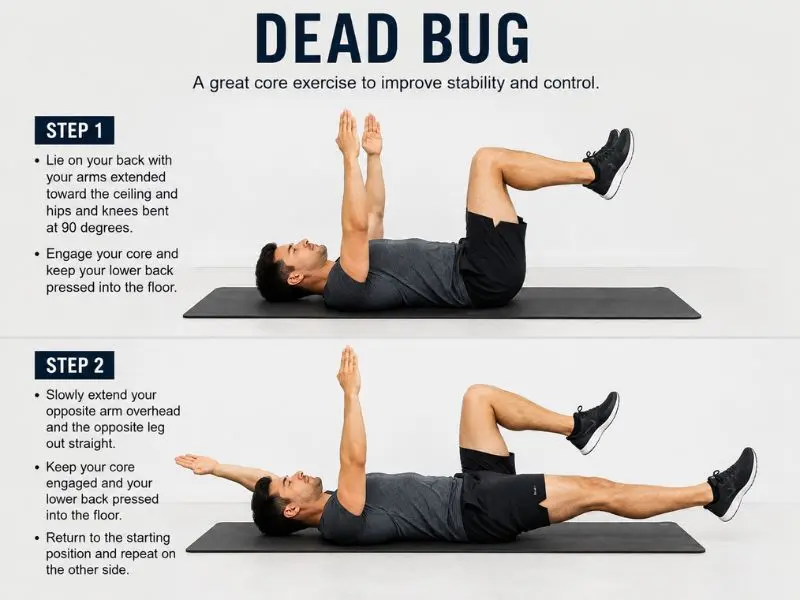
Lie on your back with your knees bent and lifted so your legs form roughly a right angle. Raise your arms toward the ceiling.
Slowly lower one arm and the opposite leg toward the floor while keeping your torso as steady as possible. Return to the starting position and switch sides.
Main muscles involved: Deep core muscles and abdominal muscles.
Suggested time: 45 seconds, alternating sides.
Form tip: Keep the movement slow and avoid forcing your lower back into an uncomfortable position.
Easier option: Move only your arms or only your legs instead of lowering opposite limbs together.
Bicycle Crunches
Start by lying flat on your back and bending your knees. Lift your shoulders slightly if comfortable and bring one knee toward your torso while rotating gently toward it. Alternate sides with control.
This movement can involve the abdominal muscles and obliques.
Suggested time: 45 seconds.
Form tip: Avoid pulling hard on your neck. Let your torso rotate naturally instead of forcing your elbow toward your knee.
Easier option: Keep your feet closer to the floor or perform the movement more slowly.
Forearm Plank
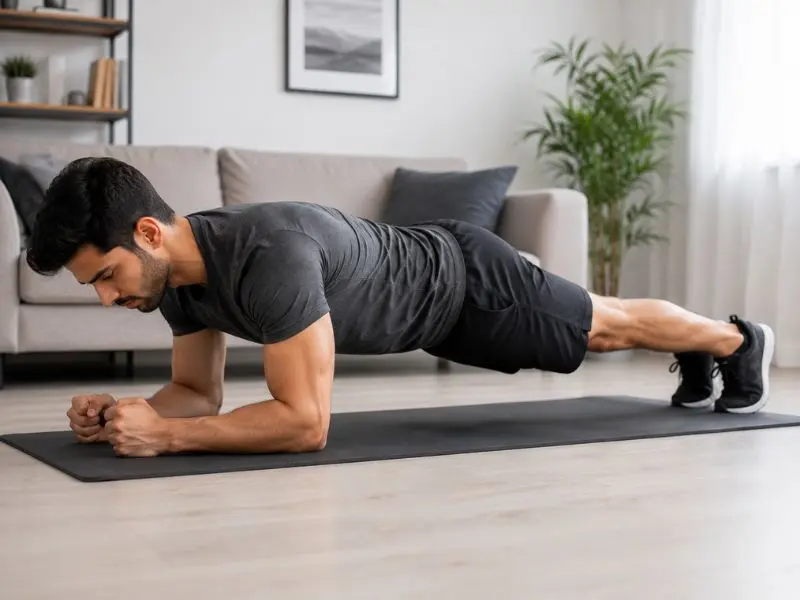
Place your forearms on the floor and extend your legs behind you. Keep your body in a straight, comfortable line from your head toward your heels.
The plank exercise challenges the core by asking you to maintain a stable position.
Main muscles involved: Abs and core, shoulders, and other stabilizing muscles.
Suggested time: Up to 45 seconds.
Form tip: Avoid letting your hips drop or lifting them excessively high.
Easier option: Perform the plank with your knees on the floor.
Reverse Crunch
Lie on your back with your knees bent and feet lifted if comfortable. Slowly bring your knees toward your torso by using a controlled movement.
Return slowly rather than dropping your legs back down.
Main muscles involved: Abdominal muscles, with emphasis on controlling the lower portion of the movement.
Suggested time: 8 to 15 controlled repetitions.
Form tip: Use a small, controlled range of motion instead of swinging your legs.
Easier option: Keep your feet on the floor between repetitions.
Bird Dog
Start on your hands and knees with your back in a comfortable neutral position. Slowly extend one arm forward and the opposite leg behind you during your 20 minute core workout.
Pause briefly, return with control, and switch sides.
Main muscles involved: Deep core muscles, lower back, glutes, and stabilizers.
Suggested time: 45 seconds, alternating sides.
Form tip: Try to keep your torso steady instead of rotating toward the moving arm or leg.
Easier option: Move one limb at a time.
Side Plank
Lie on one side and support yourself on your forearm. Keep your body aligned as comfortably as possible.
Hold the position for part of the interval, then switch sides.
Main muscles involved: Obliques and muscles that help stabilize the torso and hips.
Suggested time: About 20 seconds per side, with time to switch.
Form tip: Keep your shoulder comfortable and avoid collapsing into the supporting arm.
Easier option: Keep the lower knee on the floor.
Mountain Climbers
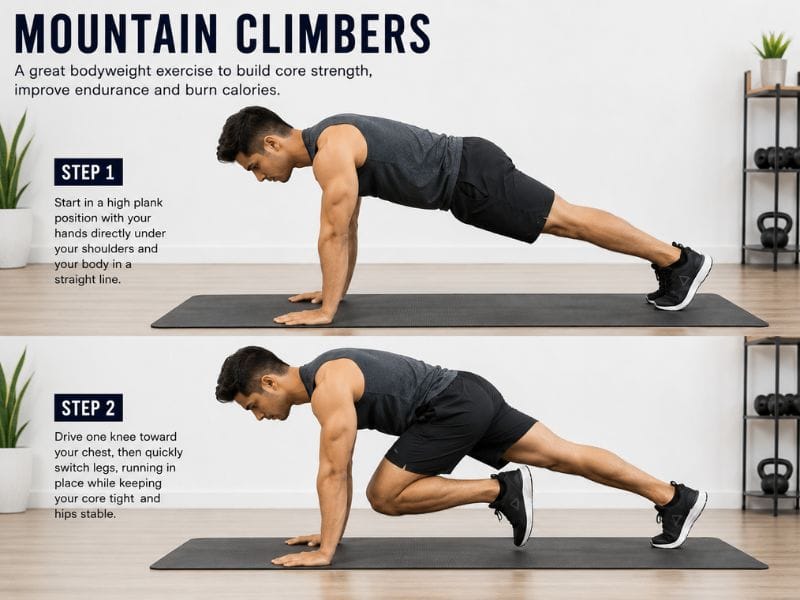
Start in a high plank position. Bring one knee toward your torso, return it, and then switch legs. You can perform mountain climbers slowly for more control or slightly faster if your fitness level allows. If your goal also includes building muscle, your core training can be combined with a structured muscle-building approach.
You can perform mountain climbers slowly for more control or slightly faster if your fitness level allows.
Main muscles involved: Core muscles, shoulders, and hip flexors, while also increasing overall workout intensity.
Suggested time: 45 seconds.
Form tip: Keep your hands firmly planted and avoid excessive bouncing.
Easier option: Step one foot forward at a time instead of moving quickly.
A Simple 20-Minute Workout Schedule
Here is the complete routine in an easy format:
Minutes 0–2: Warm-Up
- March gently in place
- Roll your shoulders
- Move your hips comfortably
- Practice a few easy bodyweight movements
Minutes 2–9: Round One
Perform each exercise for about 45 seconds, followed by 15 seconds to transition:
- Dead bug
- Bicycle crunches
- Forearm plank
- Reverse crunch
- Bird dog
- Side plank
- Mountain climbers
Minutes 9–10: Rest
Walk around slowly, take a drink if needed, and prepare for the second round.
Minutes 10–17: Round Two
Repeat the same seven exercises. Slow down or choose an easier variation if your form begins to break down.
Minutes 17–20: Cool-Down
Walk slowly and allow your breathing to settle. Use gentle movements for your shoulders, hips, and torso.
A cool-down does not need to be complicated. The main goal of a 20 minute core workout is to finish gradually rather than suddenly stopping after your final exercise.
Beginner Version of This Core Workout
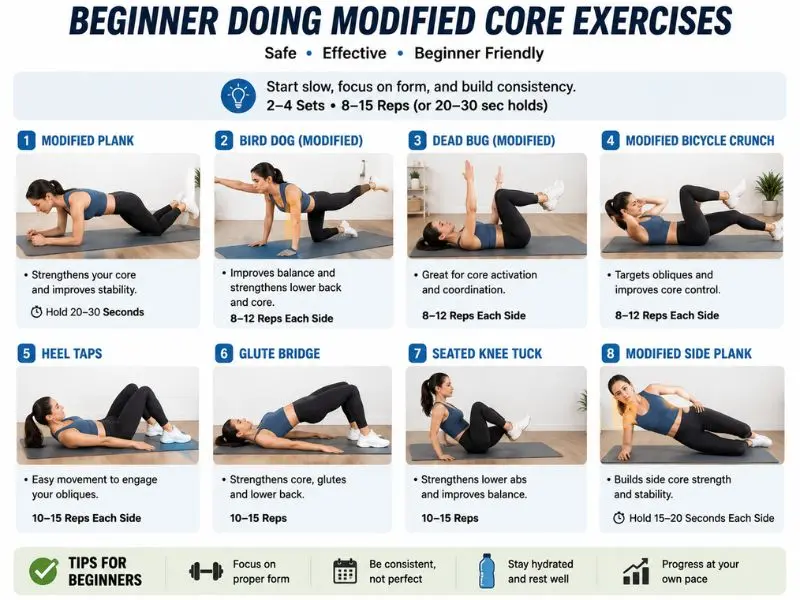
A beginner core workout should feel challenging but manageable. There is no benefit in choosing difficult movements before you can control the basics.
You can reduce the difficulty in several ways:
- Work for 20 to 30 seconds instead of 45 seconds
- Take longer rest between exercises
- Complete only one round
- Use knee-supported plank variations
- Move one arm or leg at a time during dead bugs
- Perform slower mountain climbers
- Reduce the range of motion during crunching exercises
For example, a beginner could complete one seven-minute circuit, rest, and then spend the remaining time walking or cooling down. As strength and confidence improve, the second round can be added.
Focus on learning proper form first. A smaller number of controlled repetitions during a 20 minute core workout is generally more useful than many rushed repetitions.
How to Make the Workout More Challenging
Once the routine becomes easier, you can gradually increase the challenge. You do not need to change everything at once.
One option is to improve your control. Slowing down the lowering phase of an exercise can make a familiar movement feel more demanding.
You can also gradually:
- Add a few repetitions
- Increase the duration of a hold
- Use a larger comfortable range of motion
- Choose a more difficult variation
- Reduce rest slightly when your recovery allows
- Add another round on a different day
For example, a knee-supported side plank can eventually progress to a full side plank. A basic dead bug can progress to a longer lever position as control improves.
Make sure technique stays solid before increasing workout intensity. Progress should be gradual during a 20 minute core workout, especially if you are returning to exercise after a long break.
Common Mistakes During Core Exercises
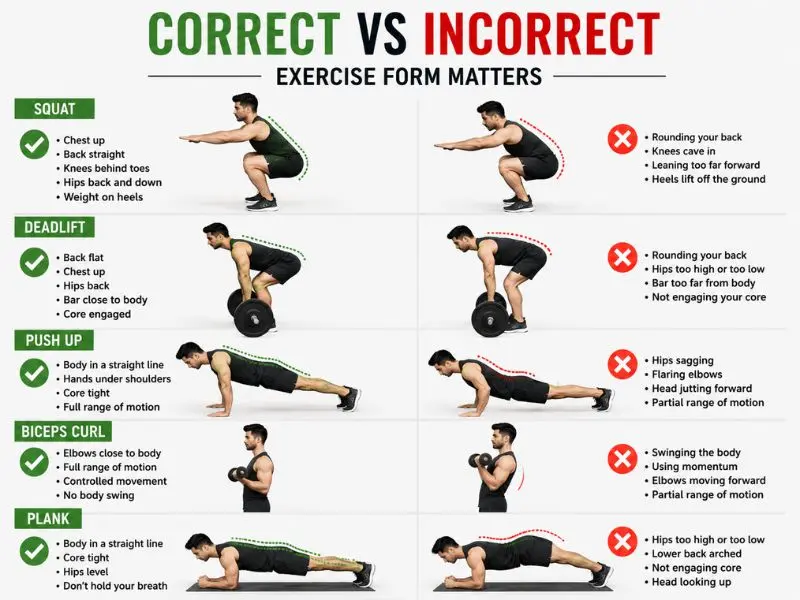
Even a quick core workout can become less effective when technique is rushed. Here are some common mistakes and simple ways to correct them.
Rushing Through Repetitions
Fast repetitions can make it difficult to control your body.
Try this: Slow down and pause briefly during the hardest part of each movement.
Using Poor Form
Poor positioning can happen when an exercise is too difficult or when fatigue builds up.
Try this: Choose an easier variation and focus on quality.
Holding Your Breath
Some people unintentionally hold their breath while concentrating.
Try this: Breathe steadily and avoid straining. A gentle exhale during effort can help you maintain a natural breathing pattern.
Pulling on Your Neck
This often happens during crunches and bicycle crunches.
Try this: Keep your hands light and avoid using them to pull your head forward.
Letting the Lower Back Compensate
During some exercises, the lower back may arch excessively as the core becomes tired.
Try this: Reduce the range of motion or choose an easier variation that allows better control.
Doing Too Much Too Soon
Starting with long workouts or advanced exercises can leave beginners overly fatigued.
Try this: Begin with a manageable amount and build gradually over time.
How Often Should You Do a Core Workout?
The best frequency depends on your overall training routine, goals, recovery, experience, and workout intensity.
Someone who performs heavy strength training may already use their core during other exercises. Another person who is new to exercise may prefer shorter sessions with enough time to recover and practice good technique.
Pay attention to how your body responds. If your muscles feel unusually tired or your form is getting worse, more recovery may be useful.
You also do not have to perform the exact same routine every session. Rotating exercises can help you practice different types of core control while keeping your training interesting.
Can You Do This Workout at Home Without Equipment?
Yes. This routine is designed as a no equipment workout. You only need enough space to lie down and move safely.
An exercise mat can make floor movements more comfortable, but it is optional. A towel or another suitable surface may also provide some cushioning depending on your floor.
Bodyweight exercises can be effective because they allow you to adjust difficulty through leverage, range of motion, tempo, and exercise variation.
If you have access to equipment, you can eventually add resistance bands, cables, medicine balls, or weights. However, equipment is not necessary to begin building better core strength.
A home workout routine can also be easier to maintain because you do not need to travel to a gym. Consistency is often more important than having a complicated exercise setup.
Tips for Getting Better Results From Core Training
A good 20 minute ab workout can be part of a larger fitness plan, but results usually come from consistent habits over time.
Be Consistent
Choose a schedule that realistically fits your week. A routine you can maintain is more useful than an ambitious plan you stop after a few days.
Progress Gradually
As your fitness level improves, make small changes to the challenge. Add time, repetitions, control, or a more difficult variation when appropriate.
Prioritize Proper Form
Technique should come before speed. Proper form can help you learn the movement and make it easier to identify when an exercise needs to be modified.
Include Other Types of Exercise
Core training works well alongside a balanced routine that may include strength training, cardiovascular activity, mobility work, sports, or regular walking.
Allow Adequate Recovery
Hard training sessions can create fatigue. Give yourself enough recovery based on the difficulty of your workouts and your overall activity level.
Support Your Training With Balanced Nutrition
Regular meals that provide enough energy and nutrients can support an active lifestyle. Individual needs vary based on body size, activity, goals, and other factors.
Keep Your Expectations Realistic
Core exercises can help strengthen your core, but they do not specifically remove fat from one body area. Visible changes in the abdomen are influenced by many factors, including overall body composition, nutrition, genetics, and total activity.
Avoid programs that promise a perfectly defined midsection within a few days or weeks. Sustainable fitness habits usually matter more than extreme short-term plans.
Frequently Asked Questions
Is a 20 minute core workout enough?
Yes, a focused 20-minute session can be useful when the exercises and intensity match your goals and fitness level.
Can beginners do a 20 minute core workout?
Yes, beginners can shorten the intervals, rest longer, and use easier exercise variations.
Can I do a core workout every day?
It depends on the workout intensity, your overall training, and how well you recover.
Do I need equipment for core exercises?
No, many effective core exercises can be performed using only your body weight.
Will core workouts burn belly fat?
Core exercises strengthen muscles but cannot specifically remove fat from the belly.
Conclusion
A 20 minute core workout can be a simple and effective addition to your fitness routine, whether you train at home or use it alongside other workouts. Start with exercises you can control, focus on proper form, and make gradual progress as your strength and confidence improve. Consistency and realistic expectations can help you build a stronger, more stable core over time.
