
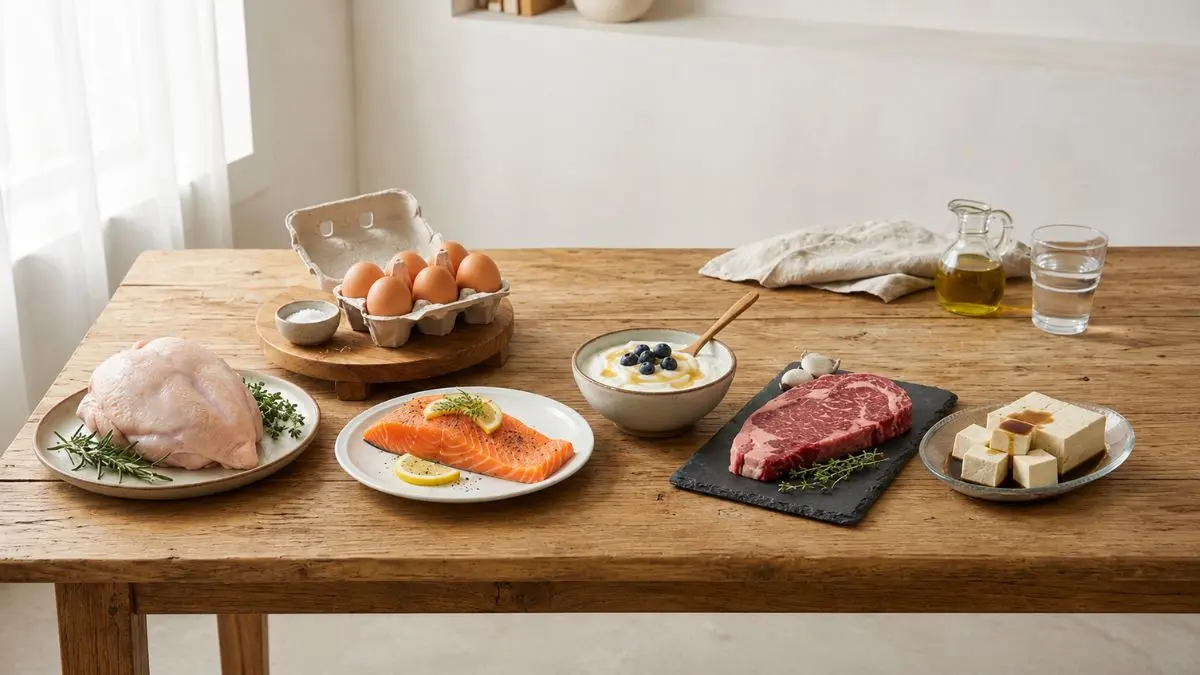
Building strong muscles requires more than regular workouts. Eating the right high protein foods for muscle gain gives your body the amino acids it needs to repair muscle tissue, recover faster, and support steady muscle growth.
Whether you’re a beginner or an experienced lifter, choosing high protein foods for muscle gain can help you reach your fitness goals more effectively. In this guide, you’ll discover the best protein-rich foods, their nutritional benefits, and practical tips to include them in your daily diet while supporting healthy, sustainable muscle growth.
What Are High Protein Foods for Muscle Gain?
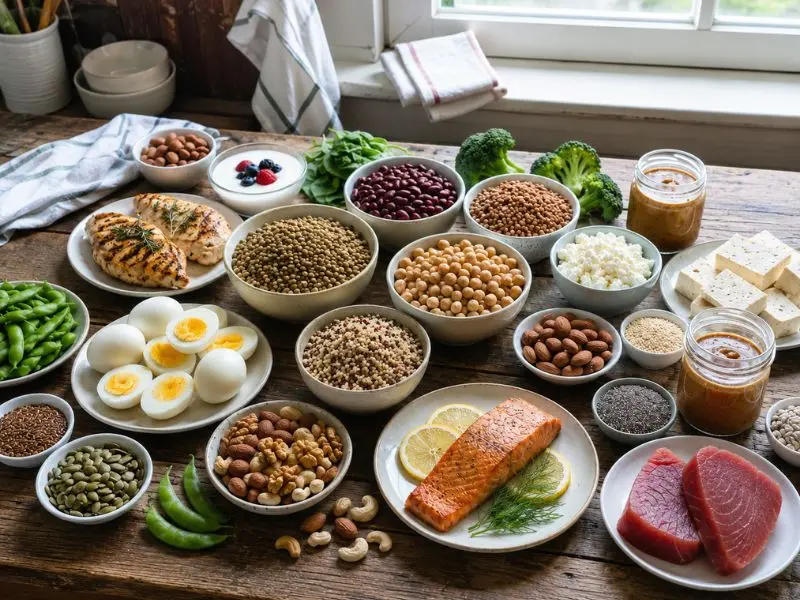
High protein foods for muscle gain are foods that contain large amounts of protein along with essential nutrients that support muscle repair and growth.
Protein is made of amino acids. The amino acids found in high protein foods for muscle gain act as the building blocks of muscle tissue. After resistance training, your muscles develop tiny tears. Protein helps repair those tears, making your muscles larger and stronger.
Good protein foods also provide vitamins, minerals, and healthy fats that improve recovery and support overall health.
Examples include:
- Chicken breast
- Eggs
- Salmon
- Lean beef
- Greek yogurt
- Cottage cheese
- Tuna
- Lentils
- Tofu
- Whey protein
Why Protein Is Important for Muscle Growth
Protein plays a major role in muscle building because it supports muscle protein synthesis. This natural process is supported by high protein foods for muscle gain, which help repair damaged muscle fibers after exercise.
Without enough protein, your muscles cannot recover efficiently. Even if you train hard, poor protein intake may slow your progress.
Protein also helps:
- Build lean muscle mass
- Speed up recovery
- Reduce muscle breakdown
- Support strength gains
- Keep you feeling full longer
Combining strength training with high protein foods for muscle gain creates the best environment for muscle development.
How Much Protein Do You Need?
Your protein needs for high protein foods for muscle gain depend on your body weight, activity level, and fitness goals.
For most people trying to gain muscle, experts recommend:
| Goal | Protein Intake |
| General Health | 0.8 g per kg body weight |
| Active Lifestyle | 1.2–1.6 g per kg |
| Muscle Gain | 1.6–2.2 g per kg |
| Advanced Bodybuilding | Up to 2.4 g per kg |
For example:
A person weighing 70 kg (154 lbs) should aim for approximately 112–154 grams of protein per day when focusing on muscle gain.
Spread high protein foods for muscle gain across 3–5 meals daily to support muscle protein synthesis.
Benefits of High Protein Foods for Muscle Gain
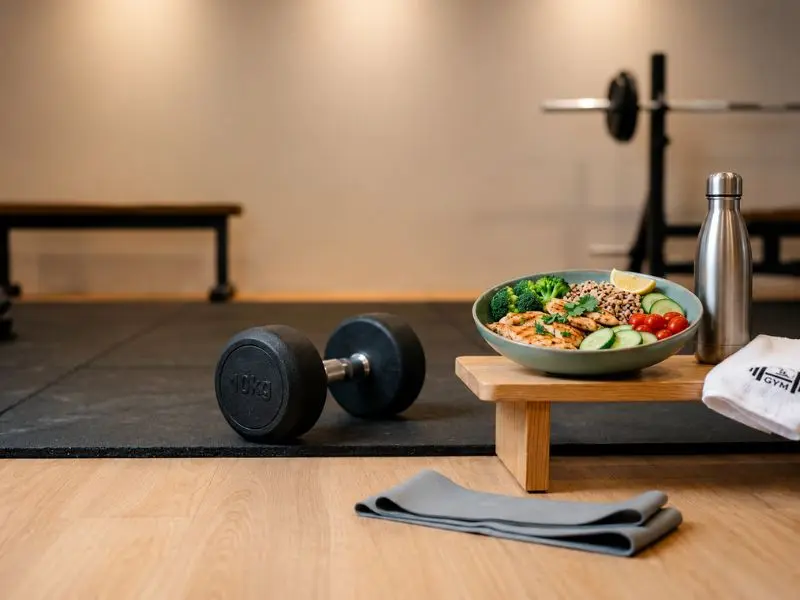
Adding more high protein foods for muscle gain to your diet offers several benefits beyond building muscle.
1. Supports Muscle Growth
Protein supplies essential amino acids that help repair damaged muscle fibers and stimulate new muscle growth.
2. Improves Workout Recovery
After exercise, your muscles need nutrients to recover. Protein speeds this recovery process, helping you train consistently.
3. Increases Strength
As muscles become stronger and larger, your ability to lift heavier weights improves over time.
4. Helps Maintain Lean Muscle
Protein helps preserve muscle mass, even during periods of calorie restriction or fat loss.
5. Keeps You Full Longer
Protein digests more slowly than carbohydrates, helping reduce hunger and support healthy eating habits.
6. Supports Healthy Bones
Many protein-rich foods also provide calcium, phosphorus, magnesium, and vitamin D, which contribute to stronger bones.
7. Boosts Metabolism
Digesting protein requires more energy than digesting fats or carbohydrates, slightly increasing daily calorie expenditure.
Comparison Table: Animal vs Plant Protein Foods
| Feature | Animal Protein | Plant Protein |
| Protein Quality | Complete | Often Incomplete |
| Amino Acids | All Essential Amino Acids | May Need Combining |
| Digestibility | Higher | Slightly Lower |
| Vitamin B12 | Yes | Usually No |
| Fiber | None | High |
| Healthy Fats | Varies | Often Higher in Healthy Fats |
| Best For | Fast Muscle Growth | Overall Health & Muscle Support |
A balanced diet with high protein foods for muscle gain from both animal and plant sources provides complete nutrition and supports muscle growth.
17 Best High Protein Foods for Muscle Gain
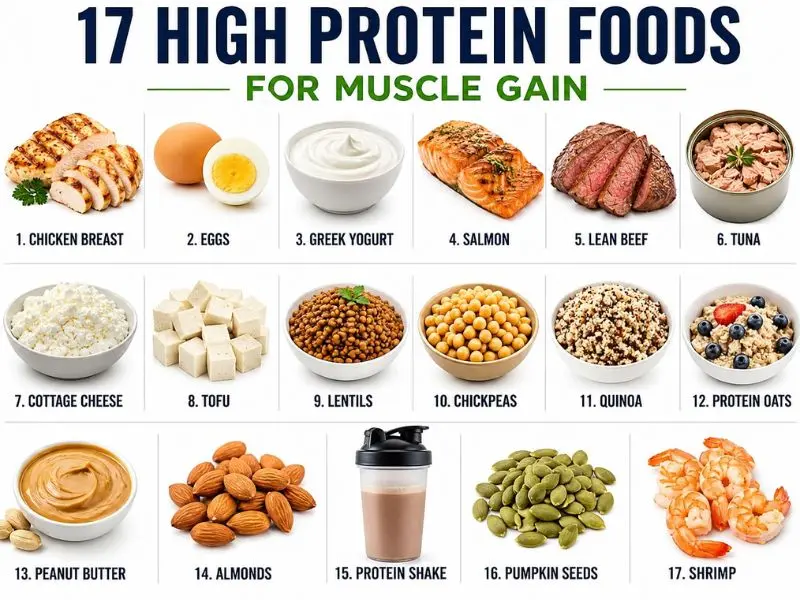
1. Chicken Breast
Chicken breast is one of the most popular high protein foods for muscle gain because it provides a large amount of lean protein with very little fat.
Nutrition (100 g)
- Protein: 31 g
- Calories: 165
- Fat: 3.6 g
Benefits
- Rich in complete protein
- Supports muscle recovery
- Low in saturated fat
- Easy to prepare
- Budget-friendly
Best Ways to Eat
- Grilled
- Baked
- Air fried
- Added to salads
- Meal prep bowls
2. Eggs
Eggs contain high-quality protein and all nine essential amino acids, making them excellent for muscle growth.
Nutrition (2 Large Eggs)
- Protein: 12–13 g
- Calories: 140
- Healthy fats included
Benefits
- Rich in leucine
- Supports muscle protein synthesis
- Contains vitamin D
- Good source of choline
- Easy breakfast option
Best Ways to Eat
- Boiled
- Scrambled
- Omelet with vegetables
- Poached
3. Salmon
Salmon is a nutrient-dense protein source that also provides omega-3 fatty acids, which may support recovery after intense exercise.
Nutrition (100 g)
- Protein: 25 g
- Calories: 206
- Omega-3 fats
Benefits
- High-quality complete protein
- Supports muscle recovery
- Heart healthy
- Rich in vitamin D
- Reduces inflammation after workouts
Best Ways to Eat
- Grilled
- Oven baked
- Pan seared
- Added to rice bowls
4. Lean Beef
Lean beef delivers complete protein along with iron, zinc, vitamin B12, and creatine, all of which support strength and muscle performance.
Nutrition (100 g)
- Protein: 26 g
- Calories: 170–200
- Rich in iron and zinc
Benefits
- Supports muscle growth
- Naturally contains creatine
- Helps maintain energy levels
- Excellent source of B vitamins
Best Ways to Eat
- Grilled steak
- Lean ground beef
- Beef stir-fry
- Homemade burgers
5. Greek Yogurt
Greek yogurt is one of the best high protein foods for muscle gain because it contains slow-digesting casein protein and fast-digesting whey protein. This combination supports muscle recovery throughout the day.
Nutrition (170 g / 6 oz)
- Protein: 17–20 g
- Calories: 100–150
- Calcium: High
- Probiotics: Yes
Benefits
- Supports muscle recovery
- Promotes healthy digestion
- Rich in calcium for strong bones
- Keeps you feeling full longer
- Great post-workout snack
Best Ways to Eat
- With berries
- Mixed with oats
- Added to smoothies
- Topped with nuts and seeds
6. Cottage Cheese
Cottage cheese is packed with casein protein, making it an excellent bedtime snack for people trying to build muscle.
Nutrition (100 g)
- Protein: 11–13 g
- Calories: 98
- Calcium: High
Benefits
- Slow-release protein
- Supports overnight muscle repair
- Low in carbohydrates
- Rich in calcium
- Easy to prepare
Best Ways to Eat
- With fruit
- On whole-grain toast
- Mixed into salads
- Before bedtime
7. Tuna
Tuna is a lean, affordable protein source that helps support muscle growth without adding excess calories.
Nutrition (100 g)
- Protein: 29 g
- Calories: 132
- Fat: Very Low
Benefits
- High-quality complete protein
- Supports lean muscle gain
- Rich in vitamin B12
- Convenient canned option
Best Ways to Eat
- Tuna salad
- Sandwiches
- Rice bowls
- Whole wheat wraps
8. Shrimp
Shrimp provides high-quality protein with very little fat, making it ideal for lean muscle development.
Nutrition (100 g)
- Protein: 24 g
- Calories: 99
Benefits
- Low in calories
- Rich in selenium
- Supports muscle recovery
- Quick to cook
Best Ways to Eat
- Stir-fry
- Grilled
- Pasta
- Rice bowls
9. Turkey Breast
Turkey breast is another lean protein choice that supports healthy muscle growth.
Nutrition (100 g)
- Protein: 29 g
- Calories: 135
Benefits
- Lean protein
- Rich in B vitamins
- Supports recovery
- Low saturated fat
Best Ways to Eat
- Roasted
- Sandwiches
- Salads
- Meal prep
10. Whey Protein
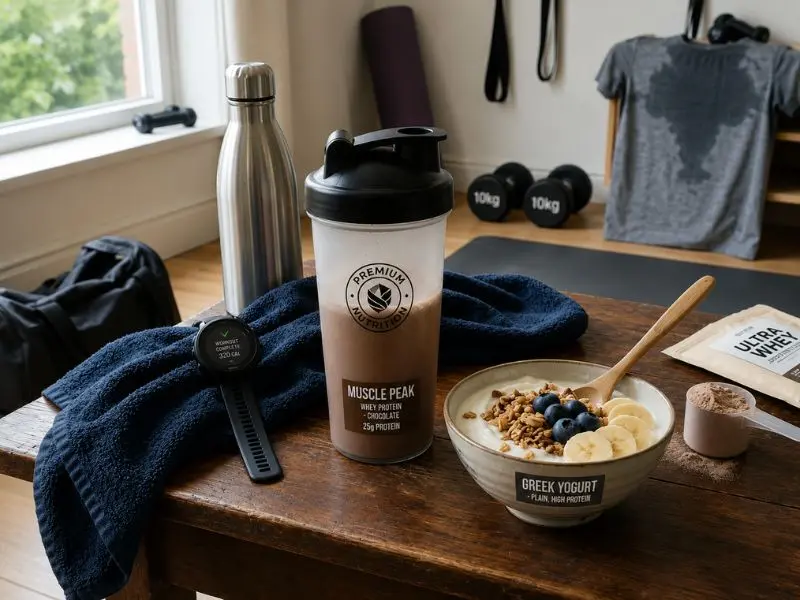
Whey protein is one of the fastest-digesting proteins available and is especially useful after resistance training.
Nutrition (1 Scoop)
- Protein: 24–25 g
- Calories: 120
Benefits
- Quickly absorbed
- High in leucine
- Supports muscle protein synthesis
- Convenient after workouts
Best Ways to Use
- Protein shakes
- Smoothies
- Overnight oats
- Yogurt bowls
11. Tofu
Tofu is a complete plant protein made from soybeans and works well for vegetarians and vegans.
Nutrition (100 g)
- Protein: 10–12 g
- Calories: 80
Benefits
- Complete protein
- Rich in calcium
- Low saturated fat
- Versatile ingredient
Best Ways to Eat
- Stir-fries
- Salads
- Grilled
- Curries
12. Lentils
Lentils provide protein, fiber, and complex carbohydrates that help fuel workouts.
Nutrition (1 Cup Cooked)
- Protein: 18 g
- Calories: 230
Benefits
- Plant-based protein
- High fiber
- Rich in iron
- Supports long-lasting energy
Best Ways to Eat
- Lentil soup
- Salads
- Curry
- Rice bowls
13. Black Beans
Black beans are nutritious and affordable while providing protein and fiber.
Nutrition (1 Cup Cooked)
- Protein: 15 g
- Calories: 227
Benefits
- Supports muscle recovery
- High fiber
- Rich in magnesium
- Helps maintain energy
Best Ways to Eat
- Burrito bowls
- Chili
- Salads
- Wraps
14. Quinoa
Quinoa stands out because it naturally provides all nine essential amino acids your body needs.
Nutrition (1 Cup Cooked)
- Protein: 8 g
- Calories: 222
Benefits
- Complete protein
- Rich in fiber
- Gluten-free
- Excellent side dish
Best Ways to Eat
- Salads
- Meal prep bowls
- Side dish
- Breakfast bowls
15. Milk
Milk provides both whey and casein protein, making it useful before or after workouts.
Nutrition (1 Cup)
- Protein: 8 g
- Calories: 120
Benefits
- Supports muscle repair
- Rich in calcium
- Good hydration source
- Easy to combine with meals
Best Ways to Drink
- Post-workout
- Smoothies
- With oats
- Breakfast
16. Almonds
Although almonds are higher in fat, they provide protein, healthy fats, and vitamin E.
Nutrition (28 g)
- Protein: 6 g
- Calories: 164
Benefits
- Healthy fats
- Vitamin E
- Supports recovery
- Convenient snack
Best Ways to Eat
- Trail mix
- Yogurt
- Oatmeal
- Smoothies
17. Pumpkin Seeds
Pumpkin seeds offer plant protein along with magnesium and zinc.
Nutrition (28 g)
- Protein: 8–9 g
- Calories: 160
Benefits
- Rich in magnesium
- Supports muscle function
- Healthy fats
- Easy snack
Best Ways to Eat
- Salads
- Yogurt
- Oatmeal
- Homemade granola
Best Daily Meal Plan Using High Protein Foods for Muscle Gain
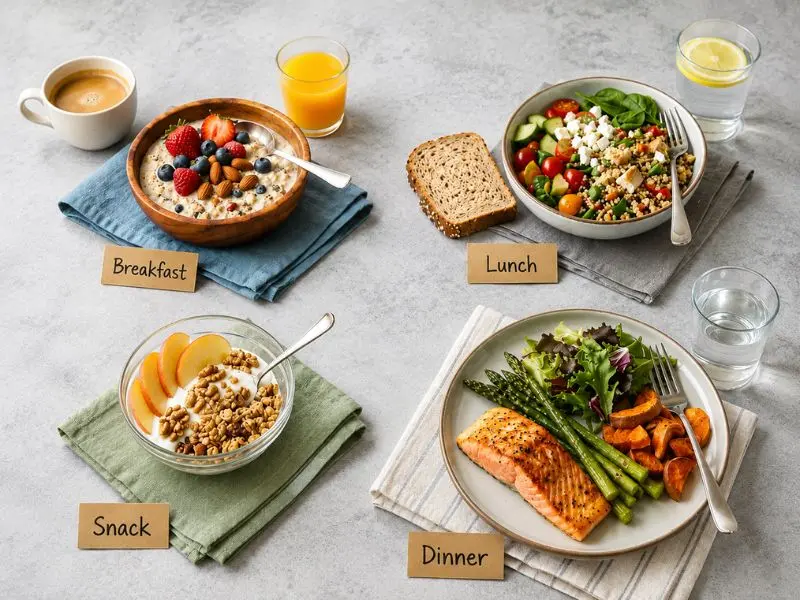
A balanced meal plan with high protein foods for muscle gain helps support muscle protein synthesis throughout the day.
| Meal | Example |
| Breakfast | Eggs, Greek yogurt, oats, berries |
| Snack | Cottage cheese and almonds |
| Lunch | Grilled chicken, brown rice, vegetables |
| Snack | Whey protein shake and banana |
| Dinner | Salmon, quinoa, broccoli |
| Before Bed | Cottage cheese or Greek yogurt |
Step-by-Step Guide to Eating High Protein Foods for Muscle Gain
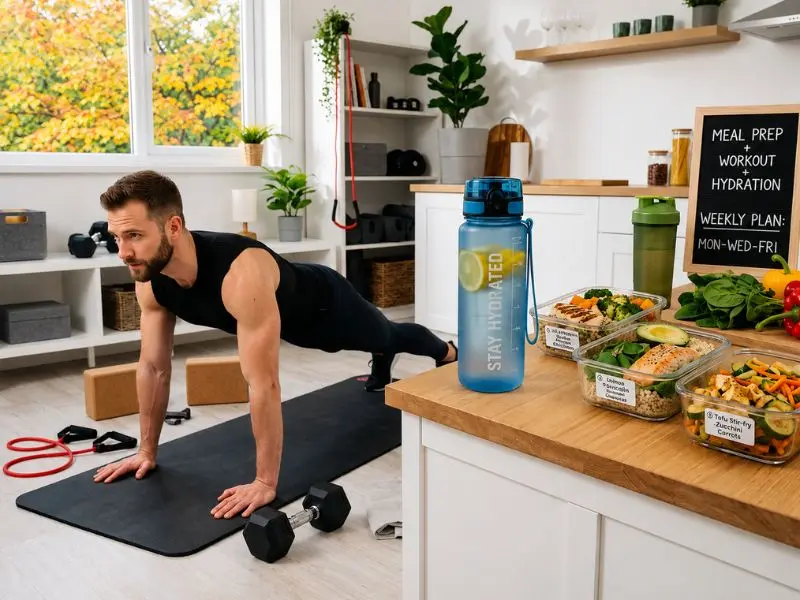
Gaining muscle requires more than simply eating high protein foods for muscle gain. You also need consistent strength training, enough calories, quality sleep, and proper meal timing. You can also include sugar-free gelatin recipes as a healthy, protein-friendly snack in your diet. Follow these simple steps to get the best results.
Step 1: Calculate Your Daily Protein Needs
Aim for 1.6–2.2 grams of protein per kilogram of body weight each day if your goal is muscle gain.
Example:
- 60 kg (132 lb): 96–132 g protein/day
- 70 kg (154 lb): 112–154 g protein/day
- 80 kg (176 lb): 128–176 g protein/day
- 90 kg (198 lb): 144–198 g protein/day
Step 2: Include Protein in Every Meal
Instead of eating all your protein at dinner, spread it across the day. This supports muscle protein synthesis more effectively.
A simple goal is 20–40 grams of protein per meal, depending on your body size and daily target.
Step 3: Combine Protein with Healthy Carbohydrates
Carbohydrates help replenish energy stores after exercise. Pair protein-rich foods with complex carbohydrates such as:
- Brown rice
- Sweet potatoes
- Oats
- Whole-grain bread
- Quinoa
- Fruits
Step 4: Add Healthy Fats
Healthy fats support hormone production, including hormones involved in muscle growth.
Good choices include:
- Avocados
- Olive oil
- Almonds
- Walnuts
- Chia seeds
- Pumpkin seeds
Step 5: Stay Hydrated
Water supports digestion, nutrient transport, and exercise performance. Drink enough fluids throughout the day, especially before and after workouts.
Step 6: Strength Train Consistently
High protein foods for muscle gain work best when combined with resistance training. Combine high protein foods for muscle gain with progressive overload by gradually increasing the weight, repetitions, or training volume.
Common Mistakes to Avoid
Even with a high-protein diet, certain habits can slow your progress.
1. Not Eating Enough Calories
Protein alone cannot build muscle if your overall calorie intake is too low.
2. Skipping Meals
Long gaps without protein may reduce opportunities for muscle protein synthesis.
3. Relying Only on Protein Shakes
Protein powders are convenient, but whole foods also provide vitamins, minerals, fiber, and healthy fats that support overall health.
4. Ignoring Vegetables
Vegetables supply antioxidants, vitamins, minerals, and fiber that support recovery and overall wellness.
5. Not Sleeping Enough
Muscle growth mainly occurs during recovery. Try to get between 7 and 9 hours of restful sleep every night to support muscle recovery.
6. Inconsistent Training
Building muscle takes time. Stay consistent with both your workouts and nutrition.
Expert Tips for Faster Muscle Growth

- Eat a protein-rich meal within two hours after strength training.
- Choose mostly whole food protein sources.
- Include both animal and plant proteins for a balanced diet.
- Increase training intensity gradually.
- Track your protein intake if you’re unsure you’re meeting your goal.
- Prioritize recovery with enough sleep and rest days.
- Staying consistent small daily habits lead to long term results.
Frequently A sked Questions
1. Which high protein foods are best for muscle gain?
Chicken, eggs, salmon, lean beef, Greek yogurt, tofu, and quinoa are excellent high-protein foods for building muscle.
2. How much protein should I eat to build muscle?
Aim for 1.6–2.2 grams of protein per kilogram of body weight each day.
3. Can I build muscle with plant-based protein?
Yes, eating a variety of plant-based protein foods can effectively support muscle growth.
4. Are protein supplements necessary?
No, most people can meet their protein needs through a balanced diet of whole foods.
5. How often should I eat protein?
Include a protein-rich food in every meal to support muscle recovery and growth.
Conclusion
Adding high protein foods for muscle gain to your daily diet is one of the most effective ways to support muscle growth, improve recovery, and increase strength. Combine lean protein sources with regular resistance training, balanced nutrition, and adequate sleep to achieve sustainable results over time.
