
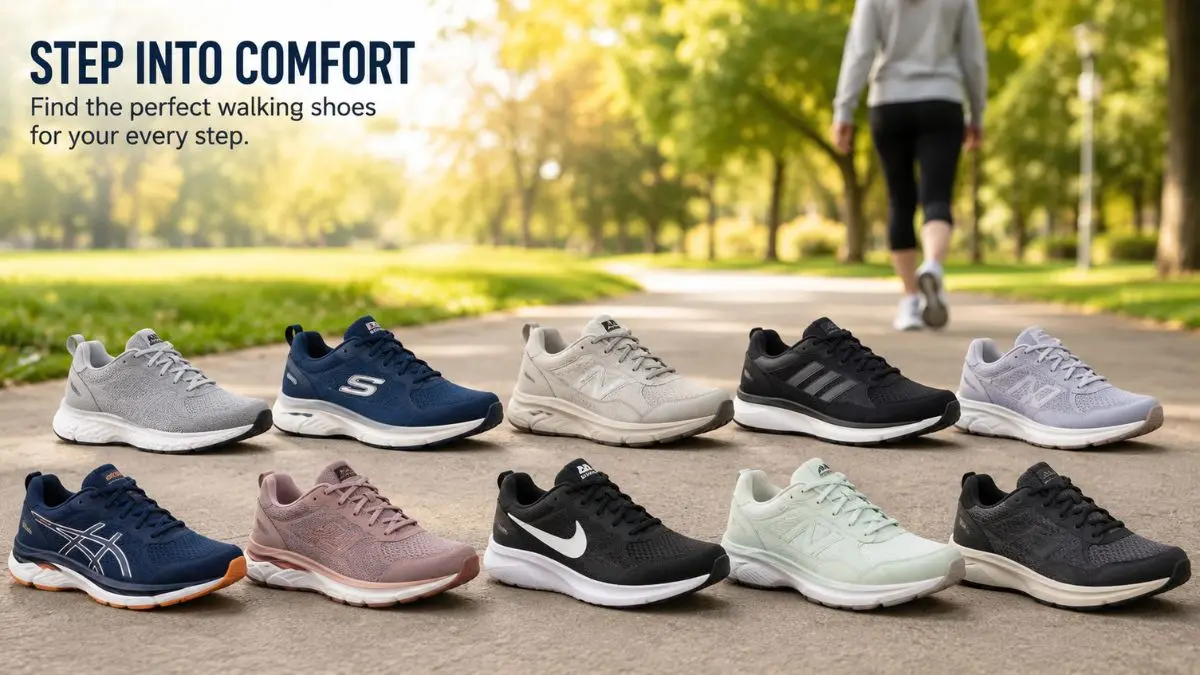
Finding the best walking shoes is not simply about choosing the pair with the thickest sole or the most popular brand. A good walking shoe should feel comfortable from the first wear, provide enough cushioning and support, and allow your feet to move naturally. Whether you walk for exercise, commute on foot, travel frequently, or spend hours standing at work, the right fit can make everyday movement much more comfortable. If you prefer walking indoors, you can also explore our guide to walking pads for convenient at-home walking.
For this 2026 guide, the focus is on walking shoes that balance comfort, cushioning, stability, breathability, durability, and value. The selections include lightweight everyday sneakers, highly cushioned options, supportive shoes, budget-friendly choices, slip-ons, and shoes designed for different foot shapes. Because no single shoe works perfectly for everyone, the goal is to help you find the best walking shoes that match your walking routine and personal preferences.
How We Chose the Best Walking Shoes
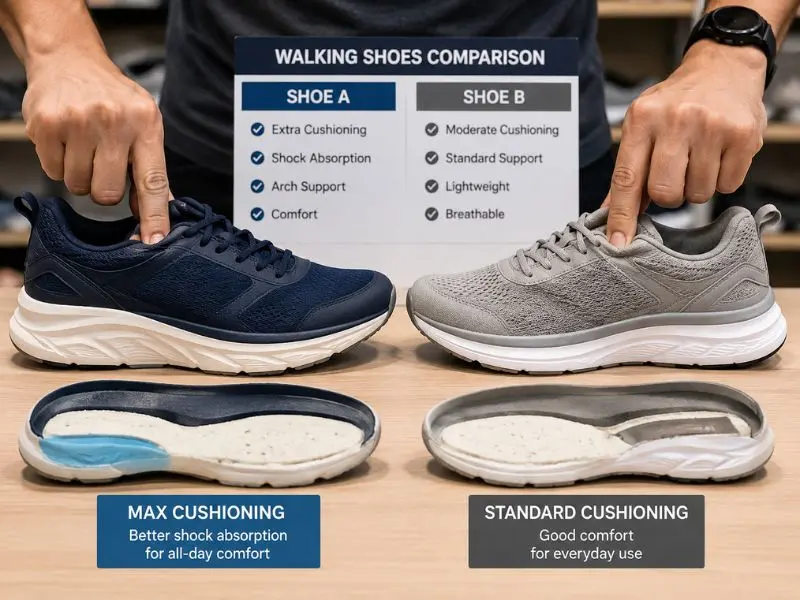
A quality walking shoe should do more than look good. We considered the features that matter most during regular walking, including fit, cushioning, support, flexibility, weight, breathability, traction, durability, and overall comfort.
Fit was especially important because even a well-cushioned shoe can become uncomfortable if it squeezes the toes or allows the heel to move excessively. Cushioning was also considered because walkers may prefer anything from a firm, responsive feel to a softer, more protective ride.
We also looked at how suitable each model is for different situations. A lightweight sneaker may be excellent for everyday errands, while a more structured shoe could be better for long days on your feet. Testing and expert-based reviews commonly use factors such as comfort, stability, responsiveness, quality, and value when evaluating walking footwear.
The 11 Best Walking Shoes of 2026
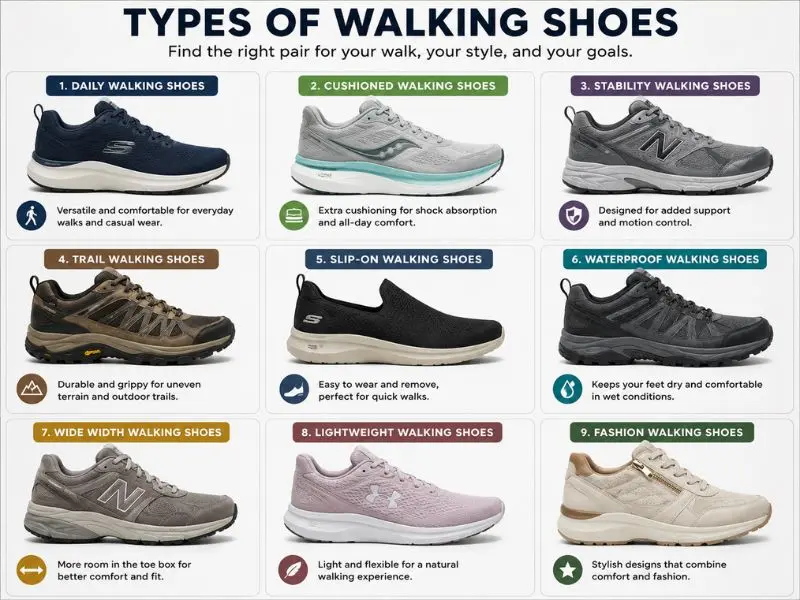
1. New Balance Fresh Foam Arishi V4 — Best Everyday Value
The New Balance Fresh Foam Arishi V4 is a strong choice for walkers who want a lightweight shoe without spending a premium. Its breathable upper and cushioned foam midsole make it suitable for everyday walks, errands, travel, and casual use.
One of its biggest advantages is its combination of light weight and comfortable cushioning. The design is available in multiple width options, which can make it easier for different foot shapes to find a suitable fit.
The Arishi V4 is also versatile enough for people who do not want a dedicated walking shoe sitting in their closet. It can work as an everyday sneaker while still offering the cushioning and flexibility found in some of the best walking shoes for regular walks.
Best for: Everyday walking and budget-conscious shoppers
Main advantage: Lightweight comfort and multiple width options
Potential drawback: The lightweight upper may feel less protective in colder weather
2. ASICS GEL-Nimbus 27 — Best for All-Day Comfort
For walkers who prefer a soft, cushioned feel, the ASICS GEL-Nimbus 27 is an appealing option. Its substantial cushioning is designed to create a plush feel underfoot while still allowing a relatively smooth transition from heel to toe.
The spacious forefoot is another useful feature for people who dislike a tight feeling around their toes. Its breathable upper can also make it more comfortable during extended wear.
The Nimbus 27 is particularly suited to people who spend several hours walking or standing. However, its highly cushioned construction may feel more substantial than a lightweight everyday sneaker.
Best for: Long walks and all-day wear
Main advantage: Plush cushioning and comfortable fit
Potential drawback: Less suitable for walkers who prefer a minimal or firm feel
3. HOKA Bondi 9 — Best Maximum-Cushioning Option
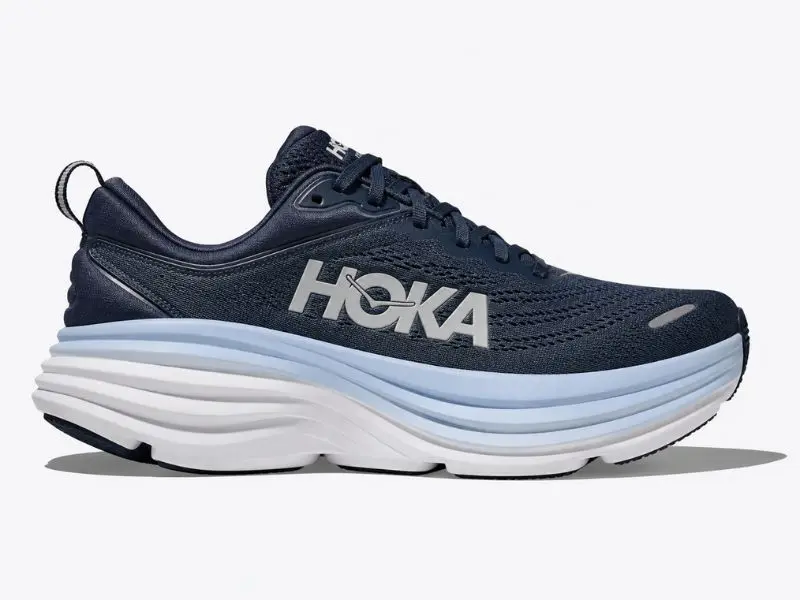
The HOKA Bondi 9 is one of the most recognizable choices for walkers who want maximum cushioning. Its thick midsole provides a soft, protective feel that can be especially appealing on hard surfaces such as sidewalks and concrete.
Despite its substantial sole, the Bondi 9 is designed to remain relatively comfortable for extended walking. Its broad base also provides a stable platform, while different width options can help accommodate a wider range of feet.
The shoe is particularly attractive for urban walkers and people who spend long periods on their feet. However, the large sole may not appeal to people who prefer a traditional, low-profile sneaker, and traction may be less impressive on loose gravel than on pavement. Current testing also highlights its roomy toe area and strong cushioning, making it one of the best walking shoes for comfort during longer walks.
Best for: Maximum cushioning and pavement walking
Main advantage: Soft, protective underfoot feel
Potential drawback: Bulky appearance and less versatile traction on loose surfaces
4. ASICS GEL-Pulse 16 — Best for Walk/Run Workouts
The ASICS GEL-Pulse 16 is a practical option for people who combine walking with occasional running. Instead of being designed solely around slow-paced walking, it offers a responsive feel that works for both activities.
Its mesh upper helps with ventilation, while the cushioned midsole provides a comfortable platform for daily exercise. The shoe can be useful for beginners who alternate between walking and short running intervals.
For someone who only walks casually, however, the additional running-oriented design may not provide a major advantage over a dedicated everyday walking sneaker.
Best for: Walk/run workouts
Main advantage: Versatile cushioning and responsiveness
Potential drawback: May offer more performance features than casual walkers need
5. Ryka Invoke 2 — Best Budget Walking Shoe
The Ryka Invoke 2 stands out for shoppers who want a comfortable walking shoe without moving into premium pricing. It combines cushioning, a breathable upper, and a supportive construction that works well for everyday activities.
The shoe’s relatively lightweight design makes it convenient for daily walks, errands, and casual wear. It also offers a useful balance between comfort and stability, which can be valuable when you spend several hours on your feet.
The main limitation is the lacing system, which some users may find less convenient to adjust. Still, its overall combination of features makes it an attractive budget choice.
Best for: Affordable everyday walking
Main advantage: Comfort and support at a lower price
Potential drawback: Laces may take more effort to adjust
6. Dr. Scholl’s Feel Support Lace Up Sneaker — Best for Added Support
Dr. Scholl’s Feel Support Lace Up Sneaker is designed for people who want additional underfoot support during daily activity. Its cushioning is balanced rather than extremely soft, giving it a more traditional feel than maximum-cushioning shoes.
The knit-style upper provides flexibility around the foot, while the structured sole gives the shoe a supportive foundation. It is particularly suitable for people who want a casual looking sneaker that can also handle regular walking, making it one of the best walking shoes for everyday use.
People with recurring foot discomfort should remember that a shoe cannot diagnose or treat the underlying cause of pain. If discomfort continues, professional evaluation is more appropriate than relying on footwear alone.
Best for: Walkers seeking supportive everyday footwear
Main advantage: Balanced cushioning and support
Potential drawback: The feel may be less plush than highly cushioned alternatives
7. Altra Solstice XT 3 — Best for a Roomier Toe Area
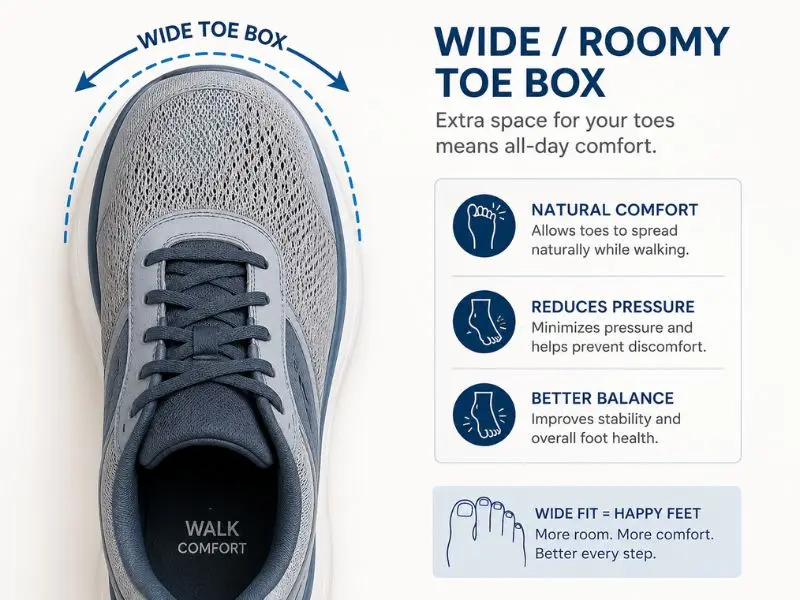
The Altra Solstice XT 3 is worth considering if you prefer a more natural-feeling forefoot. Its design gives the toes additional room to spread, which can be appealing to walkers who dislike narrow toe boxes.
The shoe has a relatively firm feel compared with plush-cushioned models. That makes it a better match for people with wide feet who prefer a more direct connection with the ground rather than a soft, sinking sensation.
Because foot shape and shoe preferences vary, walkers accustomed to heavily cushioned footwear may need time to adjust to the different feel.
Best for: Walkers who prefer a roomy forefoot
Main advantage: Natural-feeling toe area
Potential drawback: Firmer cushioning may not suit everyone
8. Brooks Ghost Max SE — Best Cushioned Walking Shoe
The Brooks Ghost Max SE is another excellent choice for shoppers who put cushioning near the top of their list. It provides a generous amount of underfoot padding while maintaining a stable platform for everyday walking.
Its construction makes it particularly appealing for pavement and casual daily use. The shoe also has enough support to feel secure without becoming excessively rigid.
Compared with lighter walking sneakers, the Ghost Max SE feels more substantial. That extra structure can be an advantage for comfort, but it may not appeal to someone looking for one of the best walking shoes with an extremely lightweight feel.
Best for: Walkers who prioritize cushioning
Main advantage: Plush cushioning with a stable platform
Potential drawback: Heavier and less versatile for running
9. Kizik London — Best Slip-On Walking Shoe
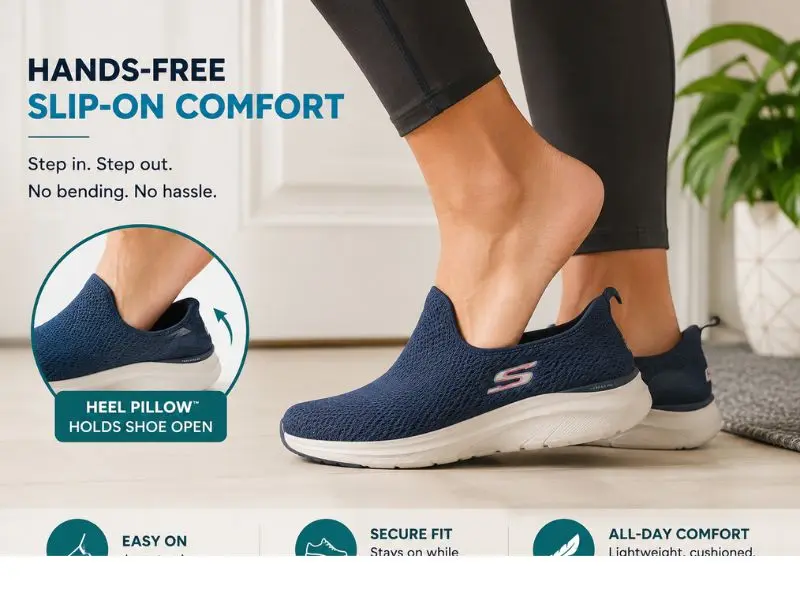
The Kizik London is designed for people who want the convenience of a slip-on without dealing with traditional laces every time they leave the house. This can be particularly useful for travel, quick errands, and everyday wear.
Its cushioned sole provides a comfortable platform for normal walking, while the knit upper gives the shoe a casual appearance. The hands-free design is its biggest selling point.
However, shoppers should still focus on getting the right size. A slip-on that is too loose can move around the foot, while one that is too tight can create pressure points.
Best for: Convenient everyday walking
Main advantage: Easy hands-free entry
Potential drawback: Fit becomes especially important because there is less adjustment
10. Anodyne No. 50 Sport Trainer — Best for Flat Feet and Wide Feet
The Anodyne No. 50 Sport Trainer is a useful option for walkers who need more width and structure. It is available in multiple widths, including wider options, making it easier to accommodate different foot shapes.
The shoe combines moderate cushioning with supportive construction rather than focusing entirely on softness. That can make it a practical choice for people who prefer a more structured walking experience and are looking for best walking shoes with reliable support.
Its cushioning is not as generous as the thickest shoes on this list, so shoppers seeking a very soft ride may prefer a different model.
Best for: Wide or flat-footed walkers seeking structure
Main advantage: Multiple width choices and supportive design
Potential drawback: Moderate rather than maximum cushioning
11. KEEN WK400 II — Best for Trail and Varied Walking
The KEEN WK400 II is a good option for walkers who regularly move beyond smooth sidewalks. Its construction is designed to handle a wider variety of walking environments, making it more versatile than many traditional road-focused sneakers.
The shoe combines cushioning with a durable outsole and useful traction. That makes it suitable for neighborhood paths, park trails, gravel, and other surfaces where a basic everyday sneaker may feel less secure.
For someone who only walks indoors or on smooth pavement, however, the additional structure may not be necessary.
Best for: Trail walking and mixed surfaces
Main advantage: Versatile traction and durable construction
Potential drawback: More substantial than a simple casual sneaker
Comparison Table
| Shoe | Best For | Cushioning | Support | Key Feature |
| New Balance Fresh Foam Arishi V4 | Everyday use | Balanced | Moderate | Lightweight design |
| ASICS GEL-Nimbus 27 | Long walks | Plush | Moderate | Soft cushioning |
| HOKA Bondi 9 | Maximum comfort | Maximum | Strong | Thick cushioned midsole |
| ASICS GEL-Pulse 16 | Walk/run workouts | Plush | Moderate | Versatile performance |
| Ryka Invoke 2 | Budget shoppers | Plush | Strong | Good overall value |
| Dr. Scholl’s Feel Support | Added support | Balanced | Strong | Support-focused design |
| Altra Solstice XT 3 | Roomy toe area | Firm | Moderate | Spacious forefoot |
| Brooks Ghost Max SE | Cushioning | Maximum | Strong | Stable cushioned platform |
| Kizik London | Slip-on convenience | Moderate | Moderate | Hands-free entry |
| Anodyne No. 50 | Wide/flat feet | Moderate | Strong | Multiple widths |
| KEEN WK400 II | Trail walking | Moderate | Strong | Outdoor traction |
What to Look for in the Best Walking Shoes
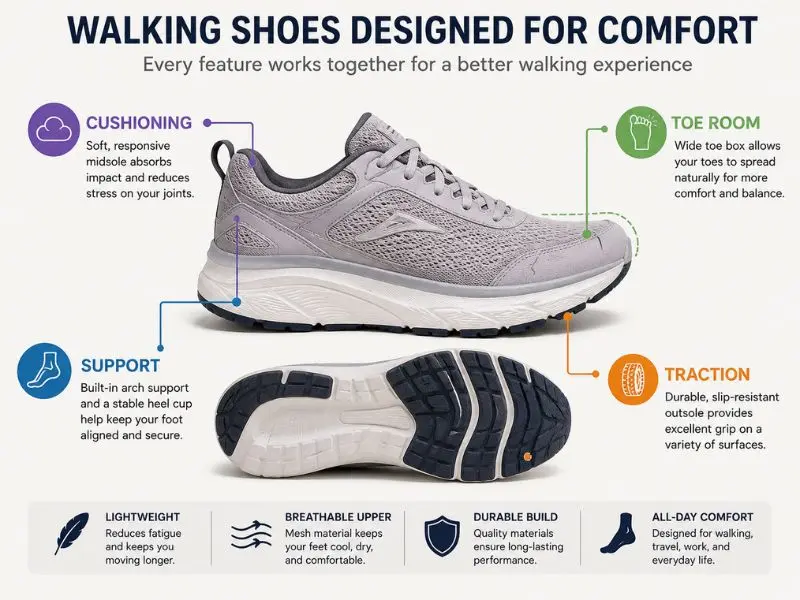
Fit and Toe Room
Fit should be one of the first things you check. Your toes should have enough room to move without being squeezed against the front or sides of the shoe.
The heel should feel secure without excessive slipping. A comfortable midfoot fit is also important because the shoe should hold your foot in place without creating pressure points.
Do not assume every brand uses identical sizing. Check the manufacturer’s current size chart and, when possible, try on the best walking shoes with the socks you normally wear.
Cushioning
Cushioning affects how a shoe feels with every step. Foam, gel, and other midsole materials can help absorb impact, but more cushioning is not automatically better for every walker.
Some people prefer a soft, plush sensation, while others like a firmer and more responsive feel. The best choice depends on your comfort preferences, walking surface, and how long you typically walk.
Support and Stability
A walking shoe should feel stable without being unnecessarily stiff. Look for a sole that provides structure through the middle of the shoe while allowing appropriate movement near the forefoot.
Support is especially worth considering if you regularly feel uncomfortable in very flexible or flat footwear. If you have persistent foot pain or a diagnosed foot condition, ask a qualified healthcare professional about the features that may be appropriate for you.
Weight
Lightweight shoes can feel convenient during long walks because there is less material to move with every step. However, extremely light construction is not always the best choice when looking for the best walking shoes for comfort, support, and durability.
A little extra structure can improve stability and durability. The goal is to find a shoe that feels light enough for your routine while still providing the support and protection you need.
Breathability
Breathable materials can make a noticeable difference during warm weather or long walks. Mesh uppers are commonly used because they allow more airflow than heavily enclosed materials.
If your feet tend to get warm, prioritize a breathable upper and moisture-managing socks. This can make extended walking more comfortable.
Flexibility
Walking shoes should allow natural movement without folding excessively through the middle. A shoe that is flexible around the forefoot can help create a smoother walking motion.
At the same time, excessive flexibility may make some shoes feel unstable.Look for a balance between movement and structure rather than choosing the most flexible option when selecting the best walking shoes for your needs.
Outsole and Traction
The outsole determines how well the shoe grips different surfaces. Rubber outsoles are common because they can provide useful traction and durability for everyday walking.
If you regularly walk on gravel, dirt, or trails, look for deeper or more pronounced tread. Smooth pavement generally requires less aggressive traction.
Durability
A shoe should be able to handle the amount of walking you actually do. Check the outsole for wear, examine the upper for damage, and pay attention to changes in cushioning.
A shoe that still looks good but has noticeably lost its cushioning or support may no longer feel the same. Your walking habits, body weight, surfaces, and shoe construction all influence how quickly footwear wears out.
Best Walking Shoes for Different Needs
For everyday walking, the New Balance Fresh Foam Arishi V4 is a practical choice because it balances comfort, weight, and value.
For long walks and maximum cushioning, the ASICS GEL-Nimbus 27 and HOKA Bondi 9 are stronger options for people who enjoy a plush underfoot feel.
If budget is your biggest concern, the Ryka Invoke 2 provides a useful combination of cushioning and support without moving into the premium category.
For a wider or flatter foot shape, the Anodyne No. 50 Sport Trainer offers multiple width options and a supportive design.
For people who want an easy slip-on, the Kizik London is the most convenient choice, while the KEEN WK400 II is better suited to walking on varied outdoor surfaces.
How Should Walking Shoes Fit?
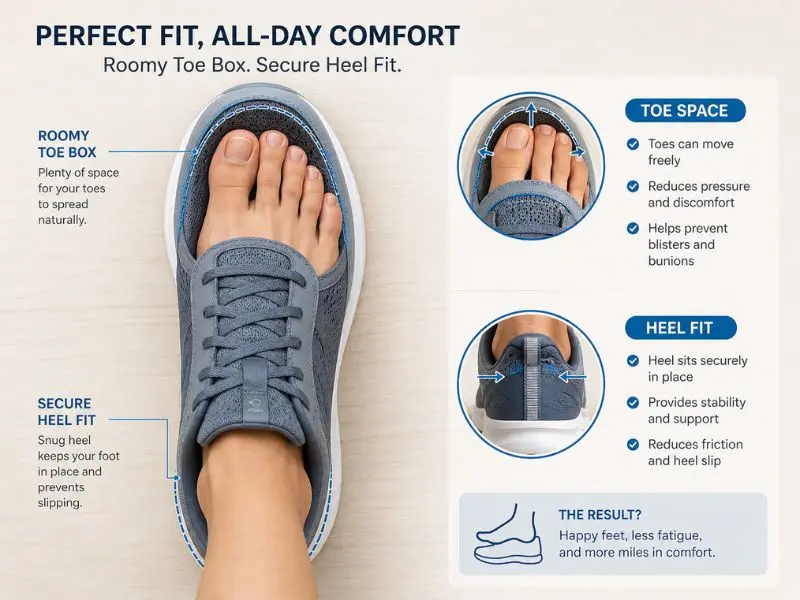
A well-fitting walking shoe should feel comfortable immediately rather than requiring a long break-in period. There should be enough space in front of the longest toe, and your toes should be able to move without pressure.
Your heel should remain reasonably secure as you walk, while the middle of the shoe should feel supportive without squeezing your foot. Try shoes with your usual walking socks and, if possible, shop later in the day when your feet may be slightly larger.
If one foot is larger than the other, fit the larger foot rather than choosing a size based only on the smaller one. Width is also important, especially if standard shoes regularly feel tight around the forefoot.
How Often Should You Replace Walking Shoes?
There is no universal replacement date for every walker. Some shoes may last considerably longer than others depending on walking frequency, surface, body weight, construction, and care.
Instead of relying only on the calendar, look for signs of wear. Flattened cushioning, worn tread, uneven outsole wear, damaged uppers, and a noticeable reduction in comfort can all indicate that it is time to consider a replacement.
For people who walk frequently, keeping track of approximate mileage can also be useful. Some footwear experts use several hundred miles as a general reference point, but individual shoe life varies considerably.
FAQs
1. What are the best walking shoes for everyday use?
Lightweight shoes with good cushioning, support, and a secure fit are ideal for everyday walking.
2. How should walking shoes fit?
They should fit securely while giving your toes enough room to move comfortably.
3. Are cushioned walking shoes better for long walks?
Yes, cushioning can improve comfort during longer walks, but personal preference also matters.
4. Should walking shoes be lightweight?
Yes, lightweight shoes can make walking feel easier while still providing enough support and cushioning.
5. How often should you replace walking shoes?
Replace them when the cushioning, traction, support, or comfort noticeably decreases.
Conclusion
The best walking shoes should match your feet, walking habits, and comfort needs. The HOKA Bondi 9 and ASICS GEL-Nimbus 27 offer plush cushioning, while the New Balance Fresh Foam Arishi V4 and Ryka Invoke 2 provide everyday value. For more women-focused options, see our guide to women’s walking shoes. Consider fit, toe room, cushioning, support, and traction before choosing your pair.
