
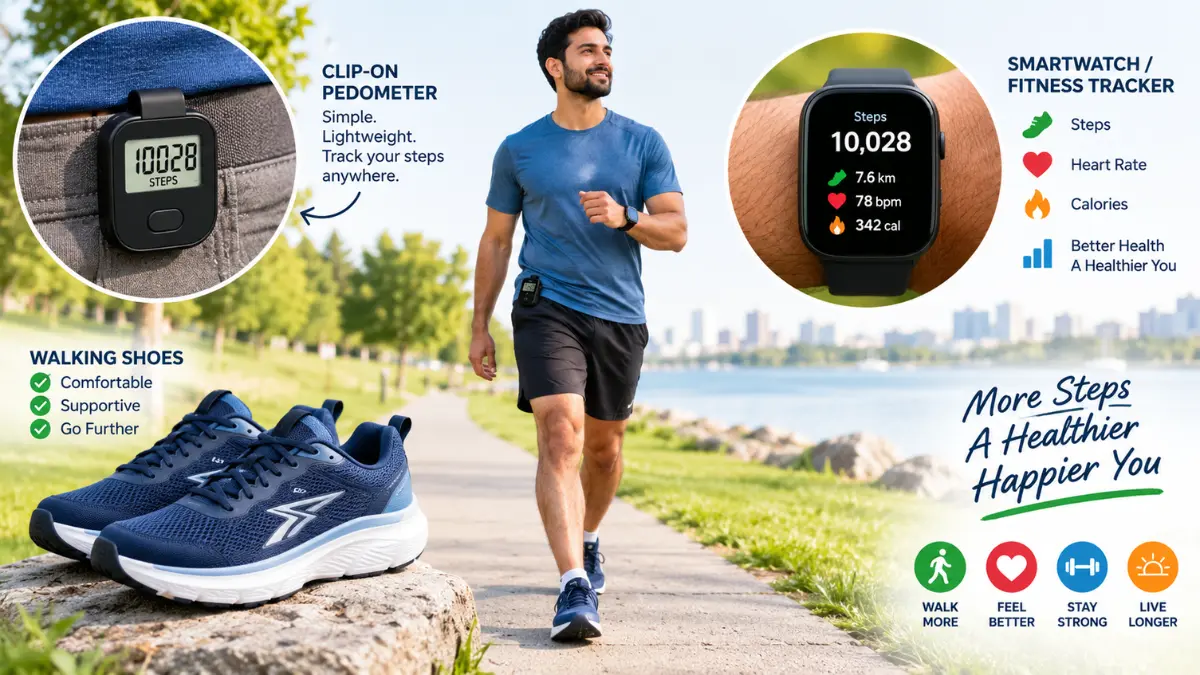
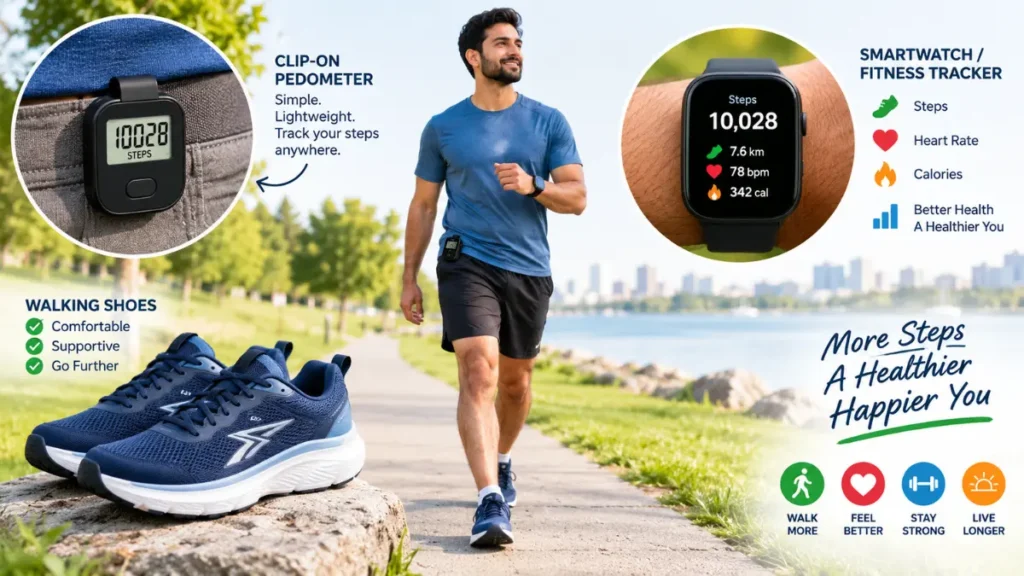
A good pedometer can make daily walking easier to understand without turning every walk into a complicated fitness session. While smartphones and smartwatches can count steps, a dedicated device can be more convenient for people who want a simple number they can check throughout the day. The best pedometers focus on the basics that matter most: dependable step tracking, an easy-to-read display, comfortable design, and simple operation.
We looked at a range of dedicated step counters and wearable fitness trackers to identify options for different needs and budgets. Some are intentionally simple, while others add workout tracking, heart-rate monitoring, connected apps, or other fitness features. Our goal is to help you find a pedometer that fits the way you actually walk, whether you want a basic clip-on counter, a device for older adults, or a more advanced wearable.
What to Look for in the Best Pedometers
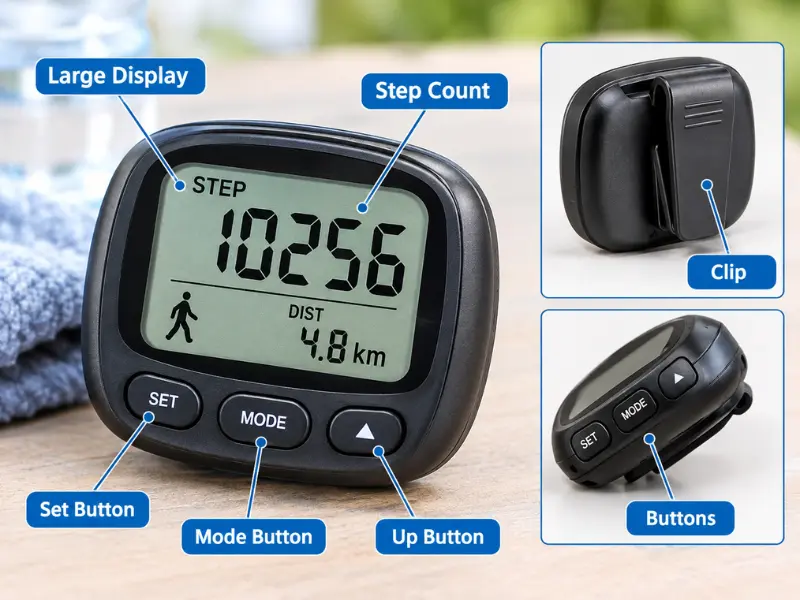
Choosing a pedometer is easier when you know which features actually matter. The best pedometers don’t need dozens of features to provide reliable step tracking.
Accuracy should be near the top of your list. A good pedometer should recognize normal walking movements consistently without adding large numbers of false steps from everyday activity.
Display readability is also important. Large, high-contrast numbers can be particularly useful if you want to check your steps quickly without opening a smartphone app.
Ease of use matters just as much. Some people prefer a device with one or two buttons, while others enjoy connecting a wearable to an app and reviewing detailed activity information.
You should also consider battery life, size, portability, comfort, durability, and storage. A pedometer that is uncomfortable or inconvenient to wear may end up sitting in a drawer.
Finally, think about what you actually want to track. If steps are your only priority, a dedicated clip-on pedometer may be enough. If you want heart-rate data, workouts, sleep information, and smartphone integration, a fitness tracker may make more sense.
How We Evaluated the Best Pedometers
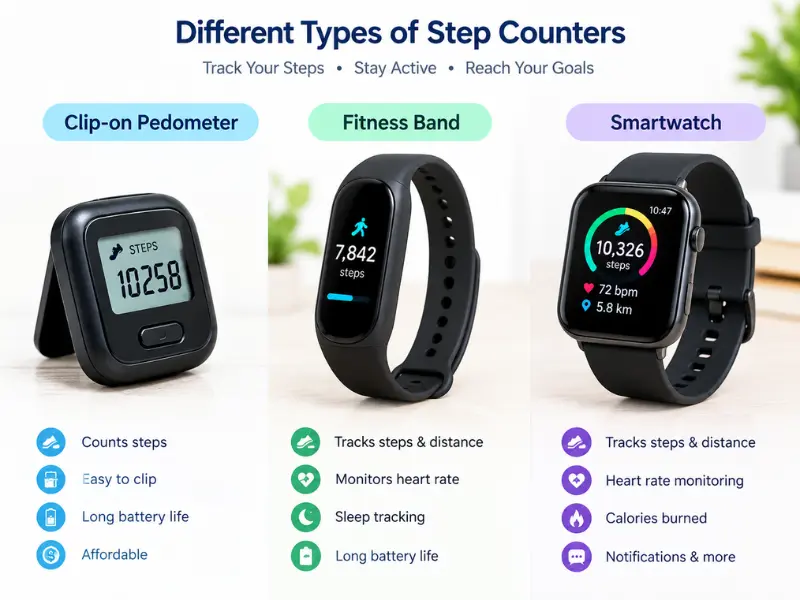
The products in this guide represent different approaches to step tracking. Some are dedicated pedometers designed primarily to count steps, while others are wearable fitness trackers that include step counting as one part of a larger feature set.
We considered factors such as step tracking, display quality, ease of use, portability, battery life, additional fitness features, data storage, and overall value. Independent testing has also found meaningful differences between simple pedometers and more advanced connected devices. For example, the Realalt 3D TriSport has been tested for step accuracy, ease of use, and portability, while current 2026 testing also includes simple devices such as the 3DFitBud alongside smartwatches and fitness trackers.
One important point: step-counting accuracy can vary depending on walking style, device placement, stride, and movement patterns. No device should be treated as a perfectly precise measurement of every step.
The 13 Best Pedometers of 2026
1. 3DFitBud Simple Step Counter — Best for Simplicity
The 3DFitBud Simple Step Counter is a strong choice for anyone who wants a straightforward device without smartphone pairing or complicated menus. It uses a large display and simple controls, making the current step count easy to see.
Its biggest advantage is simplicity. The device is designed primarily around step counting rather than trying to replace a smartwatch. The best pedometers clip or attach easily, making them ideal for everyday walking.
Current product information lists approximately 12 months of battery life, while independent testing has praised its large display and simple operation.
Best for: People who want an easy, inexpensive step counter.
Potential drawback: It does not provide the extensive health and fitness data available from a smartwatch.
2. NESKLA 3D Pedometer — Best for a Large Display
The NESKLA 3D Pedometer is designed for people who want to see their step count clearly without dealing with a small smartwatch screen.
Its large digital display makes it especially appealing for users who prefer straightforward information. A simple interface also reduces the learning curve compared with feature-heavy fitness trackers.
It is a practical option for daily walking when your main goal is monitoring movement rather than analyzing every workout.
Best for: People who prioritize display readability.
Potential drawback: It offers fewer advanced tracking features than a connected fitness wearable.
3. Omron Walking Style IV — Best Traditional Pedometer
Omron has long been associated with traditional step-counting devices, and the Walking Style IV remains an appealing choice for people who prefer a dedicated pedometer.
The device focuses on walking activity rather than turning into a full smartwatch. Its compact design can make it convenient for people who want something they can carry or clip onto clothing.
Traditional pedometers such as Omron models can be particularly useful for users who want to avoid charging a smartwatch every day or navigating a smartphone application.
Best for: Walkers who prefer a traditional dedicated pedometer.
Potential drawback: Its feature set is more limited than that of modern fitness trackers.
4. Really 3DTriSport — Best for On-Device Data
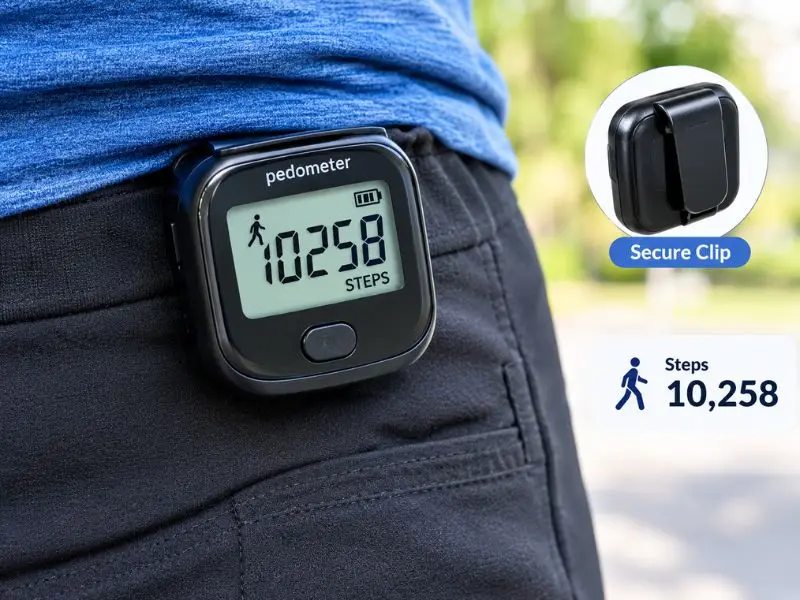
The Realalt 3DTriSport is a good option for people who want more information than a basic step counter provides without connecting to a phone.
It tracks steps and other movement information, while its built-in display allows you to check your activity directly on the device. Independent testing found the TriSport to be highly accurate and easy to use, although its lack of app connectivity limits long-term data management.
Its battery life has also been reported at up to one year, making it appealing to people who dislike frequent charging.
Best for: Users who want step, distance, and activity information without a smartphone app.
Potential drawback: The design is somewhat bulkier than some minimalist pedometers.
5. OZO Fitness SC2 Digital Pedometer — Best for Straightforward Tracking
The OZO Fitness SC2 is another dedicated pedometer aimed at people who want useful walking information without unnecessary complexity.
Its traditional design gives users direct access to their activity information. It can be a practical option for walking routines, especially if you do not need heart-rate monitoring or smartphone notifications.
The simple interface makes the best pedometers helpful for people who find modern smartwatches overwhelming.
Best for: Walkers who want traditional step tracking with additional activity information.
Potential drawback: It does not offer the app-based analysis available with connected wearables.
6. PINGKO Outdoor Multi-Function Pedometer — Best for Multiple Activity Metrics
The PINGKO Outdoor Multi-Function Pedometer is designed for users who want more than a basic step count.
It provides several activity measurements in a compact form, making it useful for people who want to monitor walking sessions while keeping the setup relatively simple.
Its appeal comes from combining multiple functions without requiring the full size or complexity of a smartwatch.
Best for: Users who want additional walking metrics.
Potential drawback: The interface may take more time to understand than an ultra-simple one-button pedometer.
7. Garmin Forerunner 55 — Best for Runners
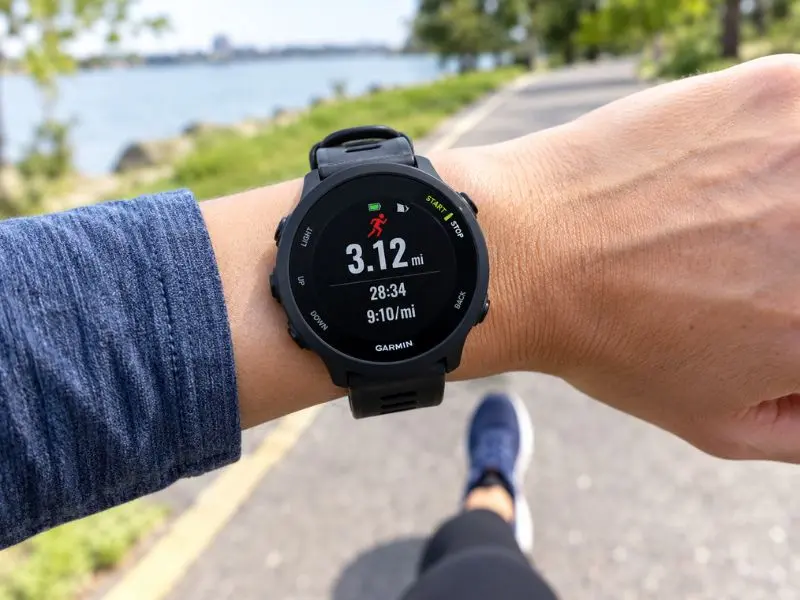
The Garmin Forerunner 55 is not a traditional pocket pedometer, but it is an excellent option for people who want step counting as part of a broader fitness system.
It is especially useful for runners and active walkers who want workout information alongside everyday activity tracking. The best pedometers can also suit runners, and the Forerunner 55 is a strong option for running.
The main advantage is its wider fitness ecosystem. Instead of simply counting steps, it can become part of a more detailed training routine.
Best for: Runners and fitness-focused walkers.
Potential drawback: It is unnecessary if you only want a basic step count.
8. Fitbit Inspire 3 — Best Pedometer-Style Fitness Tracker
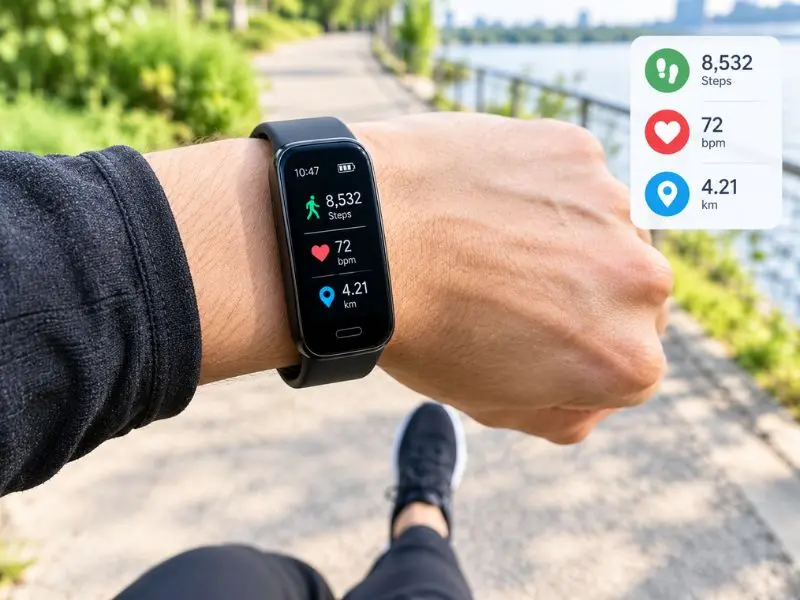
The Fitbit Inspire 3 is a compact wearable for people who want step tracking along with broader health and fitness features.
Unlike a traditional pedometer, it is designed to be worn throughout the day and connected with a smartphone. That makes it useful for people who want to look back at their activity and support their walking routine rather than simply checking today’s number.
Its small design is also less bulky than many traditional smartwatches.
Best for: People who want step counting plus additional health and fitness tracking.
Potential drawback: You will get more complexity than with a dedicated pedometer.
9. Polar Ignite 3 — Best for Hiking and Workouts
The Polar Ignite 3 is better suited to people who view step counting as only one part of their fitness routine.
Its broader workout-focused design makes it useful for people who participate in different forms of exercise. For someone who hikes, trains, or follows structured workouts, having additional activity information can be more valuable than a simple step counter.
The best pedometers for hiking can include the Polar Ignite 3, which offers useful activity tracking.
Best for: Active users who want workout tracking alongside daily activity.
Potential drawback: It is more technology than a casual walker needs.
10. Polar Verity Sense — Best for an Armband Design
The Polar Verity Sense takes a different approach to wearable activity tracking. Rather than relying on a traditional wristwatch design, it uses an armband format.
This can appeal to people who do not like wearing a watch during exercise. It is particularly relevant for users who want a less conventional wearable while tracking activity.
Its broader fitness capabilities make it more appropriate for active users than someone looking only for a basic pedometer.
Best for: People who prefer an armband-style fitness device.
Potential drawback: It is not a simple standalone step counter.
11. Bellabeat Ivy+ — Best for a Discreet Wearable
The Bellabeat Ivy+ is designed for users who want a more discreet approach to everyday activity tracking.
Rather than looking like a conventional digital pedometer, it focuses on wearable lifestyle tracking. This can make it appealing to people who want their activity tracker to blend more naturally into everyday clothing.
The best pedometers for wellness tracking offer more features than a simple step display.
Best for: Users who prefer discreet wearable tracking.
Potential drawback: It is less suitable if you want to glance directly at a large step counter display.
12. Apple Watch Series 10 — Best for iPhone Users
The Apple Watch Series 10 is considerably more advanced than a traditional pedometer, but its activity tracking makes it a practical choice for iPhone users who want steps combined with other fitness information.
A smartwatch can provide a more complete picture of daily activity, including workouts and other health-related measurements. The trade-off is that it requires more setup and costs considerably more than a basic pedometer.
Current 2026 comparisons continue to identify Apple Watch models as strong options for iPhone users who want a broader fitness tracker rather than a dedicated step counter.
Best for: iPhone users who want an all-purpose fitness wearable.
Potential drawback: Expensive and unnecessary if you only need steps.
13. Google Pixel Watch 4 — Best for Android Users
The Google Pixel Watch 4 is a strong alternative for Android users who want a smartwatch with activity tracking.
Its main advantage is that it combines everyday activity monitoring with a wider collection of smartwatch features. For someone already invested in Google’s ecosystem, this can be more convenient than purchasing a separate pedometer.
However, the best pedometers are often simpler and more affordable than advanced clip-on step counters.
Best for: Android users who want smartwatch and fitness features together.
Potential drawback: Overkill for people interested only in counting steps.
Best Pedometers Comparison Table
| Pedometer | Best For | Step Tracking | Display | Battery/Power | Key Feature |
| 3DFitBud Simple Step Counter | Simplicity | Yes | Large digital | Up to 12 months | One-button operation |
| NESKLA 3D Pedometer | Easy reading | Yes | Large | Long battery use | Large display |
| Omron Walking Style IV | Traditional walking | Yes | Digital | Long battery use | Dedicated step tracking |
| Really 3DTriSport | On-device data | Yes | Digital | Up to 1 year | Stores activity data |
| OZO Fitness SC2 | Basic tracking | Yes | Digital | Long battery use | Simple operation |
| PINGKO Pedometer | Multiple metrics | Yes | Digital | Battery powered | Activity measurements |
| Garmin Forerunner 55 | Running | Yes | Watch display | Rechargeable | Training features |
| Fitbit Inspire 3 | Daily fitness | Yes | Color display | Rechargeable | Connected tracking |
| Polar Ignite 3 | Hiking/workouts | Yes | Color display | Rechargeable | Fitness tracking |
| Polar Verity Sense | Armband users | Activity tracking | No traditional display | Rechargeable | Armband design |
| Bellabeat Ivy+ | Discreet tracking | Yes | No traditional display | Rechargeable | Lifestyle tracking |
| Apple Watch Series 10 | iPhone users | Yes | Smart display | Rechargeable | Apple ecosystem |
| Google Pixel Watch 4 | Android users | Yes | Smart display | Rechargeable | Google ecosystem |
How Accurate Are Pedometers?
Pedometers generally use motion sensors to recognize repeated movement patterns associated with walking. Modern 3D pedometers can detect movement across multiple directions, which helps them work in different positions compared with older mechanical designs.
Still, accuracy is not identical in every situation. Walking very slowly, taking unusually short steps, moving your device around frequently, or making repetitive movements that resemble walking can influence the recorded number.
Device placement matters as well. A clip-on pedometer should be positioned according to the manufacturer’s instructions, while wrist-based trackers rely partly on arm movement.
One useful way to judge a device is consistency rather than expecting it to match every step you manually count. Independent testing of the Renault 3DTriSport, for example, found strong step-counting performance under controlled testing conditions.
Pedometer vs. Smartphone Step Counter
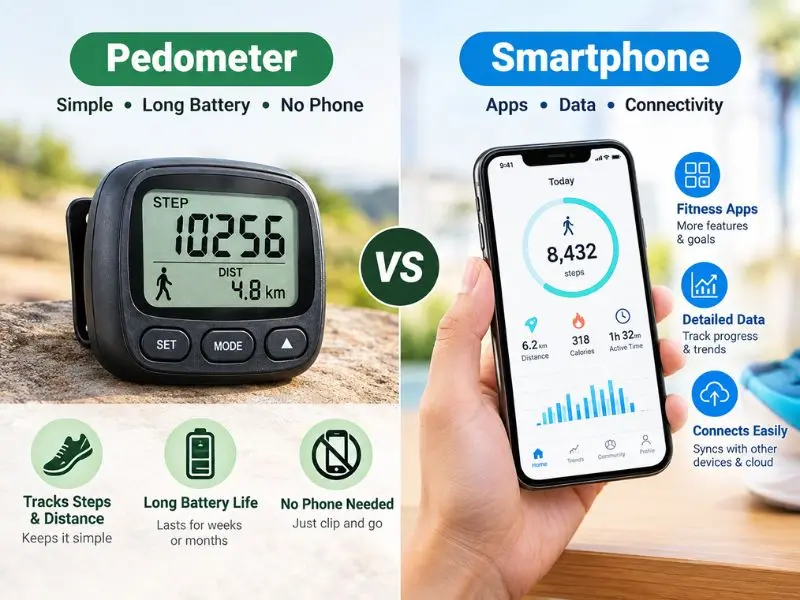
A smartphone can already count your steps, so why purchase another device?
The biggest advantage of a dedicated pedometer is simplicity. You can clip it onto clothing and leave your phone in your pocket or at home. There is also no need to open an app just to see your current step count.
Smartphones, however, are better for people who want a broader activity history and already carry their phone everywhere. The best pedometers can also offer maps, workout data, and health app integration.
A basic pedometer generally wins on simplicity and battery life, while a smartphone wins on data storage, connectivity, and versatility.
The right choice depends on how you walk. If you simply want to know how much you move each day, a small dedicated device can be enough. If you want detailed digital records, a phone or fitness wearable may be more useful.
Are Pedometers Good for Walking and Fitness?
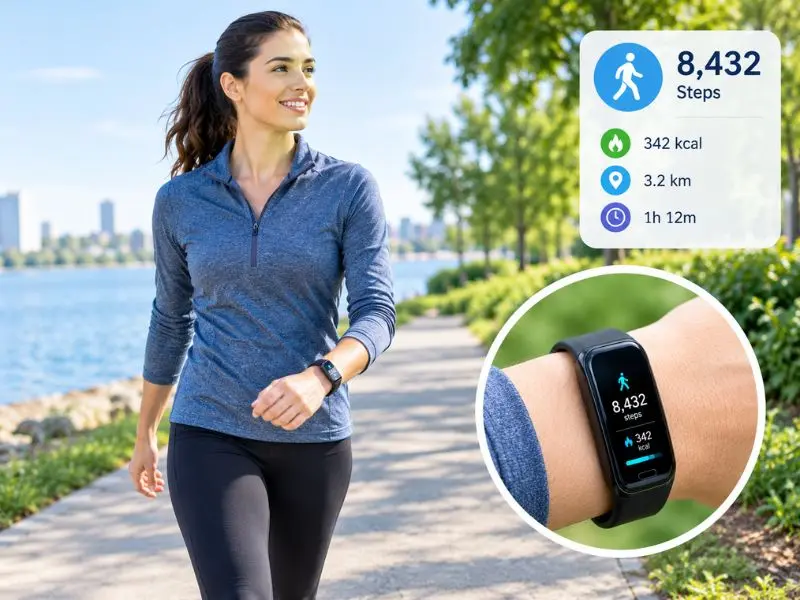
Yes. A pedometer can be a useful tool for becoming more aware of your daily movement.
Seeing your step count gives you a simple measurement that can encourage you to walk a little more. You might take a short walk after dinner, use stairs more often, or add a few extra minutes of walking to your routine.
The important thing is to use step counts as a way to monitor your habits rather than treating one specific number as a requirement for everyone. Your ideal activity level depends on your fitness, lifestyle, health, and goals.
A pedometer is most useful when it helps you notice patterns and make realistic improvements over time.
How to Choose the Right Pedometer
Start by deciding whether you want simplicity or advanced features.
For someone who only wants to count steps, a device such as the 3DFitBud, Omron, or NESKLA can make sense. These products focus more directly on walking rather than trying to function as complete smartwatches.
If you want stored activity information without using a smartphone, the Realtek 3DTriSport is worth considering.
For runners and active users, a Garmin or Polar wearable can provide a much wider range of training information.
Older adults or anyone with difficulty reading small screens may prefer a device with a large, straightforward display. People who dislike wristbands may prefer a clip-on pedometer or an armband design.
Finally, consider how often you are willing to charge a device. A traditional battery-powered pedometer can often run for months, while rechargeable wearables require more regular charging.
Frequently Asked Questions
1. What is the best pedometer for accurate step counting?
A quality 3D pedometer can provide reliable step tracking.
2. Are pedometers more accurate than smartphones?
Accuracy varies by device, placement, and walking style.
3. Do pedometers work without a smartphone?
Yes, many pedometers work independently without a phone.
4. Are clip-on pedometers accurate?
Yes, when properly positioned, they can track steps consistently.
5. What should I look for when buying a pedometer?
Consider accuracy, readability, comfort, battery life, and features.
Conclusion
The best pedometers are the ones that make tracking daily movement simple and useful. Choose one based on accuracy, comfort, battery life, features, and whether you need smartphone connectivity. The right pedometer should fit easily into your everyday walking routine.
