


A 15 minute walk may seem too short to make a meaningful difference, especially when you compare it with longer workouts at the gym or a full hour of exercise. But a short walk can still be a practical way to add movement to your day. You do not need special equipment, a gym membership, or a complicated workout plan. You simply need a comfortable pair of shoes and a few minutes that you can set aside for yourself.
For many people, the hardest part of becoming more active is getting started. A 15-minute walk can make that first step feel much easier because the time commitment is small and realistic. You can take one before work, during a lunch break, after dinner, or whenever it fits naturally into your routine. When repeated consistently, short periods of activity can help you build a more active lifestyle and create a habit that is easier to maintain over time.
What Is a 15 Minute Walk?

A 15 minute walk is simply a walking session that lasts around 15 minutes. You can walk outdoors, around your neighborhood, on a treadmill, at a park, or even indoors when the weather is not suitable for outdoor exercise.
The pace is up to you. A comfortable walk can be useful if you are just getting started, while a brisker pace can make the walk more challenging. The goal is not to make every walk exhausting. Instead, focus on moving regularly and choosing a pace that matches your current fitness level.
You can also divide your walking throughout the day. For example, you might take a 15-minute walk in the morning or complete several shorter walking breaks when your schedule is busy.
6 Reasons to Take a 15 Minute Walk Today
1. It Helps You Become More Active
1. It Helps You Become More Active
One of the biggest advantages of a short walk is that it makes physical activity easier to fit into a busy day.
You may not always have enough time for a long workout. Work, school, family responsibilities, commuting, and other daily tasks can quickly fill your schedule.
Waiting for the “perfect” time to exercise can sometimes mean not exercising at all. A 15-minute walk removes some of that pressure and gives you a simple way to get moving.
Instead of thinking that you need an hour to exercise, you can focus on walking for a short period. Regular movement can contribute to a more active lifestyle and become an easy addition to your routine.
For someone who spends most of the day sitting, a short walking break can also provide an opportunity to get up and move instead of remaining inactive for long periods.
2. It Can Support Heart Health

Walking is a form of aerobic physical activity, and regular aerobic activity can support cardiovascular health.
You do not need to walk at an extremely fast pace to make walking part of a heart-healthy lifestyle. A comfortable or moderate pace can be a good starting point, particularly for people who are not currently active.
As your fitness improves, you may choose to increase your pace or gradually make your walks longer.
The important point is consistency. One walk is not going to transform your health overnight. However, making walking a regular part of your week can help you accumulate more physical activity over time.
If you have been inactive for a long time or have a health condition that affects exercise, start at a comfortable level and speak with a healthcare professional if you are unsure what type or intensity of activity is appropriate for you.
3. It May Help Support Weight Management

If weight management is one of your goals, walking can be a useful part of a larger lifestyle approach.
Your body uses energy while you walk, and the amount depends on factors such as your body size, walking speed, terrain, and duration. A 15-minute walk will not burn a huge number of calories, but regular walks can add more movement to your daily routine.
For example, someone who walks for 15 minutes most days may accumulate significantly more activity over several weeks than someone who rarely walks.
However, weight management is not only about exercise. Food choices, overall calorie intake, sleep, stress, daily activity, and other factors can all influence body weight.
This is why it is better to think of walking as one helpful habit rather than a quick weight-loss solution.
If you enjoy walking, you can gradually increase your walking time as your fitness and schedule allow. You might eventually find that a 15-minute walk becomes 20 or 30 minutes without feeling like a major change.
4. It Can Give You a Break From Sitting
Modern routines often involve long periods of sitting. You might sit while working at a desk, studying, watching television, using your phone, or traveling.
A short walk gives you a chance to break up some of that sedentary time.
You could use your walk as a mental and physical break during the day. Instead of spending your entire lunch break at your desk, for example, you might spend part of it walking.
Even if you cannot take a full 15-minute walk every time, getting up regularly and moving around can be a practical habit.
The key is to avoid thinking that movement only counts when it happens during a formal workout. Walking to a nearby shop, taking the stairs, walking around your home, or taking a short walk after a meal can all contribute to a more active day.
5. It Can Be a Simple Way to Clear Your Mind

A walk can also give you time away from screens, work, and other daily distractions.
Some people enjoy walking while listening to music or a podcast, while others prefer leaving their phone alone and simply paying attention to their surroundings.
A change of environment can make a short break feel refreshing. Walking outdoors may also give you an opportunity to get some fresh air and spend time in a different setting.
Of course, a walk should not be viewed as a treatment for mental health conditions. But regular physical activity is commonly included as part of a healthy lifestyle, and many people find walking enjoyable and relaxing.
You can make your walk even more enjoyable by choosing a safe route, walking with a friend, or exploring a nearby park.
6. It Is Easy to Turn Into a Daily Habit
Perhaps the most practical reason to take a 15 minute walk is that it is easy to repeat.
Long and demanding workout plans can be difficult to maintain when life becomes busy. A short walk requires less planning and can fit into many different schedules.
You could walk:
- Before breakfast
- During a lunch break
- After work or school
- After dinner
- While talking with a friend
- Around your neighborhood
- On a treadmill at home or in a gym
Once walking becomes part of your routine, it may require less motivation to get started.
You can also use simple habit cues. For example, decide that you will walk immediately after dinner every day. Connecting your walk to something you already do can make the new habit easier to remember.
The goal is not perfection. If you miss one day, simply return to your routine the next day.
15 Minute Walk vs. Longer Walk
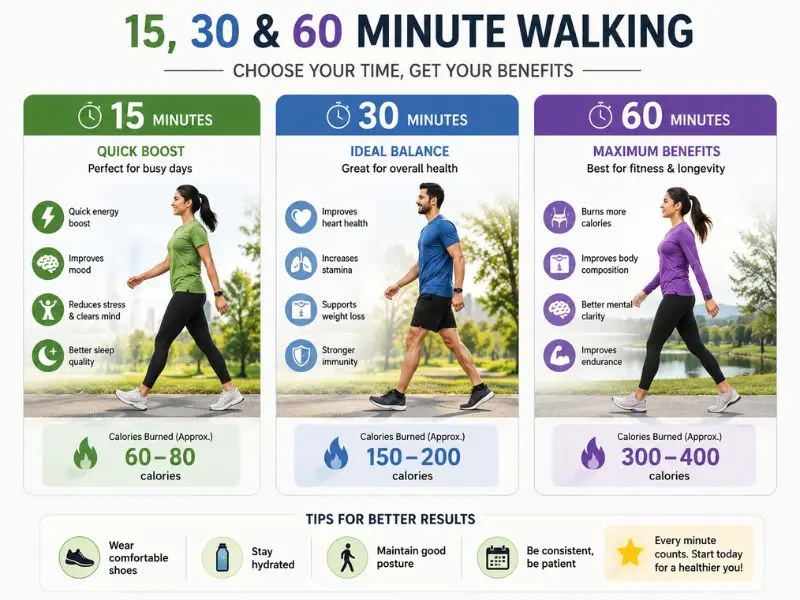
A 15-minute walk is not necessarily better than a longer walk. The main advantage is that it can be easier to fit into your schedule.
| Feature | 15 Minute Walk | 30 Minute Walk | 60 Minute Walk |
|---|---|---|---|
| Time required | Very low | Moderate | Higher |
| Easy to fit into a busy schedule | Yes | Often | More difficult |
| Good for beginners | Yes | Yes, depending on fitness | May be challenging |
| Can support daily activity | Yes | Yes | Yes |
| Equipment needed | Usually none | Usually none | Usually none |
| Can be done indoors | Yes | Yes | Yes |
| Best approach | Build consistency | Increase activity | Add more volume when comfortable |
There is no single walking duration that is perfect for everyone. If 15 minutes is realistic for you, it can be an excellent starting point. As you become more comfortable, you can increase the duration, frequency, or pace.
How Fast Should You Walk for 15 Minutes?
Your walking speed depends on your current fitness level and the purpose of your walk.
A relaxed pace is perfectly reasonable if you are new to exercise, recovering from a period of inactivity, or simply using your walk as a gentle movement break.
If you want more intensity, you can try a brisk pace. A brisk walk generally feels faster and requires more effort than a casual stroll, but you should still be able to control your breathing and maintain the activity safely.
You do not have to walk at the same speed for the entire 15 minutes. You could begin with a few minutes at an easy pace, walk more briskly in the middle, and then slow down toward the end.
This approach can make the walk feel more comfortable while allowing you to gradually introduce more intensity.
How Many Steps Can You Take in 15 Minutes?
The number of steps you take during a 15-minute walk varies from person to person.
Your height, stride length, walking speed, terrain, and individual walking pattern can all affect your step count. Because of this, there is no exact number of steps that everyone should expect to complete.
Instead of worrying about reaching a specific step number, use the 15-minute time period as your main goal.
If you use a smartwatch or phone to track steps, you can look at your numbers over time. This can help you notice changes in your walking habits without turning every walk into a competition.
Can a 15 Minute Walk Help With Weight Loss?
A short walk can contribute to a weight-loss plan, but it should be viewed as one part of the bigger picture.
Weight loss generally requires a sustained energy deficit. Walking can increase your daily energy expenditure, but the effect of a single 15-minute walk is relatively modest.
That does not make the walk useless. Small habits can add up, and regular walks may help you become more active and support other healthy habits.
You can combine walking with a balanced eating pattern, adequate sleep, strength training, and other forms of physical activity when appropriate.
The scale can also change for many reasons, including water retention and normal day-to-day fluctuations. Focus on your overall habits and progress rather than expecting immediate changes after each walk.
When Is the Best Time to Take a 15 Minute Walk?
The best time is usually the time you can follow consistently.
Some people prefer walking in the morning because it helps them start the day with movement. Others enjoy an afternoon walk as a break from work or study.
An evening walk can also be convenient, especially if you enjoy walking after dinner.
Try different times and see which one fits naturally into your schedule. If your chosen time constantly gets interrupted, change it rather than abandoning the habit.
Consistency is more important than choosing a specific “perfect” time of day.
How to Make Your Walk More Effective
You do not need to turn every walk into a difficult workout. However, a few simple changes can make your walking routine more useful and enjoyable.
Choose a Comfortable Pace
Start at a pace that feels manageable. If you are comfortable, gradually increase your speed rather than suddenly pushing yourself.
Pay Attention to Your Posture
Try to keep your body relaxed, your shoulders comfortable, and your gaze directed naturally ahead. Avoid making your walking form unnecessarily rigid.
Choose Supportive Shoes
Comfortable footwear can make walking more enjoyable. Choose shoes that fit properly and provide suitable support for your feet.
Use Different Routes
Walking the same route every day can become boring. Changing your route occasionally can make your walks more interesting.
Walk With Someone
A friend or family member can make a short walk more enjoyable. Walking together can also make it easier to stay consistent.
Gradually Increase the Challenge
Once 15 minutes feels easy, you could increase your pace, add a few minutes, or include gentle hills if they are safe and appropriate for you.
There is no need to increase everything at once.
A Simple 15 Minute Walking Routine
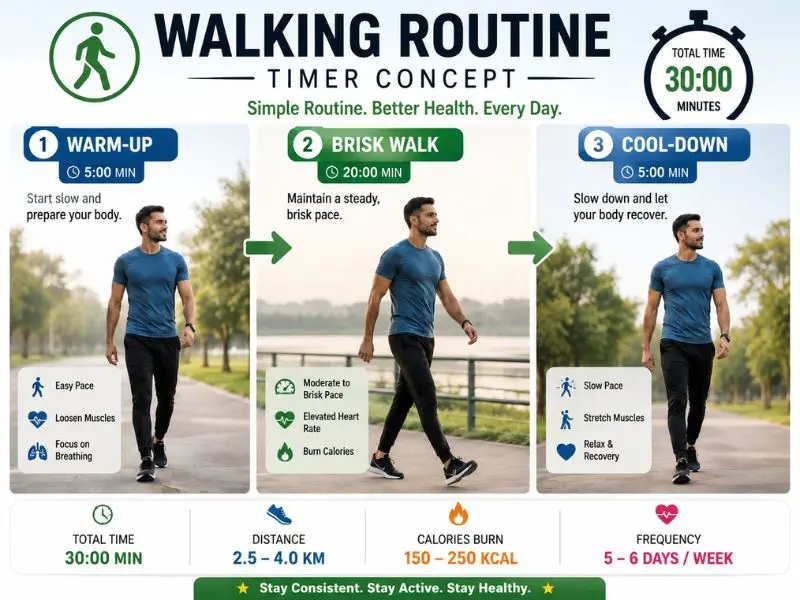
If you are not sure how to structure your walk, try this simple approach:
Minutes 1–3: Walk at an easy pace to warm up.
Minutes 4–12: Walk at a comfortable, slightly quicker pace.
Minutes 13–15: Gradually slow down and finish comfortably.
This is only an example. You can adjust the pace according to your fitness level and how you feel that day.
If you are completely new to exercise, starting slowly is usually more practical than trying to walk as fast as possible.
Tips for Staying Consistent
Building a walking habit is often easier when you remove unnecessary barriers.
Start by choosing a specific time of day. Keep your walking shoes somewhere convenient so they are easy to find. If you prefer outdoor walking, choose a route that feels safe and comfortable.
You can also set a simple goal such as walking for 15 minutes five days a week. Once the habit becomes familiar, you can decide whether you want to walk more often or for longer periods.
Do not let one missed walk turn into a missed week. Busy days happen. The important thing is to return to your routine when you can.
Another useful strategy is to focus on how walking makes you feel rather than only on weight, calories, or step counts. If you enjoy the activity, you are more likely to continue doing it.
What If You Do Not Have 15 Minutes at Once?
If your schedule is packed, you may be able to break your movement into smaller periods.
For example, you could walk for five minutes in the morning, five minutes during a break, and another five minutes later in the day.
This may not feel exactly the same as one continuous walk, but it can still help you spend more time moving.
You can also look for natural opportunities to walk. Park a little farther away, walk while taking a phone call, use stairs when appropriate, or take a short movement break after sitting for a long time.
The goal is to make movement a normal part of your day.
Common Mistakes to Avoid
One common mistake is believing that every walk needs to be intense. It does not.
Another mistake is trying to increase your walking distance or speed too quickly. If your body is not accustomed to regular activity, gradual progression is usually more sensible.
It is also easy to become overly focused on calorie-burn estimates. Fitness trackers can provide useful information, but their calorie estimates are not perfectly precise.
Finally, do not compare your walking routine with someone else’s. A beginner, an experienced runner, and someone returning to exercise will naturally have different abilities.
Your starting point is what matters.
Is a 15 Minute Walk Enough Exercise?
A 15-minute walk can be meaningful physical activity, especially for someone who is currently inactive. However, whether it is enough depends on your overall activity level, health, fitness goals, and the rest of your routine.
If your goal is general health, you may eventually want to combine walking with other forms of physical activity, including muscle-strengthening exercises.
Think of a 15-minute walk as a practical starting point rather than a limit.
If you currently do very little activity, adding 15 minutes can be a positive change. Once that becomes comfortable, you can gradually build from there.
Safety Tips Before You Walk

Walking is generally accessible, but basic safety still matters.
Choose safe routes and be aware of traffic, uneven surfaces, weather conditions, and your surroundings. If you are walking outdoors in hot weather, consider a cooler time of day and stay hydrated.
Wear appropriate footwear and avoid pushing through sharp or unusual pain.
If you experience symptoms such as chest pain, severe shortness of breath, fainting, or other concerning symptoms during exercise, stop and seek appropriate medical attention.
People with existing medical conditions or significant limitations should speak with a healthcare professional if they are uncertain about starting or increasing physical activity.
Frequently Asked Questions
1. Is a 15 minute walk good every day?
Yes, a daily 15-minute walk can be a practical way to add regular movement to your routine.
2. How many calories does a 15 minute walk burn?
Calories burned vary based on factors such as body size, walking speed, terrain, and individual metabolism.
3. Can walking for 15 minutes help lose belly fat?
A short walk can support overall activity and weight management, but you cannot specifically target belly fat through walking alone.
4. Is a 15 minute walk enough for beginners?
Yes, 15 minutes can be a comfortable starting point for many beginners who are new to regular physical activity.
5. Should I walk before or after eating?
Either can work depending on your comfort and routine, although some people enjoy taking a gentle walk after a meal.
Conclusion
A 15 minute walk is simple, accessible, and realistic enough to fit into many busy schedules. It can help you add more movement to your day, support cardiovascular health, contribute to weight-management efforts, break up sitting time, and create a consistent exercise habit. You do not need to walk for an hour or complete an intense workout to start becoming more active. Begin with 15 minutes at a comfortable pace, stay consistent, and gradually increase your activity when you feel ready. The most valuable walk is often the one you can actually make part of your everyday life.
