

Building muscle takes more than lifting weights. Your body also needs enough protein, calories, carbohydrates, and healthy fats to support muscle repair and growth. A protein drink for muscle gain can be a simple way to add more protein and calories to your daily diet, especially when you are busy or struggle to eat enough food. Along with proper nutrition, following a structured 5-day workout split can help you train different muscle groups consistently and support your muscle-building goals.
Whether you prefer a homemade shake, a ready-to-drink option, or a simple protein smoothie, the best choice depends on your nutrition needs and daily routine. In this guide, you will learn how protein drinks support muscle growth, what to include in them, and how to choose an option that fits your goals.
What Is a Protein Drink for Muscle Gain?
A protein drink for muscle gain is a beverage that provides protein along with other nutrients that can support a muscle-building diet. It may be made with protein powder, milk, yogurt, fruit, oats, nut butter, or other whole-food ingredients.
Protein contains amino acids, which your body uses to repair and build muscle tissue after resistance training. Drinking a protein shake does not automatically build muscle, but it can make it easier to meet your daily protein needs.
A well-planned drink can also provide carbohydrates and calories. This can be useful if you are trying to gain weight and need more energy than you can comfortably get from regular meals.
For example, a simple shake made with milk, Greek yogurt, banana, oats, and protein powder can provide protein, carbohydrates, calories, and other nutrients in one convenient drink.
Why Protein Matters for Muscle Growth
Resistance training creates a stimulus that tells your muscles to adapt. Your body then needs enough protein and energy to support the recovery process.
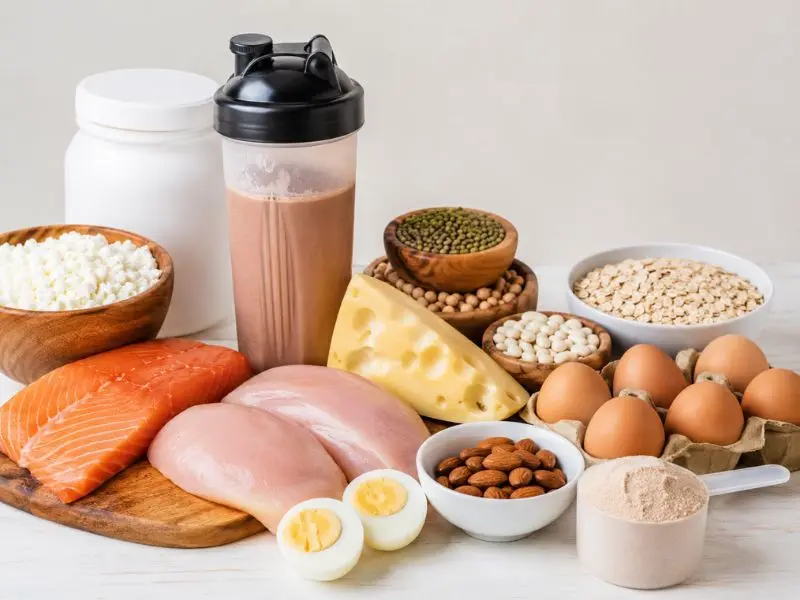
Protein is especially important because it provides amino acids used to maintain and build muscle tissue. However, consuming more protein than your body needs does not guarantee faster muscle growth.
Your overall diet matters more than one individual drink.
For people who exercise regularly, a common sports nutrition target is around 1.4–2.0 grams of protein per kilogram of body weight per day. Individual needs can vary depending on training, body size, age, total calorie intake, and goals.
Instead of trying to get all your protein from shakes, spread protein-rich foods across your meals and use drinks as a convenient addition.
How a Protein Drink Supports Muscle Gain
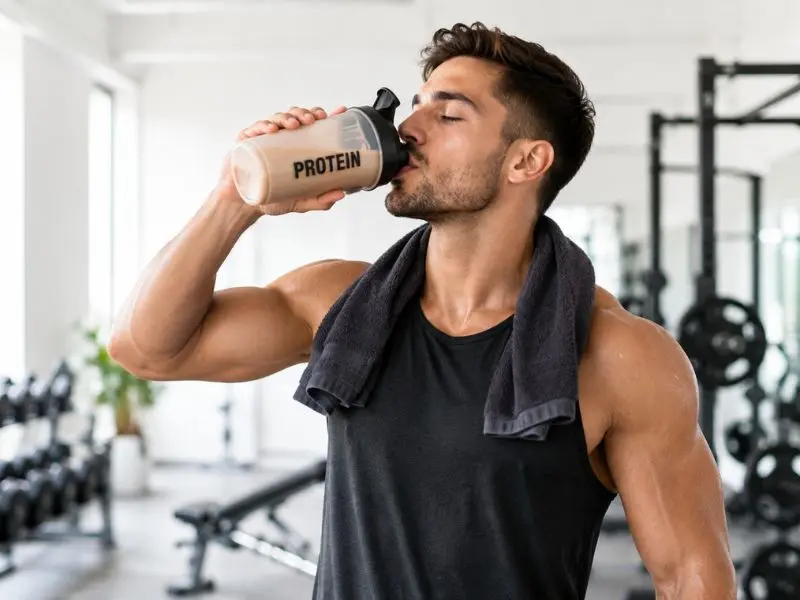
A protein drink can support muscle gain in several practical ways.
It Helps You Reach Your Protein Goal
Some people find it difficult to eat enough protein from regular meals. A shake can provide a convenient source of protein without requiring another full meal.
For example, if breakfast is low in protein, you could add Greek yogurt, milk, or protein powder to a smoothie.
It Can Add Extra Calories
Muscle gain often requires eating enough total calories. If you are not consuming enough energy, gaining muscle can become more difficult.
Adding ingredients such as oats, bananas, nut butter, milk, or yogurt can increase the calorie content of a drink without making it extremely large.
It Is Convenient After Training
A shake can be useful after a workout when you want something quick. However, you do not need to drink protein immediately after your final set.
What matters more is your total protein intake and overall diet throughout the day.
It Can Be Customized
One advantage of homemade drinks is that you can adjust the ingredients to match your needs.
You can increase protein with Greek yogurt or protein powder, add carbohydrates with oats or fruit, and increase calories with nut butter or milk.
Best Protein Drinks for Muscle Gain
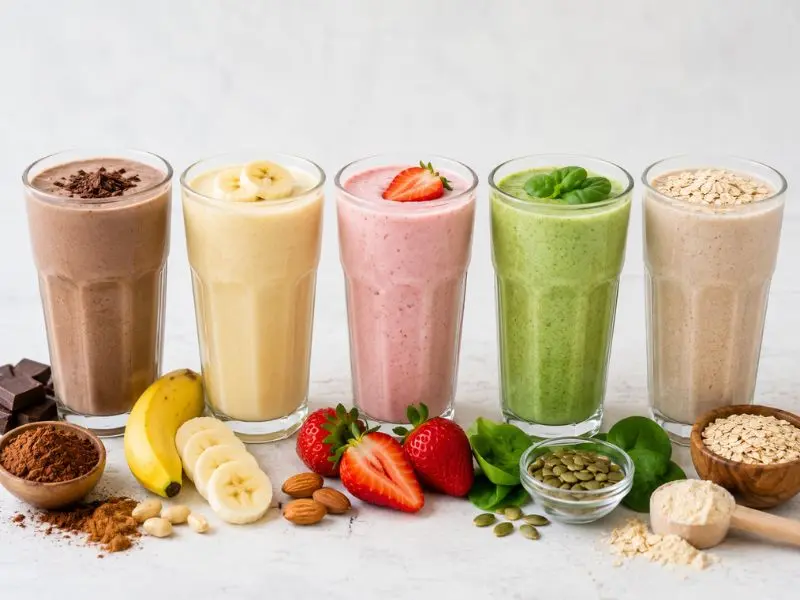
The best protein drinks for muscle gain are not necessarily the most expensive products. A good option should fit your protein needs, calorie goals, taste preferences, and digestive tolerance.
Here are several useful choices.
1. Whey Protein Shake
Whey protein is a popular option because it is convenient and provides a complete protein source.
You can mix whey protein with milk or water. Milk provides additional protein and calories, while water creates a lighter drink.
For a higher-calorie shake, add a banana, oats, and peanut butter.
2. Greek Yogurt Protein Smoothie
Greek yogurt can make a smoothie thicker and more filling while adding protein.
Blend Greek yogurt with milk, berries, banana, and a small amount of honey. You can also add protein powder if you need more protein.
This option works well for people who prefer whole-food ingredients.
3. Chocolate Peanut Butter Shake
A chocolate peanut butter shake can be useful when you need additional calories.
Blend milk, banana, cocoa powder, peanut butter, and protein powder. Oats can also be added for extra carbohydrates and calories.
Because peanut butter is calorie-dense, you do not need a large amount to increase the energy content.
4. High-Protein Fruit Smoothie
Fruit smoothies can provide carbohydrates along with protein.
Try blending milk, Greek yogurt, berries, banana, and protein powder. This creates a convenient drink that can work as part of breakfast or as a snack.
5. Ready-to-Drink Protein Beverage
Ready-to-drink protein beverages are convenient for work, school, travel, or busy days.
When choosing one, check the nutrition label for protein, calories, added sugar, and serving size. A product should complement your diet rather than replace nutritious meals unnecessarily.
Homemade Protein Drink for Muscle Gain
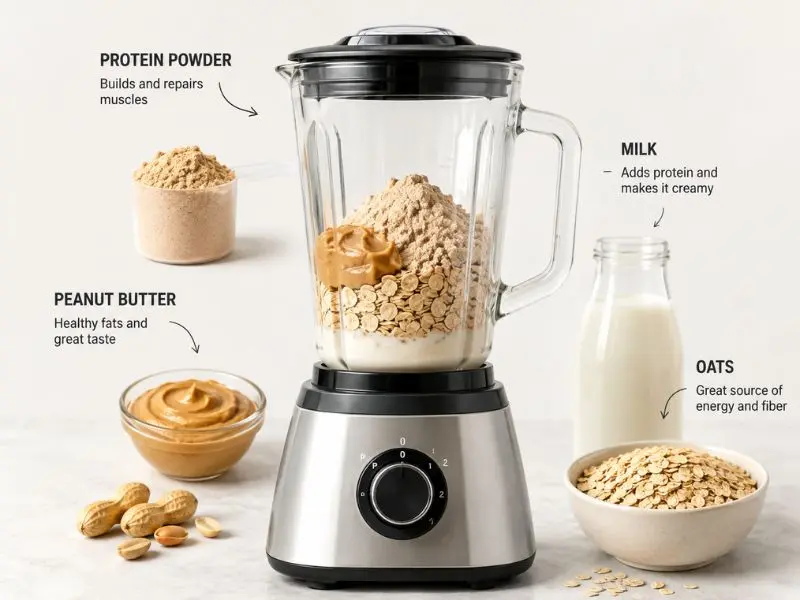
A homemade protein drink for muscle gain can be a great choice because you control the ingredients. You do not need a complicated recipe. Start with a protein source, add a liquid, and then include ingredients that provide carbohydrates, healthy fats, or extra calories. If you want more ideas, check out this guide to protein shakes for muscle gain.
Simple Muscle-Building Shake
Ingredients:
- 1 cup milk
- 1 scoop protein powder
- 1 banana
- ½ cup oats
- 1 tablespoon peanut butter
- A small amount of cinnamon
How to make it:
Add all ingredients to a blender and blend until smooth. Add more milk if you prefer a thinner consistency.
This shake provides protein from the milk and protein powder while the banana and oats provide carbohydrates. Peanut butter adds calories and fat.
The exact nutrition will depend on the brands and amounts you use.
Protein Shake for Muscle Growth

A protein shake for muscle growth works best when it is part of a complete training and nutrition plan.
A shake alone cannot create muscle. You also need resistance training that challenges your muscles over time.
For example, your routine might include exercises such as squats, presses, rows, pull-ups, and other movements that target major muscle groups.
Progressive overload is also important. Over time, you can gradually increase resistance, repetitions, sets, or training difficulty while maintaining good technique.
Your diet should support this training by providing enough protein, calories, carbohydrates, vitamins, minerals, and fluids.
Protein Drink vs. Whole-Food Protein
Protein drinks are convenient, but whole foods should still make up an important part of a balanced diet.
Foods such as eggs, chicken, fish, lean beef, dairy products, beans, lentils, tofu, and Greek yogurt provide protein along with other nutrients.
A shake can fill nutritional gaps when meals do not provide enough protein or when you need a convenient snack.
Protein Drinks vs. Whole-Food Protein
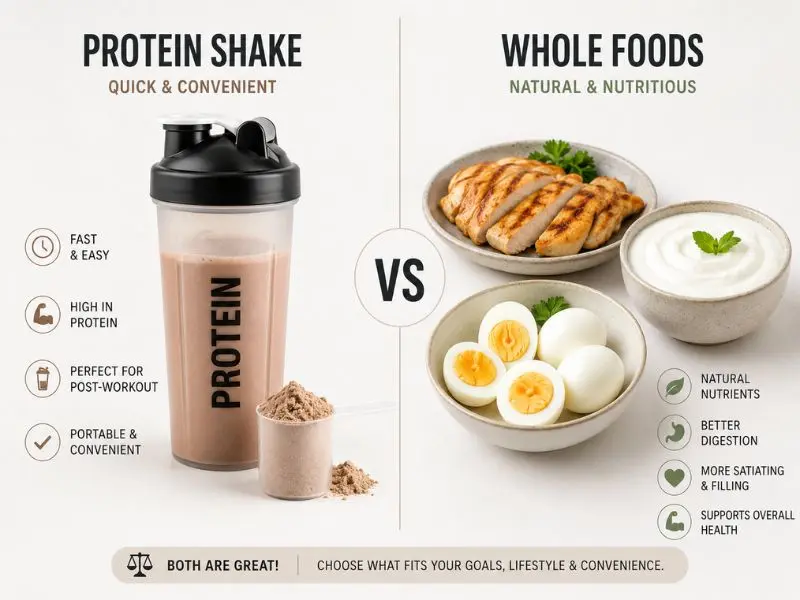
| Feature | Protein Drink | Whole-Food Protein |
| Convenience | Very convenient | Requires preparation |
| Protein | Usually easy to measure | Varies by food |
| Calories | Easy to adjust | Depends on food choice |
| Fiber | Usually low unless added | Often higher |
| Nutrients | Depends on ingredients | Often provides many nutrients |
| Best use | Convenient protein addition | Main part of balanced meals |
The best approach is usually not choosing one over the other. Combining protein-rich foods with convenient drinks can make your diet easier to follow.
When Should You Drink a Protein Shake?
There is no single perfect time to drink a protein shake.
You can have one after training, between meals, with breakfast, or whenever it helps you meet your daily nutrition needs.
For example, if you train in the afternoon and cannot eat a full meal afterward, a shake can be a convenient option.
You can also drink one earlier in the day if breakfast is low in protein.
The most important factor is your total daily protein intake rather than focusing on a narrow post-workout window.
How Much Protein Should a Muscle-Gain Drink Have?
The amount of protein you need in a drink depends on your overall daily intake.
A practical serving might provide around 20–40 grams of protein, but you do not need to hit one exact number every time.
If your meal already contains plenty of protein, a smaller shake may be enough. If your daily diet is low in protein, a larger serving may be useful.
Your body weight, training routine, age, total diet, and fitness goals should all be considered.
Rather than relying on shakes for most of your protein, use them to help fill the gap between your food intake and your daily target.
Ingredients to Add to a Muscle-Gain Shake
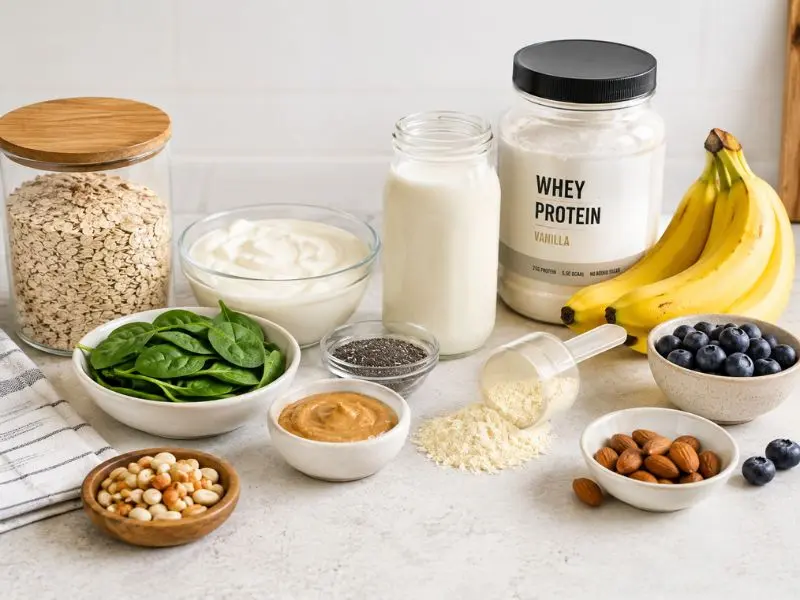
The ingredients you choose can change the nutritional value of your drink.
Milk
Milk provides protein, carbohydrates, and calories. It can also make a shake creamier.
Greek Yogurt
Greek yogurt adds protein and creates a thick texture.
Oats
Oats provide carbohydrates and can make a shake more filling.
Bananas
Bananas provide carbohydrates and add natural sweetness.
Peanut Butter
Peanut butter is useful when you want to increase calories and add healthy fats.
Berries
Berries add flavor and provide carbohydrates, fiber, and various micronutrients.
Protein Powder
Protein powder makes it easier to increase the protein content without adding a large amount of food.
You do not need to include every ingredient. Choose combinations that fit your calorie and protein needs.
How to Choose a Protein Drink
When choosing a packaged protein drink or protein powder, look beyond the front of the package.
Check the nutrition label and compare:
- Protein per serving
- Total calories
- Added sugar
- Carbohydrates
- Fat
- Serving size
- Ingredients
- Allergens
A higher-protein product is not automatically better.
For example, someone trying to gain weight may prefer a drink with more calories, while someone who already gets enough calories from food may want a simpler protein drink.
Taste and digestion also matter. The best product is one you can tolerate and use consistently.
Common Mistakes When Using Protein Drinks
Protein drinks can be helpful, but several mistakes can reduce their usefulness.
Drinking Too Many Shakes
More shakes do not automatically mean more muscle.
If most of your diet comes from protein beverages, you may miss out on the variety of nutrients found in whole foods.
Ignoring Total Calories
Protein is important, but calories matter too.
If you want to gain muscle and your body weight is not increasing, you may need to review your total calorie intake rather than simply adding more protein.
Expecting a Shake to Build Muscle
A protein drink provides nutrients, but resistance training creates the main muscle-building stimulus.
You need both proper training and adequate nutrition.
Using Too Much Sugar
Some shakes can become very high in added sugar when you combine sweetened protein powder, syrups, flavored milk, and other sweet ingredients.
Whole fruits can provide sweetness while also contributing nutrients and fiber.
Forgetting Hydration
Protein intake does not replace your need for adequate fluids. Drink water regularly throughout the day and pay attention to hydration during exercise.
Tips for Better Muscle-Gain Results
Use protein drinks as part of a complete plan rather than treating them as a shortcut.
First, establish a consistent resistance-training routine. Train your major muscle groups regularly and gradually make your workouts more challenging.
Second, eat enough total calories to support your goal. If you are trying to gain weight but your weight remains unchanged for several weeks, your calorie intake may need adjustment.
Third, spread protein intake across the day. Include protein-rich foods at breakfast, lunch, dinner, and snacks.
Fourth, prioritize sleep and recovery. Your body needs time to recover between demanding workouts.
Finally, track your progress. Body weight, strength, workout performance, measurements, and photos can help you see whether your plan is working.
Can Protein Drinks Replace Meals?
A protein drink can occasionally work as a meal replacement when it contains enough calories and nutrients, but a basic protein shake is not automatically a complete meal.
A typical protein shake may provide plenty of protein but lack enough carbohydrates, fats, fiber, vitamins, and minerals.
If you need a meal-style shake, include several food groups. For example, combine milk, protein powder, oats, banana, Greek yogurt, and nut butter.
For everyday nutrition, however, eating a variety of whole foods is usually the better foundation.
Are Homemade Protein Drinks Better?
Homemade drinks can be better for some people because they provide greater control over ingredients and portion sizes.
You can adjust the protein, calories, carbohydrates, and fats based on your goals.
They can also be less expensive than buying individual ready-to-drink beverages.
However, packaged protein drinks are useful when convenience is your main priority.
The better choice is the one that fits your lifestyle and helps you maintain a balanced diet consistently.
How to Make Your Protein Drink More Calorie-Dense
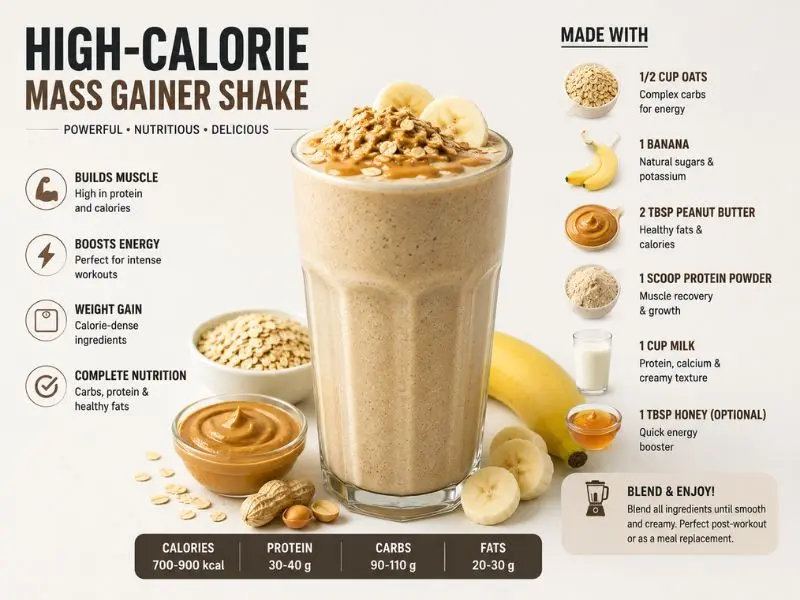
If you struggle to eat enough calories for muscle gain, you can increase the energy content of your shake.
Try adding:
- Oats
- Peanut butter
- Almond butter
- Whole milk
- Greek yogurt
- Banana
- Avocado
- Dried fruit
Increase portions gradually instead of making a very large shake immediately.
This can make the drink easier to tolerate and help you identify how much food your body handles comfortably.
Frequently Asked Questions
What is the best protein drink for muscle gain?
The best protein drink is one that helps you meet your protein and calorie needs while fitting your diet and preferences.
Can protein drinks help you build muscle?
Yes, protein drinks can support muscle growth when combined with adequate nutrition and regular resistance training.
Is a homemade protein drink good for muscle gain?
Yes, homemade shakes can provide protein, calories, carbohydrates, and other nutrients depending on the ingredients used.
Should I drink a protein shake every day?
You can drink one daily if it helps you meet your nutrition needs, but it is not required for building muscle.
Is it better to drink protein before or after a workout?
Either can work, as total daily protein intake and consistent resistance training are more important than exact timing.
Conclusion
A protein drink for muscle gain can be a convenient way to increase protein and calories while supporting a consistent muscle-building diet. Choose drinks made with quality ingredients, combine them with protein-rich whole foods, follow a progressive resistance-training plan, and give your body enough calories and recovery time to make steady progress.
