

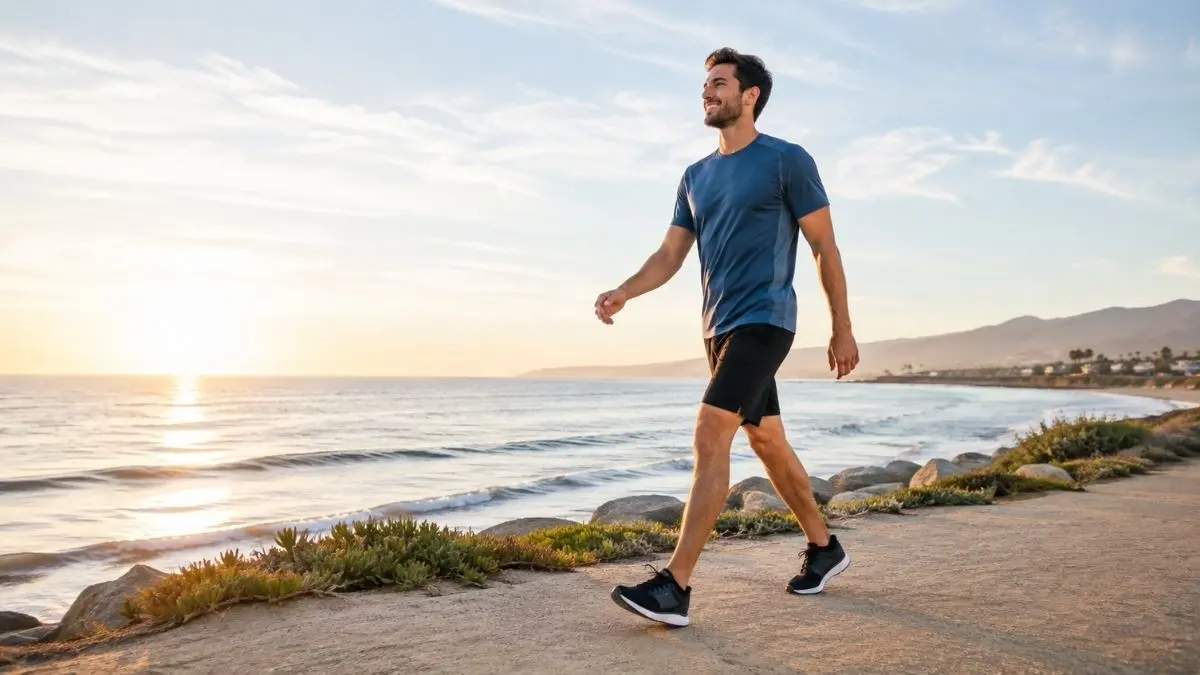
Beach walking sounds simple until sand gets inside your shoes, wet rocks become slippery, or your regular sneakers start feeling heavy after getting soaked. The best shoes for beach walking should match the surface and activity, offering a comfortable fit, useful traction, and enough protection for the conditions you expect to encounter.
Some people need a lightweight pair for short walks along soft sand, while others need more secure footwear for rocky shorelines, tidepooling, or long coastal strolls. Below, we compare 10 options for different needs and explain what to look for when choosing beach walking shoes.
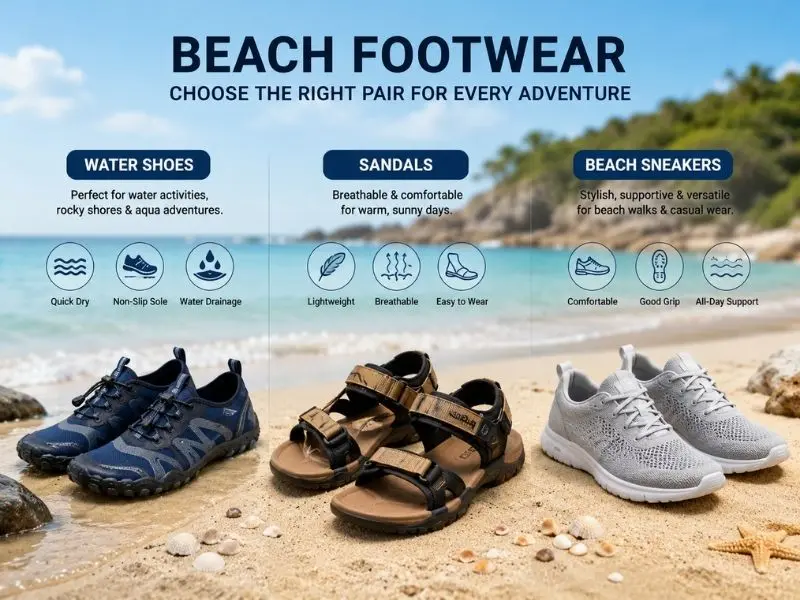
Quick Comparison of the Best Shoes for Beach Walking
| Shoe | Best For | Water Resistance/Drainage | Traction | Cushioning | Weight/Feel | Overall Use |
| New Balance Fresh Foam Arishi v4 GTX | Long walks | Waterproof | Good | Soft | Sneaker-like | Wet coastal walks |
| Teva Tirra | Adjustable comfort | Water-friendly | Good | Moderate | Lightweight sandal | Casual beach walks |
| ECCO Yucatan Sport Sandal | Stability | Water-friendly | Good | Firm | Supportive | Mixed surfaces |
| Doussport Quick Drying Water Shoes | Water activities | Quick-drying | Good | Light | Lightweight | Wet sand and water |
| Crocs Mellow Recovery Slide | Easy casual wear | Water-friendly | Moderate | Soft | Very light | Short walks |
| KEEN Drift Creek H2 | Rocky beaches | Quick-drying | Strong | Moderate | Secure | Wet and uneven terrain |
| Hoka Hopara All-Terrain | Mixed terrain | Water-ready | Strong | Plush | Substantial | Long outdoor days |
| Kane Revive | Recovery walks | Waterproof | Moderate | Soft | Lightweight clog | Wet casual use |
| Ryka Hydro Sport | Gym-to-water use | Quick-drying | Good | Moderate | Athletic | Active beach days |
| Frankie Isla Slide | Stylish casual walks | Water-friendly | Moderate | Supportive | Light | Easy coastal strolls |
The best shoes for beach walking can vary by fit, terrain, and personal preference.
The 10 Best Shoes for Beach Walking
1. New Balance Fresh Foam Arishi v4 GTX — Best for Long Beach Walks
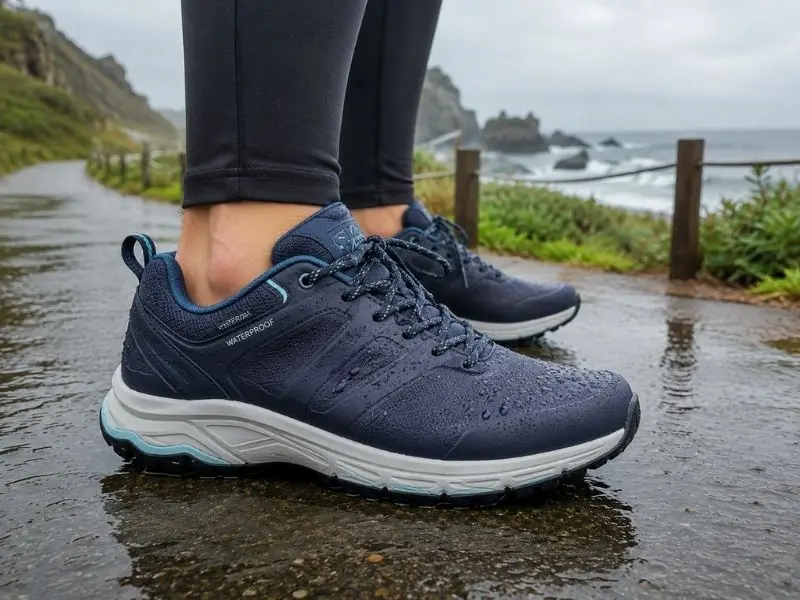
If you want a shoe that feels more like a traditional walking or running sneaker, the New Balance Fresh Foam Arishi v4 GTX is a strong option for longer coastal walks. Its waterproof construction makes it particularly useful when you expect wet conditions but do not necessarily want a sandal or open water shoe.
The cushioned midsole is better suited to extended walking than many minimalist water shoes, while the rubber outsole provides traction across surfaces such as wet pavement and rocks. The availability of wider sizes can also be useful for people who prefer more room around the forefoot.
The trade-off is breathability. A waterproof closed shoe can feel warmer than a sandal or mesh water shoe, especially on hot summer days. It also is not the most natural choice if your walk involves repeatedly going into deep water.
For long walks, the best shoes for beach walking offer dry feet and comfortable cushioning.
2. Teva Tirra — Best Adjustable Beach Sandal
The Teva Tirra is a good choice for people who prefer an open sandal but still want a secure fit. Its adjustable straps allow you to fine-tune the fit, which can be helpful when walking on sand or uneven ground.
Unlike a simple flip-flop, an adjustable sport sandal can feel more secure during longer walks. The open construction also allows air to move around your feet, which can be useful on hot beach days.
It is better suited to casual coastal walks and mixed beachside activities than very rough terrain. Sand can still collect around an open sandal, and the exposed design provides less protection than a closed water shoe.
Choose this type of footwear when you want something versatile enough for the beach, boardwalk, and casual sightseeing without the bulk of a traditional sneaker.
3. ECCO Yucatan Sport Sandal — Best for Stability
The ECCO Yucatan Sport Sandal is designed more like a supportive outdoor sandal than a basic beach shoe. That makes it worth considering if stability and a structured feel are higher priorities than having the lightest possible footwear.
Its supportive construction can work well for walks that move between the beach, pavement, and other firm surfaces. The closed portions of the upper also provide more coverage than a simple slide or flip-flop.
However, it is not designed to behave exactly like a dedicated water shoe. If your day involves swimming, frequent wading, or walking through tidepools, a quick-drying water shoe may be more convenient.
For coastal sightseeing and moderate walks, the best shoes for beach walking offer a supportive middle ground.
4. Dous Sport Quick Drying Water Shoes — Best for Water Activities
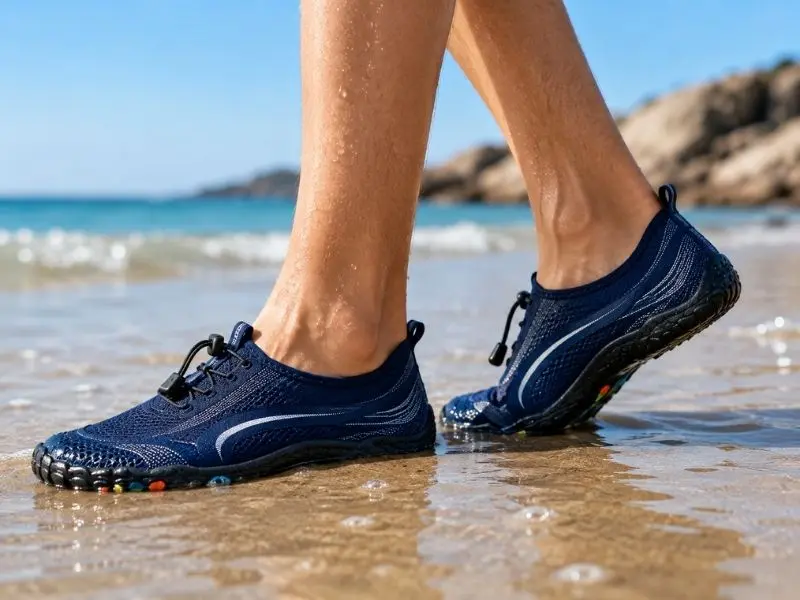
For people who expect their feet to get wet, a dedicated water shoe can make more sense than a regular sneaker. Douss Sport’s quick-drying water shoes use a lightweight mesh style construction and drainage features to help water escape rather than remaining trapped inside.
The flexible design makes them convenient for walking along the shoreline, wading, swimming, and other activities where wet feet are unavoidable. Their rubber outsole also provides useful protection from small rocks and shells.
The main limitation is long-term durability. Lightweight water shoes are generally designed around flexibility and quick drying rather than the robust construction of a hiking shoe.
They are therefore a better choice for beach trips, water activities, and shorter walks than for people who regularly spend many miles on mixed coastal trails.
5. Crocs Mellow Recovery Slide — Best for Easy Casual Walks
The Crocs Mellow Recovery Slide is a simple option for people who value easy on-and-off wear. Its lightweight construction and soft feel make it useful for short beachside walks, getting from a hotel to the shore, or relaxing after a longer activity.
A slide is also convenient because you do not have to deal with laces or complicated straps. It can be rinsed easily after a sandy beach day, which is another practical advantage.
The downside is stability. Slides generally do not hold the foot as securely as a closed water shoe or adjustable outdoor sandal. That matters more when walking quickly, climbing over rocks, or spending a long time on uneven surfaces.
For short, easy walks on relatively predictable ground, however, a comfortable slide can be all you need. It is best viewed as casual footwear, while the best shoes for beach walking offer better support for challenging terrain.
6. KEEN Drift Creek H2 — Best for Rocky Beaches
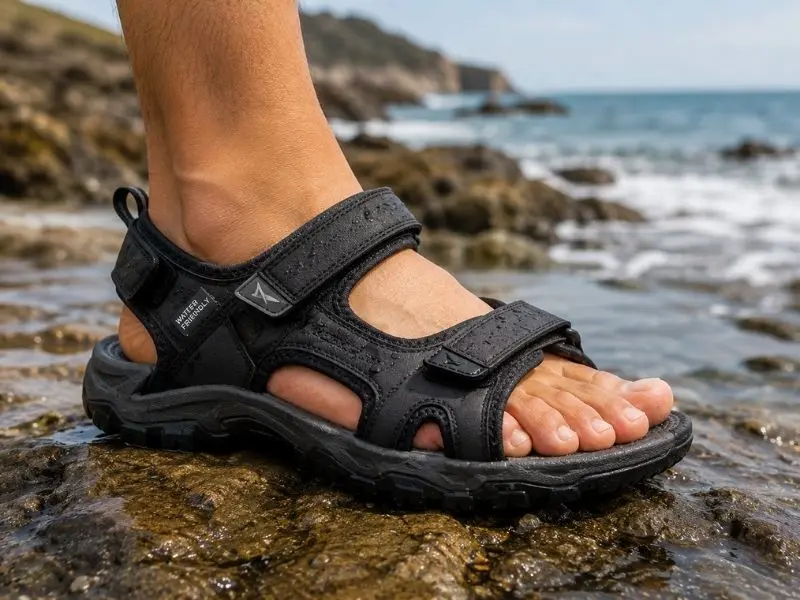
Rocky beaches create different footwear demands from soft sand. A shoe needs to provide protection and dependable traction while remaining comfortable enough for walking. The KEEN Drift Creek H2 is designed for water-friendly outdoor use and is a strong choice for people who frequently encounter wet or uneven surfaces.
Its rubber outsole is built around traction, while the secure sandal construction provides more coverage than a basic open-toe beach sandal. This can be helpful around rocks, gravel, and shoreline areas.
The style is somewhat bulkier than minimalist water shoes, so people looking for an ultra-light option may prefer something simpler. It also is not completely waterproof, meaning it is designed to handle wet conditions rather than keep your feet completely dry.
For rocky beaches and mixed wet terrain, its emphasis on grip and protection makes it a practical choice.
7. Hoka Hopara All-Terrain — Most Comfortable for Mixed Terrain
The Hoka Hopara All-Terrain is designed for people whose beach day may involve much more than walking along flat sand. Its outdoor-inspired design combines cushioning with drainage-friendly openings and a grippy outsole.
This makes it particularly interesting for coastal adventures that include light hiking, rocky paths, beach walking, and tidepooling. The cushioned platform can also be more comfortable for longer outings than a very thin water shoe.
The added structure comes with a trade-off: it does not feel as minimal as a lightweight water shoe or simple sandal. If you only need something for a five-minute walk across a flat beach, it may be more footwear than necessary.
For people who want one pair for beach walking and light outdoor terrain, the best shoes for beach walking offer versatile performance.
8. Kane Revive — Best for Recovery Walks
The Kane Revive takes a different approach from traditional beach walking shoes. It is a recovery-style clog made from closed-cell foam, giving it a waterproof, easy-to-clean construction that can work well around wet outdoor environments.
Its cushioned feel makes it suitable for easy walks and casual outdoor use, while the slip-on design is convenient after swimming or other activities. Because the material does not absorb water in the same way as fabric footwear, cleaning it after a sandy outing is relatively simple.
Still, a recovery clog is not the best match for every beach. The open heel and casual design are better suited to easy walking than technical terrain, steep rocks, or long-distance coastal hikes.
Consider it when comfort, easy cleaning, and convenience matter more than aggressive traction or maximum foot protection.
9. Ryka Hydro Sport Water Shoe — Best for Active Beach Days
The Ryka Hydro Sport is aimed at people who want water-ready footwear with a more athletic feel. Its design sits closer to a sneaker than a traditional water shoe, making it useful for active days that move between dry ground and water.
The secure fit can help keep the shoe in place when wet, while its quick-drying construction makes the transition from water back to land more comfortable. It can also provide more support than extremely thin water shoes.
One limitation is its fit around the heel. People with different foot shapes may need to pay particular attention to sizing and comfort before wearing it for extended periods.
For beach workouts and water activities, the best shoes for beach walking offer athletic-style comfort.
10. Frankie 4 Isla Slide — Best Stylish Option
Not every beach walk requires technical water footwear. The Frankie4 Isla Slide is better suited to people who want a casual, stylish option for easy walks around a beach town, resort, or boardwalk.
A supportive slide can be more comfortable for everyday use than a flat flip-flop, particularly when you are walking between different locations during a beach trip. Its simple design also makes it easy to put on and remove.
However, this is not the shoe to choose for rocky tidepools, deep water, or demanding coastal trails. A slide provides less protection and security than a closed water shoe or outdoor sandal.
If your typical beach walk is relaxed and mostly takes place on firm paths, boardwalks, or easy sand, a comfortable slide can be a practical choice.
How to Choose the Best Shoes for Beach Walking

Traction
Traction becomes especially important when beach walking takes you beyond dry sand. Wet rocks, shells, compacted sand, ramps, and boardwalks can all create surfaces where a smooth sole may feel unstable.
Look for a rubber outsole with a useful tread pattern if you expect to encounter slippery or uneven ground. For simple dry-sand walks, extreme traction may be less important, so you can prioritize comfort and weight instead.
Sand and Drainage
Sand has a habit of finding its way into almost every opening. Open sandals can allow sand to enter easily, while closed shoes can trap it around the foot.
If you expect your shoes to get wet, quick drainage can be more useful than complete waterproofing. Water shoes are generally designed to let water escape quickly, while waterproof sneakers are better when your main goal is keeping water outside.
Cushioning and Comfort
The longer you plan to walk, the more attention you should give to cushioning. A thin water shoe can be comfortable around the water but may feel less forgiving after several miles.
For long coastal walks, look for footwear with enough midsole cushioning and a secure fit. If your beach activity is only a short stroll, you may not need the same level of cushioning.
Fit and Foot Stability
A beach shoe should stay securely on your foot without squeezing it. Loose footwear can move around when wet, while overly tight shoes can become uncomfortable as your feet swell during a long walk.
Adjustable straps, secure laces, or a close-fitting upper can help create a more stable feel. Try the footwear with the type of socks you expect to wear, if any.
Breathability and Drying Time
Hot weather and wet feet can quickly make footwear uncomfortable. Breathable materials allow more airflow, while quick-drying fabrics can help reduce the time your shoes remain damp.
If you spend most of your time on dry sand, breathability may be more important. If you regularly enter the water, drainage and drying speed should move higher on your list.
Beach Type
Your destination should influence your choice.
Soft dry sand: Lightweight sandals or flexible water shoes can work well.
Firm wet sand: Look for good traction and a secure fit.
Rocky beaches: Choose footwear with stronger protection and a grippy outsole.
Tidepools: Water-ready shoes with secure construction and good traction are preferable.
Mixed coastal trails: A supportive, cushioned shoe with outdoor traction may be the better choice.
Are Beach Walking Shoes Better Than Regular Sneakers?
Not always. Regular sneakers can work well for dry boardwalks, firm sand, and short beachside walks when you do not expect much water exposure.
The advantage of dedicated beach footwear becomes clearer when sand, water, rocks, or slippery surfaces are involved. Water-friendly shoes can drain faster, while outdoor sandals and hybrid shoes may provide better traction and protection.
The best shoes for beach walking should match your activity, not just the beach.
Can You Wear Water Shoes for Long Beach Walks?
Yes, but comfort depends on the particular shoe. Some water shoes have enough cushioning and support for longer walks, while very thin models are better suited to short trips into the water.
For long beach walks, look for a secure fit, comfortable midsole, useful traction, and enough protection underfoot.If walking is your main activity, the best shoes for beach walking may offer more comfort than basic water shoes.
Tips for Comfortable Beach Walking

- Choose the right fit: Your shoes should feel secure without squeezing your toes.
- Check the surface: Match your footwear to sand, rocks, water, or mixed terrain.
- Rinse after use: Remove salt and sand with clean water after your beach trip.
- Let shoes dry properly: Give wet footwear enough airflow before storing it.
- Use socks when appropriate: Lightweight moisture-managing socks can improve comfort in closed shoes.
- Avoid loose wet footwear: Shoes that shift around can become uncomfortable quickly.
- Match shoes to distance: Short walks require less cushioning than long coastal strolls.
Frequently Asked Questions
What shoes are best for walking on sand?
Lightweight beach shoes or supportive sandals with a secure fit can work well on sand, while deeper tread is useful for mixed terrain.
Can you wear sneakers for beach walking?
Yes, regular sneakers can work for dry, firm surfaces, but water-friendly footwear is usually more practical when shoes get wet.
Are water shoes good for long beach walks?
Some supportive water shoes can handle longer walks, but very thin models may be better for short water activities.
Do beach walking shoes need good traction?
Good traction is especially useful on wet sand, rocks, shells, and other slippery shoreline surfaces.
Should beach shoes be waterproof or quick-drying?
Quick-drying shoes are often more practical for activities involving frequent water exposure, while waterproof shoes are useful when keeping feet dry is the priority.
Conclusion
Choosing the best shoes for beach walking starts with understanding where and how you plan to walk. For long coastal strolls, prioritize cushioning, comfort, and stability; for wet sand and water activities, look for quick drainage and a secure fit; and for rocky beaches or tidepooling, traction and underfoot protection become more important. The best pair is ultimately the one that matches your beach surface, walking distance, water exposure, and personal fit preferences, especially when considering hiking shoes vs walking shoes.
