
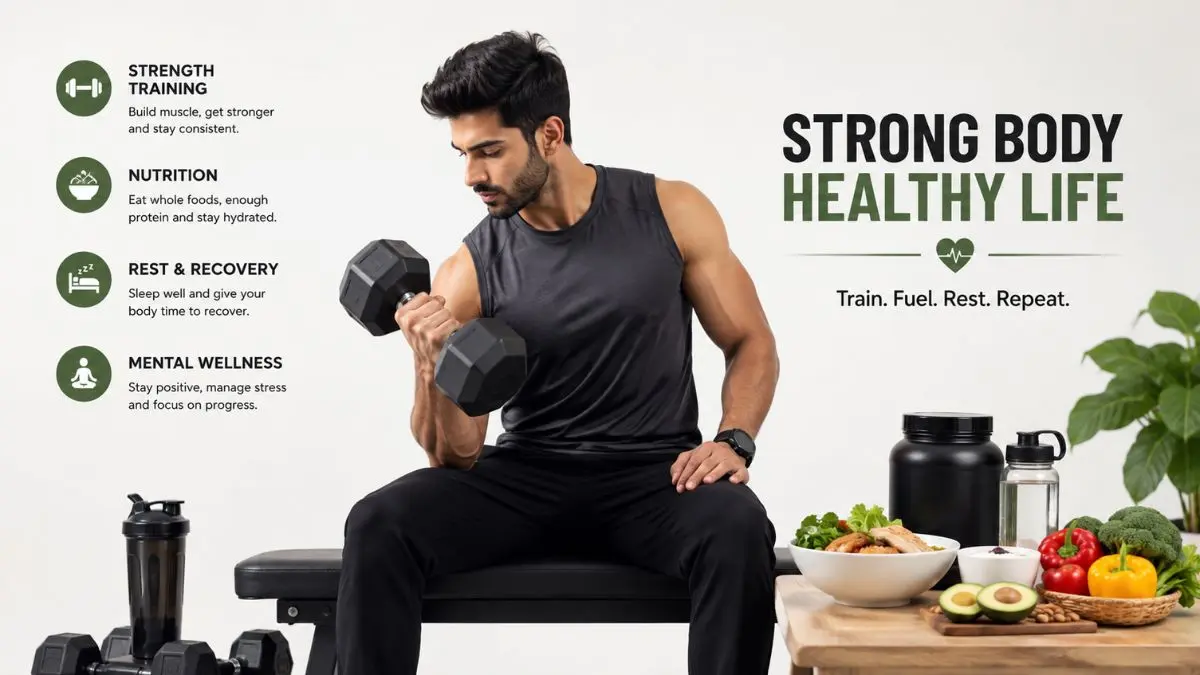
How to lose body fat and gain muscle is a common goal for people who want to improve their body composition while becoming stronger. With the right balance of nutrition, protein, resistance training, and recovery, you can work toward losing fat while maintaining or building muscle.
The goal of losing fat while building muscle is commonly called body recomposition.. Instead of focusing only on the number on the scale, you focus on improving your body composition by gradually reducing fat while maintaining or increasing lean muscle. How to lose body fat and gain muscle requires the right balance of nutrition, protein, training, and recovery.
How to Lose Body Fat and Gain Muscle?
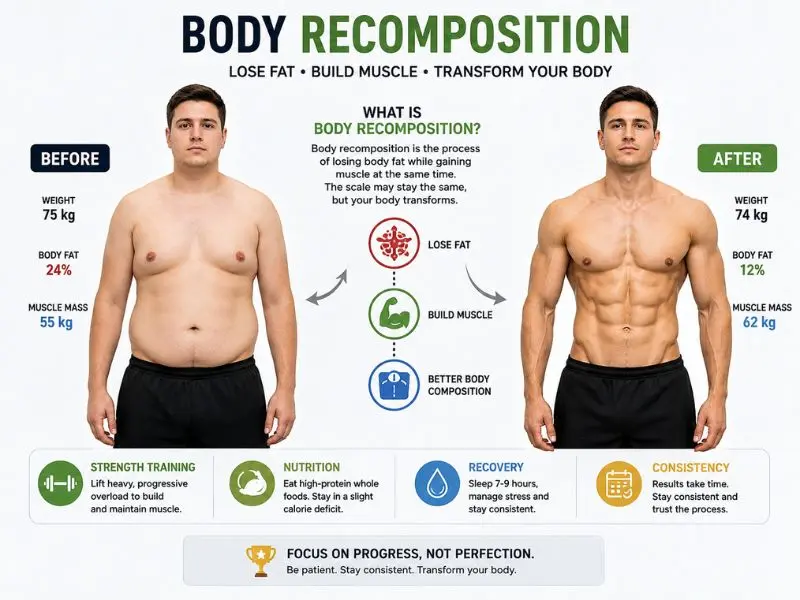
Body recomposition means reducing body fat while maintaining or increasing muscle mass. How to lose body fat and gain muscle is different from regular weight loss because the goal is to improve body composition, not just lower the number on the scale.
When you lose weight through a large calorie deficit without resistance training or enough protein, some of the weight may come from lean tissue. A better approach is to use a moderate calorie deficit while continuing to challenge your muscles through resistance training.
Research suggests that resistance training during weight loss can help protect fat-free mass while supporting greater fat loss and improvements in strength.
This is why lose fat and gain muscle goals require more than simply eating less. Your training, protein intake, calorie intake, sleep, and recovery all matter.
Why Is Losing Fat and Gaining Muscle Important?
Having a lower body-fat level and more muscle can improve how your body looks and performs. Muscle also plays an important role in strength, movement, and everyday physical function.
For many people, body recomposition is a better long-term goal than chasing a specific scale number. Two people can weigh the same, but how to lose body fat and gain muscle can lead to very different levels of muscle and body fat.
Resistance training is particularly useful because it gives your muscles a reason to stay strong and adapt while you are losing weight. A large review found that resistance training can help increase lean mass and improve body composition, while combining it with calorie restriction can reduce body fat.
The goal is not to lose weight as quickly as possible. Instead, aim for steady progress that you can maintain.
How to Lose Fat and Build Muscle at the Same Time
The basic strategy for how to lose body fat and gain muscle is simple: eat enough protein, maintain a moderate calorie deficit, train regularly, stay active, and recover well.
However, the details matter.
1. Create a Moderate Calorie Deficit
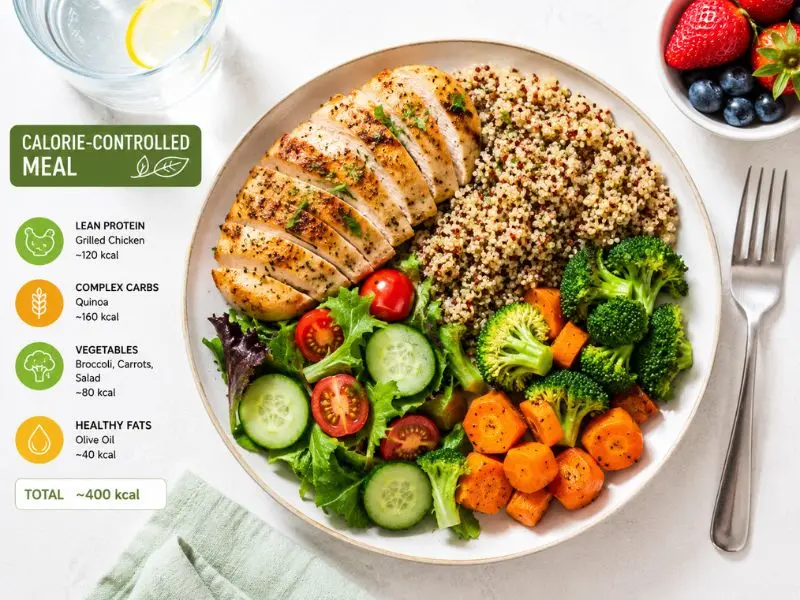
To lose body fat, your body generally needs to use more energy than you consume over time. This is known as a calorie deficit.
However, a very large calorie deficit is not automatically better. Eating far too little can make workouts harder and may make it more difficult to maintain lean muscle.
A moderate approach is usually more practical. Your exact calorie needs depend on factors such as your body size, activity level, age, sex, and current goals.
If your weight is dropping very quickly and your strength is consistently falling, your calorie deficit may be too aggressive.
The CDC recommends gradual weight loss when learning how to lose body fat and gain muscle, as it is easier to maintain over time.
2. Eat Enough Protein
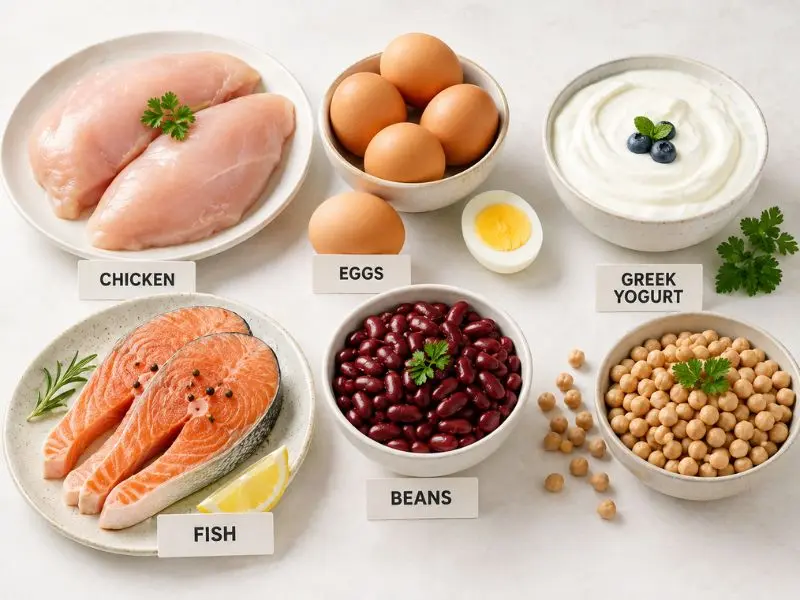
Protein is one of the most important nutrients when your goal is to build or preserve muscle.
Your muscles need amino acids to repair and adapt after resistance training. Getting enough protein throughout the day can therefore support your training and body-composition goals.
For how to lose body fat and gain muscle, exercising individuals can aim for about 1.4–2.0 grams of protein per kilogram of body weight daily.
For example, someone who weighs 180 pounds (about 82 kg) could fall somewhere around 115–164 grams of protein per day within that range.
Good protein sources include:
- Chicken breast
- Turkey
- Eggs
- Greek yogurt
- Cottage cheese
- Fish
- Lean beef
- Milk
- Tofu
- Beans and lentils
- Protein shakes
You do not need to rely on supplements if you can get enough protein from regular foods. A protein shake can simply be a convenient option when your normal meals do not provide enough.
3. Prioritize Resistance Training
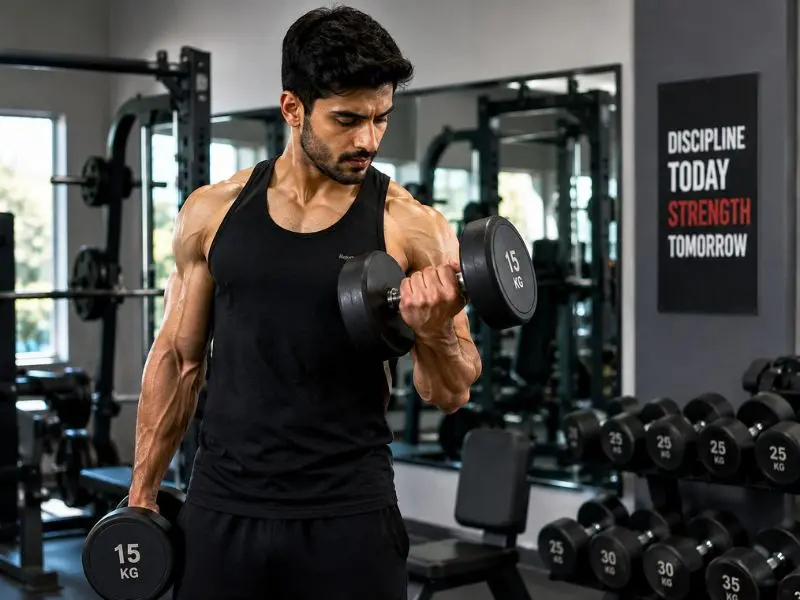
If you want to build muscle and lose fat, resistance training should be one of the foundations of your plan.
Resistance training can include free weights, machines, resistance bands, or simple bodyweight exercises. The equipment matters less than consistently challenging the muscles and gradually progressing over time.
The American College of Sports Medicine’s 2026 resistance-training guidance recommends training all major muscle groups at least twice per week and gradually building training demands. For muscle growth, it highlights roughly 10 weekly sets per muscle group as a useful target for many healthy adults.
Useful exercises include:
- Squats
- Lunges
- Romanian deadlifts
- Bench presses
- Push-ups
- Rows
- Lat pulldowns
- Shoulder presses
- Pull-ups
- Hip thrusts
You do not need an extremely complicated workout program. A consistent routine can help how to lose body fat and gain muscle by training major muscle groups and gradually increasing the challenge.
4. Use Progressive Overload
Your muscles need a reason to adapt.
Progressive overload means gradually increasing the challenge placed on your muscles. This could mean adding weight, performing more repetitions, improving your technique, or increasing the number of sets.
For example, if you can comfortably perform 10 repetitions of an exercise with a certain weight, you might eventually increase the weight slightly and work your way back up.
Progress does not need to happen every workout. The important thing for how to lose body fat and gain muscle is making your training gradually more challenging over time.
5. Add Cardio Without Overdoing It
Cardio can help increase energy expenditure and improve cardiovascular fitness, making it useful when your goal is to reduce body fat.
Walking, cycling, swimming, jogging, and other aerobic activities can all be useful.
However, cardio should support your resistance training rather than completely replace it if building or maintaining muscle is a major goal.
The Physical Activity Guidelines for Americans recommend at least 150 minutes of moderate-intensity aerobic activity per week for adults, along with muscle-strengthening activity. Individual needs can vary depending on goals and fitness levels.
You do not have to perform intense cardio every day. Regular walking and a few well-planned cardio sessions can support how to lose body fat and gain muscle for many people.
Best Foods for Losing Fat and Building Muscle
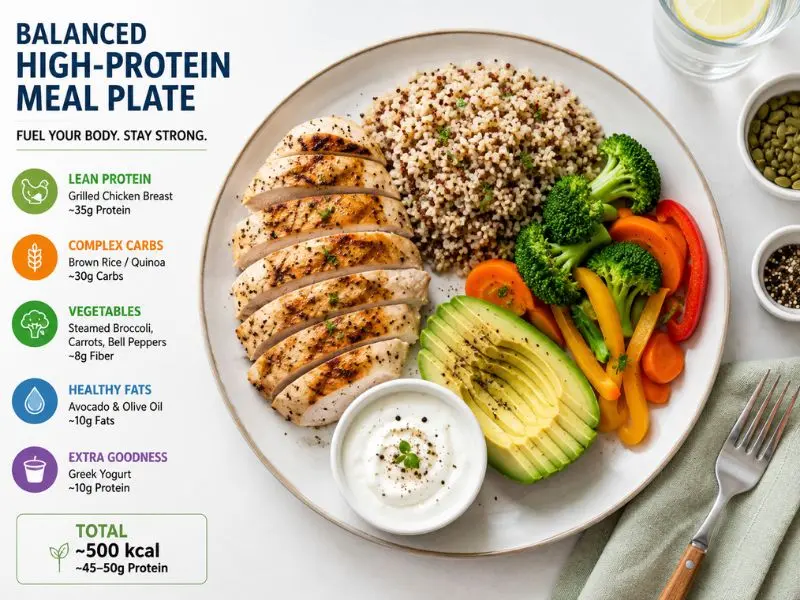
Your diet does not need to be extremely restrictive. Focus on foods that provide protein, fiber, vitamins, minerals, and enough energy to support training.
High-Protein Foods
Choose protein-rich foods such as:
- Chicken
- Turkey
- Fish
- Eggs
- Greek yogurt
- Cottage cheese
- Lean beef
- Tofu
- Tempeh
- Beans
- Lentils
Fiber-Rich Foods
Vegetables, fruits, beans, whole grains, and other high-fiber foods can help make meals more filling while providing important nutrients.
Examples include:
- Broccoli
- Spinach
- Carrots
- Berries
- Apples
- Potatoes
- Oats
- Brown rice
- Whole-grain bread
- Beans
Healthy Fat Sources
Healthy fats can also be part of a balanced diet.
Good options include:
- Avocado
- Nuts
- Seeds
- Olive oil
- Natural peanut butter
- Fatty fish
The goal is not to eliminate carbohydrates or fats. Instead, build meals around nutritious foods and control portions according to your calorie needs.
Body Recomposition: What Should Your Meals Look Like?
A simple meal structure can make your diet easier to follow.
Try building most meals around:
Protein + vegetables or fruit + a quality carbohydrate + a moderate amount of healthy fat
For example, a simple dinner could include grilled chicken, roasted potatoes, vegetables, and a small amount of olive oil.
Breakfast might include eggs, oatmeal, berries, and Greek yogurt.
Lunch could include turkey, brown rice, mixed vegetables, and avocado.
You do not need a completely different meal every day. Repeating a few simple meals can make how to lose body fat and gain muscle easier while helping you stay consistent.
Comparison Table: Fat Loss vs. Muscle Gain vs. Recomposition
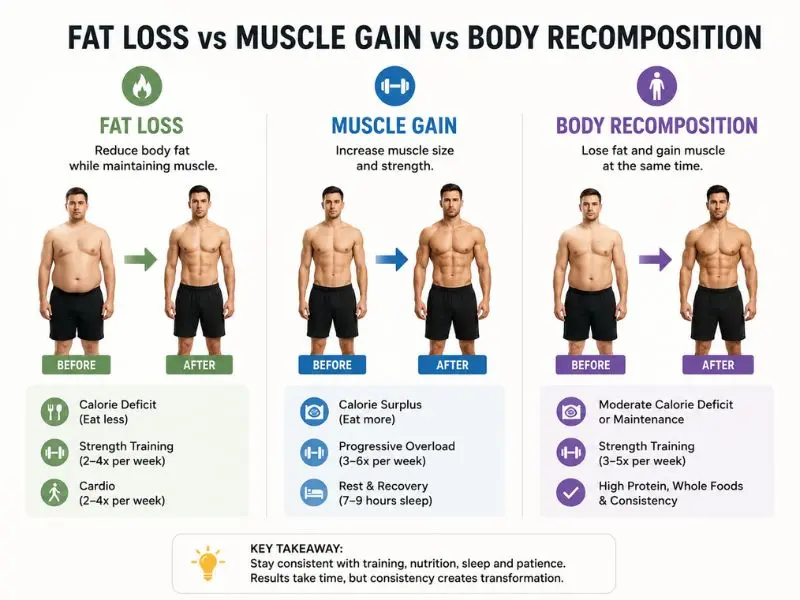
| Goal | Main Focus | Nutrition | Training | Expected Scale Change |
| Fat Loss | Reduce body fat | Calorie deficit | Cardio + resistance | Usually decreases |
| Muscle Gain | Increase muscle | Maintenance or calorie surplus | Resistance training | Usually increases |
| Body Recomposition | Lose fat and build/maintain muscle | Moderate deficit + high protein | Resistance + activity | May change slowly |
Body recomposition can be slower on the scale because losing fat and gaining muscle can partially offset changes in body weight.
That is why how to lose body fat and gain muscle should be tracked using measurements, progress photos, strength, and how your clothes fit, while regular walking can also support your overall activity and fat-loss goals.
How Often Should You Train?
There is no single perfect training schedule.
A beginner could start with full-body resistance training two or three days per week. Someone with more experience may prefer an upper/lower split or a four- or five-day program.
The key to how to lose body fat and gain muscle is to train consistently and give your muscles enough time to recover.
For muscle growth, current ACSM guidance emphasizes training major muscle groups at least twice weekly and building volume gradually.
A simple weekly schedule might look like:
| Day | Activity |
| Monday | Full-body strength |
| Tuesday | Walking or light cardio |
| Wednesday | Full-body strength |
| Thursday | Walking or rest |
| Friday | Full-body strength |
| Saturday | Light cardio or active recovery |
| Sunday | Rest |
You can adjust this schedule based on your experience, fitness level, and available time.
Common Mistakes to Avoid
Eating Too Few Calories
A very aggressive diet may cause rapid weight loss, but it can make training and recovery harder.
The goal of how to lose body fat and gain muscle is to lose fat while giving your body enough nutrition to support muscle growth.
Avoiding Strength Training
Doing only cardio may help burn calories, but resistance training is especially valuable for preserving and building lean tissue.
Make strength training a consistent part of your plan.
Eating Too Little Protein
A diet can be low in calories and still lack enough protein to support your training goals.
Include a quality protein source in most meals.
Changing Your Plan Every Week
Muscle growth and fat loss take time. Constantly switching workouts and diets makes it difficult to know what is actually working.
Give your plan enough time before making major changes.
Focusing Only on the Scale
Your weight can fluctuate because of water, food intake, sodium, and other factors.
If your waist is getting smaller while your strength improves, it may show progress toward how to lose body fat and gain muscle, even if the scale changes slowly.
Expert Tips for Better Results
Track Your Strength
Keep a simple workout log. Record exercises, weights, sets, and repetitions.
If your performance gradually improves, it can be a useful sign that how to lose body fat and gain muscle is progressing.
Monitor More Than Body Weight
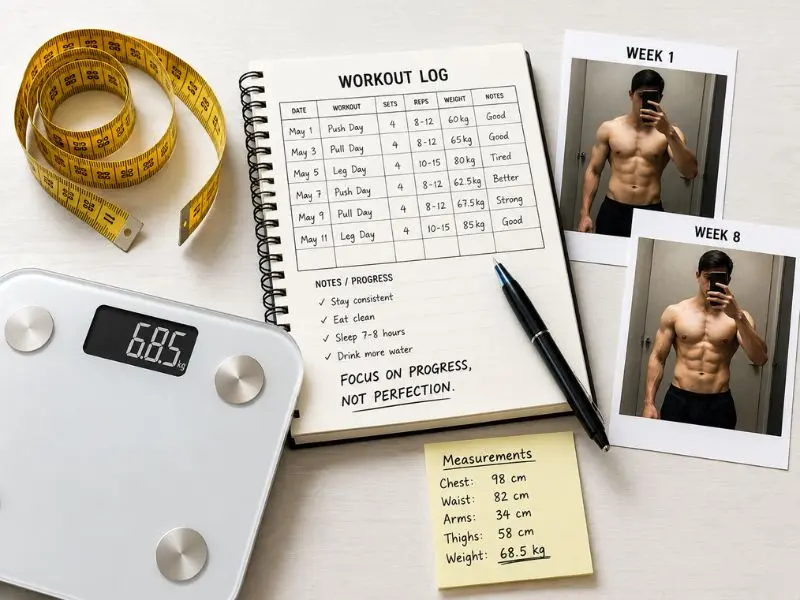
Take waist measurements and progress photos every few weeks under similar conditions.
These measurements can help you see changes that the scale does not show.
Get Enough Sleep
Recovery is an important part of muscle growth and training performance.
Maintain a consistent sleep schedule and allow enough recovery between hard workouts to support how to lose body fat and gain muscle.
Stay Consistent With Protein
Rather than eating most of your protein in one meal, include protein-rich foods throughout the day.
This can make it easier to reach your daily protein target while supporting how to lose body fat and gain muscle.
Keep Your Diet Sustainable
The best diet is one you can follow consistently.
You do not need to completely eliminate your favorite foods. Instead, control portions and make nutritious foods the foundation of meals that support how to lose body fat and gain muscle.
Can Beginners Lose Fat and Gain Muscle?
Beginners may have a particularly good opportunity to make noticeable changes in body composition because their bodies are adapting to resistance training.
Someone who is new to strength training may gain muscle while losing fat when training, nutrition, and recovery are well managed.
However, results vary from person to person. Your training history, starting body composition, diet, genetics, sleep, and consistency can all influence your progress toward how to lose body fat and gain muscle.
How Long Does Body Recomposition Take?
There is no exact timeline for body recomposition.
Fat loss and muscle growth are gradual processes, and visible changes may take several weeks or months.
Instead of expecting dramatic changes in a few weeks, focus on measurable improvements over time.
You may notice better strength, improved muscle definition, smaller waist measurements, or changes in how your clothes fit before seeing a major difference on the scale.
Patience is important when learning how to lose body fat and gain muscle, as rushing both goals can lead to extreme dieting or excessive training.
Frequently Asked Questions
Can you lose body fat and gain muscle at the same time?
Yes, you can lose fat and gain muscle with proper nutrition, protein, resistance training, and recovery.
What should I eat to lose fat and gain muscle?
Eat protein-rich foods, vegetables, fruits, whole grains, and healthy fats while managing calories.
How much protein should I eat for body recomposition?
Aim for about 1.4–2.0 grams of protein per kilogram of body weight daily.
Is cardio necessary for body recomposition?
No, but cardio can support fat loss, fitness, and overall activity levels.
Should I lift weights while trying to lose fat?
Yes, strength training helps preserve muscle and improve strength during fat loss.
Conclusion
Learning how to lose body fat and gain muscle is mainly about combining a moderate calorie deficit with enough protein, consistent resistance training, regular activity, and proper recovery. You do not need extreme diets or complicated workouts; a simple plan followed consistently can help you gradually improve your body composition, strength, and fitness.
